
Reptiles
Komodo dragon
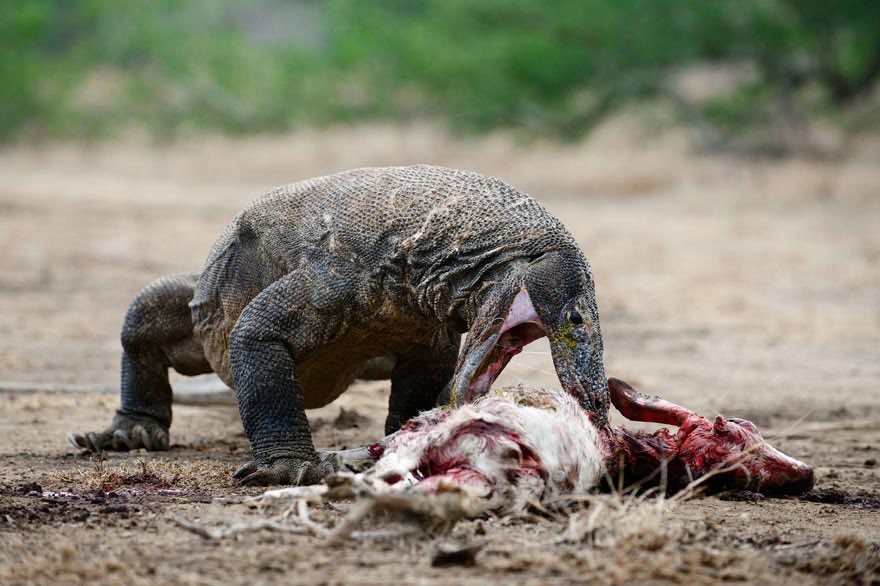
The Komodo dragon, a member of the monitor family, is the largest lizard in the world. It lives only on Komodo and a few other islands in Indonesia. It mostly feeds on carrion, but will also ambush live prey. A solitary hunter, this giant, 3-metre (10-foot) reptile has long, jagged teeth which it uses to grab its prey of wild pigs, deer and goats and shake them to death. The dragon can open its jaws wide enough to swallow some smaller prey whole.

Fighting males
May is the start of the Komodo dragon’s mating season. Males compete with each other over females and often fight to display their strength and dominance. Fighting males grasp each other and stand on their hind legs, struggling to push their rivals over. Fights sometimes result in severe injury or even death.
Mating
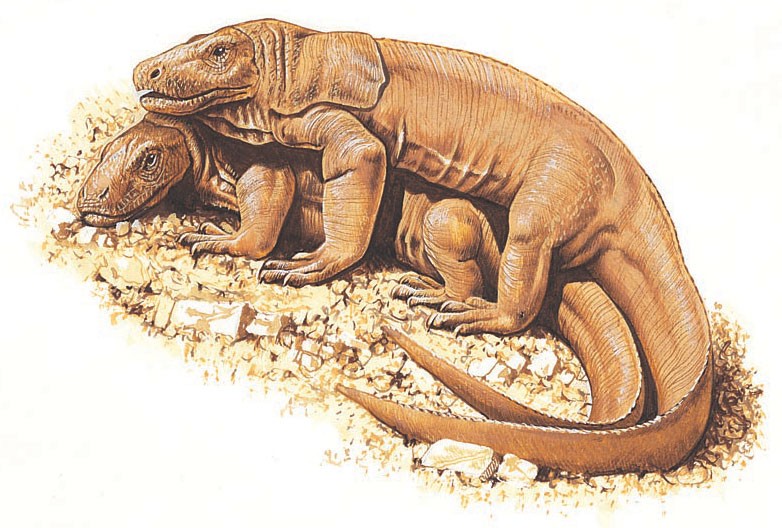
Komodo dragons are usually solitary animals, but males and females sometimes encounter one another when they are feeding. A courting male will follow a female for days, rubbing his chin against her and licking her back until she lets him mate with her.
Eggs
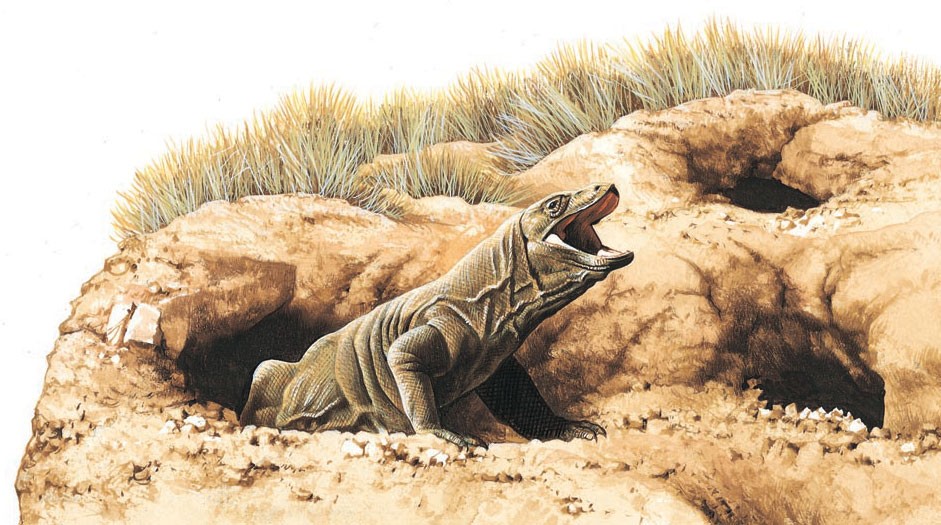
Five weeks after mating (or perhaps longer, if the mother senses the weather is too hot for the eggs), female Komodo dragons look for a place to lay their eggs. They either dig burrows deep into the side of a sandy slope, or take over burrows abandoned by other animals. Crawling inside, a female will lay between 12 and 30 soft-shelled eggs. The eggs are laid one or two metres from the surface so that they do not get too hot in the sun. Conditions must be perfect for the eggs to hatch.
The mother guards her nest for a month or two. This is mainly to prevent another nesting mother from digging up the eggs. She leaves long before the eggs hatch.
Young dragons
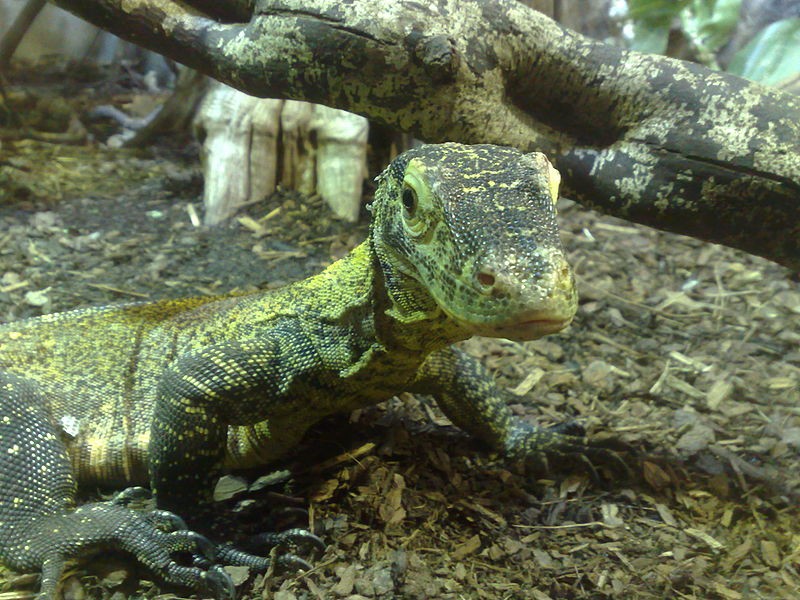
Komodo hatchlings are just 40 centimetres (16 inches) long. They quickly scurry up trees to avoid predators, including adults of their own species. The hatchlings feed on insects and small lizards until they are big enough to leave the treetops and feed on larger prey.
Consultant: Chris Jarvis