
Reptiles
Tortoises
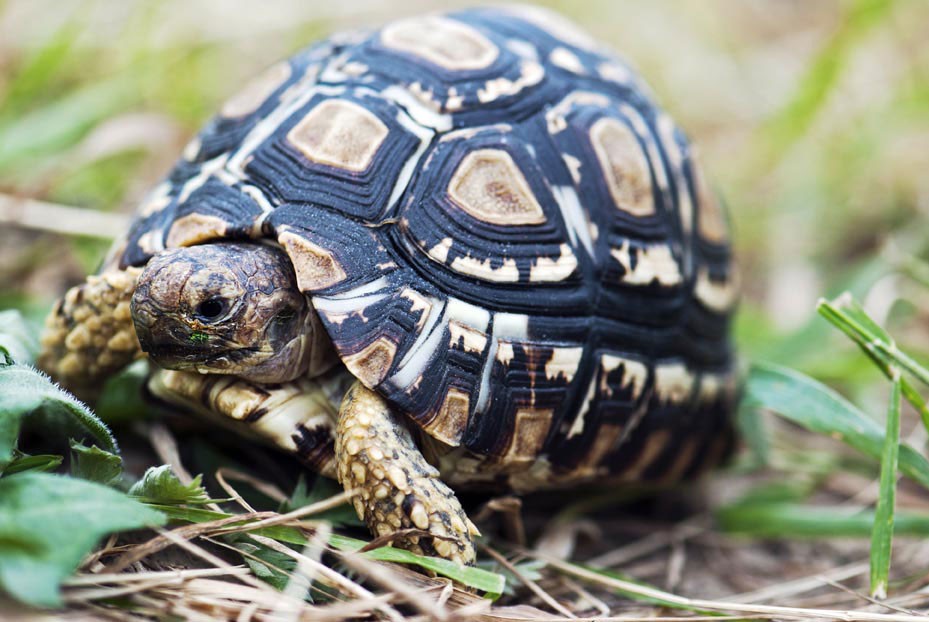
Tortoises are land-dwelling reptiles that have, like their aquatic relatives the turtles, strong, bony shells. But while turtles have flippers for limbs, tortoises have stumpy, scaly legs with short toes. Ranging in size from a few centimetres up to 2 metres (6.6 feet) in length, tortoises move about slowly, relying on their high-domed, heavy shells to protect them from predators. They are mainly plant-eaters. Many species live for 70–80 years, and some individuals for 100 or more.
Shells
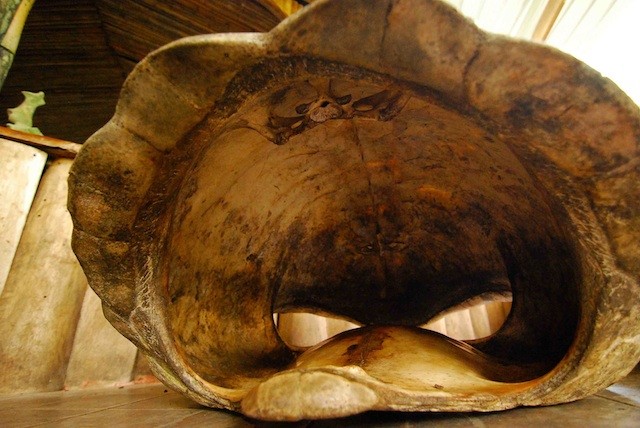
Tortoise shells are made of bone fused to their skeletons. The shell is in two parts, one forming a dome over the back, the other covering the belly, with a bony bridge connecting the two. For extra protection, the shell is covered with thick, horny scales. If threatened, most tortoises are able to draw their heads and necks backwards into their shells.
Lifestyle
Tortoises do not have teeth. Instead they have sharp, horny, beak-like mouths. They are mostly plant-eaters, feeding on grasses and flowers, but some kinds also feed on insects, snails and even small mammals and birds.
Female tortoises lay their eggs in burrows, usually at night. Then they abandon them. The hatchlings break out of their shells using their egg teeth, then they dig their way to the surface where they must fend for themselves. Juveniles of plant-eating species eat worms and insects to supplement their diet until they are older.
Giant tortoises
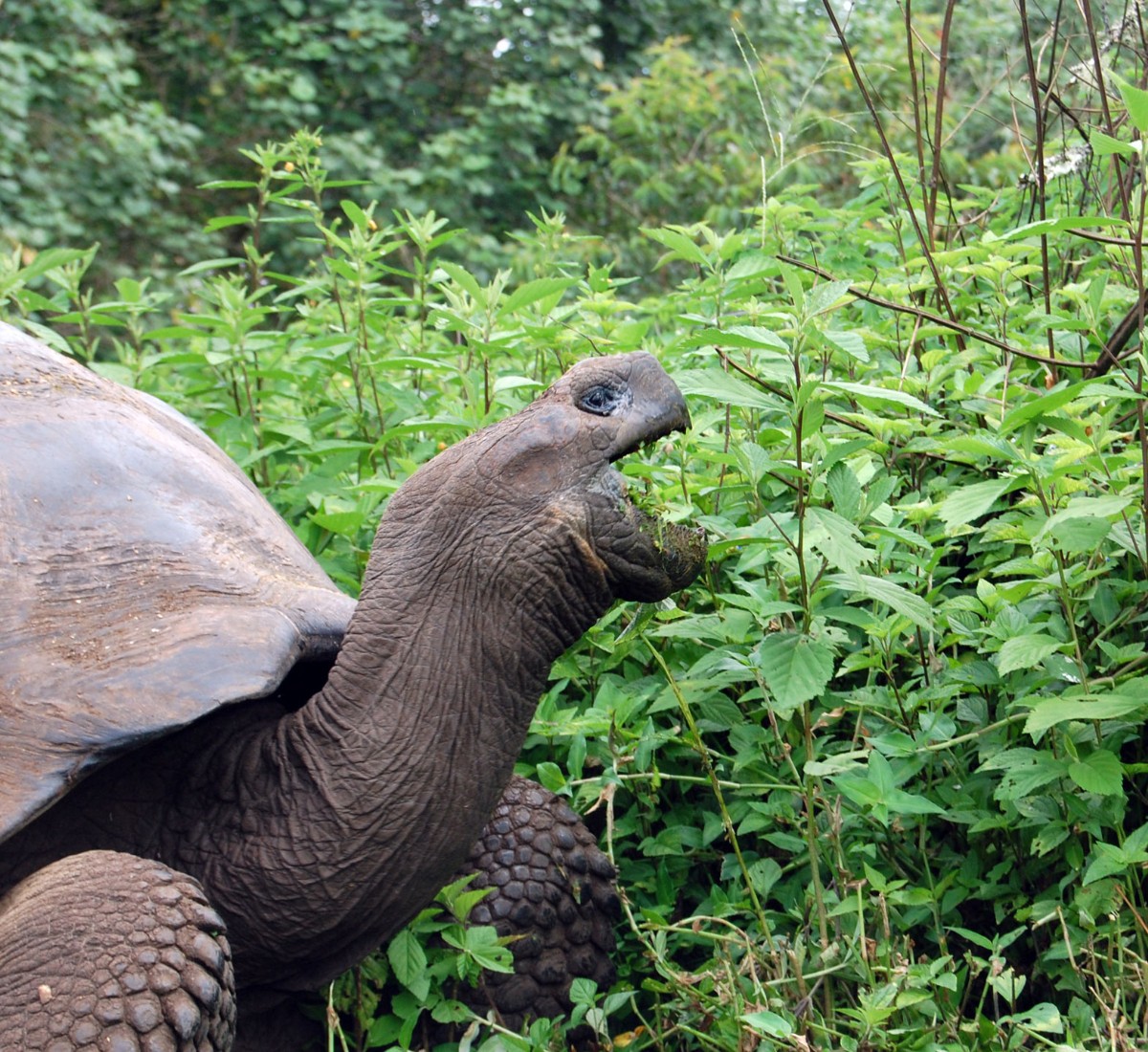
Giant tortoises live on remote islands such as the Galapagos Islands, Seychelles, Réunion, Mauritius and others. About 150,000 giant tortoises live on the Aldabra atoll in the Seychelles. With plentiful vegetation to eat and the absence of predators to threaten them in their island home, these tortoises have evolved into much larger kinds than their mainland relatives. But with the arrival of seafaring Europeans in the 16th century onwards, who found the giant tortoises a good source of fresh meat, many species declined rapidly in numbers, or went extinct.
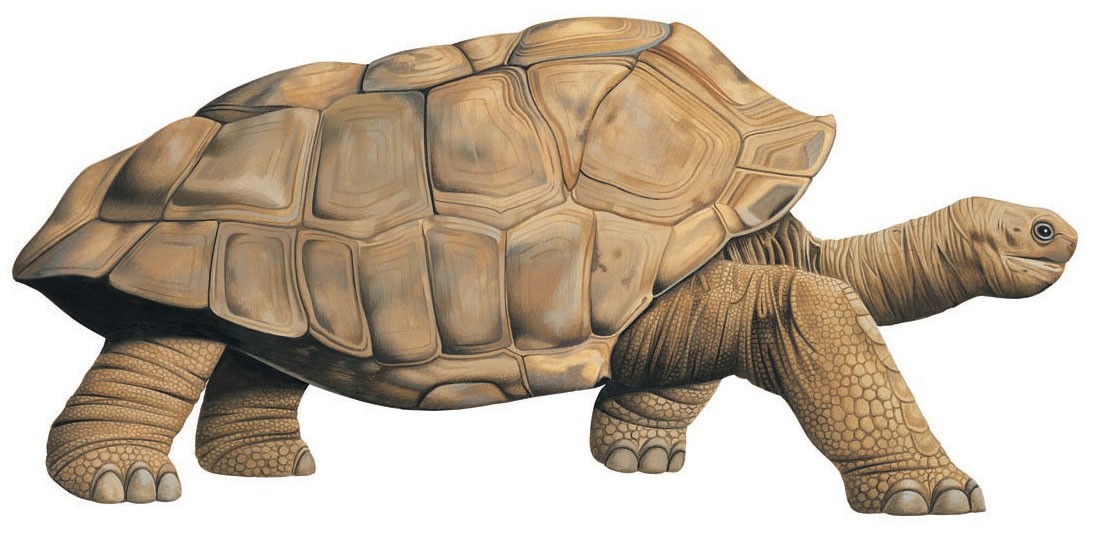
Several different species of giant tortoise live on the Galapagos Islands. Each has a slightly differently shaped shell. These huge reptiles can grow up to 1.5 metres (5 ft) long and weigh more than 200 kilograms (440 pounds). Some species have a high, arched shell opening that allows them to stretch up to tall plants.
Fighting
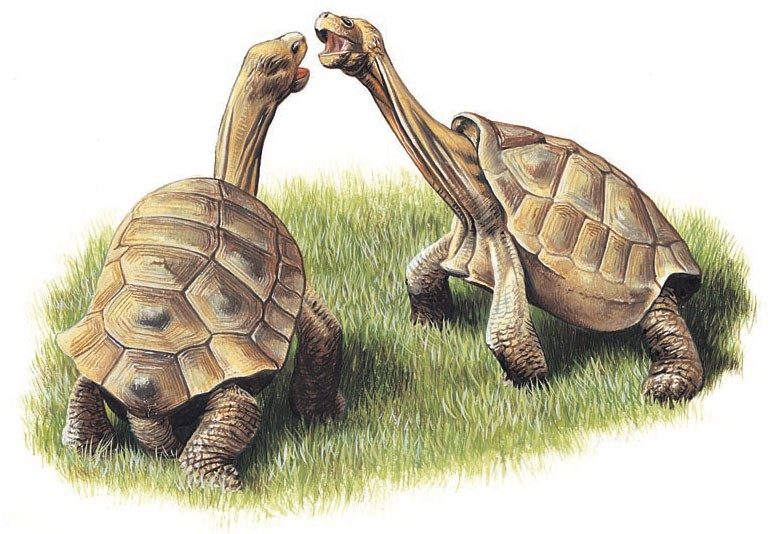
Every breeding season, male giant tortoises battle with one another for supremacy. As well as winning the right to mate, dominant males also have the first pick of food. When two males meet, they face each other and stretch their necks up as high as they can reach. The tortoise who stretches highest wins, while the other retreats. If neither tortoise backs down, the males may resort to bumping heads or even biting each other.
Consultant: Chris Jarvis