
EASY READ Shapes

CITE
We have made every effort to follow citation style rules, but there may be some minor differences. If in doubt, please refer to the appropriate citation style manual.
What are 3D shapes?. (2025). In Q-files Encyclopedia, Maths, EASY READ Shapes. Retrieved from
https://www.q-files.com/maths/easy-read-shapes/what-are-3d-shapes
"What are 3D shapes?." Maths, EASY READ Shapes, Q-files Encyclopedia, 10 Nov. 2025.
https://www.q-files.com/maths/easy-read-shapes/what-are-3d-shapes.
Accessed 1 Nov. 2026.
What are 3D shapes? 2025. Maths, EASY READ Shapes. Retrieved 1 November 2026, from
https://www.q-files.com/maths/easy-read-shapes/what-are-3d-shapes
Maths, EASY READ Shapes, s.v. "What are 3D shapes?," accessed November 1, 2026.
https://www.q-files.com/maths/easy-read-shapes/what-are-3d-shapes


What are 3D shapes?
A three-dimensional (3D) object is solid rather than flat. It can be measured in three different directions: length, width and depth. Cubes, pyramids, spheres, cylinders and cones are all examples of 3D shapes.
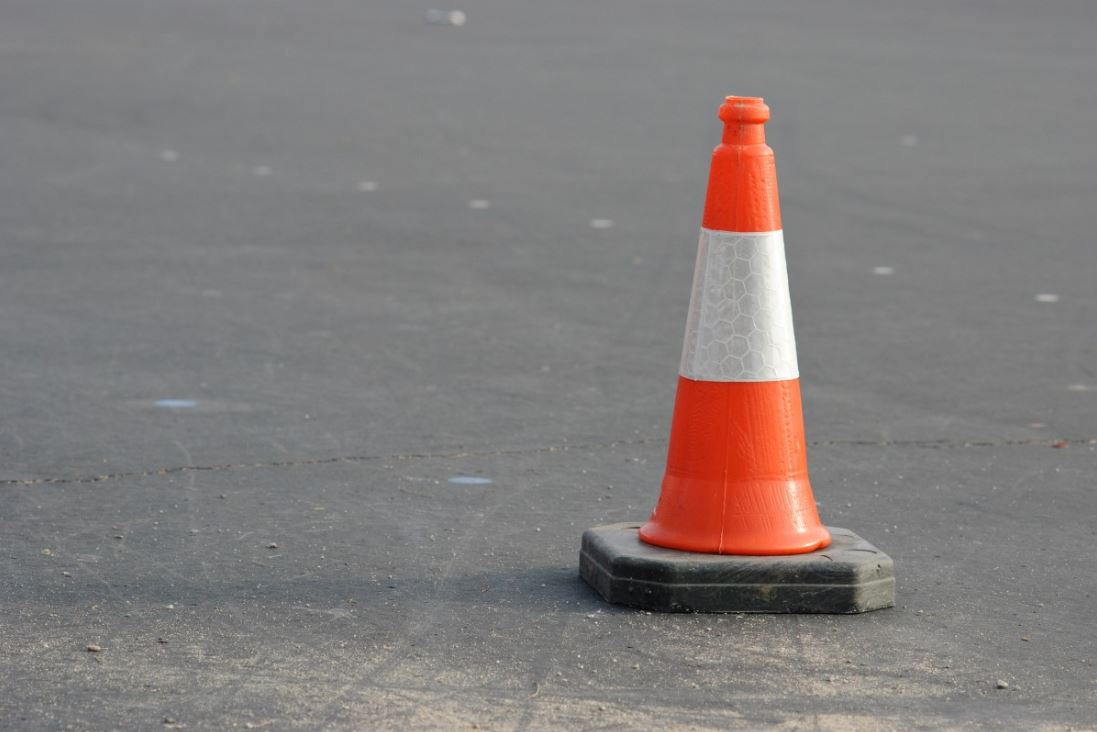
3D shapes

3D shapes are made up of surfaces called faces. Where two faces meet, they form an edge. Two edges meet at a corner, which in a 3D shape is called a vertex. The plural of vertex is vertices, so when we are counting corners, we call them vertices.
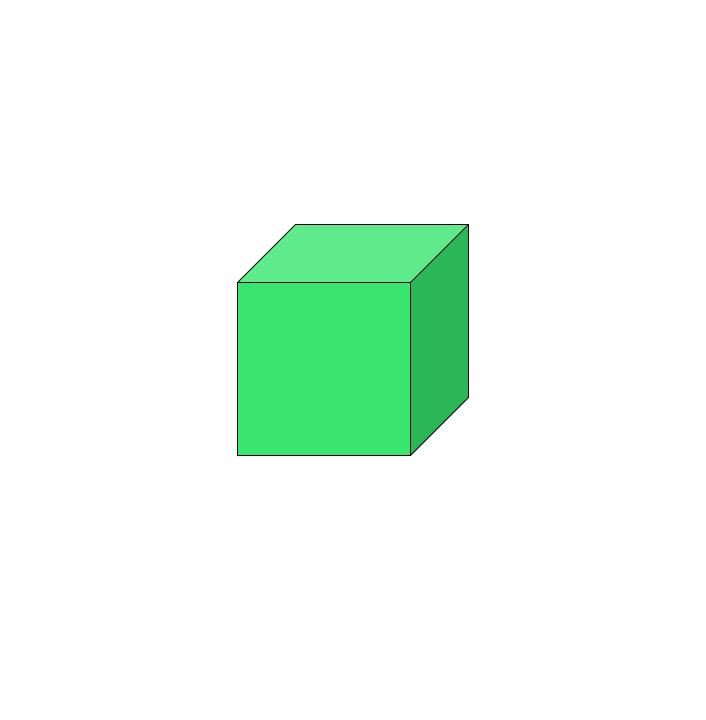
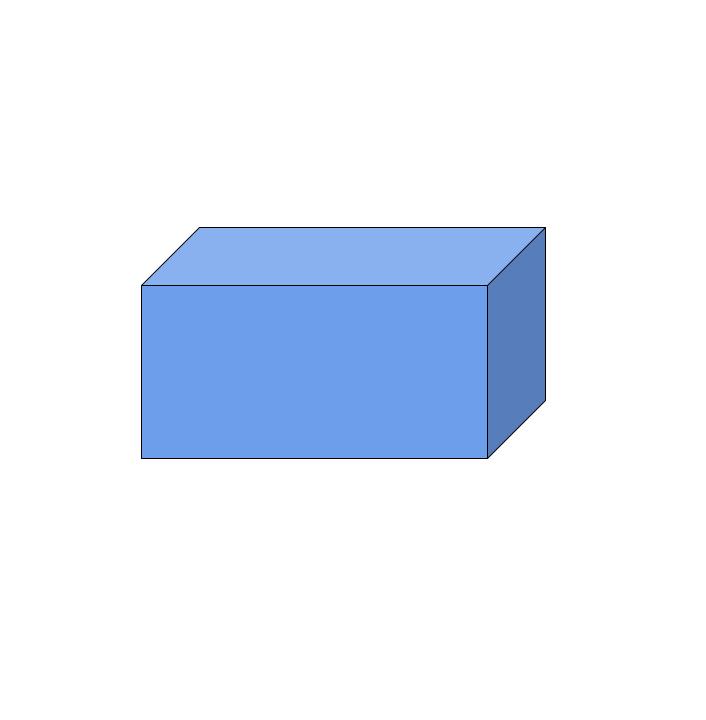
Cubes and cuboids
A cube has 12 edges of equal length, 8 vertices, and its 6 faces are all the same length and width. Each face has a square shape.
A cuboid also has 12 edges and 8 vertices and 6 faces, but they have different lengths and widths. Each face has a rectangular shape.
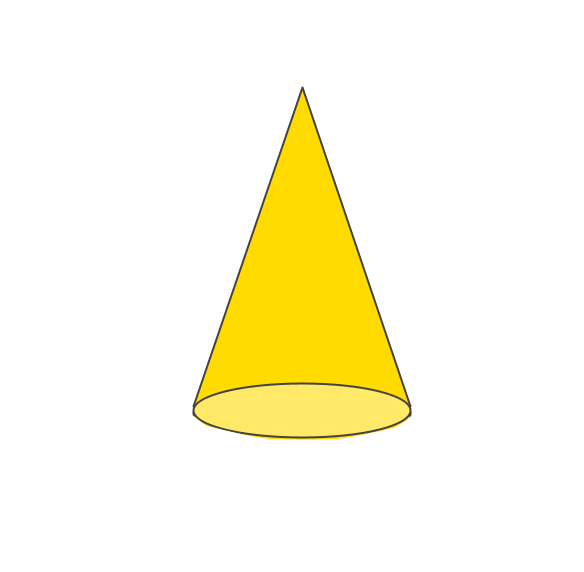
Cones and cylinders
Cones have 2 faces: one flat, circular face on the bottom, and another on top that curves all the way around, forming a point. Where these two faces meet at the base, there is 1 edge. A cone has 1 vertex, at the pointed tip.
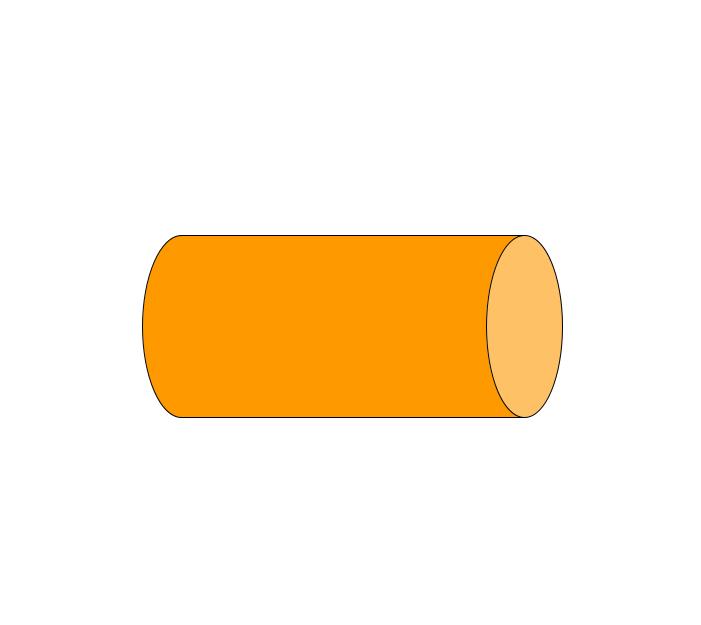
A cylinder looks like a tube, or a tin can. It has 3 faces: a circular face at each end and a curved face between them. These faces meet at the 2 edges. There are no vertices.
Pyramids
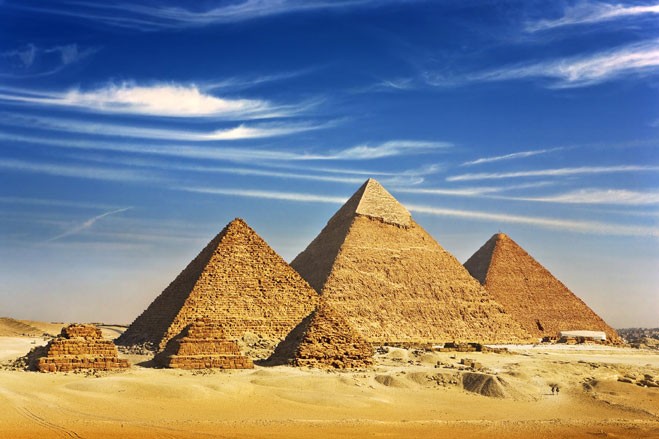

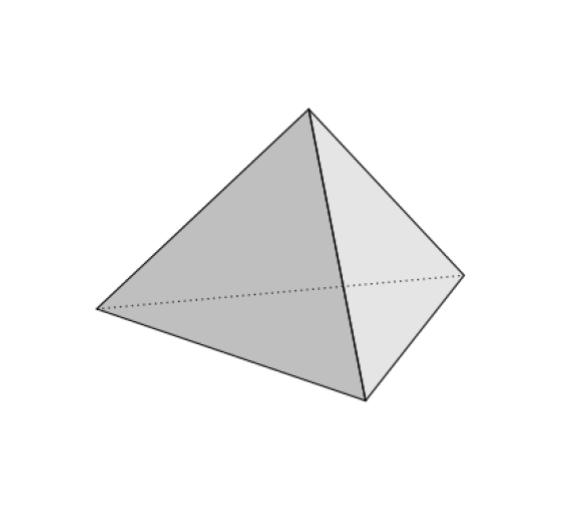
A square-based pyramid has 5 faces. One of the faces—the base—is a square, and the others are triangles of equal size. It has 8 edges and 5 vertices.
A triangular-based pyramid is known as a tetrahedron. Its 4 faces are all triangular. It has 6 edges and 4 vertices.
Spheres
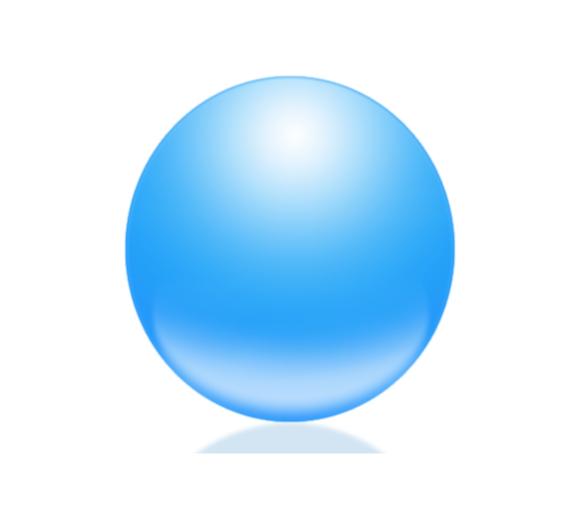
A sphere is completely round. It has only one face: a curved face that goes all the way around it. It has no vertices, and no edges. A ball is an example of a sphere.
Prisms
The two ends of a prism are always the same shape and size. A triangular prism has 5 faces: two triangular (at each end) and three rectangular. It has 9 edges and 6 vertices. A hexagonal prism has hexagonal faces at both ends.

Nets
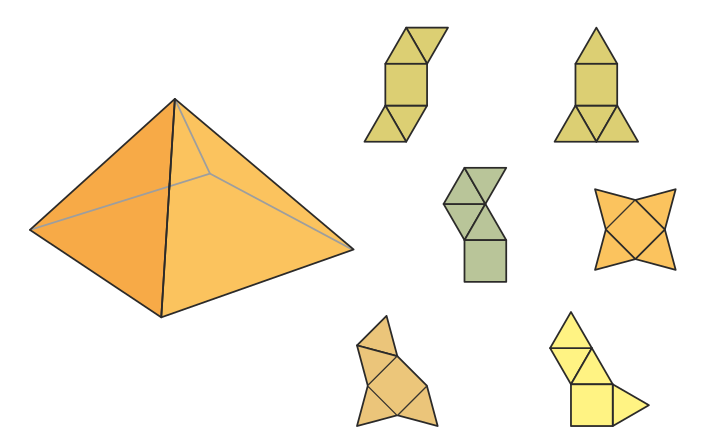
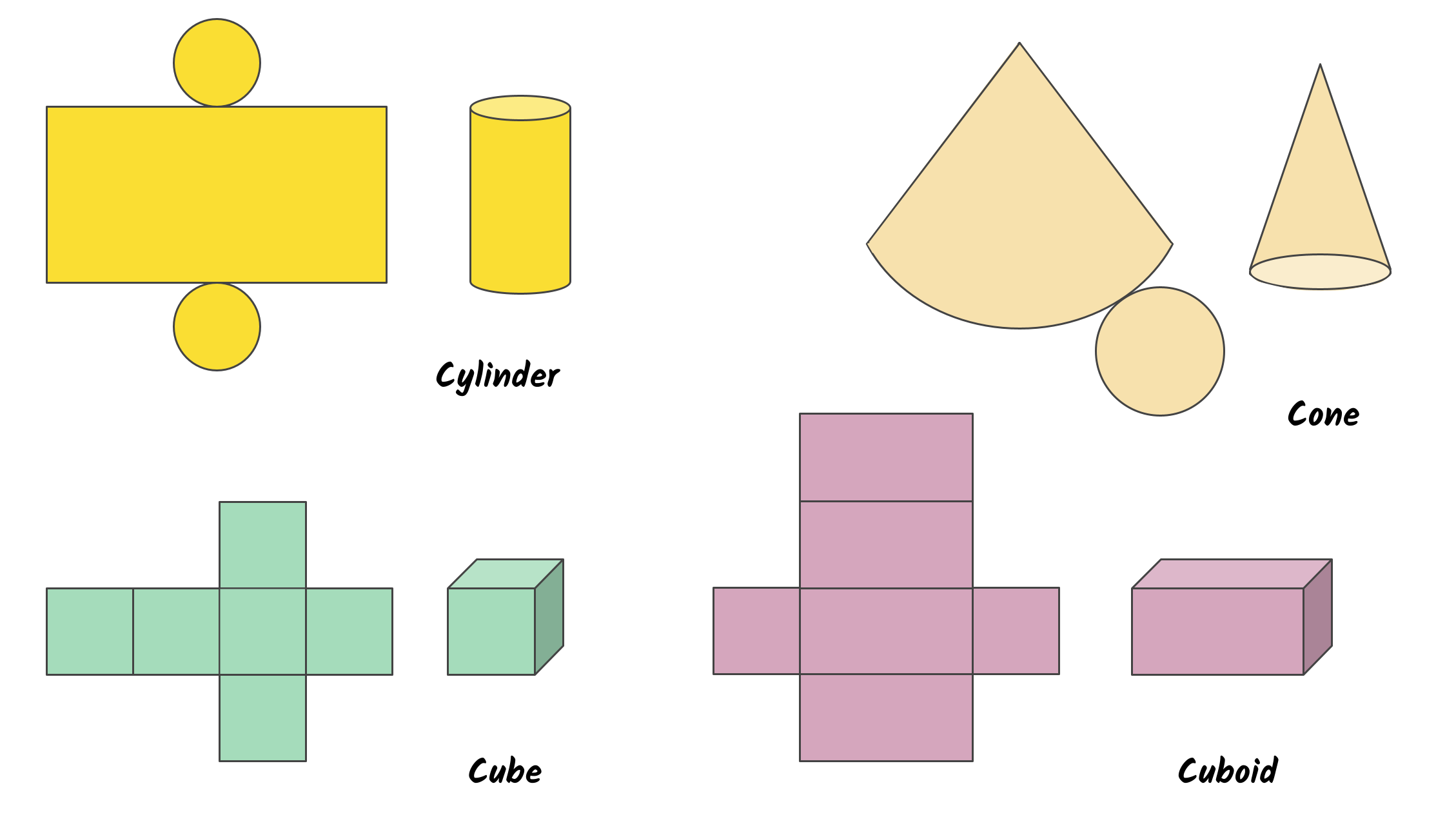
If you were to open out a 3D shape, such as a cube, and lay it flat, you would have a net.
A 3D shape can have more than one possible net.
One of the best ways to understand nets is to cut them out of paper, then fold them up into 3D shapes.
Consultant: Adam Larking
Key words
3D three-dimensional. A 3D shape is a solid object that has a length, a width and a depth
dimension something that can be measured, like a length, width or depth
edge where two faces on a 3D shape meet
face a flat surface that makes up a 3D shape
net what a 3D shape would look like if it were folded out flat
prism a type of 3D shape which has the same shaped face at both ends
vertex the corner of a 3D shape
vertices plural of vertex: the corners of a 3D shape
pics
Without in any way limiting Q-files Ltd’s exclusive rights under copyright, any use of this publication to “train” generative artificial intelligence (AI) technologies to generate text is expressly prohibited. Q-files Ltd reserves all rights to license use of this work for generative AI training and development of machine learning language models.