Q-news
New evidence may help explain one of the Sun's greatest mysteries
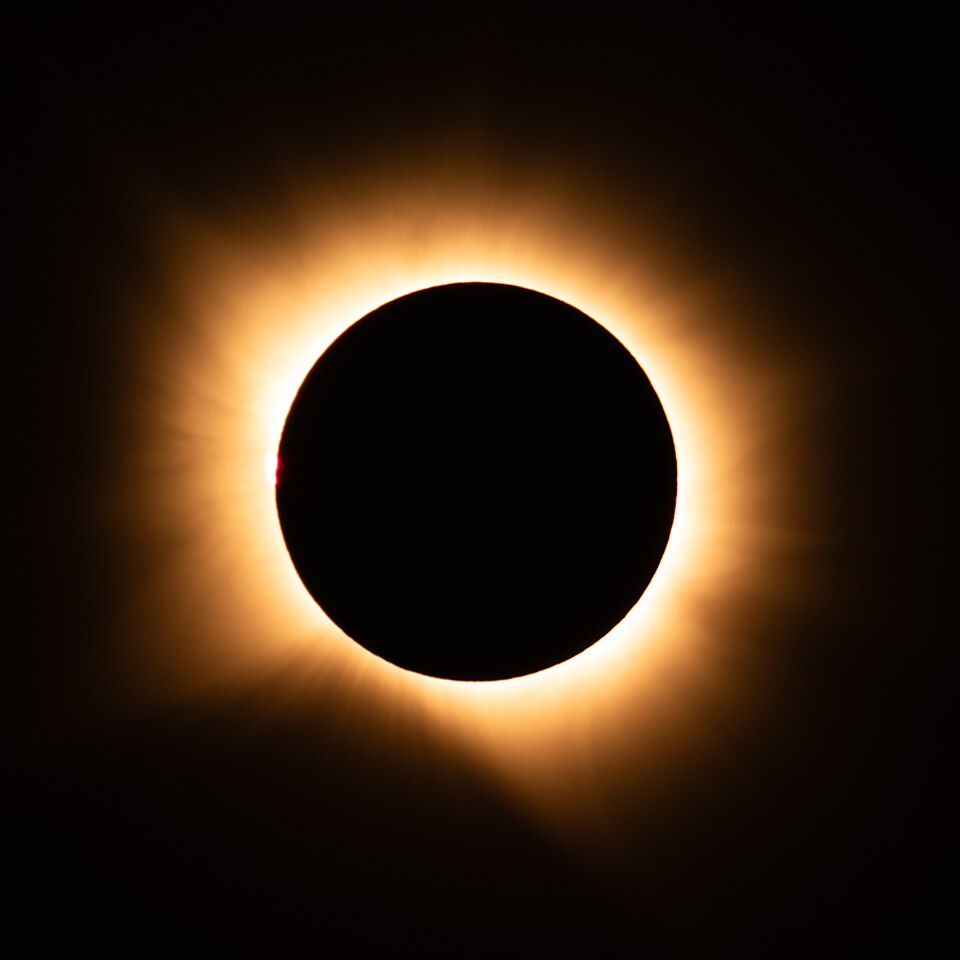
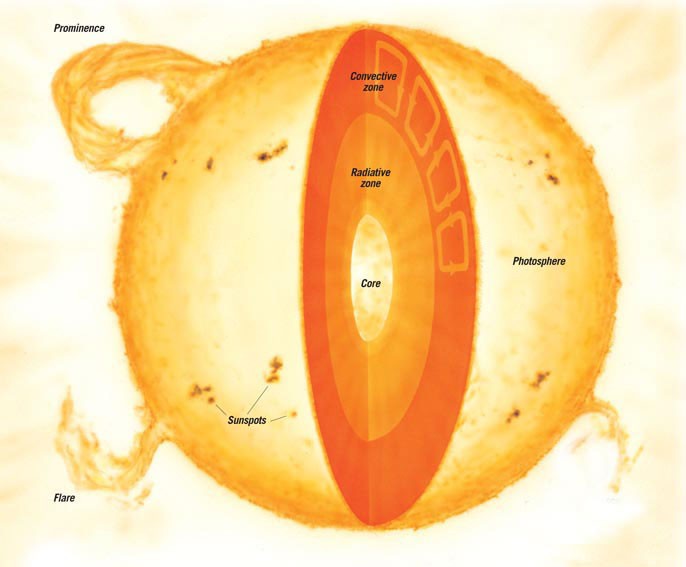
During the solar eclipse of 12th August 2026, some people were lucky enough to witness totality—the short period of time when the disc of the Sun is fully covered over by the Moon. When this happens, the Sun's corona, its outer atmosphere, becomes visible to the naked eye (normally it is obscured by the Sun's glare). The corona reaches out from the Sun a distance of up to the equivalent of 10 solar diameters, or 14 million kilometres. It reaches temperatures of between 1 and 3 million degrees Celsius (it has been known to reach an incredible 40 million °C), while the Sun's surface, the photosphere, is "only" about 5500°C. Scientists have long been puzzled why the corona is so much hotter than the photosphere—and continues to remain so hot despite frequent eruptions, during which it loses huge amounts of energy. A new study, published in August 2026, may throw some new light on this mystery.
17th August 2026
Coronal heating
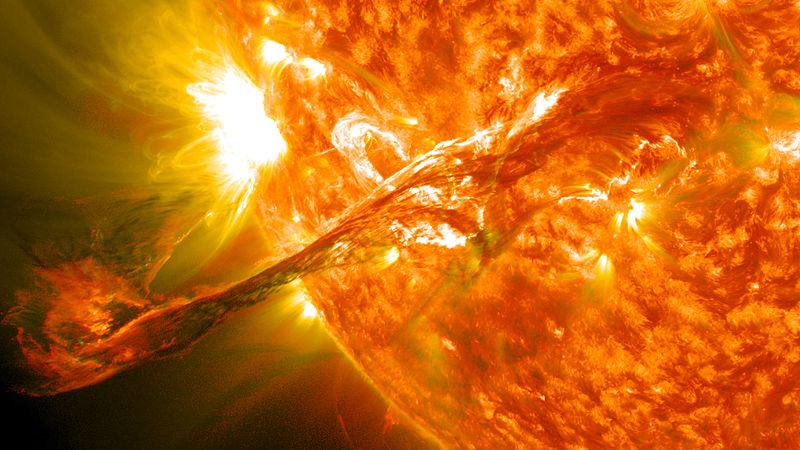
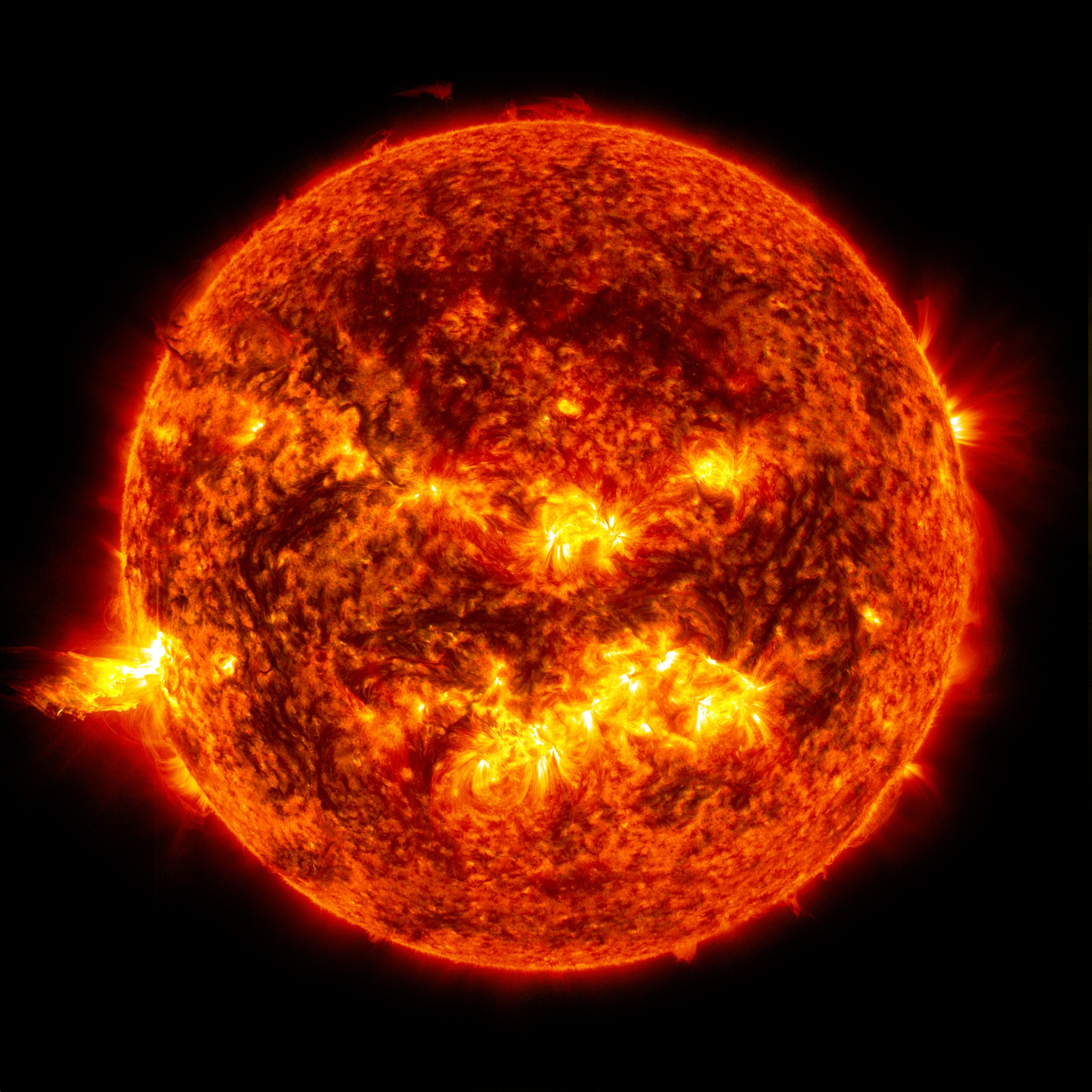
The corona is where solar flares and coronal mass ejections (CMEs) happen. During these events, large amounts of energy are released into space. Were this not to be replenished, the Sun would sooner or later lose all its energy. But since that does not appear to be happening, there must exist a mechanism by which the corona is able to replenish its energy and stay as hot as it is.
There are two possible explanations. The first is the bubbling motion on the photosphere, which constantly generates waves, known as plasma waves. As they travel outwards from the surface, they carry energy to the corona.
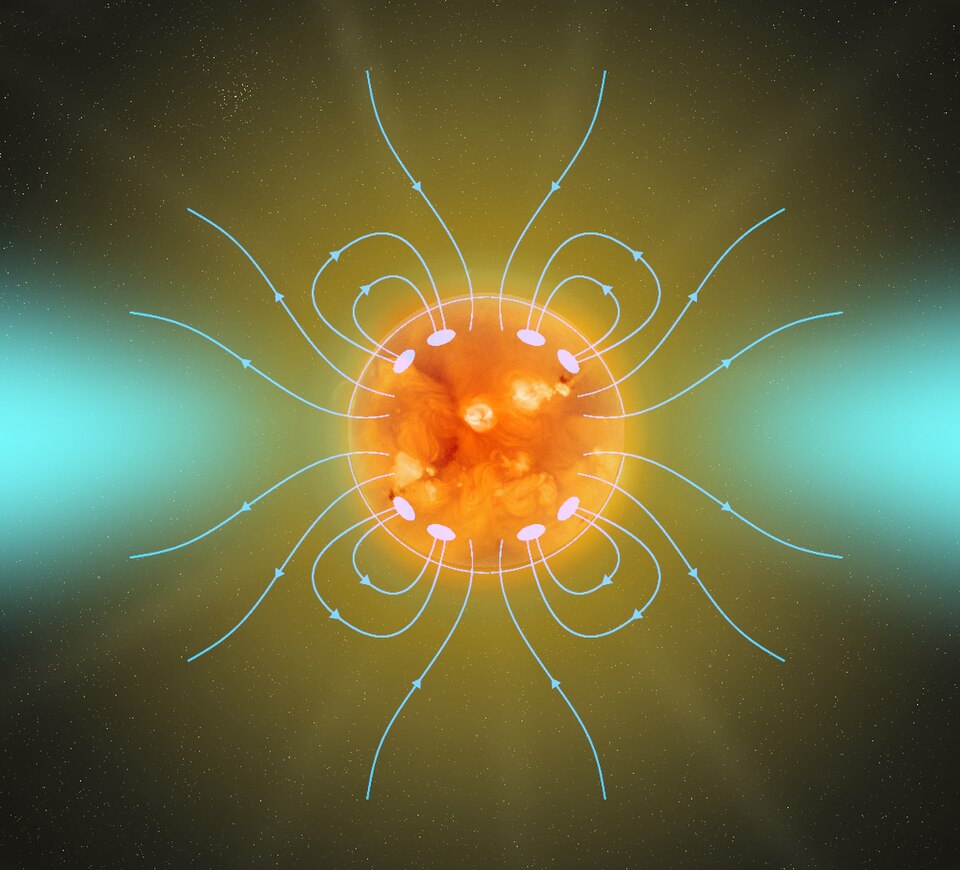
The second is the "tangled magnetic field lines"—twisting, looping lines in the Sun's atmosphere. When these snap, tiny explosions called nanoflares are set off which blast heat out into the corona.
Magnetic reconnection
A study led by Indian astronomer Professor R. Ramesh of the Indian Institute of Astrophysics (IIA) found that plasma waves supply only about 7% of the corona's energy requirement. Observing a particularly energetic CME, the researchers found that the broken magnetic field lines were able to return to their original intact form—a process called magnetic reconnection—in just a few hours. As they reconnected, the corona's energy was replenished. In Ramesh's own words: "Our study shows that the magnetic field lines snapping and reconnecting everywhere on the Sun are the primary source for supplying most of the energy."
But what starts the process, causing the magnetic field lines to tangle and snap in the first place?
Solar whirlpools
Images published in August 2026 from the National Science Foundation's Daniel K. Inouye Solar Telescope may provide the answer. The telescope captured thousands of swirling vortices, whirlpool-like structures—some just 20 kilometres wide—on the photosphere. They are probably the result of what are known as Kelvin-Helmholtz instabilities (KHIs), which occur when two fluids slide past each other at different speeds. KHIs are seen in lakes and oceans on Earth, and so are familiar to scientists. They think it is these solar whirlpools that physically twist the Sun’s magnetic field lines, which then snap, creating the nanoflares that continually heat its corona.