
Q-news

CITE
We have made every effort to follow citation style rules, but there may be some minor differences. If in doubt, please refer to the appropriate citation style manual.
The FIFA World Cup tournament kicks off in Russia. (2022). In Q-files Encyclopedia, , Q-news. Retrieved from
https://www.q-files.com/news/the-fifa-world-cup-tournament-kicks-off-in-russia
"The FIFA World Cup tournament kicks off in Russia." , Q-news, Q-files Encyclopedia, 10 Feb. 2022.
https://www.q-files.com/news/the-fifa-world-cup-tournament-kicks-off-in-russia.
Accessed 13 Sep. 2026.
The FIFA World Cup tournament kicks off in Russia 2022. , Q-news. Retrieved 13 September 2026, from
https://www.q-files.com/news/the-fifa-world-cup-tournament-kicks-off-in-russia
, Q-news, s.v. "The FIFA World Cup tournament kicks off in Russia," accessed September 13, 2026.
https://www.q-files.com/news/the-fifa-world-cup-tournament-kicks-off-in-russia


The FIFA World Cup tournament kicks off in Russia
The 21st FIFA World Cup football tournament kicks off on 14th June 2018, when hosts Russia play Saudi Arabia in the 80,000-seater Luzhniki Stadium in Moscow. A total of 64 matches will be played in 12 different stadiums across Russia. For the first time, the tournament will include Iceland, with a population of 335,000, the smallest country ever to qualify for the finals. On 15th July the final will be played, also in the Luzhniki. The tournament is contested by 32 nations every four years. The first world cup was held in, and won by, Uruguay in 1930. It was the idea of Jules Rimet, then president of FIFA (Féderation Internationale de Football Association). Just 13 teams participated in the first tournament.

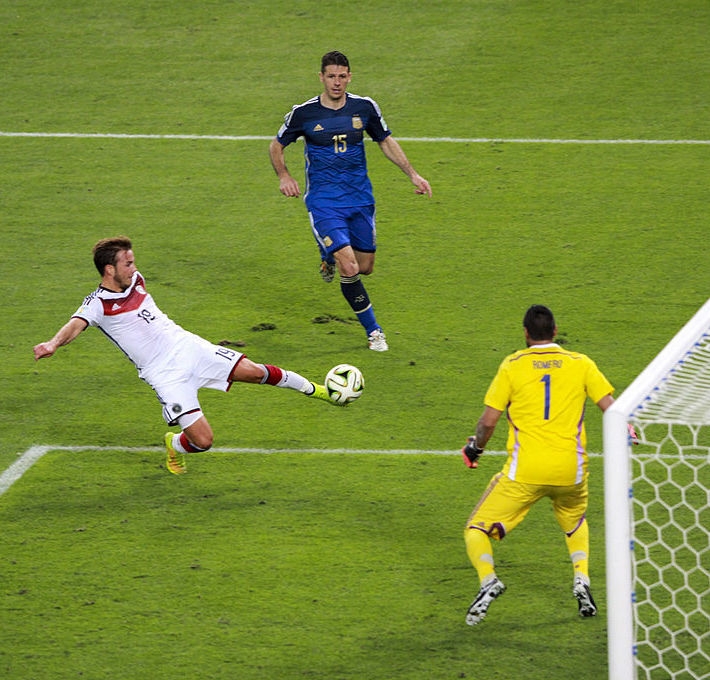
Tournament
The 32 countries are drawn into eight groups of four teams. Each team plays the other, gaining three points for a win, one for a draw. At the end of the group stage, the two teams with the highest number of points from each group advance to the knockout stage. Matches are then played between the 16 surviving teams, with the victorious eight sides advancing to the quarter-finals. The four victors of that round play in the semi-finals, with the two winners contesting the final.
During the knockout stage, if the sides are level after 90 minutes, they play an additional 30 minutes of extra time. If they are still level, the outcome is decided by a penalty shoot-out. Both Brazil (1994) and Italy (2006) won the final by this method.
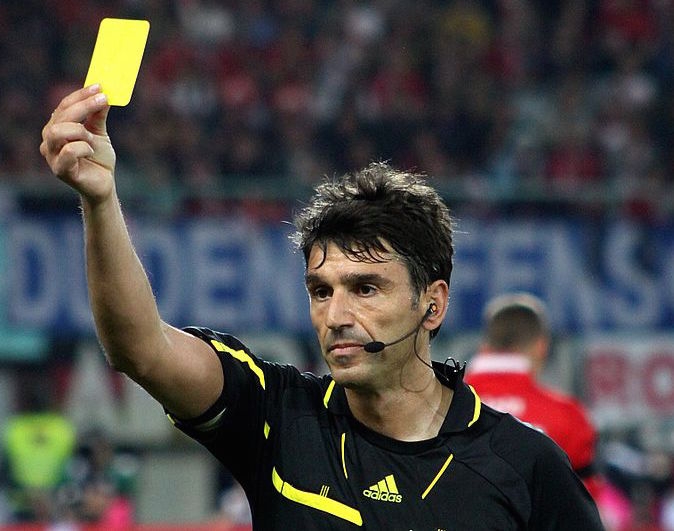
VAR

This year’s World Cup tournament will be the first in which Video Assistant Referees (VAR) will be used. The system is intended to help referees avoid making mistakes that might decide the course of the match, for example, the awarding of goals, penalties or sending-off offences. VAR has proved controversial and is likely to be a talking point of Russia 2018.
Trophy
The Jules Rimet Trophy was awarded permanently to Brazil after they won the tournament for the third time in 1970, but it was stolen 13 years later and has never been returned. The new trophy, called simply the Fifa World Cup trophy, is about 37 centimetres (14.5 inches) tall and weighs 6.1 kilograms (13.4 pounds). Made of solid gold, it depicts two human figures holding up the Earth.

Qualification

With the exception of Russia, who qualify automatically as hosts, the other 31 teams all had to go through a two-year qualifying process to make it to the tournament. Since the second World Cup in 1934, qualifying tournaments have been held to whittle down the number of teams contesting the final tournament. They are held within the six FIFA continental zones (Africa, Asia, North and Central America and Caribbean, South America, Oceania and Europe). For each tournament, FIFA decides the number of places awarded to each of the continental zones beforehand.
Past winners
The 20 tournaments so far have been won by eight teams. Brazil, the only team to have played in every tournament, have won five times. Germany and Italy have four titles each, while Argentina and Uruguay have two titles each. England, France and Spain have each won the competition once. The photo (left) shows Queen Elizabeth II presenting the Jules Rimet trophy to 1966 World Cup winning England captain, Bobby Moore.
History of the World Cup

1930 The first World Cup was held in Uruguay in July 1930. Thirteen teams entered; due to the difficulties in travelling to South America, only four European teams took part. All matches were played in the city of Montevideo. Lucien Laurent of France scored the first ever World Cup goal in a 4-1 win over Mexico. Uruguay beat Argentina 4-2 in the final in front of a crowd of 93,000.
1934 During the following tournament, held in Italy in 1934, teams had to qualify for their places in the finals. Thirty-two nations entered the competition, with 16 teams reaching the finals. All matches were played as a knockout tournament. The final between Italy and Czechoslovakia ended in a 1-1 draw, with Italy clinching victory after extra time.
1938 The next World Cup was held in France in June 1938. Uruguay and Argentina withdrew from the competition in protest at the decision to hold it in Europe for the second time running. Italy retained the trophy after a 4-2 win over Hungary.
1950 After a break caused by World War II, the next World Cup was held in Brazil 1950. All matches were played in two group stages. The tournament saw England playing in the finals for the first time, but they went down to a shock 1-0 defeat to the USA, and were eliminated after another loss to Spain. In the final, Brazil lost 2-1 to Uruguay in front of 200,000 spectators in the Maracana Stadium.
1954 The 1954 tournament was held in Switzerland. Led by their great striker Ferenc Puskas, the Hungarian team were favourites to win the tournament. But West Germany emerged victorious in the final against Hungary, winning 3-2 in a match known as the “Miracle of Bern”.
1958 The 1958 World Cup in Sweden saw England, Scotland, Wales and Northern Ireland all qualify for the first (and only) time. Sweden reached the final but lost 5-2 to Brazil, with 17-year-old Brazilian phenomenon Pelé scoring two goals.

1962 The 1962 tournament returned to South America where it was held in Chile. Brazil retained the trophy by beating Czechoslovakia 3-1 in the final.
1966 The 1966 World Cup came to England. A few months before the tournament, the Jules Rimet Trophy was stolen. It was recovered a week later, thanks to a dog named Pickles. England met West Germany in the final at Wembley Stadium in front of 98,000 spectators. West Germany scored a last minute equaliser to send the match into extra time at 2-2. Geoff Hurst made the score 4-2 and won England their only World Cup.
1970 The 1970 World Cup in Mexico was the first tournament to be staged in North America. In the final Brazil defeated Italy 4-1 and so won the World Cup for the third time. Brazil thus earned the right to retain the Jules Rimet Trophy, although it was later stolen and never recovered.
1974 The 1974 tournament, held in West Germany, saw the participation of Zaïre (now Democratic Republic of Congo), the first team from sub-Saharan Africa, to qualify. The Dutch team, inspired by Johan Cruyff, were strong favourites to win, but they lost to Germany in the final, 2-1.
1978 The World Cup was held in Argentina in 1978. The Dutch team again made it to the final, where they faced hosts Argentina in Buenos Aires. Argentina emerged as champions with a 3-1 win after extra time.
1982 For the 1982 tournament in Spain, the World Cup finals were expanded from 16 to 24 teams. This allowed more teams from Africa and Asia to qualify. Italy beat West Germany 3-1 in Madrid to win their third title.

1986 The 1986 tournament was originally scheduled to be hosted by Colombia, but was switched to Mexico after Colombia ran into financial problems. The tournament saw the first appearance of the “Mexican wave”. Argentina, with Diego Maradona starring for them, met West Germany in the final which they won 3-2.
1990 Italy hosted their second World Cup finals in 1990. England went out in the semi-finals to West Germany. The final between the Germans and Argentina saw the first two red cards issued in a World Cup final. West Germany won 1-0 with a penalty in the 85th minute.
1994 The 1994 World Cup finals were held in the USA. Colombian defender Andres Escobar scored an own goal, losing his team the match, for which he was shot dead in Medellín ten days later. The final, between Italy and Brazil, in the Rose Bowl, Pasadena, finished 0-0 after extra time, and so became the first World Cup final to be decided on penalties. During the penalty competition, Italy’s Roberto Baggio sent his kick over the crossbar, and so Brazil emerged victorious.
1998 The 1998 World Cup finals, held in France, expanded the number of teams from 24 to 32. The “golden goal” (the first goal scored in extra time) now decided draws. Two goals from Zinedine Zidane helped win France their first trophy, defeating Brazil in the final.
2002 South Korea and Japan were the first joint hosts and the first Asian hosts in the 2002 competition. Reigning champions France went out without scoring a single goal. Brazil and Germany contested the final, with Ronaldo scoring two goals in a 2-0 victory for Brazil. They lifted the World Cup for a fifth time.
2006 In 2006 the World Cup finals was staged by a re-unified Germany. During the tournament, Brazil’s striker Ronaldo scored his 15th World Cup goal, a record that still stands. The final was won by Italy on penalties after a 1-1 draw with France. Zinedine Zidane was sent off for headbutting Italy's Marco Materazzi.

2010 The 2010 tournament was the first World Cup held in Africa. The sound of the vuvuzela, a loud, plastic horn commonly played by members of the crowd at football matches in South Africa, was a memorable feature of the competition. Spain defeated the Netherlands 1–0 in a ill-tempered final with an extra time goal by Andres Iniesta.
2014 The 2014 tournament returned to Brazil. Every World Cup-winning team since the first tournament in 1930—Argentina, Brazil, England, France, Germany, Italy, Spain and Uruguay—qualified for this tournament. Spain, the title holders, were eliminated at the group stage, along with England and Italy. One of the biggest shocks in World Cup history came in the semi-finals when hosts Brazil were beaten 7-1 by Germany. Germany went on to beat Argentina 1-0 in the final. Winners for the fourth time, Germany thus became the first European nation to win the tournament in the Americas.