
Forces

CITE
We have made every effort to follow citation style rules, but there may be some minor differences. If in doubt, please refer to the appropriate citation style manual.
Why do ships float?. (2026). In Q-files Encyclopedia, Science, Forces. Retrieved from
https://www.q-files.com/science/forces/why-do-ships-float
"Why do ships float?." Science, Forces, Q-files Encyclopedia, 10 Mar. 2026.
https://www.q-files.com/science/forces/why-do-ships-float.
Accessed 13 Sep. 2026.
Why do ships float? 2026. Science, Forces. Retrieved 13 September 2026, from
https://www.q-files.com/science/forces/why-do-ships-float
Science, Forces, s.v. "Why do ships float?," accessed September 13, 2026.
https://www.q-files.com/science/forces/why-do-ships-float


Why do ships float?
If you dropped a small stone into the water, it would sink immediately. But if a block of steel weighing thousands of tonnes were made into a ship, it would float. Any object placed in water experiences two forces: gravity, which pulls it down because of its mass, and the buoyancy force, or upthrust, which pushes it up. When these forces are balanced, the object floats. The buoyancy force of a stone is much smaller than its gravity force, which is why the stone sinks (although the buoyancy force makes the stone sink slower than it would do through the air). A ship also experiences these two forces. But because of its body design, which contains a lot of air, it displaces (pushes aside) enough water so that the buoyancy force is equal to its gravity force. That is why a ship floats.


In fact, a ship does not float on the surface of the water; it sits in the water with part of its hull below the surface. The heavier the load, the deeper it sits. The deeper into the water the ship sits (without actually submerging completely), the more buoyancy force is created. So if a ship weighs 1000 tonnes, it will sink into the water until it has displaced 1000 tonnes of water. Provided it displaces 1000 tonnes before it is completely submerged, it still floats. But if the ship weighs more than the total volume of water it displaces, it will sink.
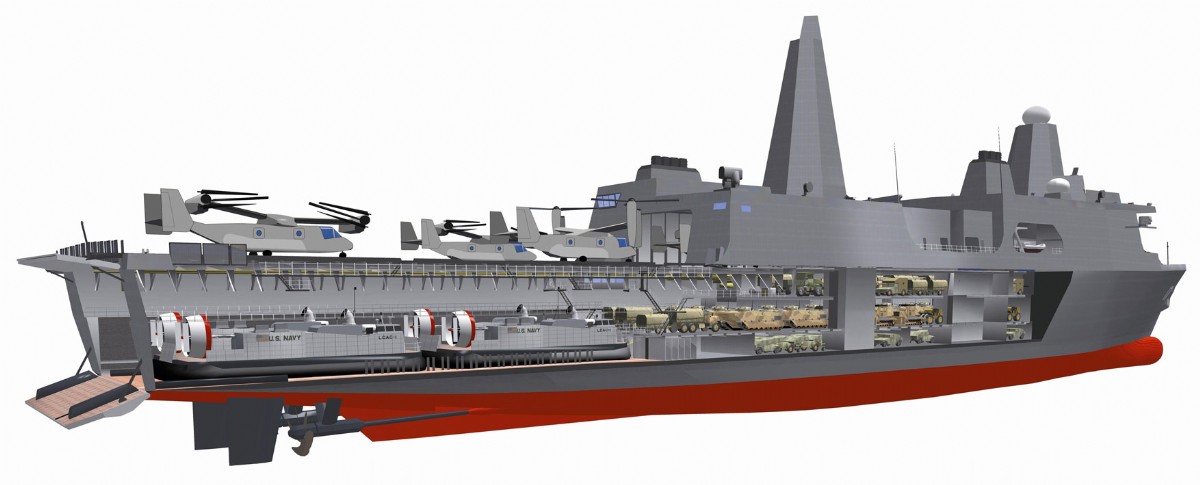
What is it about the body design of a ship that makes it so easy to float? It is because a large portion of the interior of any ship is air—unlike a solid lump of steel weighing the same amount. The average density of the ship—that is, the combination of the steel and the air—is low compared to the average density of water, even if it were, say, a 70,000-tonne aircraft carrier. So, very little of the ship actually has to sink into the water before it has displaced its own weight.
Consultant: Mike Goldsmith
Other Q-&-As to explore:
For a full list of all our Q&As, please click here.
If you have a question that you would like to see answered on Q-files, please send us an email to info@Q-files.com or use the contact us page.
pics
Without in any way limiting Q-files Ltd’s exclusive rights under copyright, any use of this publication to “train” generative artificial intelligence (AI) technologies to generate text is expressly prohibited. Q-files Ltd reserves all rights to license use of this work for generative AI training and development of machine learning language models.