
EASY READ How things work

CITE
We have made every effort to follow citation style rules, but there may be some minor differences. If in doubt, please refer to the appropriate citation style manual.
EASY READ How are ships powered?. (2026). In Q-files Encyclopedia, Technology, EASY READ How things work. Retrieved from
https://www.q-files.com/technology/easy-read-how-things-work/easy-read-how-are-ships-powered
"EASY READ How are ships powered?." Technology, EASY READ How things work, Q-files Encyclopedia, 13 Mar. 2026.
https://www.q-files.com/technology/easy-read-how-things-work/easy-read-how-are-ships-powered.
Accessed 13 Sep. 2026.
EASY READ How are ships powered? 2026. Technology, EASY READ How things work. Retrieved 13 September 2026, from
https://www.q-files.com/technology/easy-read-how-things-work/easy-read-how-are-ships-powered
Technology, EASY READ How things work, s.v. "EASY READ How are ships powered?," accessed September 13, 2026.
https://www.q-files.com/technology/easy-read-how-things-work/easy-read-how-are-ships-powered


How are ships powered?
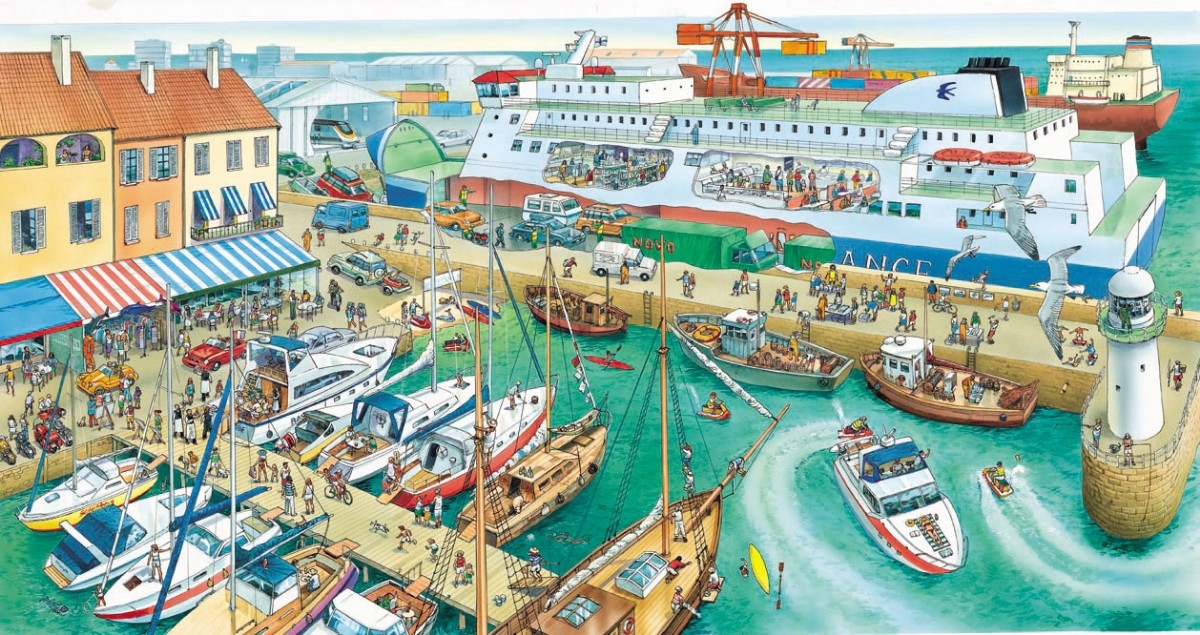
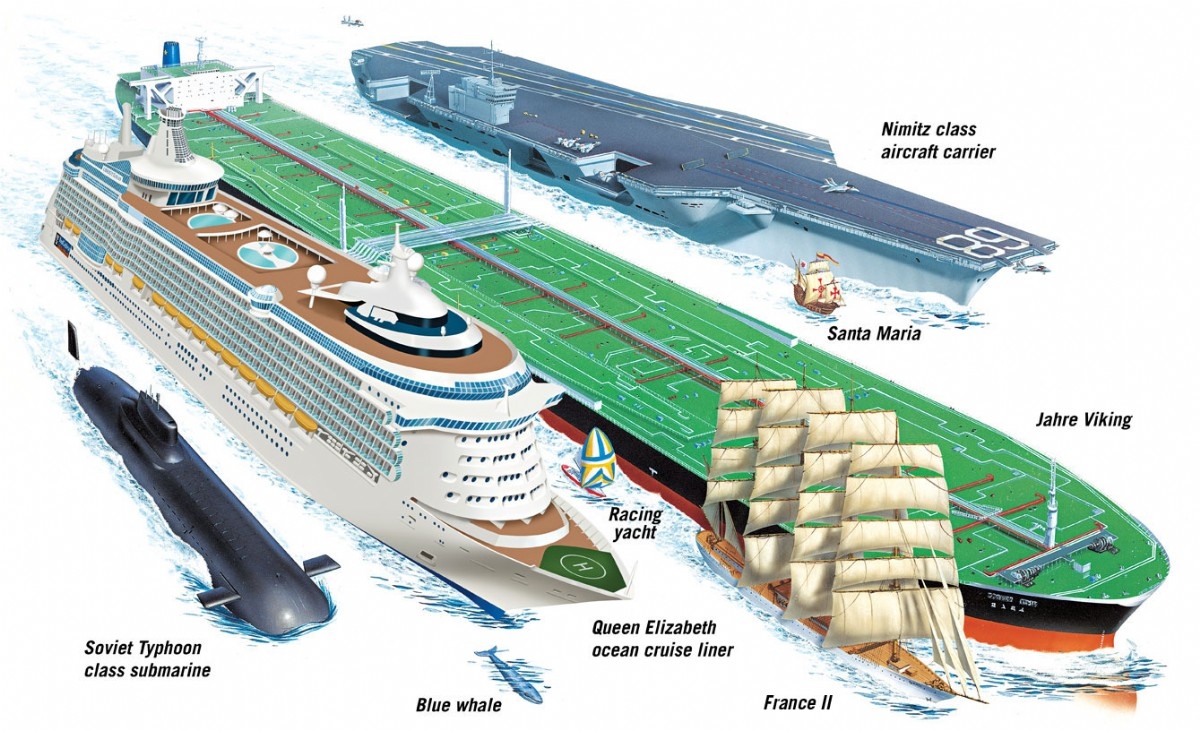
Ships are large vessels that travel across seas and oceans. Boats are smaller craft. Centuries ago, all ships were powered either by the wind or by oars. Most ships today are powered by engines that turn a propeller. Ships are used for carrying passengers or cargo, for fishing, harbour work, scientific research or for military purposes.
Why a ship floats
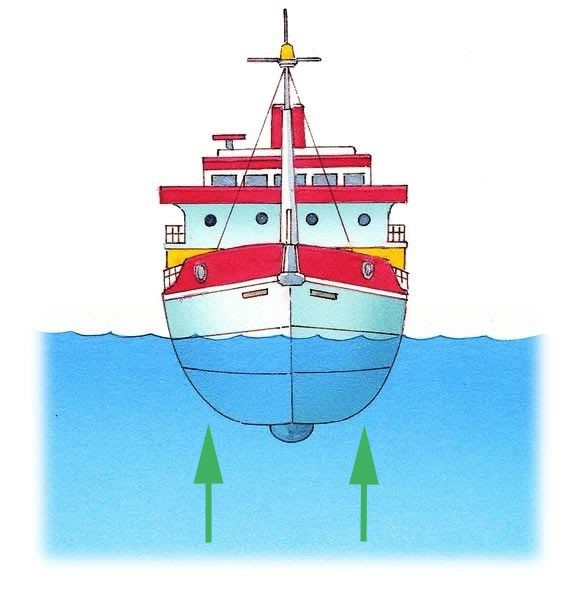
Water pushes upwards on anything that is immersed in it. This is called buoyancy. Anything that is denser than water will sink, while objects less dense than water will float. A heavy metal ship floats because it contains lots of air, making it less dense than water.
Propeller
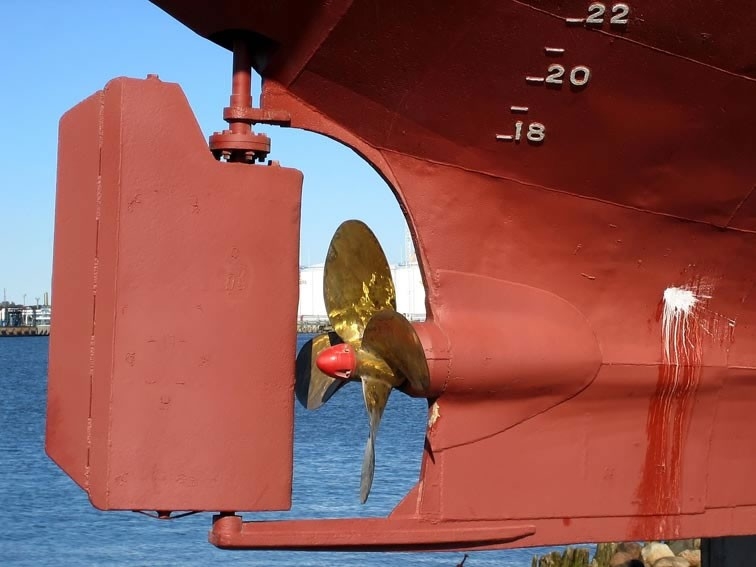
Most ships and boats are driven by a propeller. It is connected by a shaft to the engine (normally a diesel engine). The propeller’s blades are large and curved. As they turn, the water around them is sucked in and pushed backwards. This drives the boat forwards. A rudder at the stern (back of the ship) steers the ship. Large ships also have small electrically-powered propellers called thrusters for manoeuvring in port.

Navigation
Ships are controlled from a room high up near the bow (front of the ship), called a bridge. From here, the crew control the engines and steer the ship across the seas. They keep track of their position using satellite navigation systems, and sometimes lighthouses and buoys. Radar helps to avoid collisions at night or in fog. Sonar warns of shallow water under the ship.
Multihulls

A multihull is a ship or boat that has more than one hull, the vessel's body. Catamarans are the most common type, with two hulls of equal size. They are used for racing, sailing, fishing and carrying passengers. Most passenger and car ferries are catamarans. The two hulls combined usually have less friction than a single hull. This means that catamarans need less power to drive them forwards.
Container ship
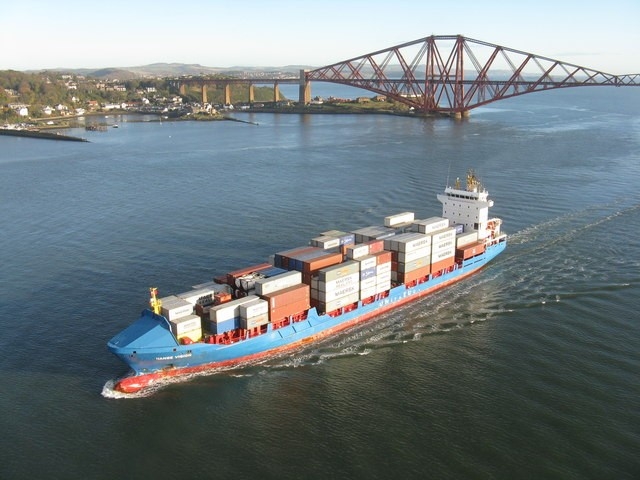
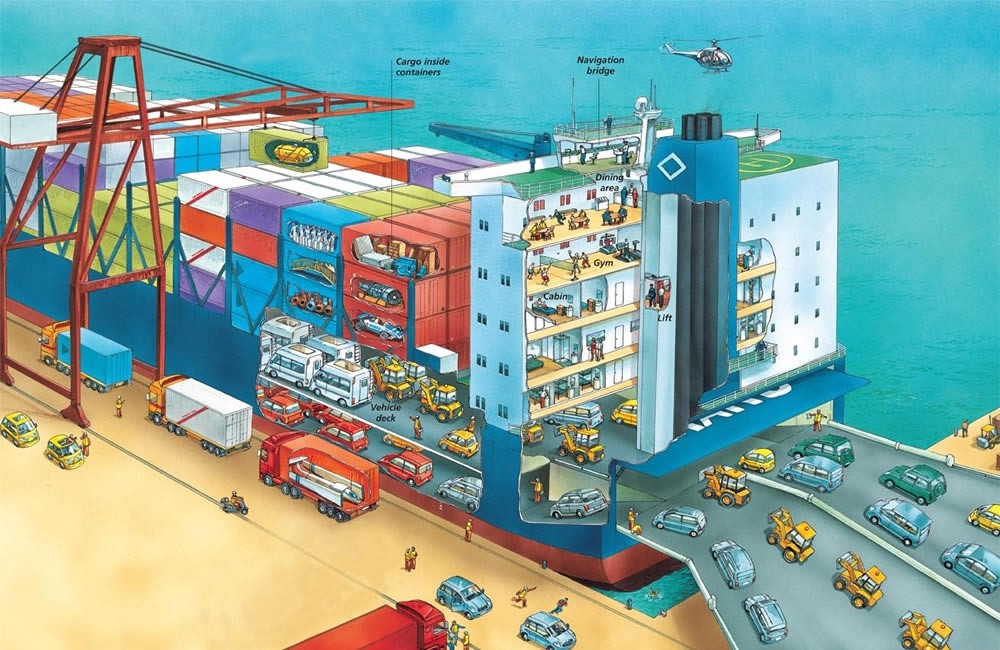
Container ships are cargo ships that carry their load in lorry-size containers. These are steel boxes that can be moved from ship to lorry without unloading or reloading their contents. To avoid wasted space, the containers are packed together on the ship as tightly as possible. Loading and unloading of container ships is handled at ports with special cranes.

Oil tanker
Oil tankers are the largest forms of transport in the world. They are specially designed to be very strong so they do not break on waves. The largest modern oil tankers measure up to 380 metres (1250 feet) long, and are known as ultra-large crude carriers (ULCCs).
Tugs
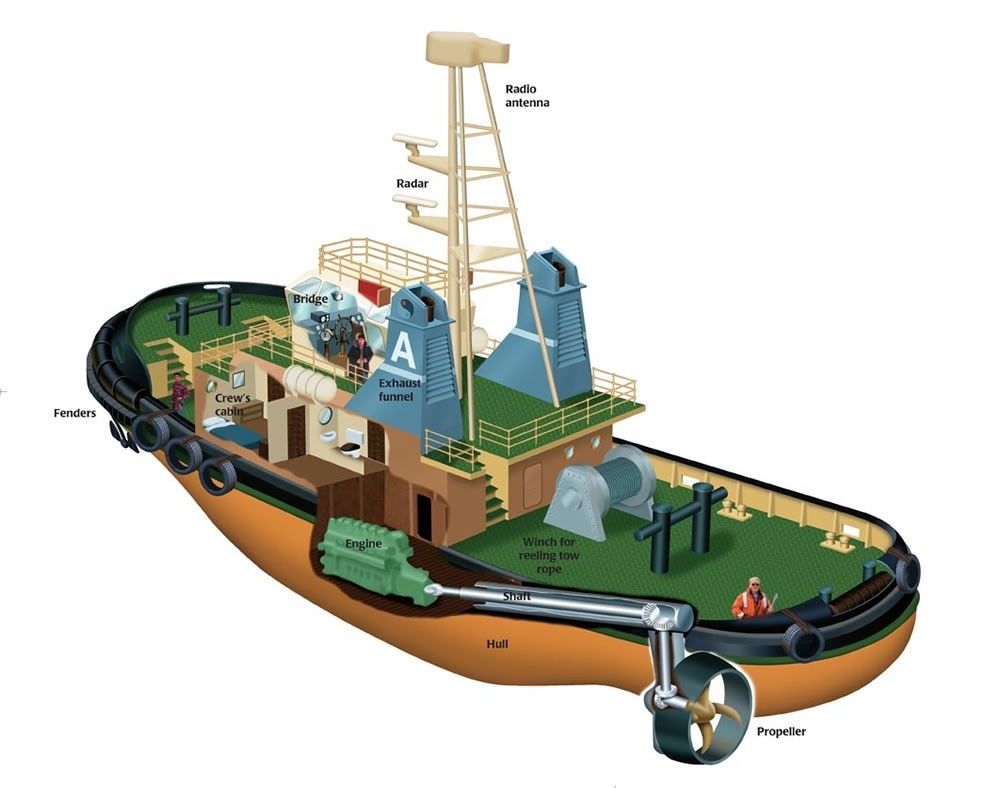
Tugs are boats specially designed to tow heavy ships, such as oil tankers, in and out of harbour. They have strong steel hulls and rubber fenders used for pushing ships. A tug has an extremely powerful engine which drives a large propeller. On some tugs, the propeller itself can be steered, changing the direction in which the tug is moving.
Consultant: Mike Goldsmith
Ready to find out more?
Here are some pages in other parts of Q-files you might like to explore:
Modern ships
Ships and submarines A-Z
pics
Without in any way limiting Q-files Ltd’s exclusive rights under copyright, any use of this publication to “train” generative artificial intelligence (AI) technologies to generate text is expressly prohibited. Q-files Ltd reserves all rights to license use of this work for generative AI training and development of machine learning language models.