
EASY READ How things work

CITE
We have made every effort to follow citation style rules, but there may be some minor differences. If in doubt, please refer to the appropriate citation style manual.
EASY READ How does a space rocket work?. (2026). In Q-files Encyclopedia, Technology, EASY READ How things work. Retrieved from
https://www.q-files.com/technology/easy-read-how-things-work/easy-read-how-does-a-space-rocket-work
"EASY READ How does a space rocket work?." Technology, EASY READ How things work, Q-files Encyclopedia, 13 Mar. 2026.
https://www.q-files.com/technology/easy-read-how-things-work/easy-read-how-does-a-space-rocket-work.
Accessed 13 Sep. 2026.
EASY READ How does a space rocket work? 2026. Technology, EASY READ How things work. Retrieved 13 September 2026, from
https://www.q-files.com/technology/easy-read-how-things-work/easy-read-how-does-a-space-rocket-work
Technology, EASY READ How things work, s.v. "EASY READ How does a space rocket work?," accessed September 13, 2026.
https://www.q-files.com/technology/easy-read-how-things-work/easy-read-how-does-a-space-rocket-work


How does a space rocket work?
In a rocket engine, two different fuels (for example kerosene and liquid oxygen, or liquid hydrogen and oxygen) are mixed together. When ignited inside a combustion chamber, they turn into hot gases that rush out of a nozzle at great speed. This causes the spacecraft, attached to the rocket engine, to be thrust in the opposite direction.

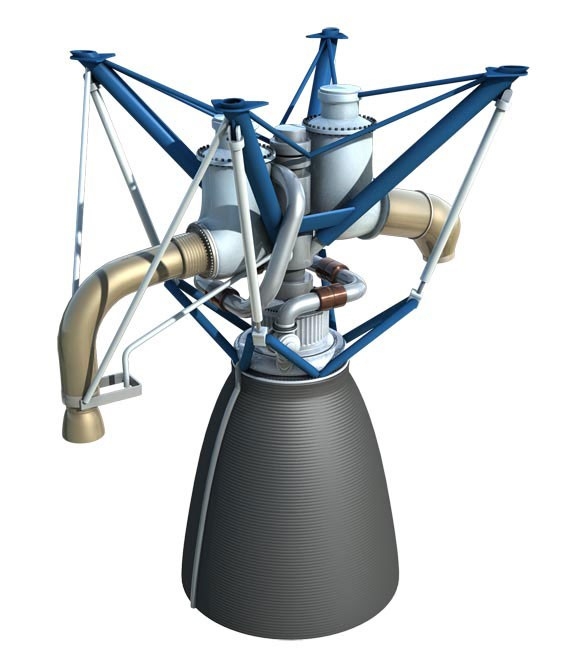
Escape velocity
To travel into space and escape from the Earth's gravity a space rocket must reach a speed of 40,000 kilometres per hour (25,000 mph)—ten times the speed of a rifle bullet. This is called the escape velocity. But to reach the International Space Station or even the Moon, which are within the Earth's gravity field, much lower speeds are enough. A rocket's engines must be able to work without air (there is none in space). Jet engines cannot do this because they need oxygen to work.
Once in space, the spacecraft’s engines can be turned off. It mostly maintains its speed (the Earth's gravity pulls it back) because there is no air to slow it down—which is what would happen if a plane switched its engines off.
Stages and boosters
Space rockets usually consist of several stages. When the fuel in one stage is burned up, that stage is jettisoned (cast off into space) and the engines of the next stage fire. The rocket becomes lighter each time a stage is lost, allowing it to go faster.
To give some space rockets extra thrust at lift-off, solid fuel boosters fire as well as the first stage engine. After the boosters and the first stage are jettisoned, the second stage engine, often fuelled by liquid hydrogen and oxygen, fires.
Some new kinds of spacecraft can reach orbit without jettisoning any stages or using solid fuel boosters. These are called single-stage-to-orbit craft.
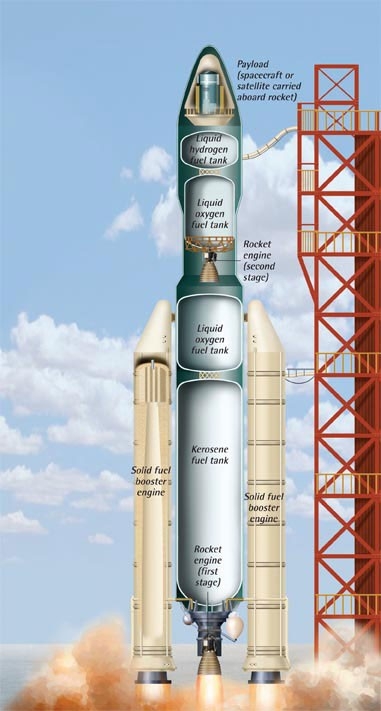
Rocket launch

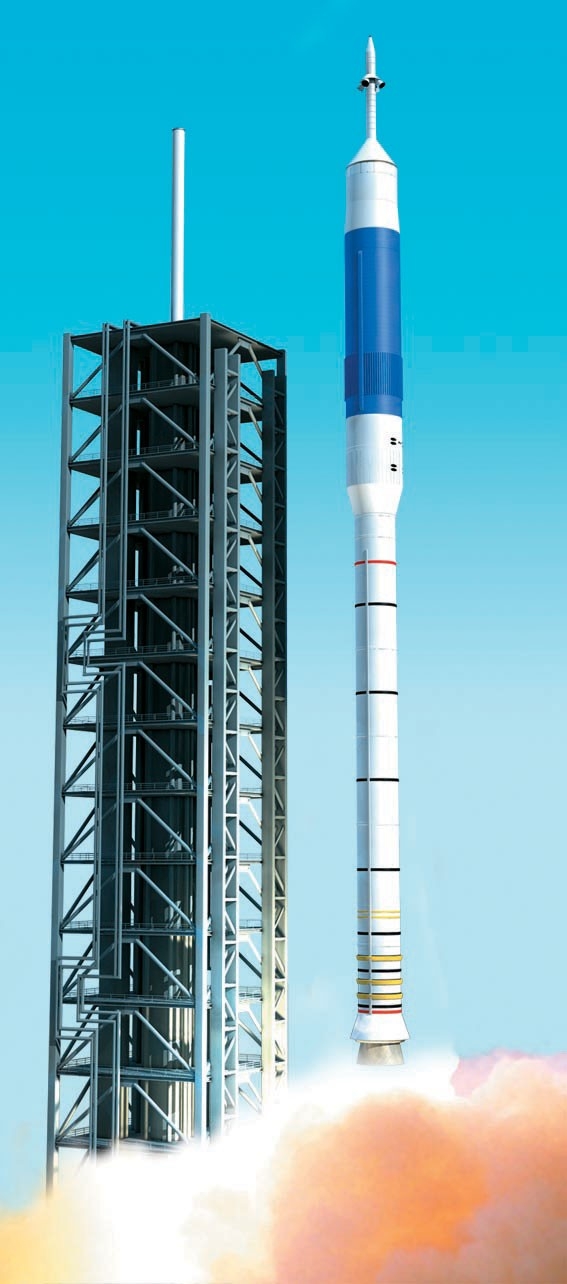
Different rockets launch in different ways. Here is one example.
Before launch, a crawler-transporter vehicle carries the rocket out to the launch pad. Countdown to lift-off begins. The ground crew fills the rocket stages with fuel. If the spaceflight is to be manned, the crew enters the spacecraft. Mission Control monitor weather satellite reports. If everything is OK, the final stage of countdown begins.
With three minutes to go, the trenches in the pad beneath the rocket engines are flooded with water. This cools the ground and reduces noise vibrations which can damage the spacecraft. The solid-fuel rocket engine is ignited. There are just a few seconds to go: "Ten, nine, eight..."
Just before lift-off, the support tower separates from the rocket. Now the rocket’s engines fire, hot gases blast out, and the rocket is propelled upwards. “We have lift-off!”

After lift-off
Two minutes later, the solid fuel is already used up and the first stage is jettisoned. It is re-usable, so parachutes open to slow its descent to the ocean (1), from where it is later recovered. Now the liquid-fuelled second stage engine is ignited (2). About 30 seconds later, the launch abort system (which is used to blast the crew capsule clear of the rocket in an emergency) is jettisoned (3).


Five minutes 30 seconds after lift-off, the second stage engine cuts off. About 45 minutes later, there is a second burn of the engines. Now the command module separates from the rocket's second stage, leaving it to burn up in the atmosphere.
Consultant: Mike Goldsmith
Ready to find out more?
Here are some pages in other parts of Q-files you might like to explore:
Rocket engines
Rocket launch
pics
Without in any way limiting Q-files Ltd’s exclusive rights under copyright, any use of this publication to “train” generative artificial intelligence (AI) technologies to generate text is expressly prohibited. Q-files Ltd reserves all rights to license use of this work for generative AI training and development of machine learning language models.