
Art
Vincent van Gogh
Dutch artist Vincent van Gogh (1853–1890) was one of the most famous painters in history. During his short lifetime, he created more than 2000 artworks, including drawings, sketches and 860 oil paintings. His mature work, in what is now known as the Post-Impressionist style, is easily recognizable from its use of swirls, bold brushstrokes and bright colours. Van Gogh began working as an artist aged 27. He spent nearly all his working life in France, where he painted the landscapes and still-life paintings for which he is most famous today. Van Gogh’s work was not at all well known in his lifetime, and he died in poverty. Today, his works are among the world's most expensive paintings, selling for tens of millions of dollars.
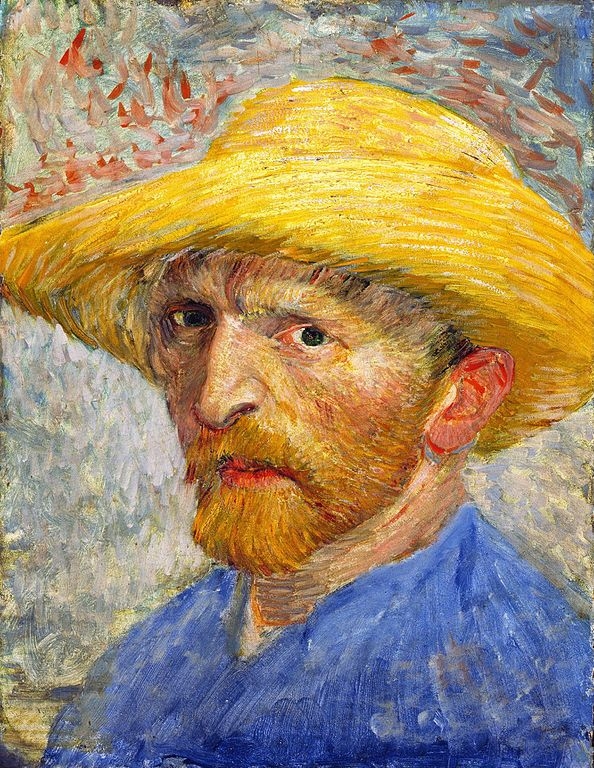
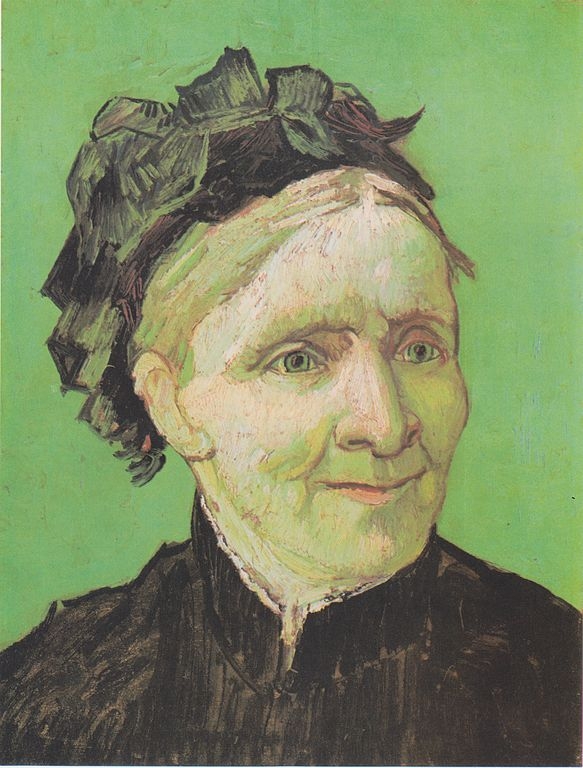
Early life
Vincent van Gogh was born on 30th March 1853 in Zundert, a village in the province of Brabant, the Netherlands. Vincent was the eldest of six children. His father was a minister in the Protestant church. His mother Anna, who came from a well-to-do family, was a rather strict, religious woman, but, spotting her son's talent at an early age, she encouraged the young Vincent to draw. When he was 16, Vincent went to work at the gallery of one of his uncles, an art dealer, in The Hague. At 20, he transferred to the gallery's London branch, and then to one in Paris. But the work did not interest him for long and he soon returned to the Netherlands.
A religious life
As a young man, Van Gogh was deeply religious. It upset him to see people suffering and living in poverty and he was keen to improve their lives. On his return to the Netherlands, he applied to study theology (religion) at university in Amsterdam but failed the entrance exam. Instead, he went to work as a missionary, helping people in the mining district of Borinage in Belgium, living in poverty among them. But the church considered this an undignified practice and dismissed him.

Becoming an artist
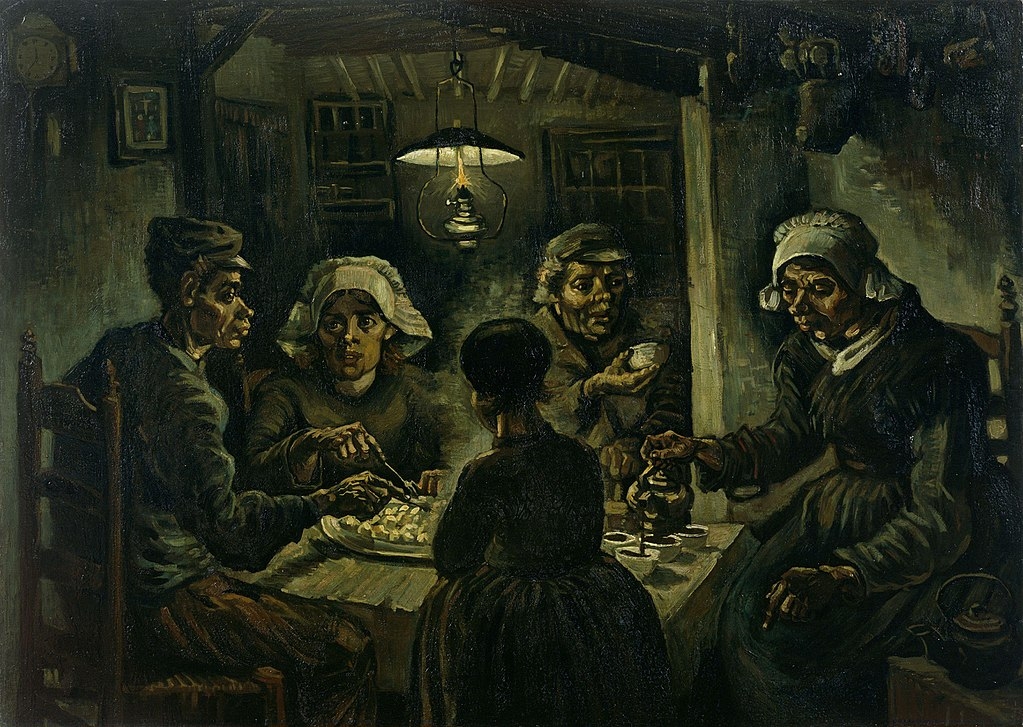
By now 27, Van Gogh decided to follow his passion for art and enrolled at art school in Brussels. Supported financially by his brother Theo, he spent the next few years learning to draw and paint. His early paintings used dark colours, and often showed the hard life of peasants going about their work.
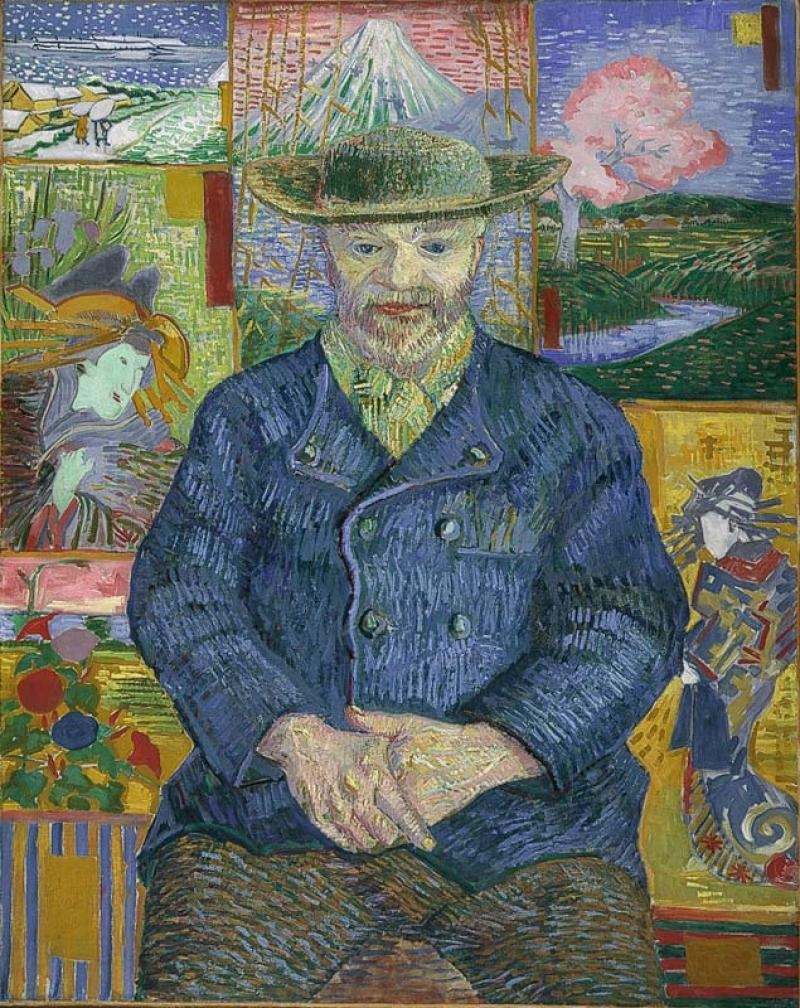
In 1886 Van Gogh went to stay with Theo in Paris and saw the colourful Impressionist paintings of Claude Monet. When Theo introduced him to artists such as Emile Bernard and Paul Gauguin, Van Gogh’s way of painting changed completely. He was inspired to use lighter and brighter colours in his paintings, and developed his own style using short, expressive brushstrokes.
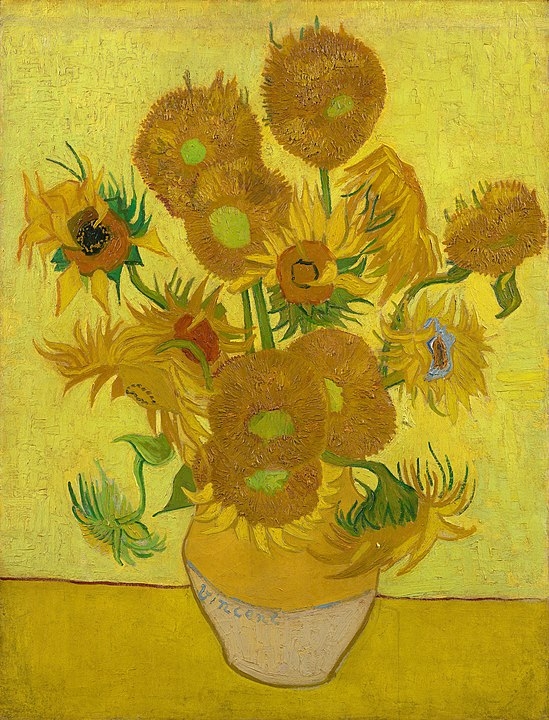
Sunflowers
In 1888 Van Gogh moved to Arles in Provence, southern France. He wanted to get away from the noise and bustle of Paris and find somewhere quiet to work. Van Gogh loved the light and countryside of Provence, and his new home, the Yellow House. He painted the landscapes around him enthusiastically, especially the olive groves, cypresses (a type of tall, slender tree) and flowers. It was in Arles that he painted his famous Sunflowers, a series of paintings of sunflowers arranged in a vase. During this year, 1888, Van Gogh developed the style he is best known for today.

Style
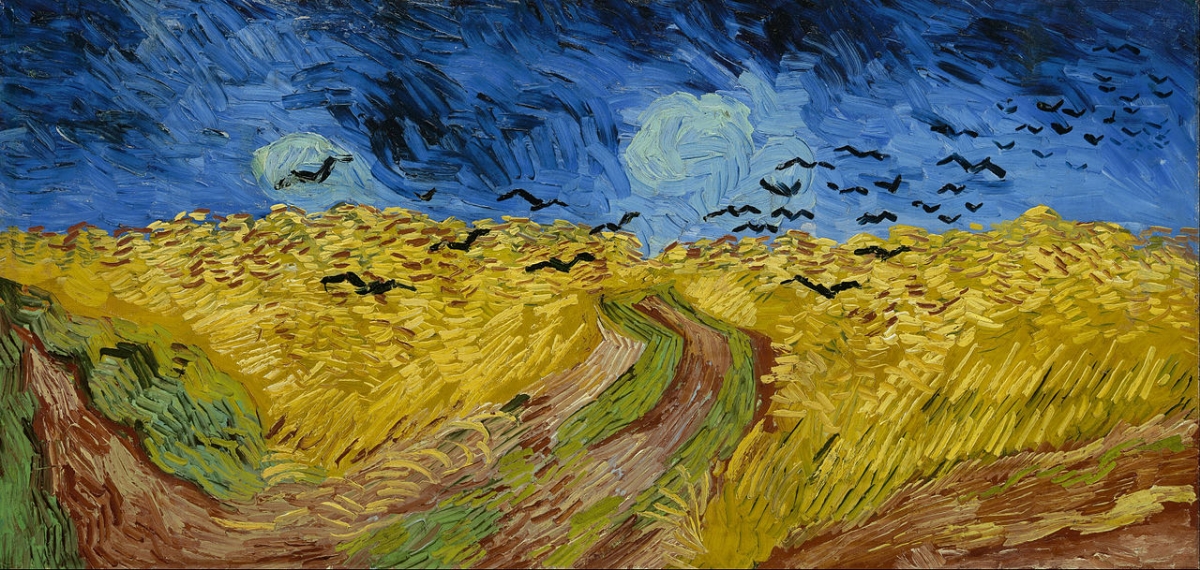
Van Gogh used bright, strong colours in his paintings. He made expressive marks with his brushes, sometimes applying oil paint so thickly that the brush marks could be seen: a technique called impasto. Like other artists of his time, Van Gogh was inspired by the Impressionist painters before him, but he wanted to develop a new way of painting. His aim was to create a representation of the subject he was painting, rather than record it exactly as it looked. He used the loose style of painting of the Impressionists, but did not attempt to make every detail of his paintings accurate.

The Starry Night
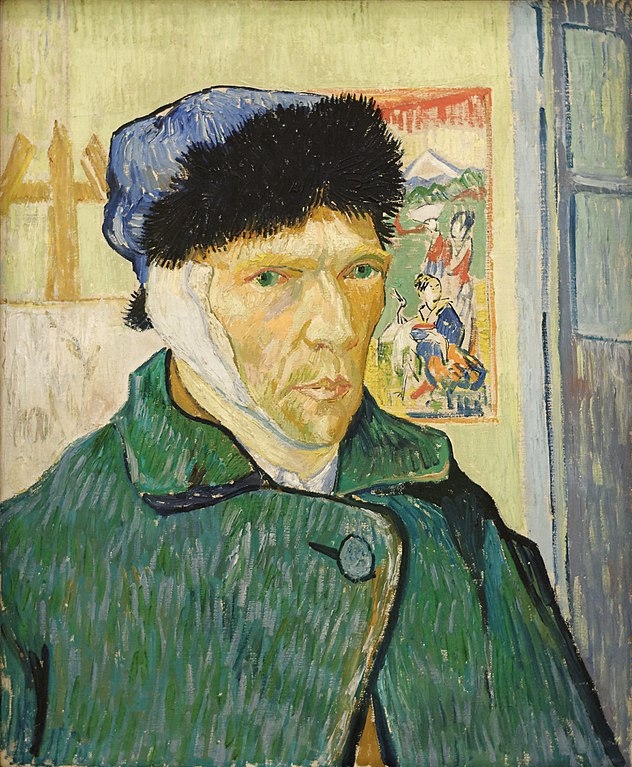
During his time in Arles, Van Gogh produced more paintings than ever before in his life. But he was also becoming increasingly unwell. In December 1888, following an argument with his friend, Gauguin, he was so distressed that he cut off part of his own ear. Soon afterwards, he suffered a nervous breakdown and was admitted to hospital in Saint-Rémy to recover.
After a while, Van Gogh became well enough again to paint. He worked outside in the gardens, or from a studio in the hospital. One of the works he completed during this time was The Starry Night (June 1889), inspired by the view from his hospital window.
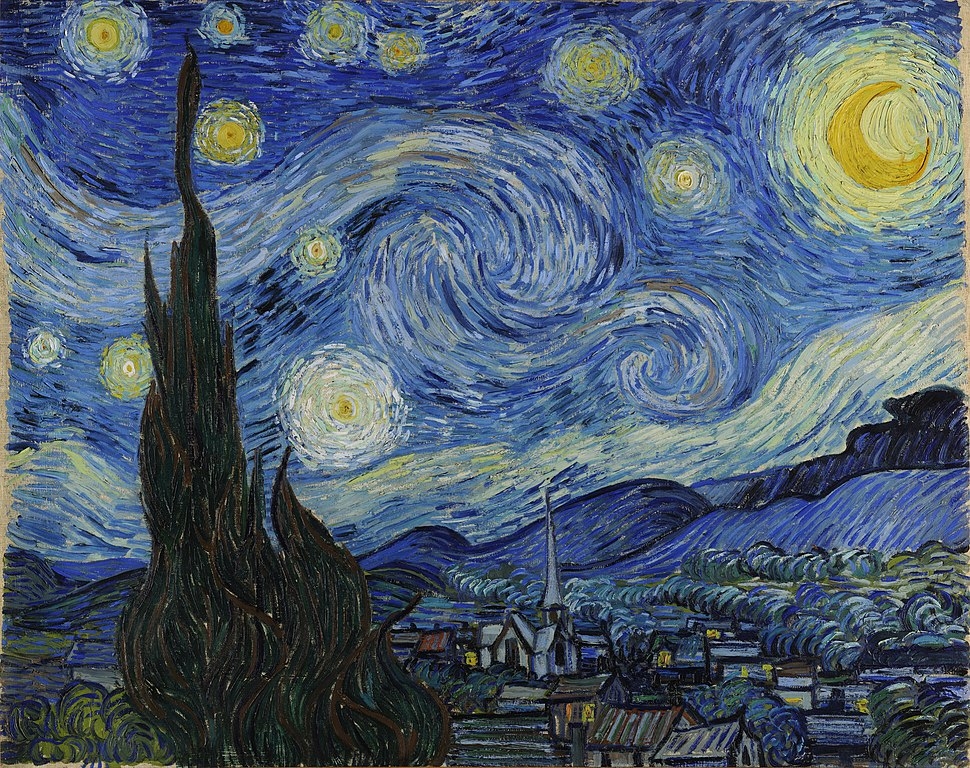
Van Gogh painted a night sky—just before sunrise—filled with stars, including the "morning star" (actually the planet Venus), and a bright moon. There is a tall cypress tree in the foreground reaching upwards, and, to the right of it, a village—which Van Gogh added: it was not in the actual view. The Starry Night would later become one of the most famous paintings in the world.
Death
In 1890, some of Van Gogh’s paintings were included in an exhibition in Brussels. For the first time in his life, his work was beginning to find appreciation. But his health continued to decline, and, suffering from depression, he shot himself, dying from the wound on 29th June 1890. He was aged just 37.
After his death, Van Gogh’s paintings were looked after by Theo's wife, Johanna. She worked hard to make his work known throughout Europe. As his paintings became more popular, she loaned them to galleries all over the world. Soon, Van Gogh became known as one of the great artists of the late 19th century. In 1973, the Van Gogh Museum opened in Amsterdam. It holds the world’s largest collection of his paintings, and is visited by more than 2 million people each year.

Consultant: Philip Wilkinson