
Art

CITE
We have made every effort to follow citation style rules, but there may be some minor differences. If in doubt, please refer to the appropriate citation style manual.
Drawing. (2026). In Q-files Encyclopedia, Culture, Art. Retrieved from
https://www.q-files.com/culture/art/drawing
"Drawing." Culture, Art, Q-files Encyclopedia, 13 May. 2026.
https://www.q-files.com/culture/art/drawing.
Accessed 29 Aug. 2026.
Drawing 2026. Culture, Art. Retrieved 29 August 2026, from
https://www.q-files.com/culture/art/drawing
Culture, Art, s.v. "Drawing," accessed August 29, 2026.
https://www.q-files.com/culture/art/drawing


Drawing
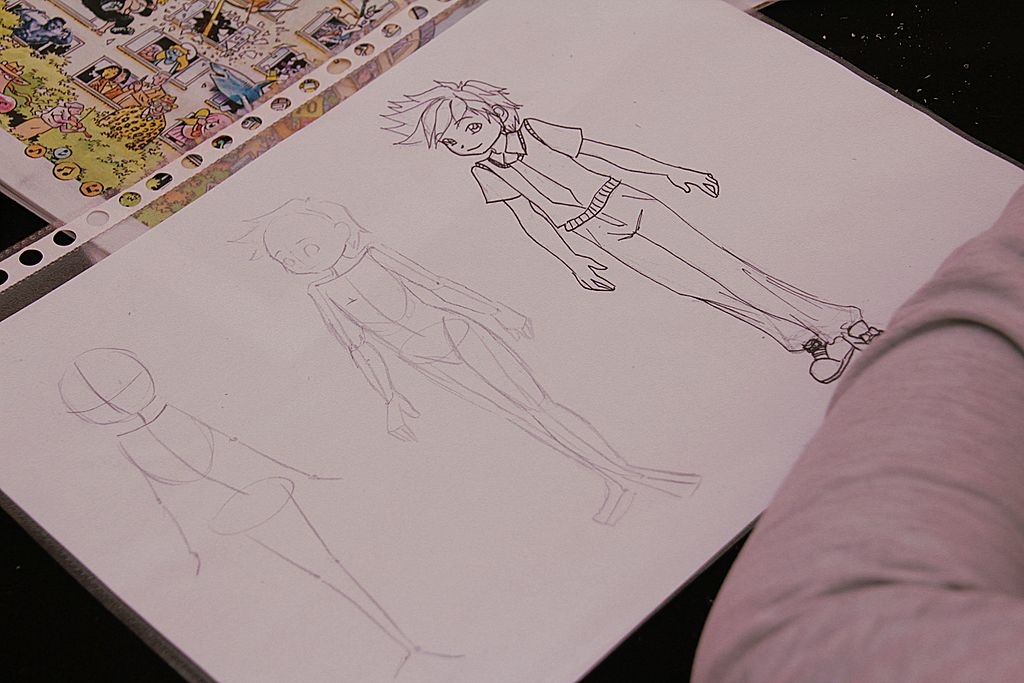
Drawing is the art of making a picture with a mark. The earliest drawings were made around 30,000 years ago on the walls of caves by our ancestors. Drawing first became popular as an art form during the Renaissance period, when it was part of every artist’s training. A drawing is usually made up of different lines and tones (areas of light and dark) which together build up an image. Drawing tools include graphite pencils, charcoal and pen and ink. Today, drawings can also be made using computer software. Drawing is used in illustration, architecture and graphic design, and to make animations. It often forms part of planning a painting or sculpture. But it also may be simply a way of recording what we see.
Early drawings
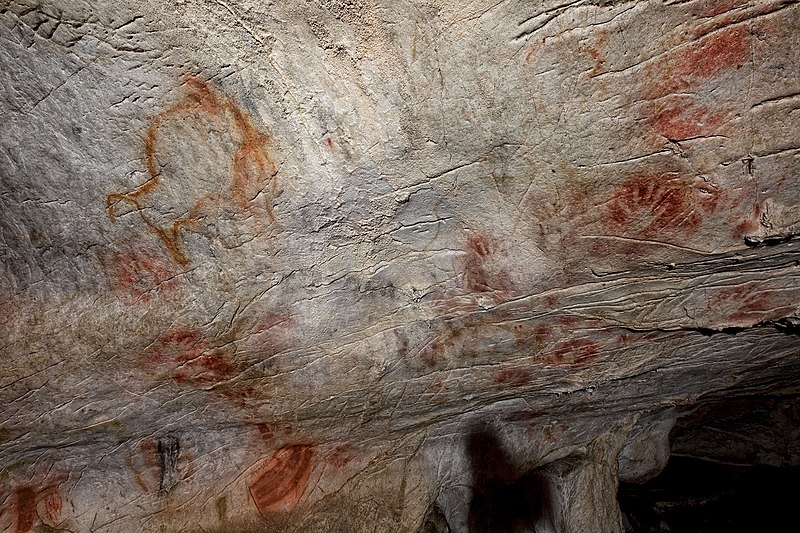
People used drawings to communicate before writing developed. During the Stone Age, people sketched the outlines of animals into the walls of caves using sharp stones. The El Castillo caves in Spain show drawings of horses and bison as well as symbols and hand stencils—made around 30,000 years ago by placing a hand on the rock and blowing paint over it.
Middle Ages
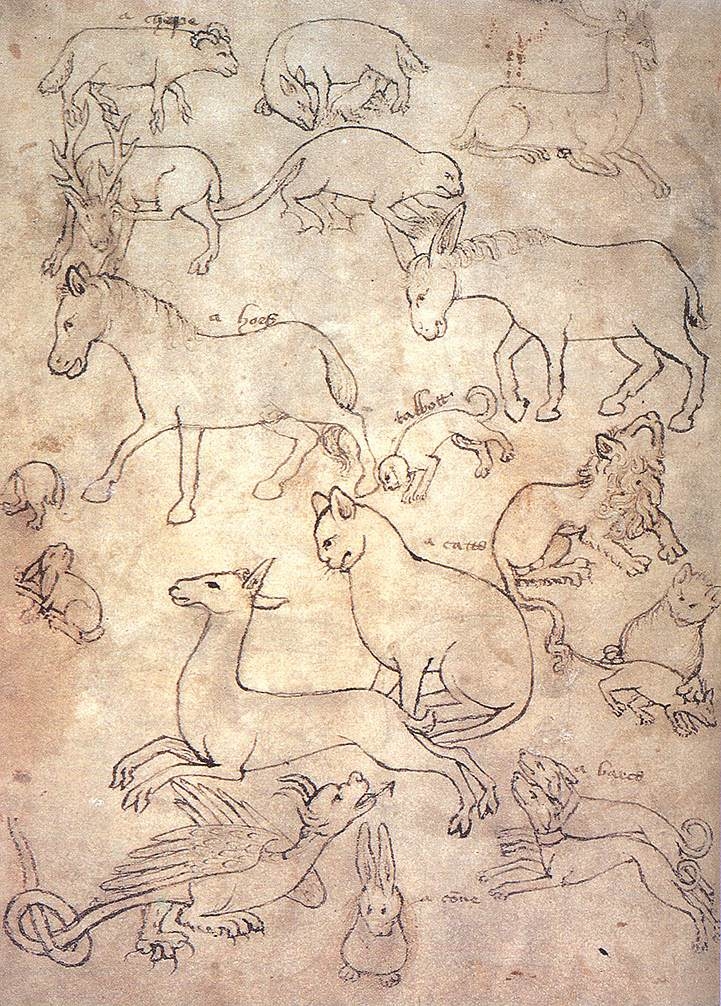
During the Middle Ages in Europe, monks made detailed drawings on parchment to illustrate prayer books. They used luxurious materials such as gold leaf, thin pieces of real gold. Medieval artists collected together drawings of figures, plants and animals in what were called “model books”, so that they could refer to them for later use. These were like the first sketchbooks. Drawing was also used by medieval scholars, who included them in their works to help explain their ideas more clearly.
When paper became widely available in the 14th century, drawing began to develop as an art form. The end of the Middle Ages saw artists starting to draw more realistically, and the beginnings of the period now known as the Renaissance.
Italian Renaissance
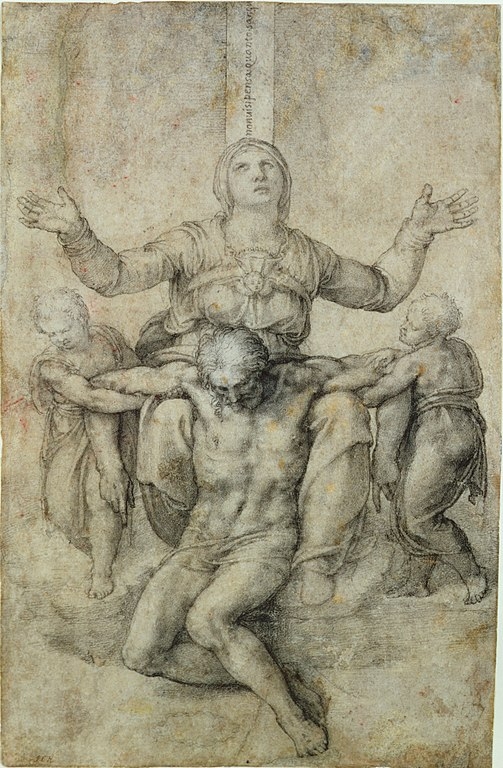
Some of the most skilled drawings ever produced were made in the 15th and 16th centuries, during the Renaissance in Italy. As a new passion for painting and sculpture spread across Italy, artists learned to draw as part of their training.
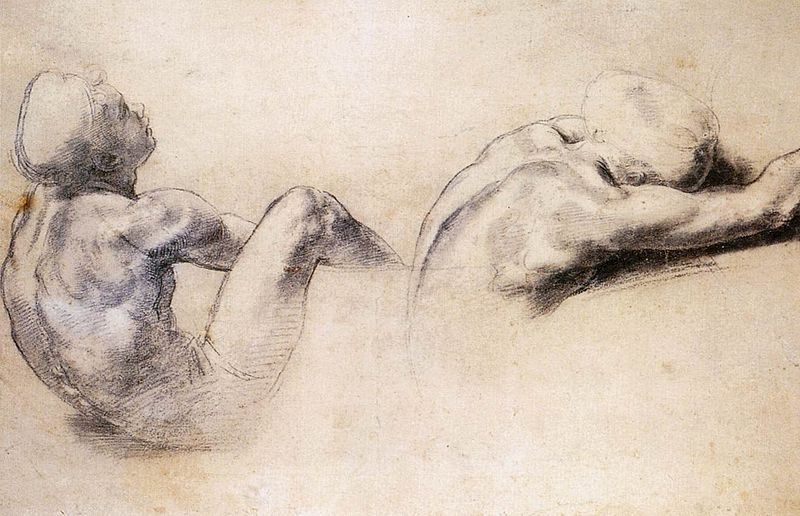
Artists such as Michelangelo (1475–1564) and Raphael (1483–1520) used drawing as part of the creative process to make studies and designs for their paintings and sculptures. These drawings soon became highly-prized by collectors.
Renaissance artists used fine lines and lots of detail in their drawings. They studied the human body carefully and drew from models—people posing—to make sure their drawings were realistic.
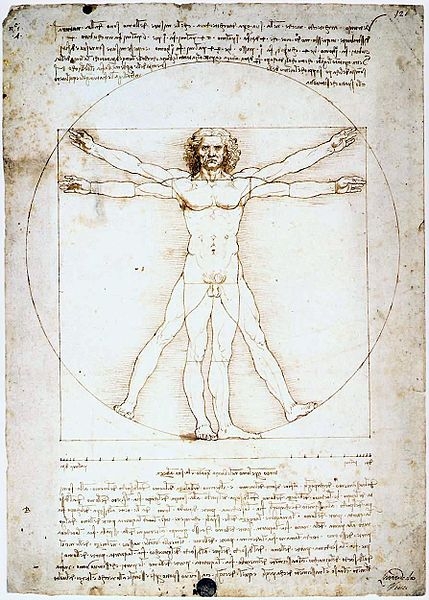
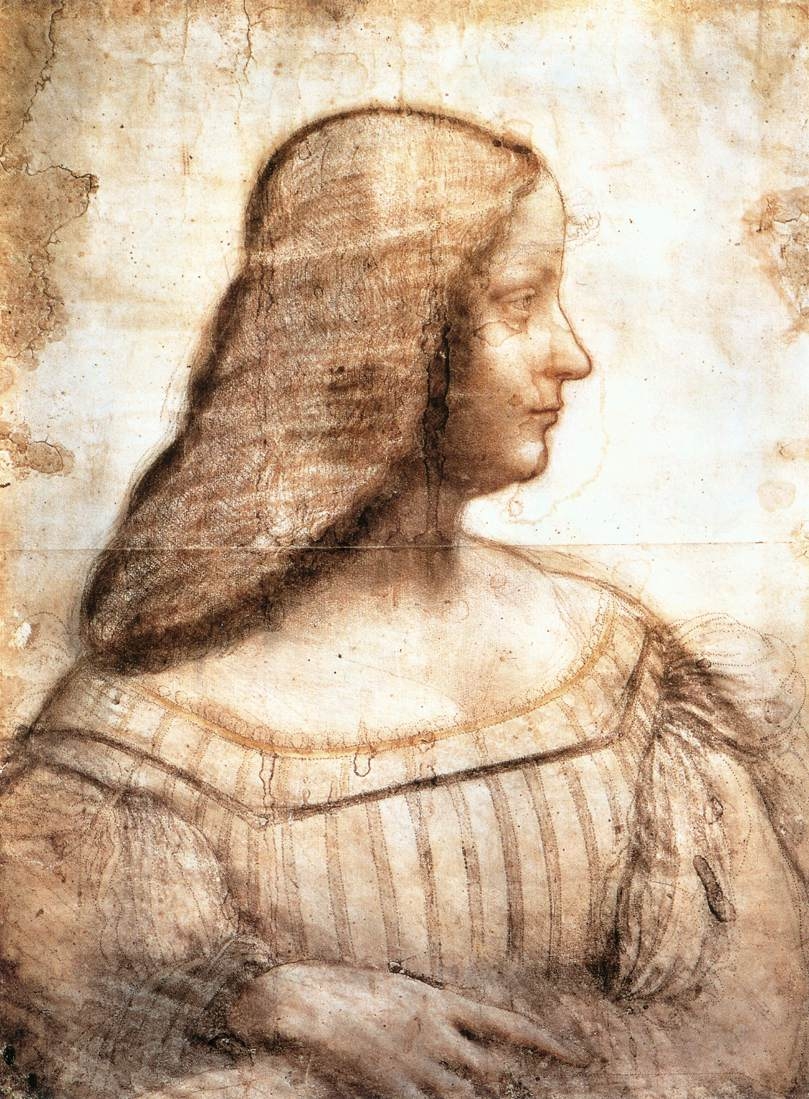
Leonardo da Vinci (1452–1519) made stunning realistic drawings of figures and objects. He used brush, pen and ink to make his drawings, as well as coloured chalks. His Portrait of Isabella d'Este (1499) was made using black, red, ochre (a brownish-yellow) and white chalks. Leonardo also produced thousands of drawings for his scientific and engineering works. He made his famous drawing Vitruvian Man (c.1480) while studying the proportions (measurements) of the human body.
Northern Renaissance
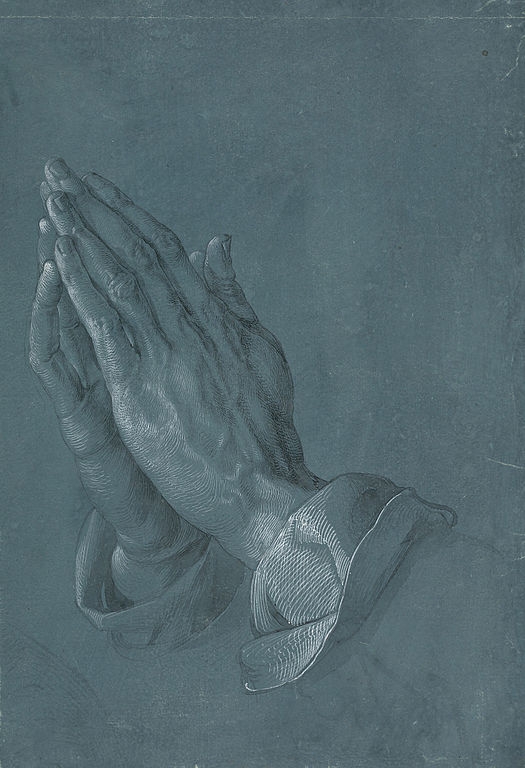
By the end of the 15th century, Renaissance ideas had spread from Italy north to other parts of Europe, starting what is called the Northern Renaissance. In the Netherlands and Germany, drawing was regarded as an art in itself, not just a way of preparing for a painting. Masters of drawing included Hans Holbein the Younger (1497–1543) and Albrecht Dürer (1471–1528). Holbein used black chalk and watercolour to make detailed portraits of the British royal family. Dürer produced hundreds of drawings of landscapes, animals and still life compositions (arrangements of objects). One of his best-known drawings, Betende Hände (Praying Hands), dates from around 1508. It was a study for one of the figures in a large painting he was working on, the Heller altarpiece.
Rembrandt
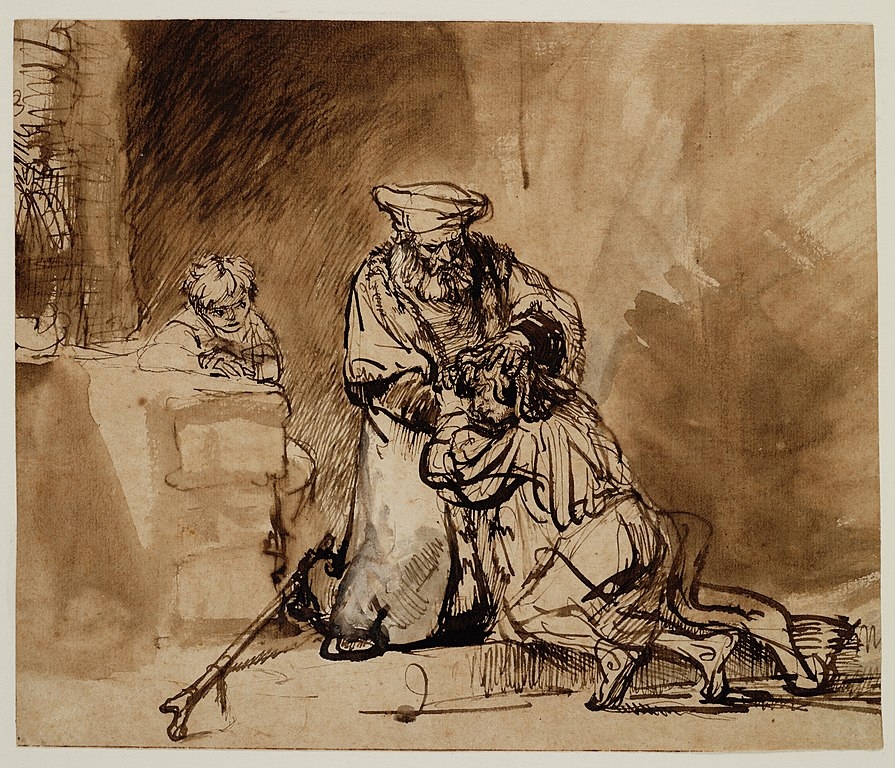
During the Baroque period of the 17th and 18th centuries, drawing styles became looser. Although the drawings of this time were still realistic, they were less detailed and more expressive than those made during the Renaissance. Artists developed their own recognizable styles. Drawings made with ink and wash (brush and water) became more popular, especially in Germany and the Netherlands. The Dutch artist Rembrandt (1606–69) was the master of 17th-century drawing. He made quick, loose drawings using ink and chalk to record his experiences and observations. Bursting with energy, Rembrandt's drawings use shading to create a dramatic atmosphere with areas of light and dark.
French styles
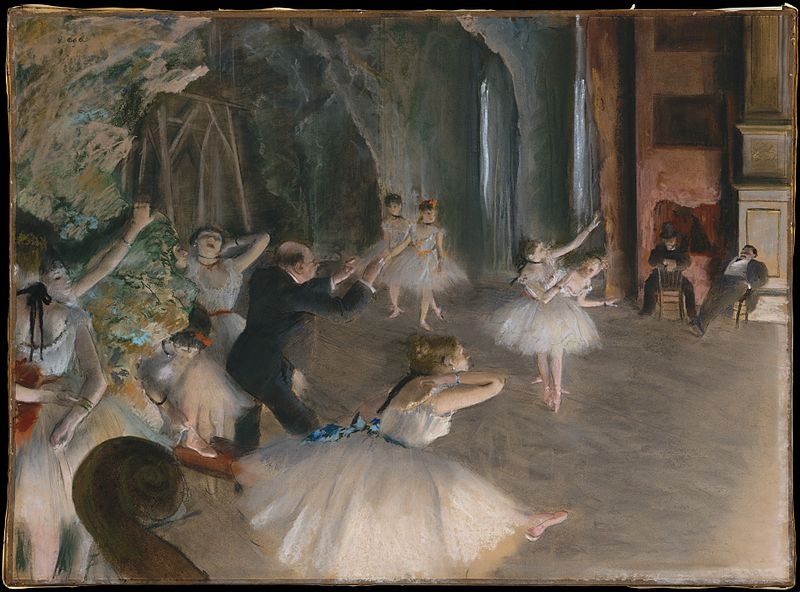
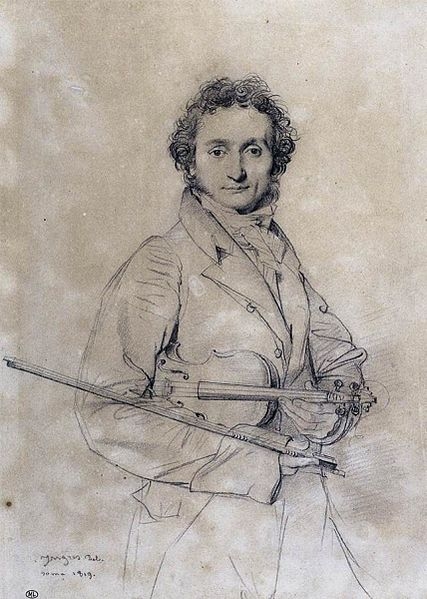
In the early 19th century many different styles of drawing emerged one after the other, especially in France. Jean-Auguste-Dominique Ingres (1832–67) became famous for the portraits he drew using pencil. He was especially skilful at depicting the textures of different fabrics, such as silk, in his drawings.
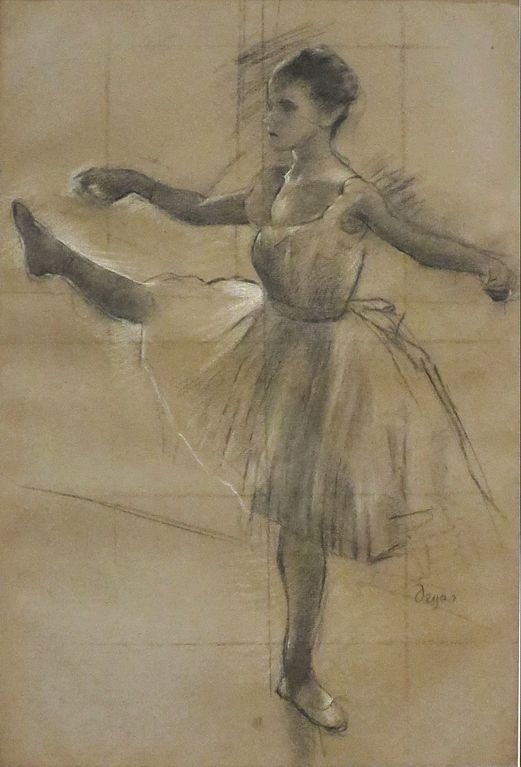
Impressionist artist Edgar Degas (1834–1917) is well-known for his drawings of dancers, made using chalk pastels. He drew from life, spending time sketching in rehearsals to capture the way the dancers moved.
Post-impressionists
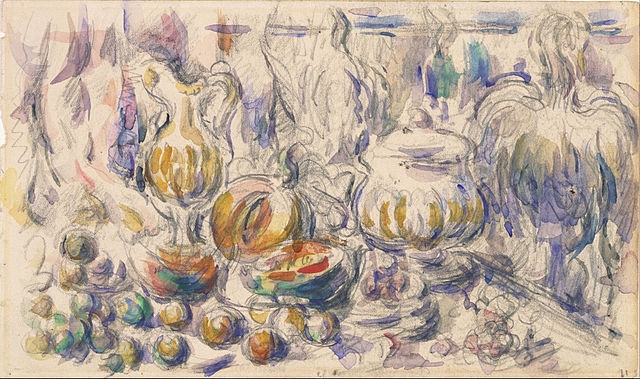
Towards the end of the 19th century it became popular for painters to paint straight on to the canvas without first making a drawing or “study”. Instead, Post-Impressionist artists produced drawings as separate pieces to explore their ideas. The style of their drawings was often as free and loose as their paintings. Vincent Van Gogh (1853–90) produced expressive drawings of landscapes, using a combination of pen, charcoal and pencil. The sketchbooks of Paul Cézanne (1839–1906) contain the many drawings he made throughout his life. He used loose lines, watercolour and washes of ink to create shading.
Modern drawing
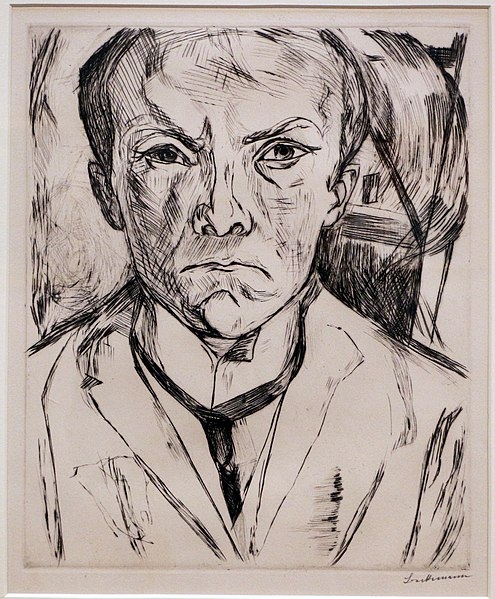
In the 20th century, different artists developed their own individual drawing styles. Henri Matisse (1869–1954) and Pablo Picasso (1881–1973) drew with bold strokes, sometimes capturing a figure or an object with a single line. In Germany, Käthe Kollwitz (1867–1945) and Max Beckmann (1884–1950) used black lines and cross-hatching (lines overlain at different angles) to create shading in his dramatic self-portraits.
British artist Graham Sutherland (1903–80) recorded the devastation of World War II in a series of drawings. He used wax crayon, watercolour and ink to draw factories and bombsites. Sutherland chose dark colours and used jagged lines to create a sense of the frightening destruction he had seen.
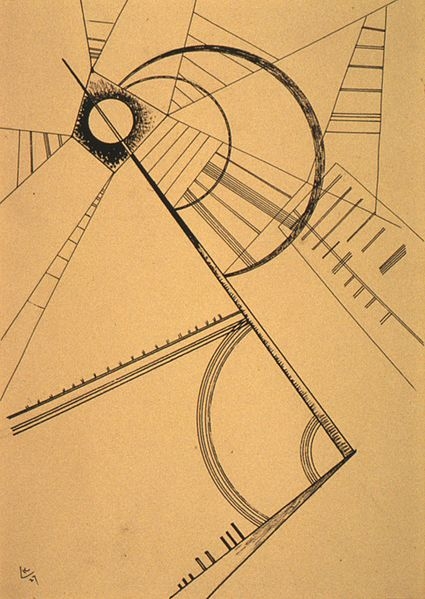
Abstraction
In the early 20th century, some artists made drawings in the abstract style: things that could not be seen in the real world. They were made up of colours, shapes and textures composed in such a way as to express the artist’s ideas.
Russian artist Wassily Kandinsky (1866–1944) was one of the first to create abstract pieces. His elegant drawings are made from curving lines and overlapping shapes. American artist Cy Twombly (1928–2011) created huge drawings using freely-scribbled lines. They were filled with energy and emotion. Canadian-born American artist Agnes Martin (1912–2004) drew precise, geometric grids in pale colours.
Drawing materials
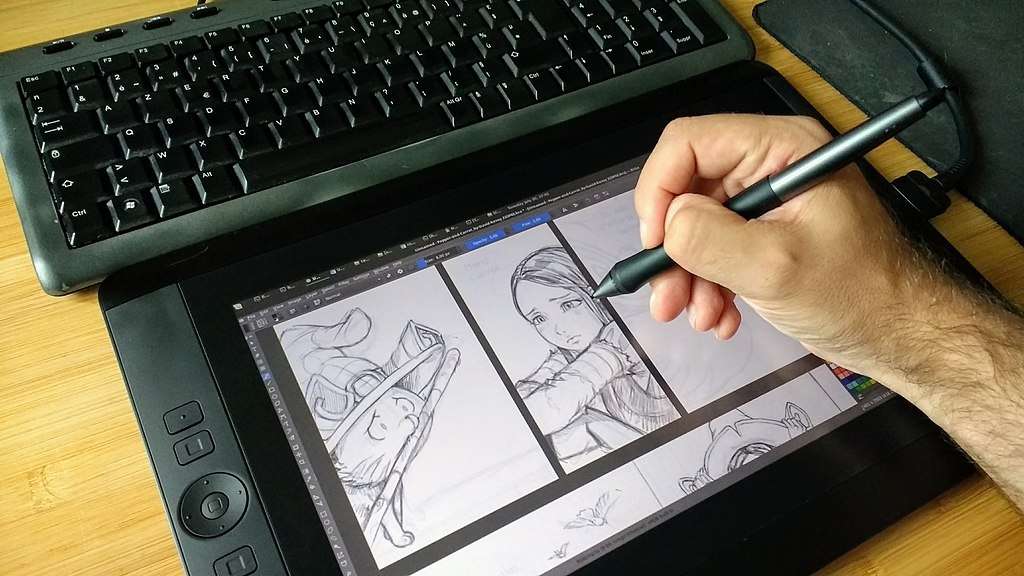
Almost anything that can make a mark can be used to make a drawing. One of the most popular drawing tools are graphite pencils. They are easy to carry around and come in different grades of softness, classified with the letters H ("hardness") and B ("blackness"). Charcoal, pastels and chalks are soft materials that flow smoothly and can be used to make quick, expressive marks. An ink pen is perfect for drawing with finer detail, but it can also be used together with water and a brush to create a variety of looser effects. A digital drawing tablet and stylus pen connect to a computer. When the artist draws on the tablet with the pen, it creates a digital drawing that can be stored as a document on the device.
Drawing techniques
A quick drawing or rough outline is called a sketch. Sometimes an artist begins a drawing with a sketch and then gradually adds more detail, tone and shading to develop the piece. Shading is the way that artists make things look three-dimensional (3-D) in a drawing. They pay attention to the part of the object that is in shadow, and draw this part using darker tones. "Tone" is a term used to describe how light or dark something is.
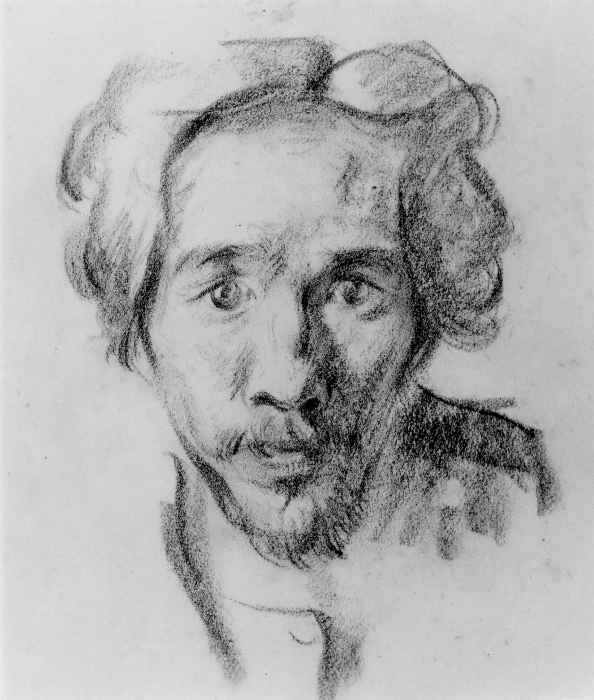
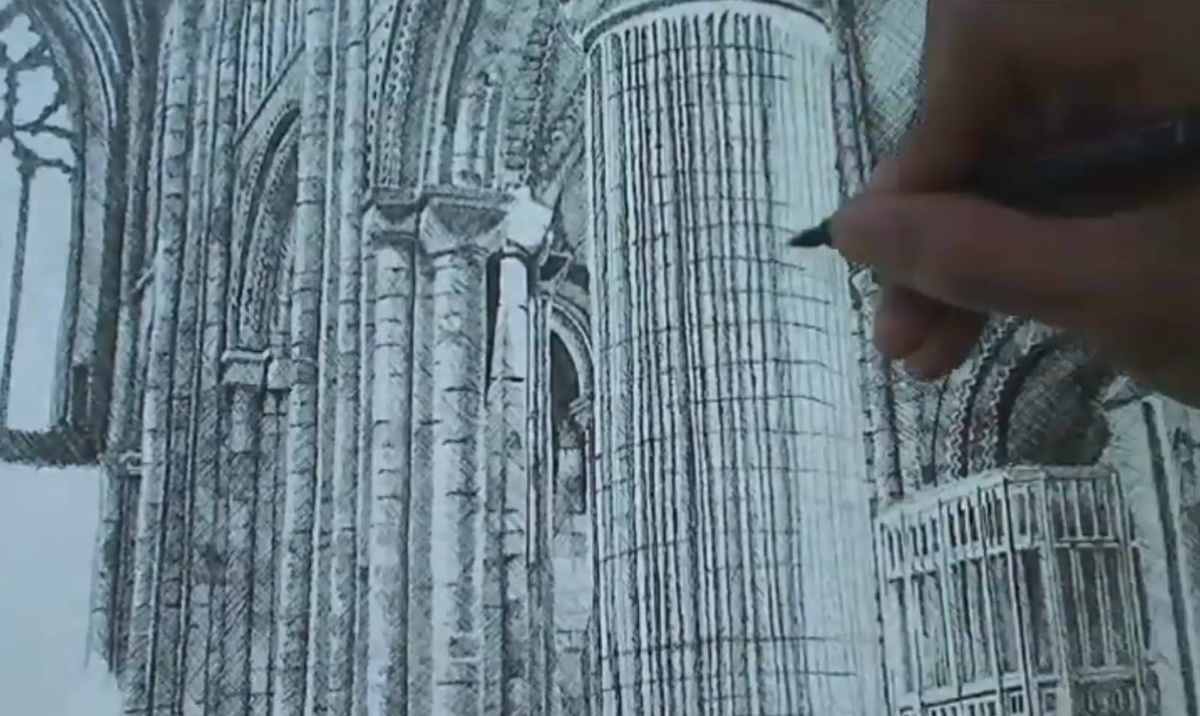
Artists drawing with a fine pen or pencil might use a technique called cross-hatching, in which they build up different tones in a drawing by using closely-drawn lines overlain at different angles. Soft materials like charcoal can be blended and smudged on the paper to create different tones and effects.
Perspective
When we draw buildings and landscapes, a technique called perspective helps to create a sense of distance and scale (size) in the picture. Imagine you are standing on a long road facing the horizon. As the two edges of the road stretch into the distance they appear to meet at a single point on the horizon. This is known as the vanishing point. To achieve perspective in a drawing, things that lie farther away should appear smaller than those that are nearer.
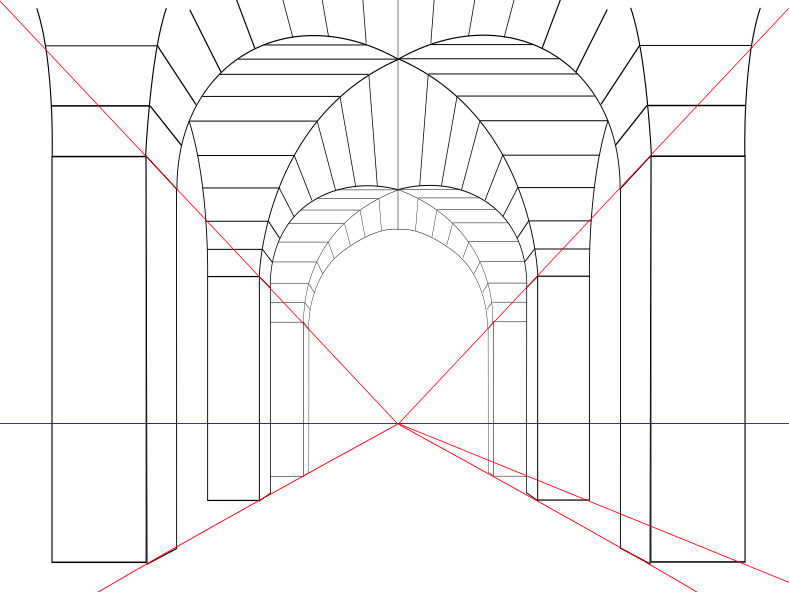
Perspective was "discovered" in 1413 by the Italian Renaissance architect Filippo Brunelleschi (1377–1446). While drawing buildings, he noticed that if he continued the lines of the rooftops, they all appeared to meet at a single point. His discovery changed the way artists composed their pictures forever.
Consultant: Philip Wilkinson
pics
Without in any way limiting Q-files Ltd’s exclusive rights under copyright, any use of this publication to “train” generative artificial intelligence (AI) technologies to generate text is expressly prohibited. Q-files Ltd reserves all rights to license use of this work for generative AI training and development of machine learning language models.