
EASY READ The Earth

CITE
We have made every effort to follow citation style rules, but there may be some minor differences. If in doubt, please refer to the appropriate citation style manual.
EASY READ How are mountains formed?. (2026). In Q-files Encyclopedia, Earth, EASY READ The Earth. Retrieved from
https://www.q-files.com/earth/easy-read-the-earth/easy-read-how-are-mountains-formed
"EASY READ How are mountains formed?." Earth, EASY READ The Earth, Q-files Encyclopedia, 6 Mar. 2026.
https://www.q-files.com/earth/easy-read-the-earth/easy-read-how-are-mountains-formed.
Accessed 13 Sep. 2026.
EASY READ How are mountains formed? 2026. Earth, EASY READ The Earth. Retrieved 13 September 2026, from
https://www.q-files.com/earth/easy-read-the-earth/easy-read-how-are-mountains-formed
Earth, EASY READ The Earth, s.v. "EASY READ How are mountains formed?," accessed September 13, 2026.
https://www.q-files.com/earth/easy-read-the-earth/easy-read-how-are-mountains-formed


How are mountains formed?
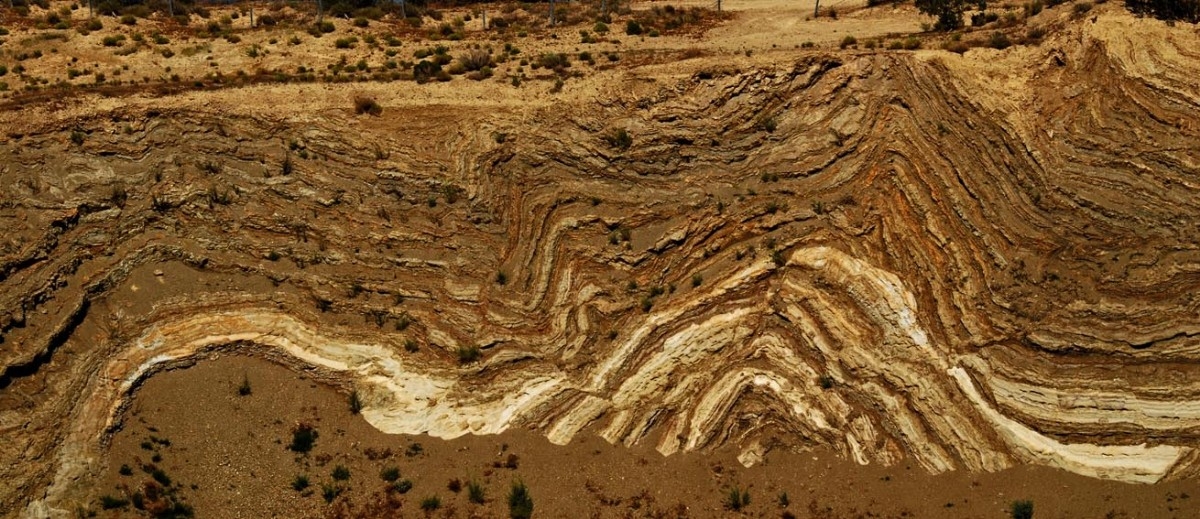
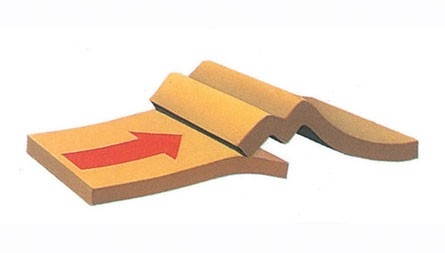
Moving tectonic plates are responsible for some of the Earth’s major landscape features. If a large slab of the Earth’s surface is gradually squeezed, the solid rock slowly wrinkles and crumples. Layers of rock become wavy folds. If the rocks are stretched or squashed together quickly, they crack or split apart. These cracks are known as faults.
Mountain building
When two tectonic plates push together, the rocks slowly crumple and fold up. This is how mountain chains are created. It happens over millions of years—far too slowly for us to notice.
The world’s great mountains, including the Himalayas in Asia, Andes in South America, Rockies in North America and Alps in Europe, are all fold mountains. The Himalayas are actually getting higher, as two tectonic plates continue to push against one another.
The tops of some mountains are so high that they are covered in snow and ice all year round. There is less oxygen in the air to breathe.

Peaks


As the mountains "grow”, they are attacked by wind, rain, frost and ice. The rocks break up, leaving behind sharp edges. These forces of weathering and erosion produce jagged peaks. Eventually, after many millions of years, the peaks will be worn down to become low, rounded hills. The Appalachians in eastern North America are an example of an "old" mountain range like this.
Rift valleys
Faults are cracks in the Earth’s crust. They form where the rocks break under pressure from moving tectonic plates. A block of land sometimes slips down between two faults to make a valley. This is called a rift valley.


The biggest gash in the Earth’s surface on land is the Great Rift Valley. It runs from the eastern Mediterranean southeast through the Red Sea, then across East Africa. The entire valley is some 5000 kilometres (3000 miles) long. It widens by up to two centimetres (nearly an inch) in places every year.
Consultant: Ian Fairchild
Ready to find out more?
Here are some pages in other parts of Q-files you might like to explore:
Folds and faults
Mountains
Great Rift Valley
Plate tectonics
pics

Without in any way limiting Q-files Ltd’s exclusive rights under copyright, any use of this publication to “train” generative artificial intelligence (AI) technologies to generate text is expressly prohibited. Q-files Ltd reserves all rights to license use of this work for generative AI training and development of machine learning language models.