
EASY READ The Earth

CITE
We have made every effort to follow citation style rules, but there may be some minor differences. If in doubt, please refer to the appropriate citation style manual.
EASY READ What's it like at the poles?. (2026). In Q-files Encyclopedia, Earth, EASY READ The Earth. Retrieved from
https://www.q-files.com/earth/easy-read-the-earth/easy-read-whats-it-like-at-the-poles
"EASY READ What's it like at the poles?." Earth, EASY READ The Earth, Q-files Encyclopedia, 1 May. 2026.
https://www.q-files.com/earth/easy-read-the-earth/easy-read-whats-it-like-at-the-poles.
Accessed 13 Sep. 2026.
EASY READ What's it like at the poles? 2026. Earth, EASY READ The Earth. Retrieved 13 September 2026, from
https://www.q-files.com/earth/easy-read-the-earth/easy-read-whats-it-like-at-the-poles
Earth, EASY READ The Earth, s.v. "EASY READ What's it like at the poles?," accessed September 13, 2026.
https://www.q-files.com/earth/easy-read-the-earth/easy-read-whats-it-like-at-the-poles


What's it like at the poles?
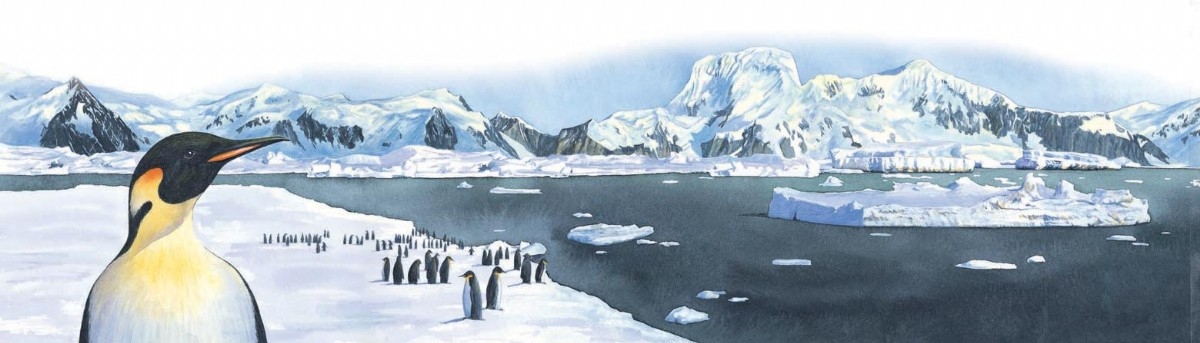
The North Pole lies not on land but in the ocean: the Arctic Ocean. It is permanently covered by ice, although the ice cover shrinks in the summer months as it melts. The South Pole lies on the continent of Antarctica. This huge, mountainous landmass is mostly covered by an ice sheet all year round.
Arctic


The North Pole lies on a floating sheet of ice, 2–3 metres (6–10 feet) thick, formed by freezing of the seawater in the middle of the Arctic Ocean. In winter, pack ice forms around the edges of the ice sheet. These are slabs of ice that are constantly being broken up and crushed together by the movement of the water underneath. Greenland is mostly covered with ice throughout the year.
Antarctica
Nearly the whole continent of Antarctica is covered by ice all year round. In some parts, the ice is more than 3.5 kilometres (2.2 miles) deep. In winter, the waters of the Southern Ocean, which surrounds the continent, are covered with floating pack ice and icebergs.

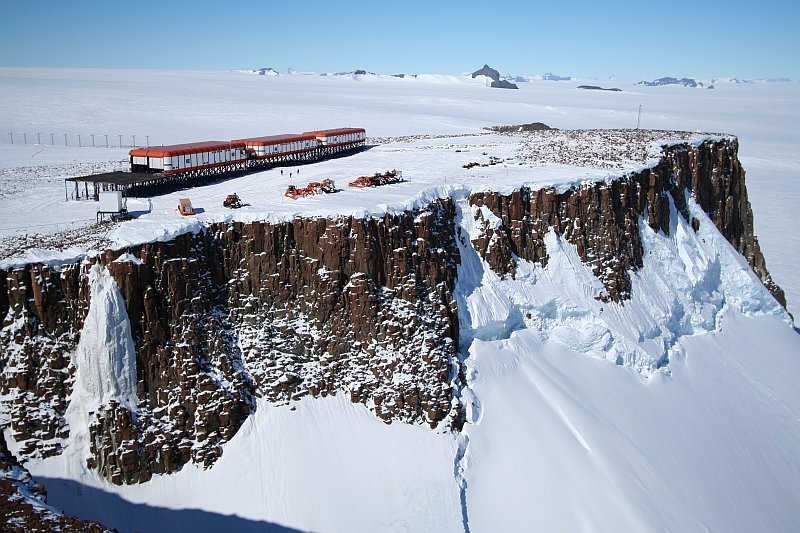
Antarctica is the coldest, driest and windiest continent. It is actually a desert: it hardly ever rains or snows here. Antarctica is inhabited only by people who work at scientific research stations. The coldest temperature ever recorded on Earth was -89.2°C (-128.6°F) at the Russian Vostok Station in 1983.
Icebergs
An iceberg is a large chunk of floating ice. About 90% of it lies under the water. Most Arctic icebergs break off the ends of glaciers that have formed on Greenland and crashed into the sea. These are often shaped like small mountains.
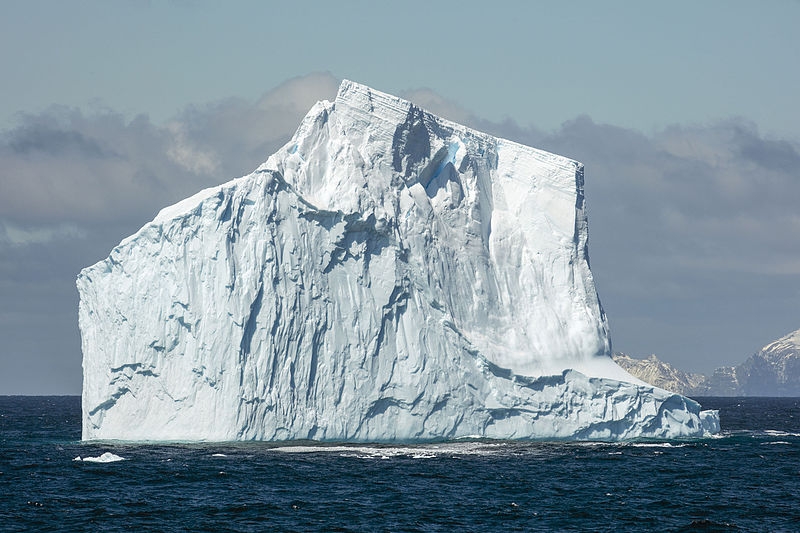
Antarctic icebergs break off from ice shelves, great flat tongues of ice that jut out from the continent into the Southern Ocean. This is called calving. Antarctic icebergs are often flat-topped.
Consultant:Ian Fairchild
Ready to find out more?
Here are some pages in other parts of Q-files you might like to explore:
Polar waters
Polar regions
pics
Without in any way limiting Q-files Ltd’s exclusive rights under copyright, any use of this publication to “train” generative artificial intelligence (AI) technologies to generate text is expressly prohibited. Q-files Ltd reserves all rights to license use of this work for generative AI training and development of machine learning language models.