
EASY READ The Earth

CITE
We have made every effort to follow citation style rules, but there may be some minor differences. If in doubt, please refer to the appropriate citation style manual.
EASY READ What are tectonic plates?. (2026). In Q-files Encyclopedia, Earth, EASY READ The Earth. Retrieved from
https://www.q-files.com/earth/easy-read-the-earth/easy-read-what-are-tectonic-plates
"EASY READ What are tectonic plates?." Earth, EASY READ The Earth, Q-files Encyclopedia, 6 Mar. 2026.
https://www.q-files.com/earth/easy-read-the-earth/easy-read-what-are-tectonic-plates.
Accessed 13 Sep. 2026.
EASY READ What are tectonic plates? 2026. Earth, EASY READ The Earth. Retrieved 13 September 2026, from
https://www.q-files.com/earth/easy-read-the-earth/easy-read-what-are-tectonic-plates
Earth, EASY READ The Earth, s.v. "EASY READ What are tectonic plates?," accessed September 13, 2026.
https://www.q-files.com/earth/easy-read-the-earth/easy-read-what-are-tectonic-plates


What are tectonic plates?
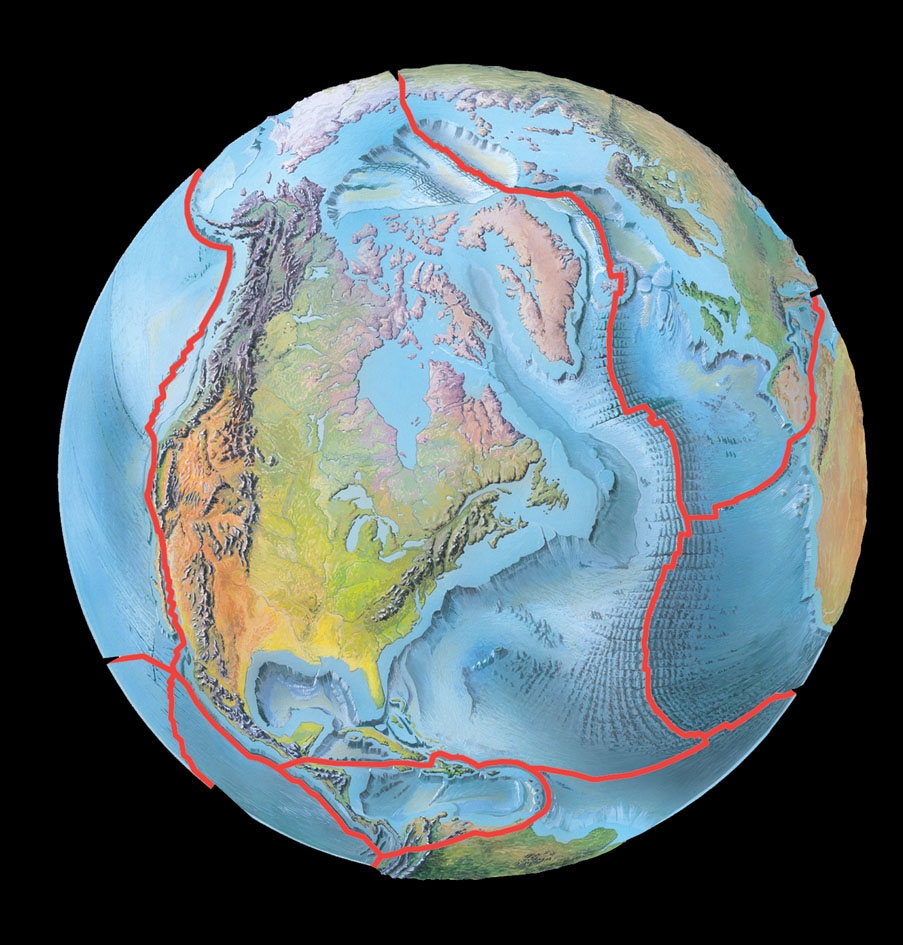
The Earth’s surface is like a ball-shaped jigsaw puzzle. It is made up of about 15 giant pieces, called tectonic plates. These plates are always shifting about—but only very gradually. Some plates are moving apart, others are pushing together. In some places, the edge of one plate slides down below another. In others, two plates slide past each other, moving in opposite directions. All this pushing, sliding or bumping at the edges of the plates causes earthquakes.
Continental drift
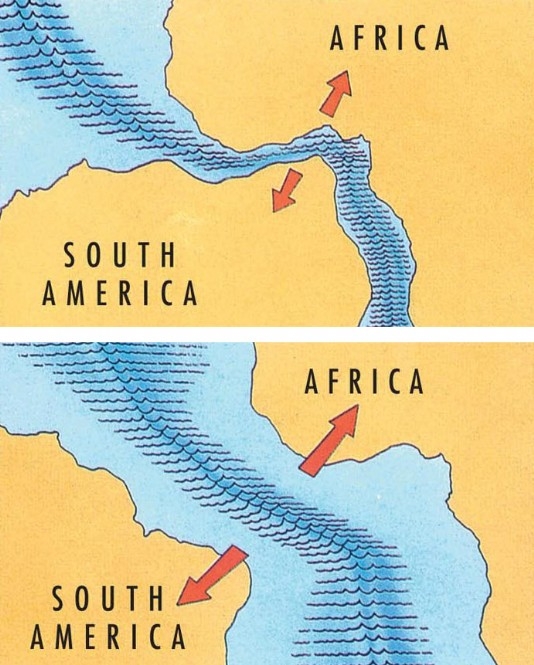
Each plate carries a piece of continent or a piece of the ocean floor, or both. The plates float like giant rafts on top of a molten layer of the mantle. In this way, the continents gradually move to new positions around the globe. This is called continental drift. Over hundreds of millions of years, the map of the world has changed completely.
Himalayas
When two plates push together, the land slowly crumples up, forming mountains. The Himalayan mountains rise up where a plate that carries India is pushing into another plate carrying the rest of Asia. The Himalayas, which are already the highest in the world, grow taller by about the length of your thumb every year.


San Andreas Fault
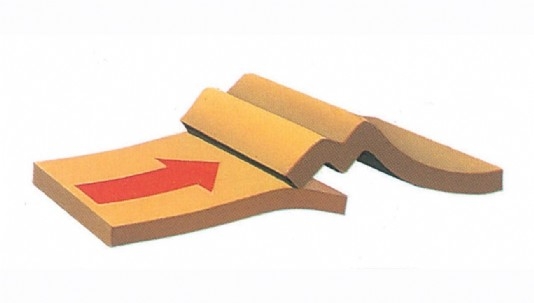
Two plates slide past one another along what is called the San Andreas Fault in California. Sometimes the plates lock together for a time. The pressure becomes too much and the plates suddenly snap apart. When they do, an earthquake is the result.

Mid-Oceanic Ridge
Two tectonic plates are slowly moving apart from one another under the Atlantic Ocean. There is an enormous, jagged crack that runs down the middle of the ocean floor. Molten rock oozes up from the mantle to push the plates apart. As the rock cools and hardens it forms a long, narrow mountain range. This is called the Mid-Oceanic Ridge. The two plates are gradually pushing Europe and Africa further and further away from the Americas.


Consultant: Ian Fairchild
Ready to find out more?
Here is a page in another part of Q-files you might like to explore:
Plate tectonics
pics
Without in any way limiting Q-files Ltd’s exclusive rights under copyright, any use of this publication to “train” generative artificial intelligence (AI) technologies to generate text is expressly prohibited. Q-files Ltd reserves all rights to license use of this work for generative AI training and development of machine learning language models.