
British Empire
Twilight of Empire
By 1913 the British Empire was the largest empire the world had ever seen. It covered around 25% of the world's land area, including large areas of North America, Australasia, Africa and Asia. Other countries, including those in South America, were closely linked to by trade. The British Empire ruled over around 412 million inhabitants, or around 23% of the world’s population at the time. Such was its dominance, it became known as “the empire on which the sun never sets”—because its expanse around the globe meant that it was always daytime in at least one of its territories. But by now Germany and the United States had begun to challenge Britain's military and economic power. During World War I, Britain relied heavily upon Empire for its manpower and resources. The conflict placed enormous strain on Britain's finances. Although the Empire achieved its largest extent immediately after the war, Britain was now no longer the world's greatest industrial or military power.

World War I


The British declaration of war on Germany and its allies committed its Empire—all the British colonies and Dominions—to war as well. Britain relied on its Empire to provide the extra manpower and resources it needed to keep a military campaign going on several fronts. Over 2.5 million men served in the armies of the Dominions, alongside many thousands from the colonies. Australian and New Zealand troops made a hugely significant, but ultimately unsuccessful, contribution during the 1915 Gallipoli Campaign against the Ottoman Empire. The shocking casualties they suffered had a great impact on public opinion at home, and tipped the balance in favour of supporting the move to full independence after the war. To Canadians, the success of its forces in the Battle of Vimy Ridge was a tribute to Canadian national achievement and sacrifice.

The war offered opportunities for the British Empire to expand still further. Soon after the declaration of war, British troops invaded and occupied most of Germany's overseas colonies in Africa. In the Pacific, Australia and New Zealand occupied German New Guinea and German Samoa respectively. The plans for a post-war territorial carve-up of the ailing Ottoman Empire, which had joined the war on Germany's side, were secretly drawn up by Britain and France under the 1916 Sykes–Picot Agreement. The plans were not revealed to the Arabs, however, who were encouraged by the British to launch a revolt against their Ottoman rulers, under the (mistaken) impression that Britain would, in return, support the creation of an independent Arab state.

League of Nations Mandates

On the victorious side at the end of World War I, under the terms of the Treaty of Versailles signed in 1919, the British Empire gained an additional 4,700,000 square kilometres (1,800,000 square miles) of territory and 13 million new subjects. The colonies of Germany and the Ottoman Empire were divided up between the Allied powers as Mandates (agreed-upon terms for administering the territory) on behalf of the League of Nations, the world's first global intergovernmental organization, founded in January 1920. Britain gained control of Palestine, Transjordan (modern Jordan), Iraq, Tanganyika (for the most part present-day Tanzania) and parts of Cameroon and Togoland. The Dominions acquired mandates of their own: the Union of South Africa gained South West Africa (present-day Namibia), Australia gained New Guinea and New Zealand Western Samoa. The British Empire was now at the greatest extent in its history.
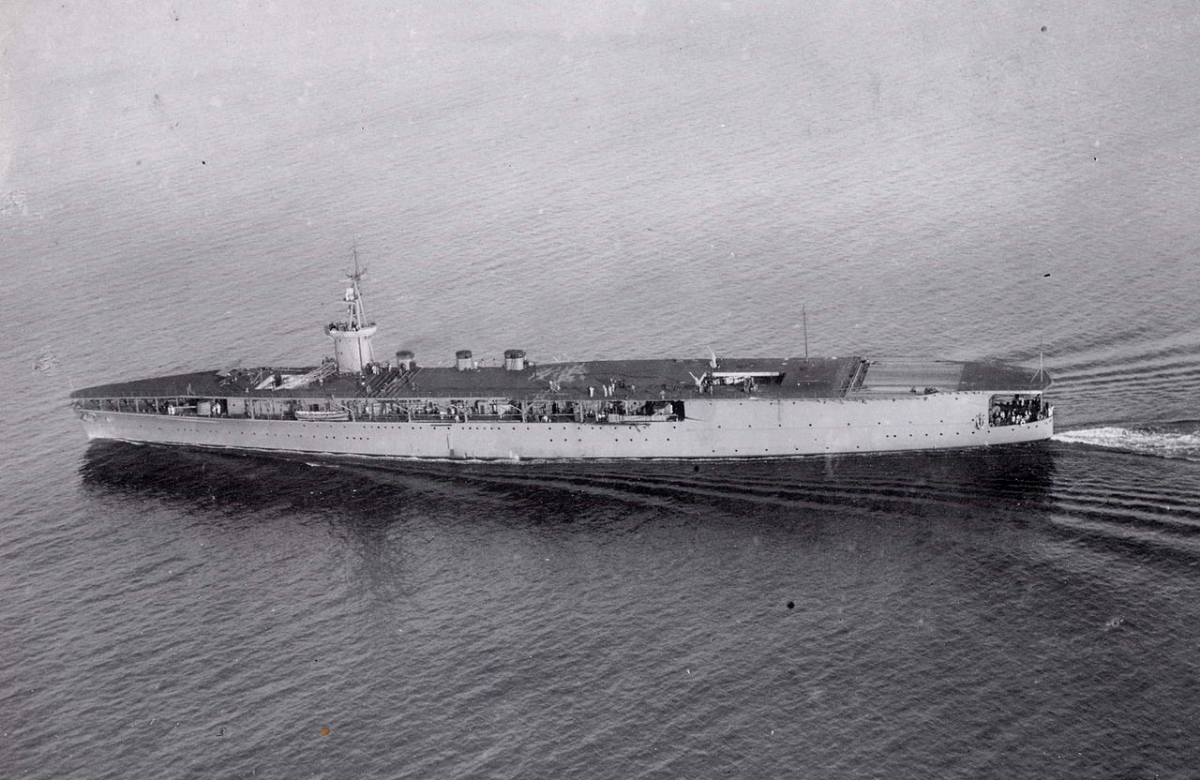
Even while the Empire appeared to be at its most powerful, however, it was becoming clear that the once formidable Royal Navy no longer had enough resources to provide military protection to the various territories spread around the globe. The navies of the US and Japan had now emerged as rivals—Britannia no longer "ruled the waves". A drive for national self-determination was also becoming a growing force in many parts of the world under British rule, no more so than in Ireland and India.

Irish independence
In 1912, 105 Irish Home Rule MPs forced the Liberal government in London to introduce a new Home Rule Bill. Protestant Unionists from northern Ireland, who wanted to keep the Union with Britain and did not want to be governed by Catholics from Dublin, objected to the bill. They set up an armed group to resist the bill by force. Irish Nationalist supporters of Home Rule did the same to support the bill. Civil war threatened, until the outbreak of World War I in 1914 led to the Home Rule Act being suspended. At Easter 1916, however, a group of Irish Nationalists staged an uprising in Dublin to make Ireland an independent republic outside the United Kingdom. The Easter Rising was soon crushed, but the idea of an independent republic of Ireland had been born.


In the British general election of 1918, 73 Sinn Féin MPs demanding an Irish republic were elected in Ireland. They refused to take their seats at Westminster and set up their own republican parliament, or Dáil, in Dublin. The Irish Republican Army (IRA) was set up to fight the British, who used armed force against them, sparking the Anglo-Irish War, or the Irish War of Independence (1919–21). In 1920 the British government decided to partition Ireland between the 26 largely Catholic Republican counties in the south and the six mostly Protestant Unionist counties in the north. It set up two Home Rule parliaments: one in Dublin and one in Belfast in the north. At first the Republicans refused to accept this, but in the Anglo-Irish Treaty of December 1921 they agreed to an independent Irish Free State for the 26 counties.

The Irish Free State, set up in 1922, remained part of the British Empire, gaining the same self-governing Dominion status as Canada, Australia, New Zealand and South Africa. Some Irish republicans, led by Éamon de Valera, refused to accept the terms of the treaty and fought a bloody war against it (the Irish Civil War) that lasted until 1923. The Civil War was won by the pro-treaty Free State forces led by Michael Collins, assisted by weapons provided by the British government. Under a new constitution drawn up in 1937, the Irish Free State was renamed Ireland (or Éire in Irish).
India's fight for independence
During World War I, Indian troops fought on Britain’s side. But after the war, in 1919, the British introduced a new law (the Rowlatt Act) by which Indians suspected of sedition (any act that encourages rebellion against authority) could be imprisoned without trial. In response, a leading campaigner for Indian independence, Mahatma Gandhi, called for a national day of fasting, meetings and strikes as an act of satyagraha (meaning "insistence on truth"), a form of non-violent resistance.
But after a few days the resistance descended into violence, including the massacre by British troops of hundreds of Indians attending a peaceful meeting at Amritsar on 13th April 1919. Troops of the British Indian Army under the command of Colonel Reginald Dyer fired on a crowd of pilgrims, who gathered in Jallianwala Bagh public garden to participate in the annual Baisakhi celebrations unaware of the ban on public meetings announced by Dyer earlier that day.
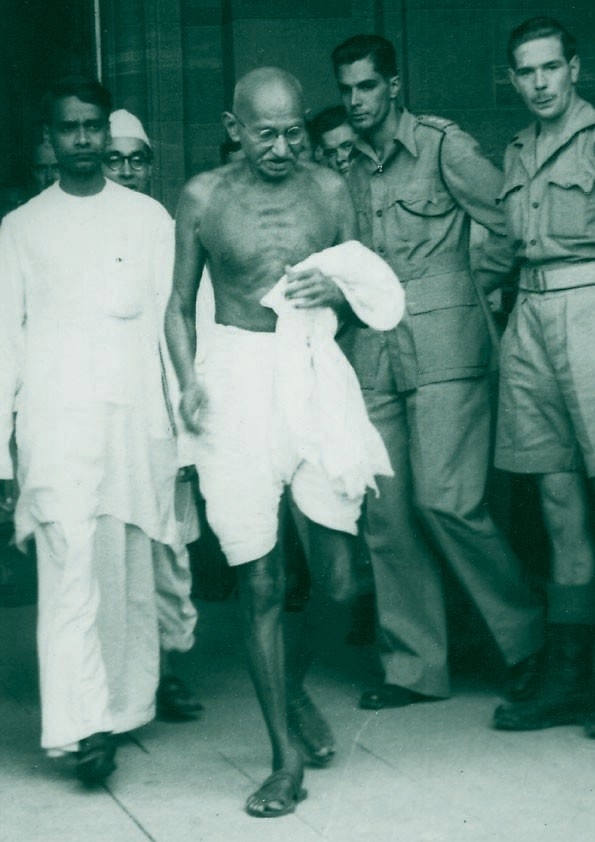
The official death total was given as 379, with around 1200 wounded, but local sources put the number of dead at over 1000. Many historians consider this event was a decisive moment leading to the end of British rule in India.


In 1920, Gandhi became leader of the Indian National Congress, a political party set up to campaign for independence. His ideas about non-violent resistance formed the focus for the Indian nationalist movement. All over the country, Indians boycotted British goods, and refused to work in British institutions. Sometimes they took part in acts of resistance such as lying down in front of trains to stop them running, causing disruption. Gandhi struggled to control national protests to stop them from turning violent. Thousands of Indians were arrested during this period, including, in 1922, Gandhi himself.
In an attempt to meet the protesters' demands, the British passed the Government of India Act in 1935 which gave Indians self-government in all areas except foreign policy. It remained part of the British Empire, however, and discontent continued to simmer for the next 12 years.
Middle East
In 1922, Egypt, which had been declared a British Protectorate at the outbreak of the World War I, was granted formal independence. Some British troops remained to occupy and defend the Suez Canal Zone. Iraq, a British Mandate since 1920, was granted independence in 1932. Withdrawing from its commitments in the Mandate of Palestine, however, proved more problematic for Britain.
During World War I, the Jews received the promise of a "National Home" from the British in the form of the Balfour Declaration on the 2nd November 1917. This aim was included in the Mandate for Palestine by which Britain was to govern the territory on behalf of the newly-created League of Nations under the terms of the Treaty of Versailles. After the British Mandate of Palestine began in 1923, there were several waves of Jewish immigration. The Arab population of Palestine was hostile to increased Jewish immigration, however, and carried out violent attacks on Palestinian Jews in the Great Revolt of 1936–39. The revolt was suppressed, but, as in other parts of Empire, the British was now intent on winding down its involvement in ruling overseas territories.

Independence for the Dominions

By the mid-1920s, Canada, Newfoundland, Australia, New Zealand, Irish Free State and South Africa had all achieved the status of Dominion of the British Empire. This meant they were self-governing, although they were not yet able to set their own foreign policy. In 1926, the British government agreed the Balfour Declaration (not the same as the 1917 one). The Declaration acknowledged that the countries were now to be political equals of the United Kingdom—the Dominions were to become completely independent countries, "freely associated as members of the British Commonwealth of Nations". The Statute of Westminster 1931 legalized this status: Britain could no longer pass laws for them without their consent.
Newfoundland reverted to being a colony in 1933. The Irish Free State opted to distance itself further from Britain with the introduction of a new constitution in 1937, making it a republic in all but name.
Consultant: Philip Parker