
Exploration
Challenger expedition
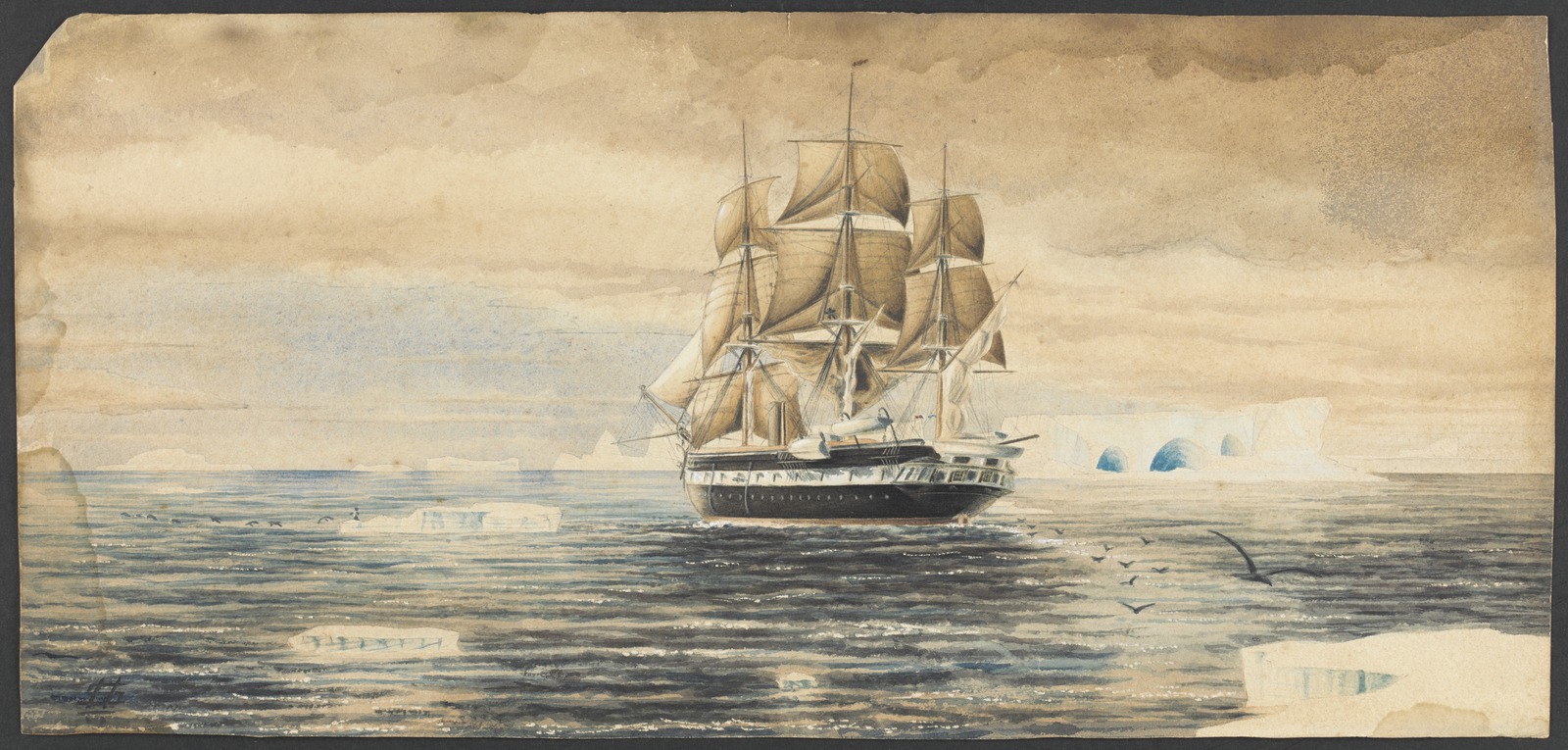
The Challenger expedition of 1872–76 was a round-the-world voyage that made many scientific discoveries about the deep oceans. It would lay the foundations of a new science: oceanography. The expedition was named after the naval vessel that undertook the long voyage, HMS Challenger. The expedition was the idea of Scottish scientist Charles Wyville Thomson and English scientist William Benjamin Carpenter, who convinced the British government that such a large-scale expedition would contribute much-needed information about the oceans. The Royal Society of London obtained the use of Challenger from the Royal Navy, equipping it with laboratories for natural history and chemistry.
Scientific work

HMS Challenger set sail from Sheerness in Kent in December 1872. Joining its company of 250 sailors, engineers and marines under Captain George Nares was a team of six scientists led by Wyville Thomson, the expedition's chief scientist.

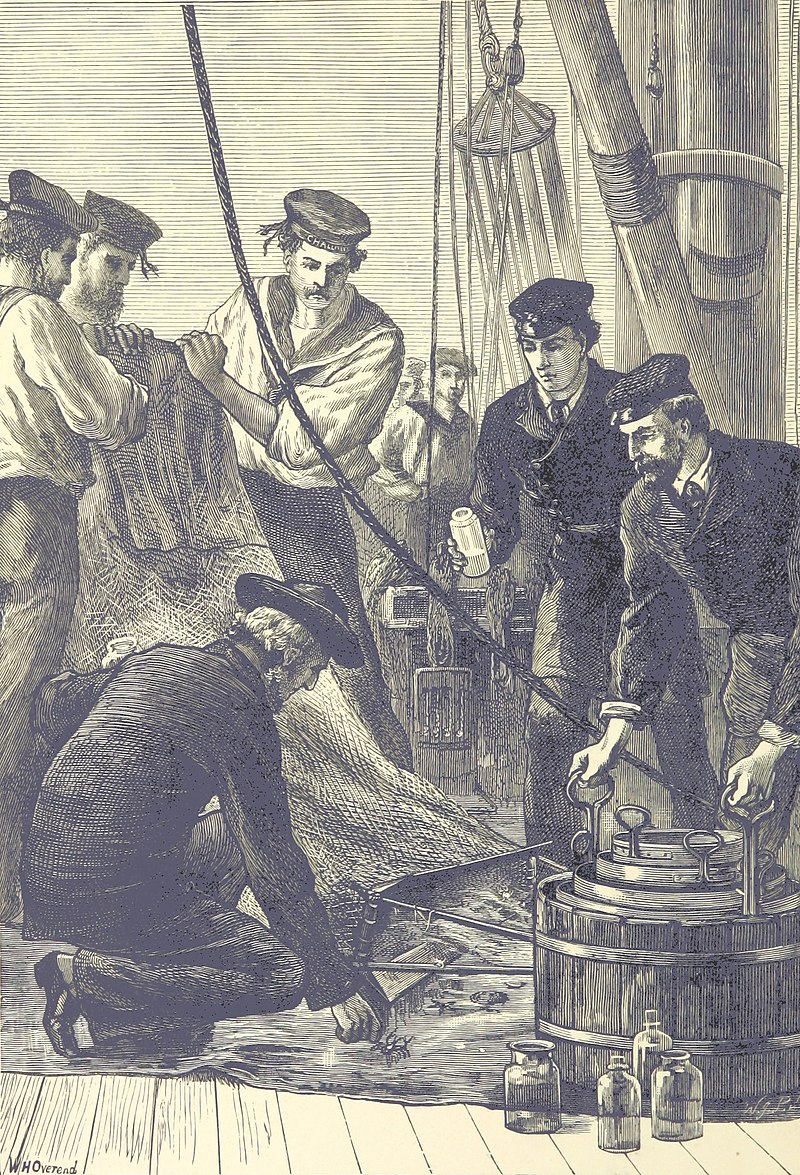
For the next four years, Challenger sailed 68,890 nautical miles (127,580 kilometres or 79,280 miles) across the Pacific, Atlantic and Southern oceans, surveying and exploring. At regular points, the crew measured the bottom depth, the water temperature at different depths, observed weather and surface ocean conditions, and collected samples from the seafloor, including marine creatures.
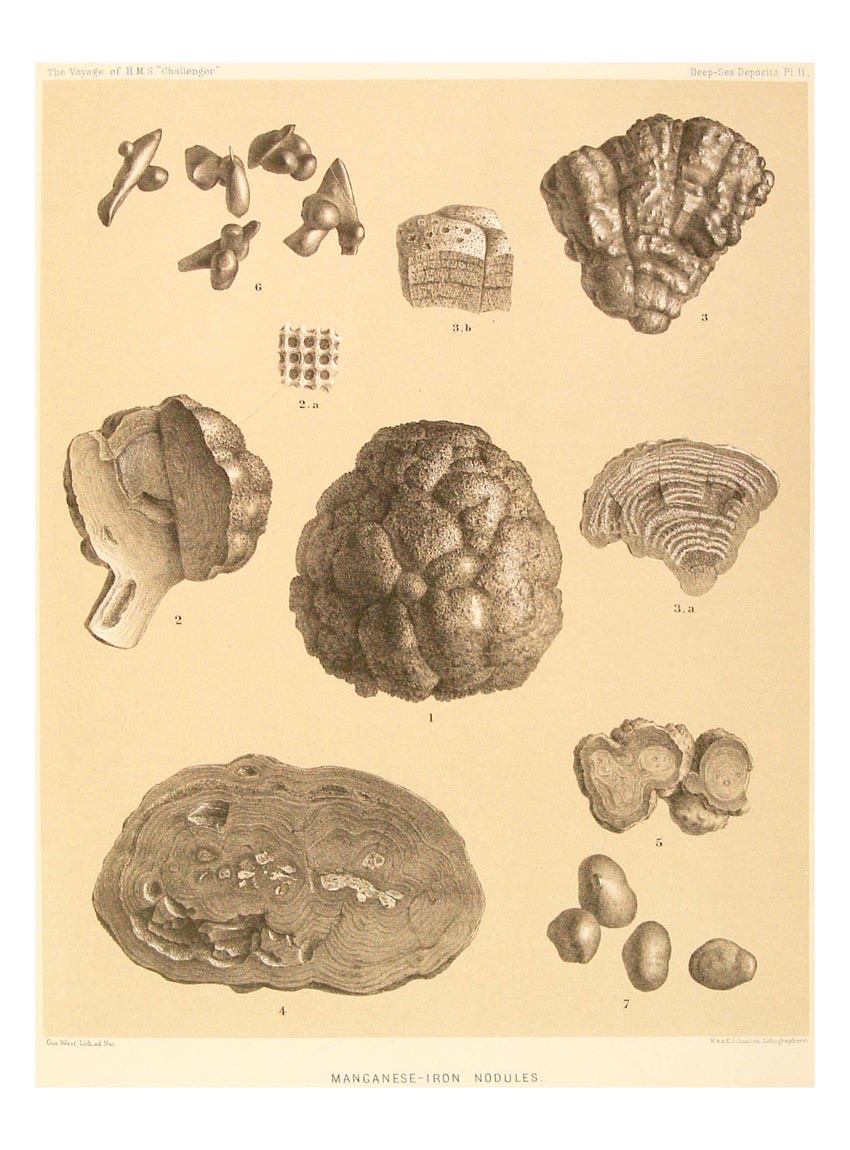
Over the course of voyage, the team took 133 scoops from the ocean floor, carried out 492 deep-sea soundings and made 263 water temperature readings. Among the samples they brought up from the seafloor were some small metallic nuggets—which we know today as manganese (or polymetallic) nodules.

Revealing the
ocean floor
In the mid-19th century, most scientists assumed the deep ocean floor was a vast flat expanse, coated with soft mud. The Challenger expedition completely changed this view. From the evidence collected, the researchers were able to draw up charts that showed mountain ranges, valleys and vast trenches deep below the waves.
The deepest of these trenches, located at the southern end of the Mariana Trench in the western Pacific Ocean, is today known as the Challenger Deep, named after the expedition. It lies more than 10,900 metres (35,750 feet) below the surface and is the deepest-known point on the surface of the Earth. The expedition also verified the existence of the Mid-Atlantic Ridge.

Marine life
One of the expedition's scientific objectives was to investigate the distribution of organic life at different depths and on the deep seafloor. Before the expedition, scientists thought that nothing could live in the deep ocean waters: they were too dark and too cold, and the pressure was far too great. The work of the Challenger expedition was to change that view as well.
The expedition collected marine life from every part of the ocean. More than 100,000 species were preserved and brought back to the expedition’s headquarters in Edinburgh. After 20 years of study, around 4700 previously unknown species of plants and sea life had been catalogued.

Consultant: Philip Parker