
Exploration

CITE
We have made every effort to follow citation style rules, but there may be some minor differences. If in doubt, please refer to the appropriate citation style manual.
Conquest of Everest. (2022). In Q-files Encyclopedia, History, Exploration. Retrieved from
https://www.q-files.com/history/exploration/conquest-of-everest
"Conquest of Everest." History, Exploration, Q-files Encyclopedia, 13 Sep. 2022.
https://www.q-files.com/history/exploration/conquest-of-everest.
Accessed 6 Aug. 2026.
Conquest of Everest 2022. History, Exploration. Retrieved 6 August 2026, from
https://www.q-files.com/history/exploration/conquest-of-everest
History, Exploration, s.v. "Conquest of Everest," accessed August 6, 2026.
https://www.q-files.com/history/exploration/conquest-of-everest


Conquest of Everest
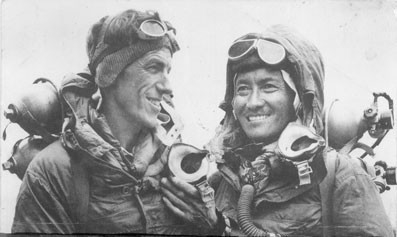
In 1953 a British and Commonwealth expedition led by Colonel John Hunt set out to climb Mount Everest. Two men reached the South Summit, about two hours' climb from the true summit, but they had to return. Colonel Hunt chose two others to make a second attempt. They were Edmund Hillary, a New Zealander, and Tenzing Norgay. Tenzing was a Sherpa, one of the peoples who live in mountainous Nepal. On 29th May 1953, they reached the top. Worried that their oxygen might run out, they stayed only 15 minutes. After taking photographs to prove they had made it, they made their way, weary but triumphant, back down the mountain.
The challenge
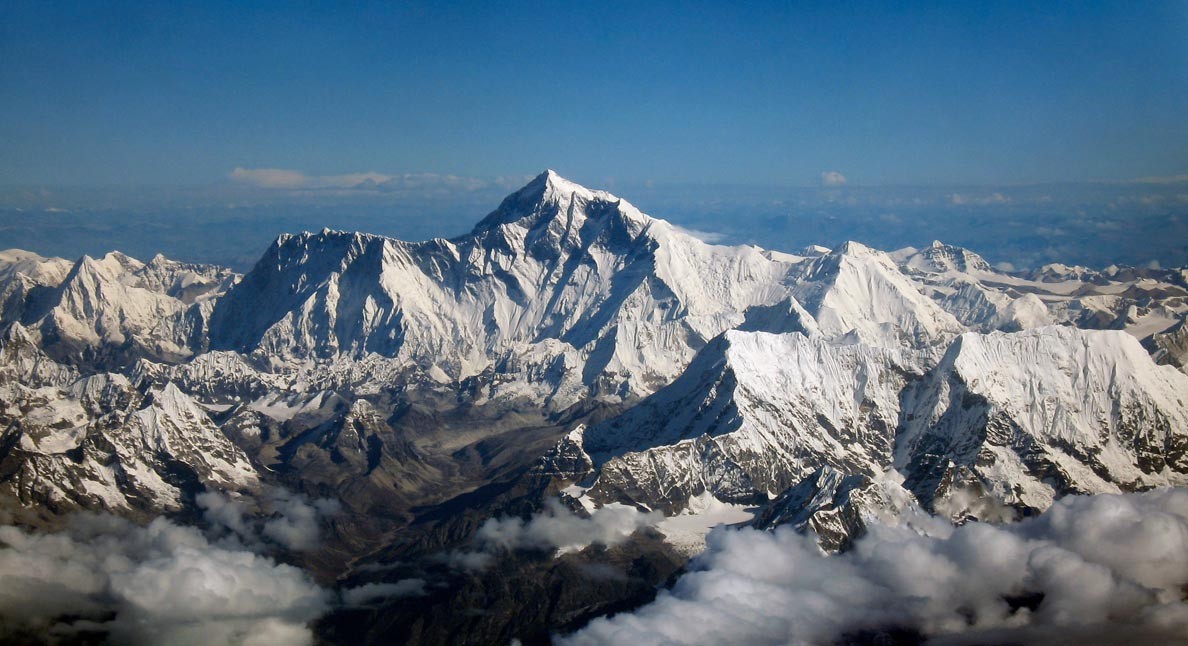
People first began climbing mountains for sport about 200 years ago, but not until the 20th century did anyone try to climb Mount Everest, the highest mountain in the world at 8849 metres (29,032 feet). Tibetan people call Everest Qomolangma, which means "Mother Goddess of the World". At its summit, gales blow at more than 150 kilometres an hour (90 miles an hour) and the air is so thin that most climbers take oxygen tanks. Two British mountaineers, George Mallory and Andrew Irvine, may have got there in 1924. They were last seen 250 metres (820 feet) from the top—but then they disappeared.
Up from Base Camp
The Hunt expedition was made up of over 400 people, including 362 porters. In April 1953, they set up their Base Camp on the Khumbu Glacier at a height of 5356 metres (17,572 feet). It was a long hard climb to get that far. From there, a smaller team made the dangerous climb up the Khumbu icefall (a steep and fast-moving portion of glacier). Then the trek led the group up the sloping valley called the Western Cwm. This route had been used only once before. Then it was up the steep slope of the Lhotse Face. Sheer cliffs and icy winds slowed down the climbers. No progress could be made for several days.

The final haul
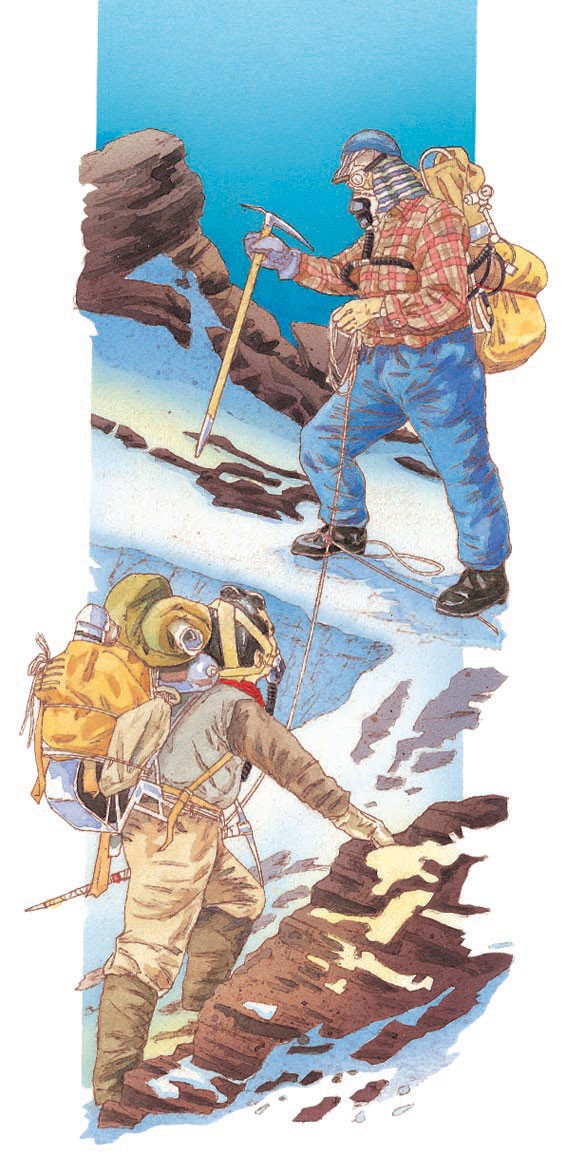
The advance party eventually reached South Col, at a height of 7890 metres (25,900 feet). It was a level spot where they could set up camp. From here, on 26th May, Hunt directed climbers Tom Bourdillon and Charles Evans to try for the summit. The pair had to turn back at the South Summit, just 91 metres (300 feet) below the actual summit, because Evans' oxygen system failed. On 28th May, it was Hillary and Tenzing's turn to make their attempt.
First they ascended the terrifying Southeast Ridge. There they cut out a ledge where they could pitch camp for the night. Hillary slept sitting up to stop the tent blowing away. Next morning the wind dropped and the sun shone. By 9 a.m. they were on the South Summit.
Ahead was a rock wall, 12 metres (40 feet) high. They hauled themselves up and made it the last few metres to the summit. By 11.30 a.m. they were standing on top of the world.
Consultant: Philip Parker
pics
Without in any way limiting Q-files Ltd’s exclusive rights under copyright, any use of this publication to “train” generative artificial intelligence (AI) technologies to generate text is expressly prohibited. Q-files Ltd reserves all rights to license use of this work for generative AI training and development of machine learning language models.