
Exploration

CITE
We have made every effort to follow citation style rules, but there may be some minor differences. If in doubt, please refer to the appropriate citation style manual.
Scott's Antarctic expedition. (2024). In Q-files Encyclopedia, History, Exploration. Retrieved from
https://www.q-files.com/history/exploration/scotts-antarctic-expedition
"Scott's Antarctic expedition." History, Exploration, Q-files Encyclopedia, 12 Jan. 2024.
https://www.q-files.com/history/exploration/scotts-antarctic-expedition.
Accessed 2 Nov. 2026.
Scott's Antarctic expedition 2024. History, Exploration. Retrieved 2 November 2026, from
https://www.q-files.com/history/exploration/scotts-antarctic-expedition
History, Exploration, s.v. "Scott's Antarctic expedition," accessed November 2, 2026.
https://www.q-files.com/history/exploration/scotts-antarctic-expedition


Scott's Antarctic expedition
On 17th January 1912, members of the British Antarctic Expedition or Terra Nova Expedition (Terra Nova means "new land"), led by Captain Robert F. Scott, reached the South Pole. Hoping to have been the first people to achieve that goal, Scott and his companions were devastated to find that a party from Norway, led by Captain Roald Amundsen, had beaten them to the Pole by 34 or 35 days. To get there, the men had endured a gruelling journey across the icy continent of Antarctica. They now faced an equally long and difficult trek back to their base camp. But tragedy would soon follow.
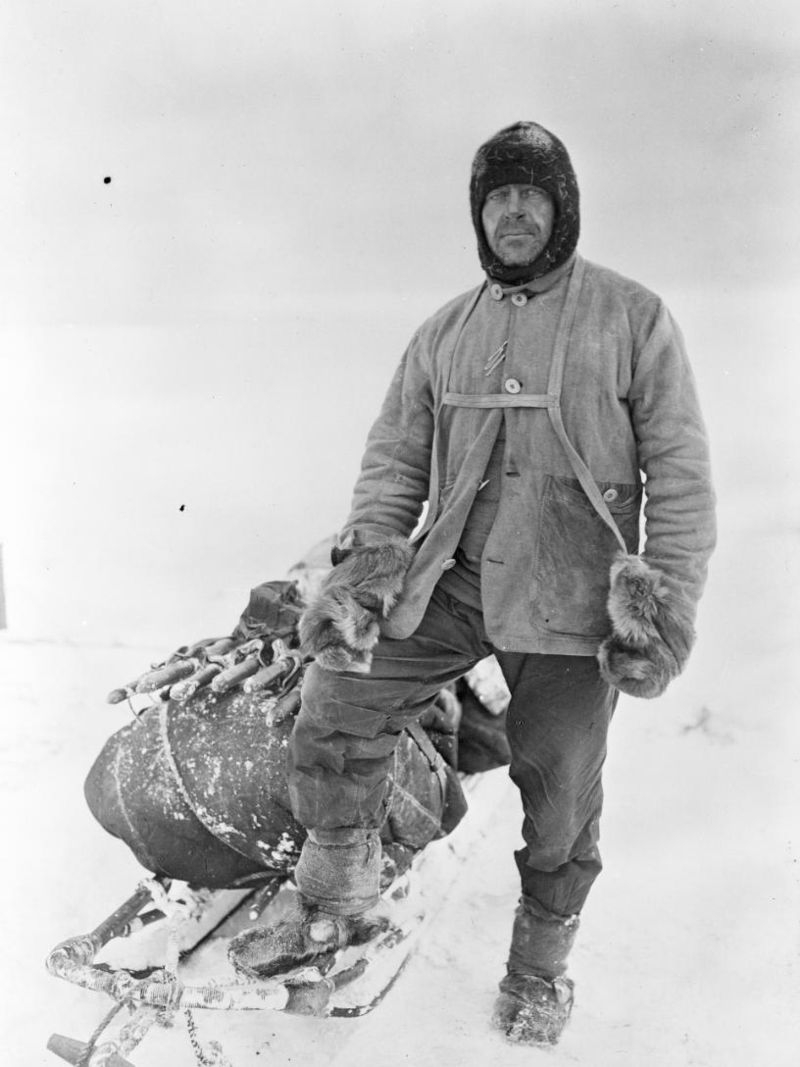
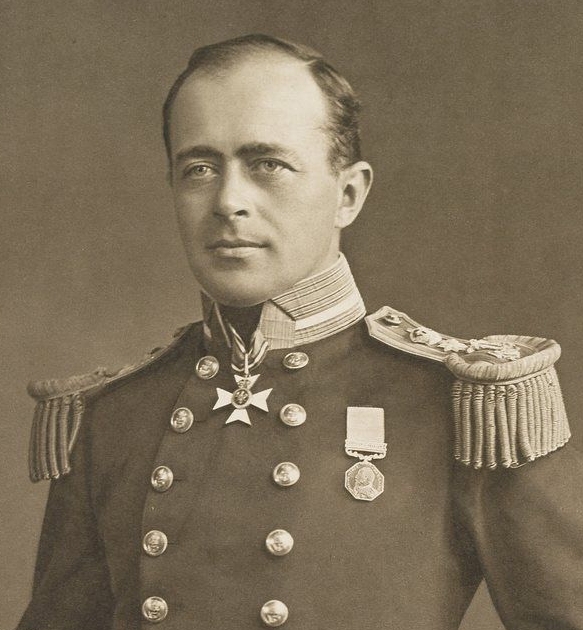
Robert Falcon Scott
Robert Falcon Scott was born in Devonport, England, in 1868. He served on a number of Royal Navy ships in the 1880s and 1890s. The Royal Geographical Society appointed him to command the National Antarctic Expedition of 1901–04. The expedition, which included Ernest Shackleton, reached further south than anyone before them and Scott returned to Britain a hero. He now began to plan an expedition to be the first to reach the South Pole, spending years to raise funds to pay for the expensive trip.
Arrival in Antarctica
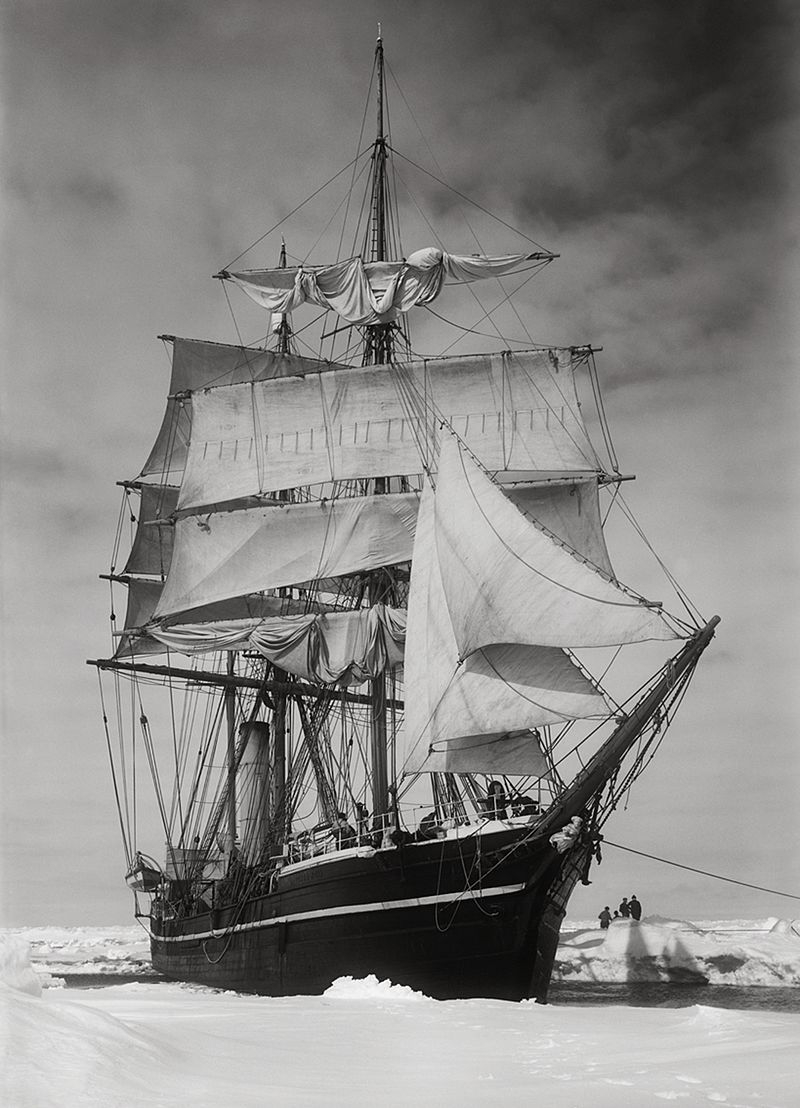
The expedition, consisting of 65 men (including seamen, scientists and others), left London on 1st June 1910, sailing on the Terra Nova. It was only when the ship landed in Melbourne, Australia, that Scott discovered Amundsen’s intentions to try for the South Pole. Scott insisted that his own plans would not change, and that he would not sacrifice the expedition's scientific goals to win a race to the Pole.
The purpose of the expedition was not solely to reach the South Pole: important scientific research was also to be carried out along the coast of Victoria Land on the Ross Ice Shelf. However, Scott felt that the expedition's main objective was to arrive at "the remotest place on Earth, and its southernmost point, first."
Camp

In early January 1911, Scott’s team arrived in Antarctica. Despite the fact it was midsummer there, conditions were harsh, with temperatures plunging as low as -60°C (-76°F). The men set up camp at Cape Evans (named after Scott's second-in-command, Edward Evans) on Ross Island. Over the next few months, the team made preparations to survive the long winter months to come. They also laid down supply depots at various points across the Ross Ice Shelf for the use of those making the journey to the Pole.

The party built a hut, measuring about 15 by 7.7 metres (50 x 25 feet). It was insulated with seaweed and contained a stove and cooking range. A partition made out of crates was erected between the officers' quarters and the rest of the men's quarters. To keep fit, the men played football outside the hut.
Setting off for the Pole
The main group, a party of 15 men, set off from base camp on 1st November 1911. To haul their supplies, including food and fuel, they had motorized sledges, dogs and ponies. The motorized sledges soon had to be abandoned. The ponies struggled with the cold and the heavy work. They had to be shot, their meat used for food.
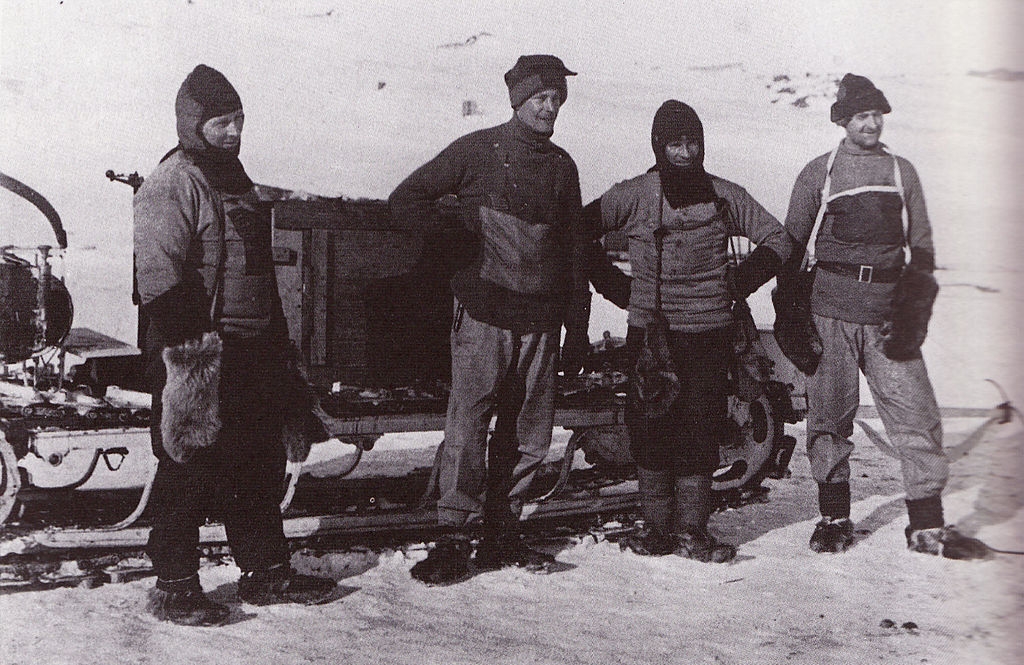
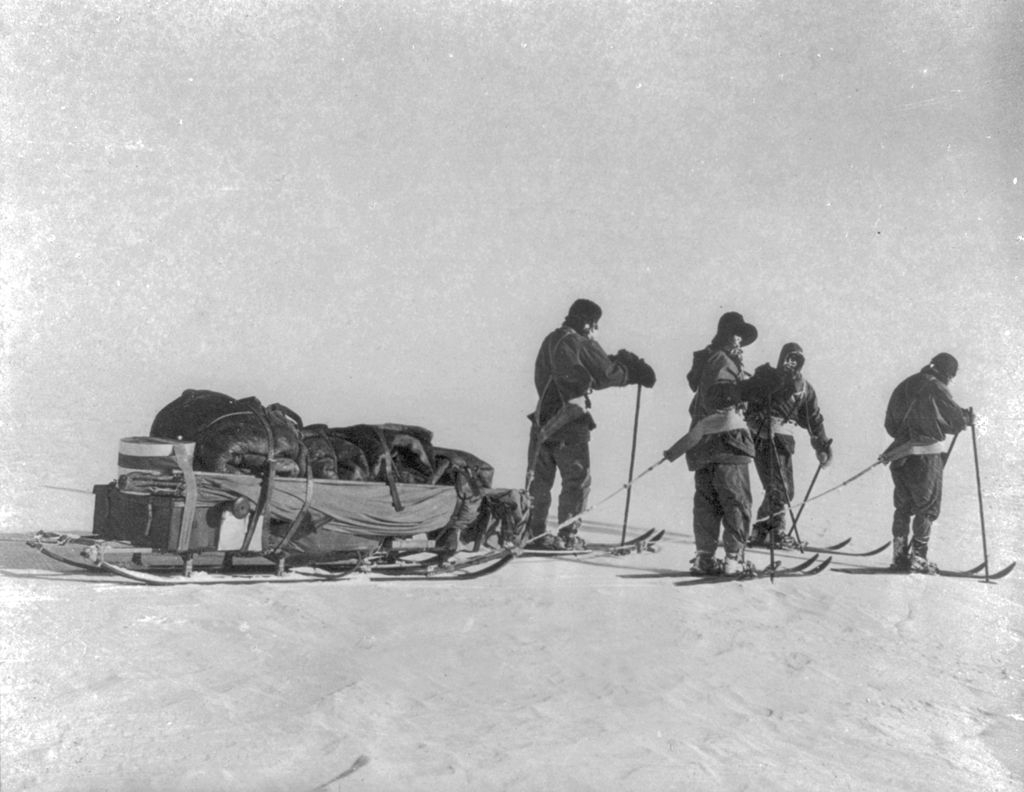
By mid-December, the dog teams had to turn back: there was not enough food to keep them going further. This left the rest of the party to ascend Beardmore Glacier and cross the polar plateau hauling their own sledges. On 3rd January 1912 Scott nominated four men—Edward "Bill" Wilson, Captain Lawrence "Titus" Oates, Edgar Evans and Henry "Birdie" Bowers—to accompany him on the final leg of the journey for the Pole, still some 240 kilometres (150 miles) distant. The others returned to the camp.

The Pole
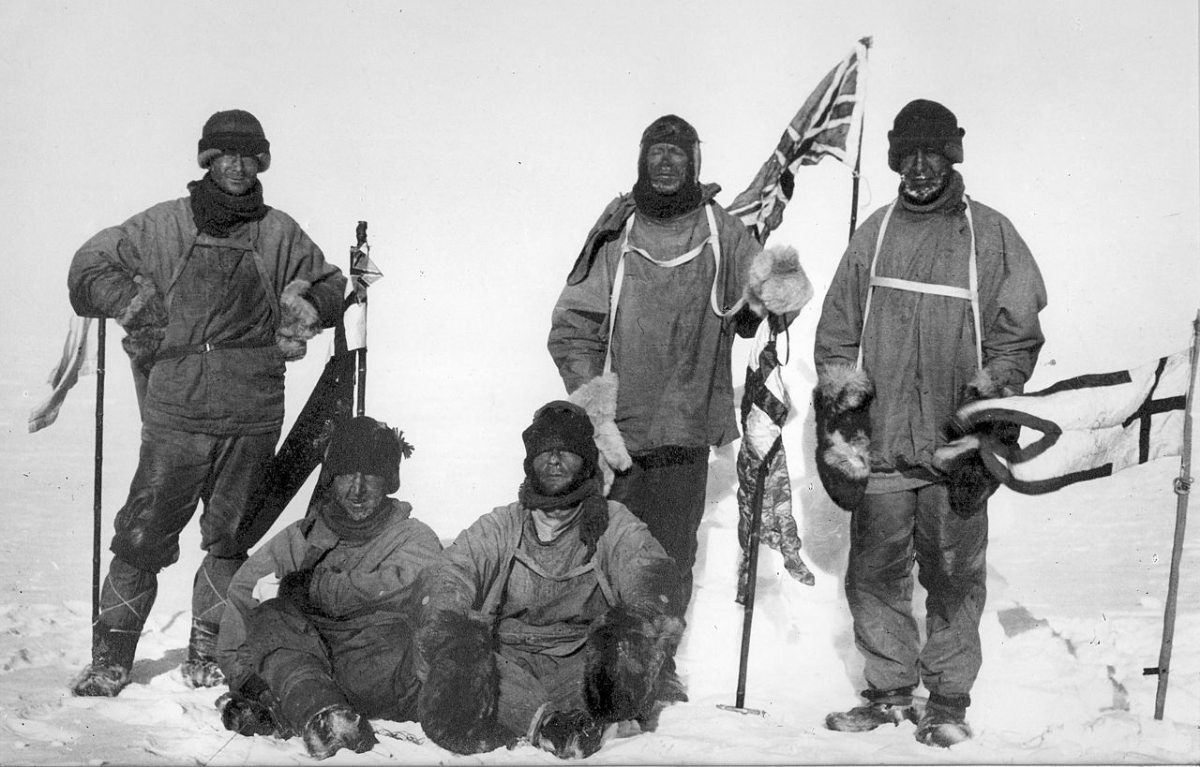
The progress of the "polar party" was delayed by ridges, called sastrugi. These were difficult to cross on skis. On 16th January, as they neared the Pole, Bowers spotted a black flag left at a camp made by Amundsen's party. They knew then that they had been beaten. Their fears were confirmed when they arrived at the Pole the next day to find a tent and a Norwegian flag. Inside, a note informed them that Amundsen had reached the Pole on 16th December 1911, beating Scott's party by 35 days.
Scott wrote in his diary: "Great God! This is an awful place and terrible enough for us to have laboured to it without the reward of priority." They raised the Union Jack and took photos.
Return journey
The following day, 18th January, the dejected group began their long return journey. A 1300-kilometre (800-mile) trek back to base camp lay before them. At first they made good progress, but gradually the men began to suffer from slow starvation, hypothermia and scurvy. Despite this, they honoured their scientific objectives, taking rock samples whenever possible.
The worsening weather conditions took their toll. Evans died on 17th February at the base of Beardmore Glacier. Earlier, he had fallen and suffered a blow to his head and this may have been the cause. Leaving Evans's body behind, the men trudged on. They eventually reached a supply depot that had been set up earlier, but they had begun to run short of both fuel and food. They had also expected to meet up with dog teams to take them swiftly back to camp, but these failed to appear.
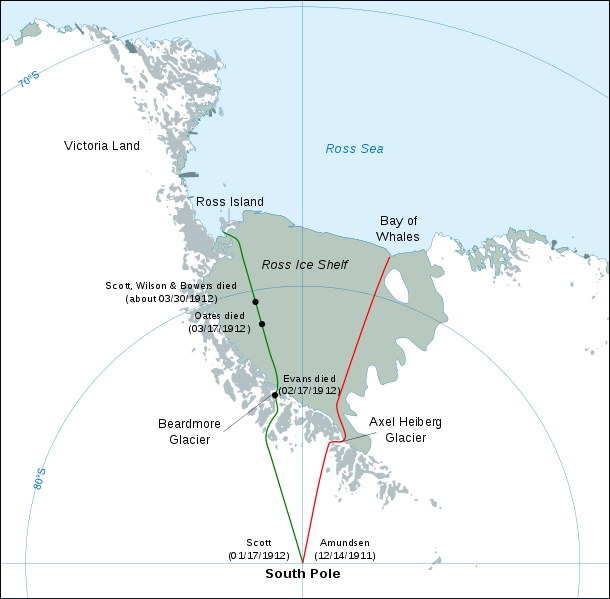

Oates had severe frostbite in his left foot, which slowed him down significantly. On 15th March, while the others sheltered in their tent, he walked out into the blizzard, saying to his companions: "I am just going outside and may be some time..." He sacrificed his life so that the other men could carry on unhindered.
The end
On 21st March the remaining three men—Scott, Wilson and Bowers—were caught in terrible blizzards on the Ross Ice Shelf, just 18 kilometres (11 miles) short of another supply depot. Unable to leave their tent as they waited for the blizzards to end, they were forced to watch their supplies dwindle. They had only enough food for a couple of days and fuel for one hot meal.
By 30th March, all three were dead, from a combination of starvation, exhaustion and cold. The men had each written farewell messages to their families. The last entry in Captain Scott’s diary on 29th March read: "The end cannot be far. It seems a pity but I do not think I can write more. R. Scott. Last entry. For God's sake look after our people."

A search party found the tent, the bodies and Scott's diary eight months later. They buried the bodies under the tent and built a cairn of ice and snow to mark the spot. A pair of skis was used to make a cross.
In 1913, a wooden cross was erected on Observation Hill, Ross Island, inscribed with the names of the dead and a quote from lines written by the poet Alfred, Lord Tennyson: "To strive, to seek, to find, and not to yield".

Consultant: Philip Parker
pics

Without in any way limiting Q-files Ltd’s exclusive rights under copyright, any use of this publication to “train” generative artificial intelligence (AI) technologies to generate text is expressly prohibited. Q-files Ltd reserves all rights to license use of this work for generative AI training and development of machine learning language models.