
Slavery
Slavery in the colonial history of the United States
Only a small percentage of the enslaved Africans brought to the New World came to the British colonies of North America—perhaps as little as 5% of the total. The vast majority were sent to the Caribbean sugar colonies, Brazil or Spanish America. Nevertheless, throughout the 17th and 18th centuries until the trade was abolished in 1808, hundreds of thousands of kidnapped African people were purchased and put to work by inhabitants of the Thirteen Colonies, later the United States. Enslaved Africans were forced to work either as servants or as farm labourers in the production of crops such as rice and tobacco.


Indentured labourers
In 1607, England established Jamestown, Virginia, as its first permanent colony on the North American continent. Tobacco soon became the chief crop. Plantation owners needed a workforce, and, to begin with, labourers mainly came from Britain. Some were convicted criminals transported to the colonies, but most were young white people intending to become permanent residents. They were indentured labourers, signing contracts to pay for their passage and upkeep with work for up to seven years. Once the seven years were over, those who survived became free citizens, which meant more indentured labourers were required.
Plantation owners began to see them as too costly; fewer people were, in any case, willing to leave home to sign up for the harsh conditions in the colonies. By the middle of the 17th century, the colonists began to look elsewhere for workers. Thousands of Native American slaves were brought from South Carolina to Virginia and other colonies further north: Pennsylvania, New York, Rhode Island and Massachusetts.
First African slaves
However, Africans were thought to be the best answer to the labour shortage, because Native Americans would often successfully escape into the frontier territory they knew well. Africans were also far more resistant to malaria. Africans had been in Virginia as early as 1619, when the first records of enslaved people—20 Africans seized from a Portugese slave ship who arrived on a privateer vessel The White Lion—were made.
To begin with, they worked as indentured servants, but in 1640 Virginian courts sentenced an African man named John Punch to lifetime of slavery, after he attempted to flee his service. (The two white men with whom he fled were sentenced only to an additional year of their indenture, and three years' service to the colony). This was the first legal enforcement of slavery in English colonies (as well as one of the first legal distinctions made between Europeans and Africans). Slavery in English North America was established.

Slaves in the colonies
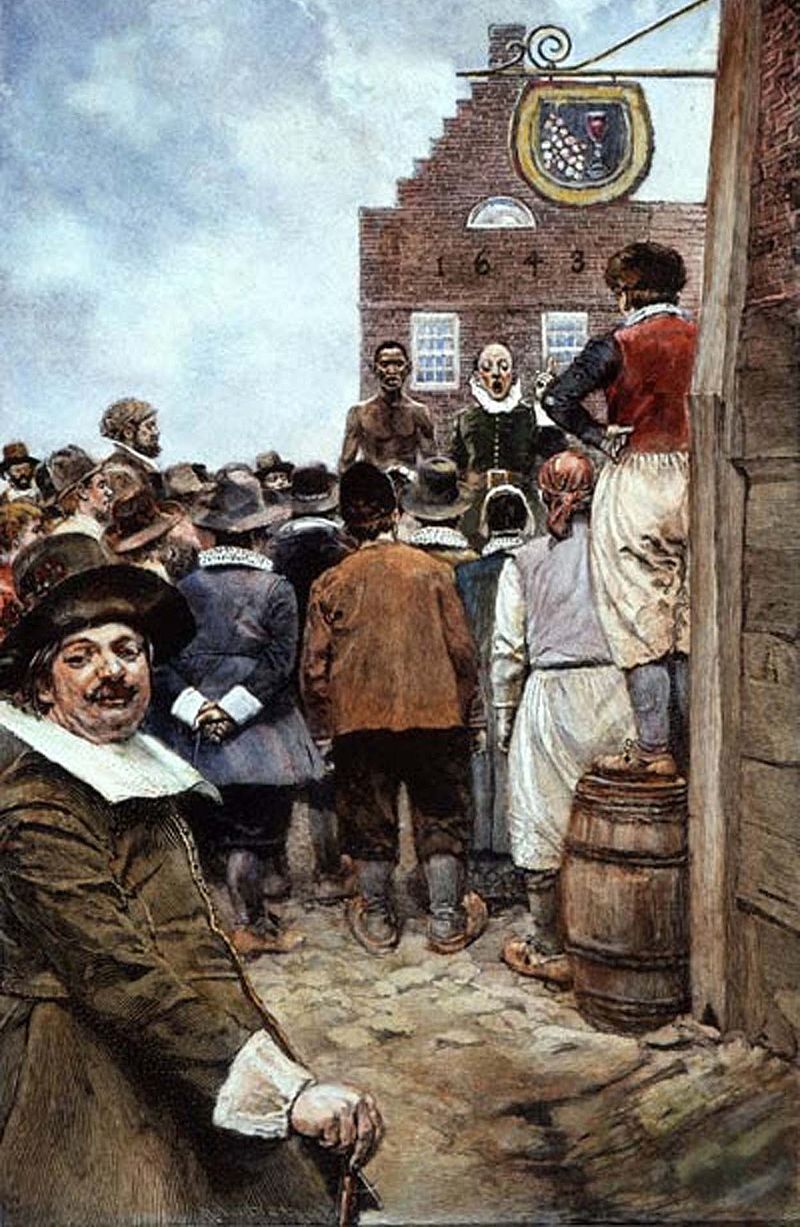
Slavery was introduced in the other British colonies further north. In 1641, Massachusetts became the first colony to legalize slavery. It passed the Body of Liberties, which prohibited slavery in some instances, but did permit slaves to be held if they were captives of war, if they sold themselves into slavery, were purchased from elsewhere, or if they were sentenced to slavery by the governing authority. The Body of Liberties used the word "strangers" to refer to people bought and sold as slaves, because they were generally not native-born English subjects.
Wealthy Virginia and Maryland planters began to buy slaves in preference to indentured servants during the 1660s and 1670s. In 1662 Virginia passed a law with the doctrine of partus sequitur ventrem, stating that any child born in the colony would follow the status of its mother, whether bonded in slavery or free. This meant that a future labour force would build up naturally, free of charge. Virginia enacted laws concerning runaway slaves and "negroes" in 1672.
In 1670, Carolina (which later split into North and South Carolina) was founded by planters from the English island colony of Barbados, to cultivate rice. They brought with them large numbers of African slaves who had worked on the sugar plantations—and the practice of brutal force to control their workforce. By the 1680s, following the establishment of the Royal African Company (re-chartered by King Charles II in 1672), enslaved Africans started arriving in the other North American colonies in increasing numbers.
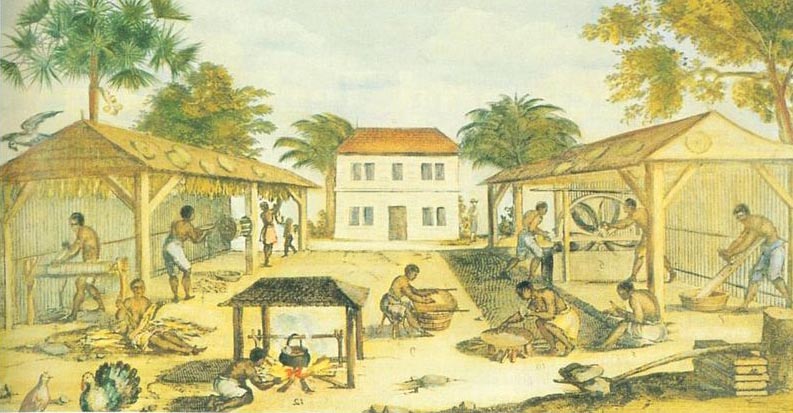
Chattel slavery rather than indentured labour was, by the end of the 17th century, standard in the tobacco, rice and indigo plantations of the southeastern Atlantic coast, from the Chesapeake Bay colonies of Maryland and Virginia south to Georgia. By 1710 the African population in Virginia had increased to 23,100 (42% of the total). Maryland was home to 8000 Africans (23%).
Inhabitants of Northern colonies also purchased slaves—though on a much smaller scale than in the South. They typically lived in towns, rather than on plantations, and worked as craftspeople, sailors, dock hands or domestic servants. In 1703, more than 42% of New York City households had slaves, a proportion second only to Charleston in the South Carolina.

With the enslaved Africans now outnumbering the white population in places, harsh new slave codes severely limiting the rights of African slaves were introduced during the late 17th century and early 18th century. The Virginia slave codes of 1705 defined as slaves those people imported from nations that were not Christian.
Slave resistance
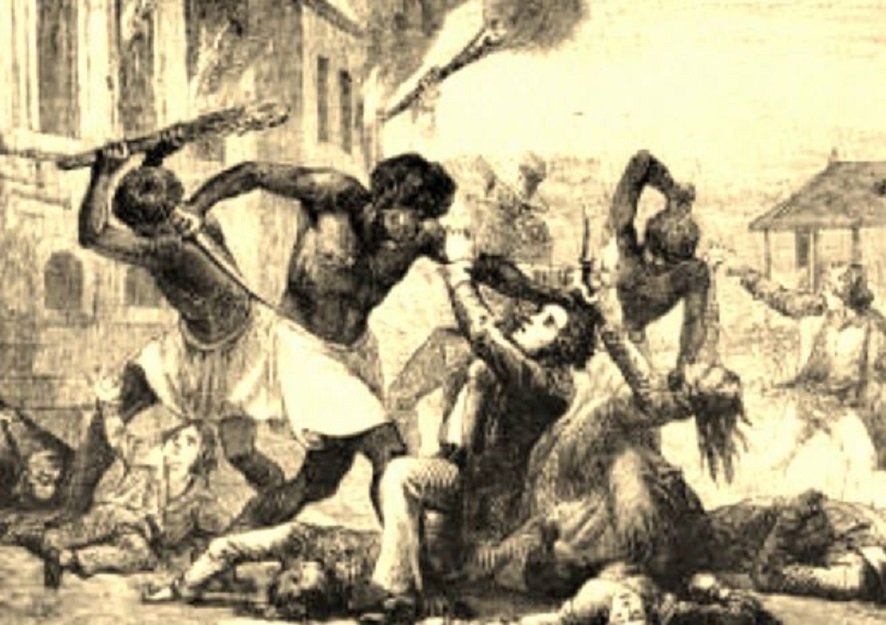
Opposition to slavery gradually began to emerge in the middle of the 18th century. Some slaves themselves expressed their opposition through armed uprisings, such as the 1739 Stono Rebellion in South Carolina. But more often they resisted through work slowdowns, tool-breaking or by simply attempting to run away.
Not until the years leading up to the American Revolution did any white American colonists speak out against slavery. Even the Quakers—some of whom had drawn up a petition against the use of slaves by English colonists in Pennsylvania in 1688—generally tolerated slaveholding.
Outlawing slavery
The Massachusetts courts followed the law in England, which became the first country in the world to outlaw the slave trade within its borders with the Somersett Case of 1772. During the disruption of the American War of Independence (1775–83), many slaves took the opportunity to escape their bondage, many of them fleeing to behind British lines. Thousands of black loyalists left America along with the defeated British, ending up as free people in England or its colonies. Some were resettled in Nova Scotia.

After the War of Independence, many colonists, particularly in the North, made the link between the oppression of enslaved Africans to their own oppression by the British, and called for the abolition of slavery.
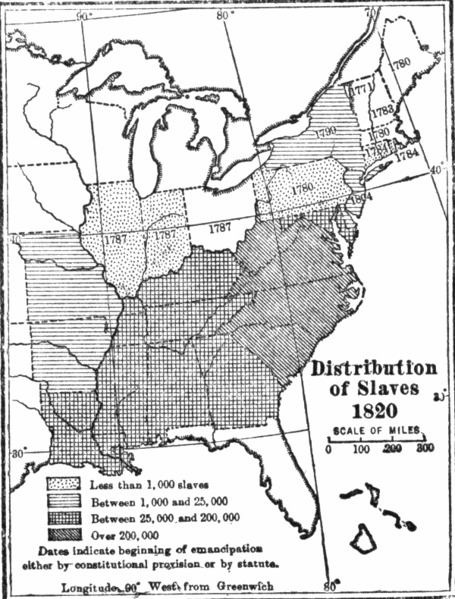
Pennsylvania had begun gradual abolition in 1780. By 1790 slavery in all the New England states was abolished. The Republic of Vermont had banned slavery in its constitution of 1777 and continued the ban when it entered the United States in 1791. New York introduced gradual emancipation in 1799. All of the colonies except Georgia had banned or limited the Atlantic slave trade by 1786; Georgia did so in 1798.
By 1804, slavery had been abolished in some way in every state north of Maryland—although free blacks were still subject to racial segregation in the North, causing many to flee across the border into Canada. The last slaves in New York were not freed until 1827, when it was celebrated with a grand parade. In other Northern states, it persisted in small numbers until after 1840. Indentured servitude, which had been widespread in the colonies, disappeared by 1800. The vast majority of enslaved people in the years following independence lived in the South.
Shortly after the Revolution, the Northwest Territory, lands lying northwest of the Ohio River (which became Ohio, Michigan, Indiana, Illinois, Wisconsin and part of Minnesota) was established, doubling the size of the United States. Through the Northwest Ordinance passed by Congress of the Confederation in 1787, slavery was prohibited in this region.

In 1794, Congress banned American vessels from being used in the slave trade, and also banned the export of enslaved people from America to other countries—although little effort was made to enforce this legislation. Finally, Congress, acting on the advice of President Thomas Jefferson, passed an Act Prohibiting Importation of Slaves as of 1st January 1808. The slave trade, the buying and selling of enslaved people between countries was banned, but not the internal slave trade. The illegal importing of African slaves—smuggling—meanwhile, remained common.
Consultant: Philip Parker