
Reptiles
Boas
The boa constrictor and the anaconda are both types of boa. Boas are large, constricting snakes from Central and South America that give birth to live young. They seize their prey by the neck and coil around it to suffocate the animal to death. Boa constrictors grow up to 4 metres (13 feet) long. At nearly nine metres (30 feet) long, the anaconda is one of the world's longest and heaviest snakes.
Hunting
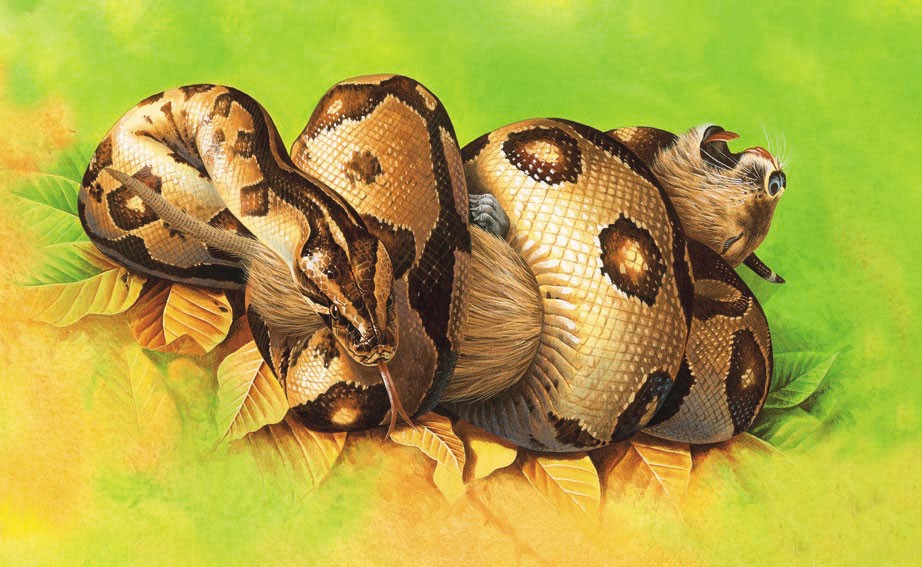
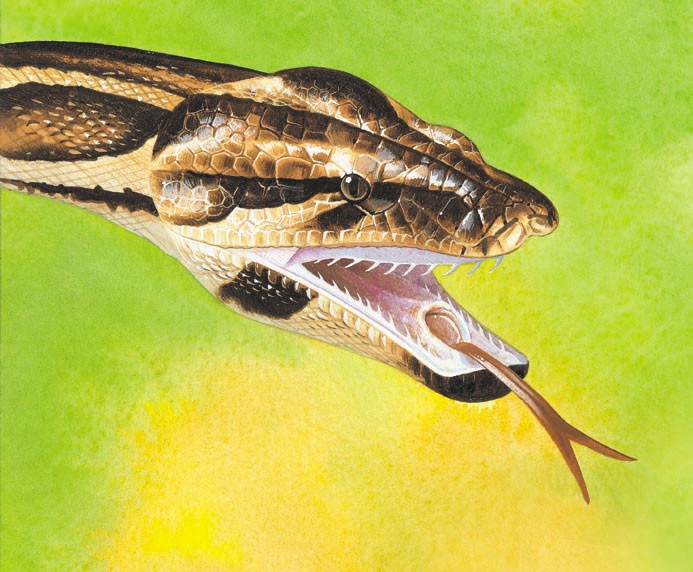
The boa constrictor has an excellent sense of smell and sharp eyesight. Catching an animal's scent in the air, the snake moves silently and with lightning speed. It will first strike at the prey with its teeth. Boas do not have long fangs. Instead, their short, sharp, backward-pointing teeth help them to grasp their prey. It is almost impossible for the victim to escape.

The boa then proceeds to coil around its victim and suffocate it to death, a method called constriction. It then swallows the animal head first. It will not need to eat again for several days after feeding. Boas often lie in wait for its victims to come close, before launching an ambush attack. But they will also go in hunt of their prey, usually at night.
Anaconda
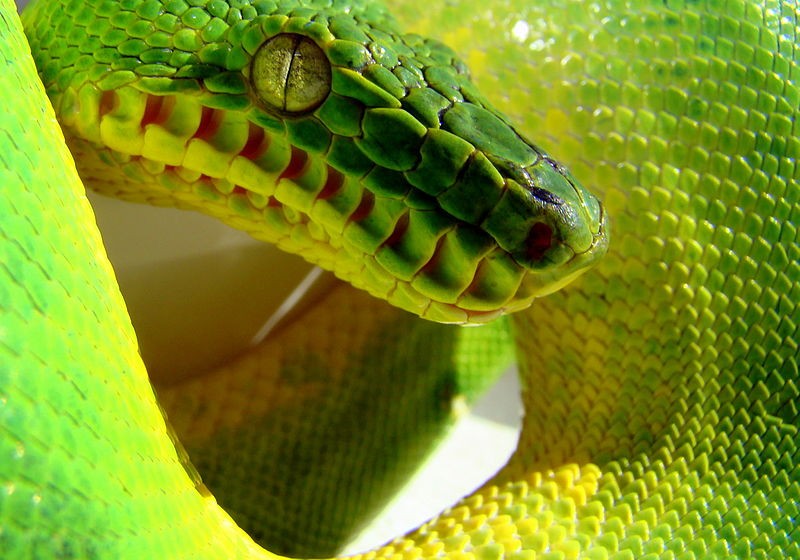
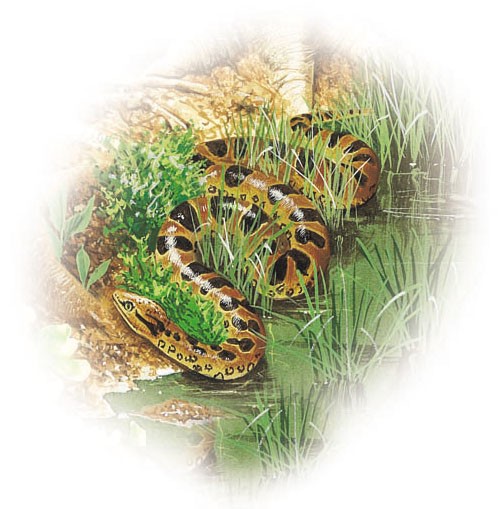
At more than 9 metres (30 feet) long, the anaconda is one of the world’s largest snakes, and, at 100 kilograms (215 pounds) certainly the heaviest. It spends much of its life wallowing in shallow water, or sometimes basking on overhanging branches. Its eyes and nasal openings are on the top of its head, allowing it to be nearly completely submerged while it waits for some unwary animal to come within range. Then it will seize its victim by the neck, coil its own body around it and suffocate it to death. The anaconda always swallows its victims whole, and then lies still for up to several weeks afterwards while it digests its meal.
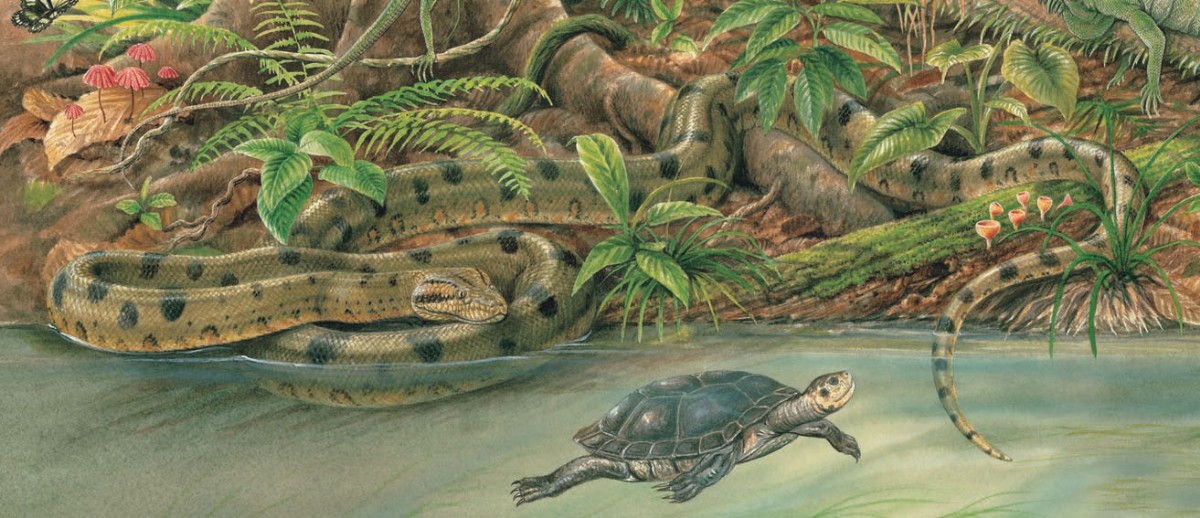
The hunter hunted
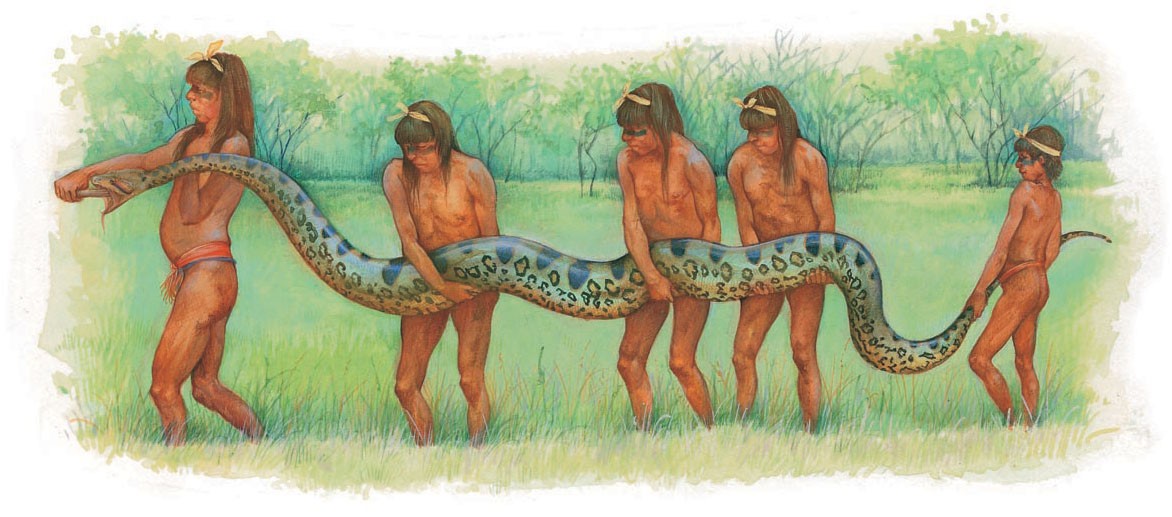
Boa constrictors and anacondas rarely attack humans. All the same, the anaconda is hunted by the native forest peoples, who use blowpipe darts or rifles to kill it. Several men are needed to carry its body back to the village: a large anaconda weighs more than a cow.
Consultant: Chris Jarvis