
Q-news

CITE
We have made every effort to follow citation style rules, but there may be some minor differences. If in doubt, please refer to the appropriate citation style manual.
A smoky haze blankets large parts of Southeast Asia. (2022). In Q-files Encyclopedia, , Q-news. Retrieved from
https://www.q-files.com/news/a-smoky-haze-blankets-large-parts-of-southeast-asia
"A smoky haze blankets large parts of Southeast Asia." , Q-news, Q-files Encyclopedia, 10 Feb. 2022.
https://www.q-files.com/news/a-smoky-haze-blankets-large-parts-of-southeast-asia.
Accessed 13 Sep. 2026.
A smoky haze blankets large parts of Southeast Asia 2022. , Q-news. Retrieved 13 September 2026, from
https://www.q-files.com/news/a-smoky-haze-blankets-large-parts-of-southeast-asia
, Q-news, s.v. "A smoky haze blankets large parts of Southeast Asia," accessed September 13, 2026.
https://www.q-files.com/news/a-smoky-haze-blankets-large-parts-of-southeast-asia


A smoky haze blankets large parts of Southeast Asia
A smoky haze is blanketing large parts of Southeast Asia, bringing grey skies and a lingering acrid smell now familiar to the local population. The haze—which occurs almost every year—is caused by smoke spreading from forest fires in Indonesia (as well as in Malaysia, but on a far smaller scale). More than 3600 fires had been detected on the islands of Sumatra and Borneo by weather satellites. This year, 2019, has seen some of the worst haze levels since 2015, when a state of emergency was declared in six Indonesian provinces. The haze has spread across Malaysia, Singapore, southern Thailand and the Philippines, causing a significant worsening of air quality.


Slash and burn
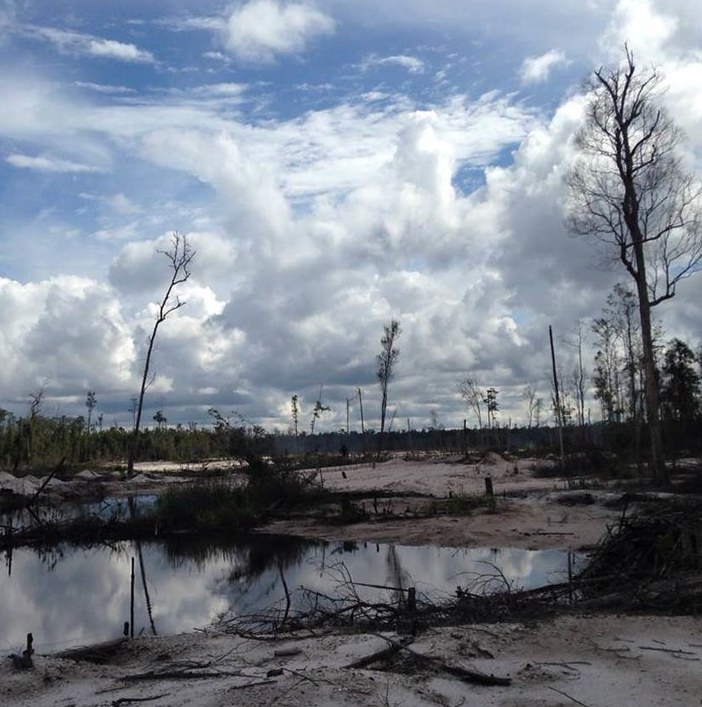
Forest burning usually peaks during Indonesia's dry season: July to October. Many farmers take advantage of the dry conditions to clear vegetation for cultivation, using the slash-and-burn method. Land is cleared by burning patches of forest. After a few years of planting crops, the rainforest soil loses its fertility, so the farmers clear a new area, leaving the previous land to return to its natural state. The fires the farmers start often flare out of control and spread into protected forested areas. The burnt land also becomes drier, which makes it easier to set alight the next time there are clearings.
Palm oil
Uncontrolled burning has accelerated in the last 30 years as more and more rainforest has been cleared to make way for expanding palm oil plantations. A recent fall in the price of palm oil has led some farmers to burn their plantations and replant them with vegetables or dragon fruit.

The slash-and-burn technique is against the law, but, because it is the easiest way for farmers to clear their land and get rid of any diseased crops, it remains common—and difficult for the authorities to police. A big concern is that many of the fires are started deliberately by big companies that want to expand their already extensive palm oil plantations.

Tackling the fires
The Indonesian authorities have been dumping millions of litres of water in affected areas. But they struggle to put out the fires, many of which have been burning on lands rich in peat. A peat fire can burn underground for months, and requires a great deal of water to extinguish. Fires can spread underground and spring up in other places later.
Effects
It is in Indonesia itself where the impact of the haze is most severe. In Palangkaraya, the capital of central Kalimantan (Indonesian Borneo), the Air Quality Index (AQI) reached 2000 in September 2019—well above the hazardous level of 300.

Besides irritating the respiratory tract and the eyes, pollutants in the haze can cause serious long-term damage to health. Tiny particles are considered the most dangerous as they can enter deep into the lungs. Health risks include respiratory illnesses, heart disease and lung damage. The 2015 haze caused more than 500,000 people to suffer from respiratory illnesses.
Kalimantan is home to many of the world's remaining orang-utans. The Bornean orang-utan, which is native to the island, is critically endangered. The forest fires have already destroyed much of their natural habitat and released vast amounts of soot particles into the atmosphere. These are as damaging to the health of the animals as they are to humans.