
Q-news

CITE
We have made every effort to follow citation style rules, but there may be some minor differences. If in doubt, please refer to the appropriate citation style manual.
Gorilla populations under threat, but numbers are higher than expected. (2022). In Q-files Encyclopedia, , Q-news. Retrieved from
https://www.q-files.com/news/gorilla-populations-under-threat-but-numbers-are-higher-than-expected
"Gorilla populations under threat, but numbers are higher than expected." , Q-news, Q-files Encyclopedia, 10 Feb. 2022.
https://www.q-files.com/news/gorilla-populations-under-threat-but-numbers-are-higher-than-expected.
Accessed 13 Sep. 2026.
Gorilla populations under threat, but numbers are higher than expected 2022. , Q-news. Retrieved 13 September 2026, from
https://www.q-files.com/news/gorilla-populations-under-threat-but-numbers-are-higher-than-expected
, Q-news, s.v. "Gorilla populations under threat, but numbers are higher than expected," accessed September 13, 2026.
https://www.q-files.com/news/gorilla-populations-under-threat-but-numbers-are-higher-than-expected


Gorilla populations under threat, but numbers are higher than expected
A study has found that gorillas are far more numerous than previously thought—although the animal remains critically endangered. Researchers estimate there are more than 360,000 western lowland gorillas living in the wild. Although this figure is about a third higher than earlier estimates, it represents a drop of 20% in just eight years. Around four-fifths of the gorillas do not live in protected areas. This means they are vulnerable to poachers, disease and the destruction of their forest habitat—“guns, germs and trees”, as the researchers put it. Professor Fiona Maisels of the Wildlife Conservation Society warns: “Just because there are rather a lot of does not mean they are not very, very vulnerable.” Gorillas breed slowly, giving birth only every four years. “It takes a very long time to build populations back up,” Maisels says.


The scientists covered about a quarter of the gorilla’s total range in western central Africa—an area the size of France—counting the number of nests that the gorillas made every night. They made their estimate for the gorilla’s entire range by taking into account the presence of people, roads and intact forest outside the surveyed areas. They also estimated the population of the central chimpanzee sub-species (which lives in the same range) by the same method, and found that the chimp population was also higher than expected.
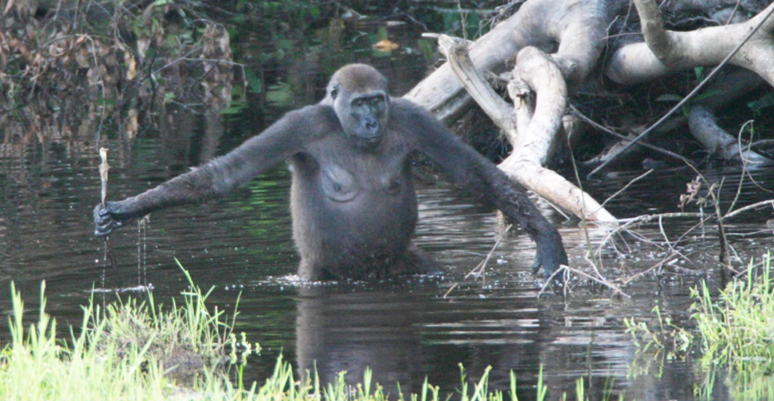
The western lowland gorilla (scientific name Gorilla gorilla gorilla) is by far the most populous subspecies, accounting for nearly 99% of all living gorillas (there are about 3600 eastern lowland gorillas, G. beringei graueri, 800 mountain gorillas, G. beringei beringei, and 200–300 Cross River gorillas, G. gorilla diehli). It is illegal to kill or capture any great ape in all the nations where they live, but poaching to supply bushmeat for food is still common. Dominant male gorillas are easy to shoot because they try to stand up to the hunters in a vain effort to protect their group—while chimpanzees tend to flee when hunters approach.
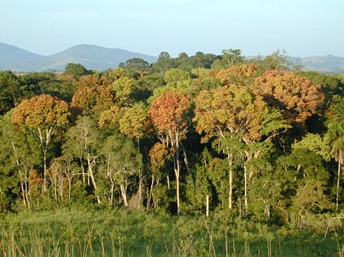
Outbreaks of Ebola have also had a catastrophic impact on gorilla and chimp populations in recent decades, and it still lingers in remote regions today.
The larger-than-expected population gives hope for gorilla survival, say scientists—so long as Ebola can be kept in check, anti-poaching measures are introduced and forest destruction (for plantations to produce palm oil) is halted. Establishing a network of well-managed parks in the region, with guards to deter poachers, could allow the gorillas to thrive in the long term.