
Q-news
Hurricane Harvey causes devastating floods in Texas
Hurricane Harvey is the first major hurricane to make landfall in the United States since Hurricane Wilma in 2005. Around 3.00 a.m. on 26th August, the hurricane reached Rockport, Texas, with winds of 215 km/h (130 mph). It later made a second landfall in Texas just north of Holiday Beach at 6.00 a.m., before weakening to a tropical storm by about 12 hours later. As Harvey drifts northeastwards, Louisiana, which was devastated by Hurricane Katrina in 2005, is preparing for major flooding.

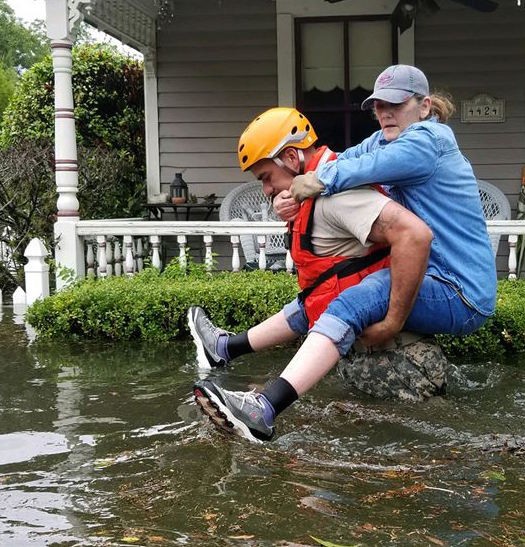
Flooding
Harvey has caused devastating floods in the Texan city of Houston, where more than 30,000 people have been forced to leave their homes. Dams outside the city are beginning to overspill. Heavy rains on an unprecedented scale (more than 75 centimetres or 30 inches) have fallen for three days and the downpour is forecast to continue. The flooding has left millions of people stranded, with thousands taking to their rooftops to await rescue by helicopter or boat. At least 18 people are reported to have died in the Houston area, six from the same family. There are fears that more bodies will be found when the floods eventually recede.
Why is Hurricane Harvey so extreme?
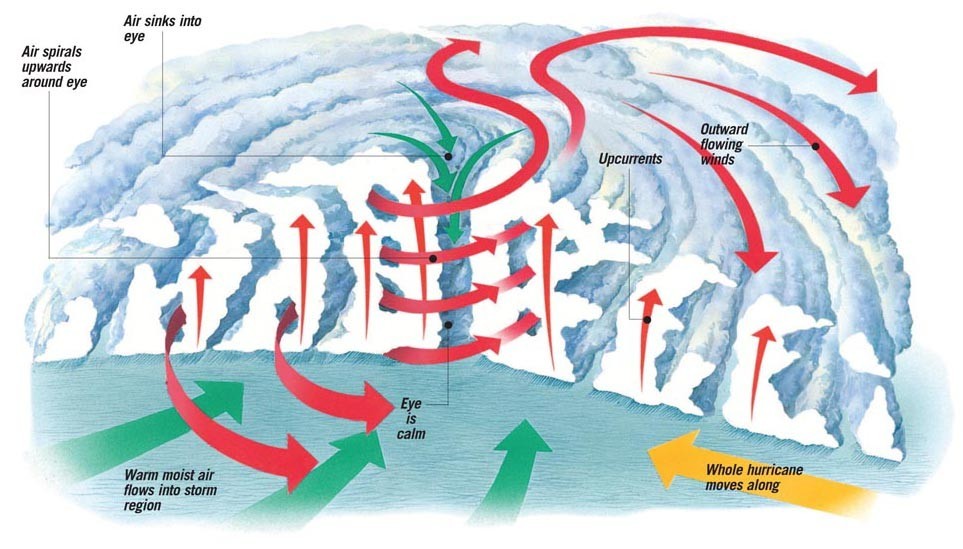
Hurricanes begin as warm, moist air heated by the Sun rises high into the atmosphere over the tropical oceans. The rising air sucks in more air from all around, which then begins to swirl around in a spiral. The moisture in the rising air condenses into clouds. These unleash massive downpours.
Hurricane Harvey rapidly grew out of a tropical depression in just eight hours. This is because it passed over a body of extremely warm water, called an eddy, in the Gulf of Mexico—at around 85°F (30°C), several degrees warmer than the average temperature for this time of year. The warmer the water, the more energy it gives to a storm: more moisture rises into the air and the clouds spiral faster.

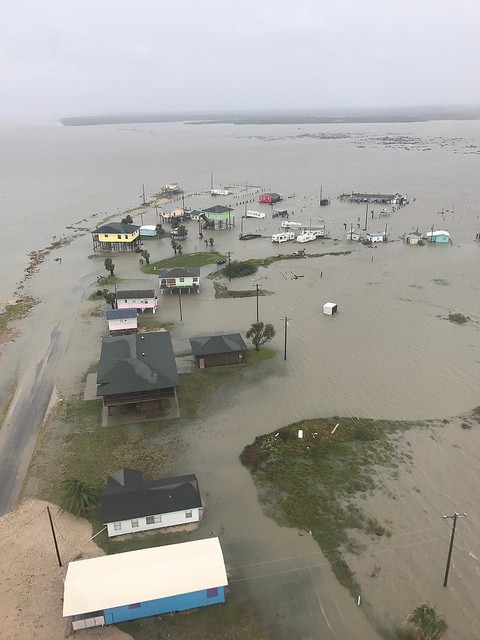
Hurricanes are steered by wind patterns in the atmosphere, but Hurricane Harvey has been wedged between two, equally powerful high pressure systems, causing it to be stuck in place over Texas. Normally, moisture is drawn up from the ocean into the hurricane, which then releases it as rain across the area of the storm. But Harvey has dropped so much water over southeastern Texas that the flooded land is itself acting as an ocean. The storm, which is barely moving, is pulling the moisture from the land back up into itself and dumping it back again as more rain.
The floods are made worse as the swollen rivers rush towards the Gulf coast. Here they are met by a storm surge coming inland off the sea. The two surges meet and the water piles up from both sides.