
Q-news
Million-year-old skull holds clue to origins of modern humans
Study of a million-year-old human skull found in China suggests that the modern humans originated far earlier than previously thought. It also raises the possibility that our own species, Homo sapiens, first emerged not in Africa but in Asia. The fossil skull, known as Yunxian 2, was discovered in Hubei province in 1990. Considering its age, scientists at the time thought it was a more ancient human species, Homo erectus. But a new study of the skull, which has now been independently reviewed by experts, has led to a different conclusion. The research team believe the skull belongs to an early version of Homo longi, the scientific name for Denisovans. Although now extinct, they were closely related to both us and another prehistoric human species, the Neanderthals. Scientists warn that the results of the study are far from certain. More evidence is needed to confirm whether the identification is accurate.
30th September 2025

Yunxian 2

The skull was excavated along with two others from Hubei province in 1990. Called Yunxian 1, 2 and 3, they were damaged and crushed, which meant that identification was difficult. Their age—the skulls were dated to 1 million years old—told scientists they must belong to Homo erectus, the only species of human known to be living in China at that time.
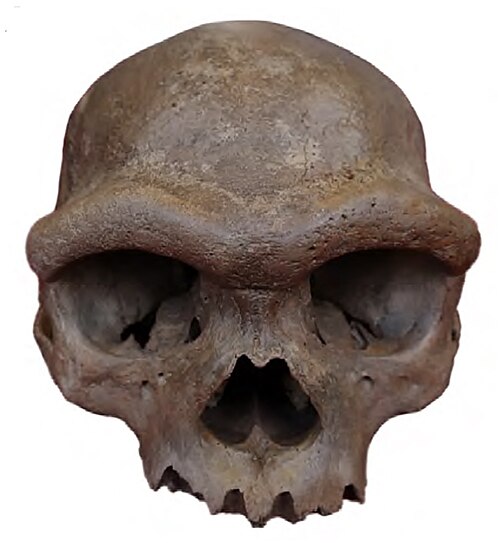
Modern techniques have allowed scientists to carry out a new study of Yunxian 2. To restore it to its original shape, they used advanced CT imaging, and high-resolution surface scanning to produce a virtual reconstruction of the skull. They then used a 3D printer to create a replica skull.
While the jutting lower jaw resembles that of Homo erectus, the overall shape and size of the brain case and teeth make it look much more like another fossil nicknamed "Dragon Man", which was given the scientific name Homo longi in 2021. This makes Yunxian 2 a Denisovan, a human species until recently known only from a jawbone, a toe bone and a tooth. We know from DNA analysis that Denisovans lived alongside Neanderthals in parts of western Asia, and interbred with each other and with modern humans, Homo sapiens.
Muddle in the middle
Before this discovery, scientists had a different theory about how different human species emerged. It went like this: African Homo erectus (called Homo ergaster) evolved into Homo heidelbergensis by around 800,000 years ago. Then, by around 600,000 years ago, Homo heidelbergensis had split into two branches. Individuals from one branch had spread out into Europe and Asia and, by 400,000 years ago, had given rise to the Neanderthals in Europe and Denisovans in Western Asia. From the other branch, our own species, Homo sapiens, evolved in Africa by around 300,000 years ago. (More recent evidence suggests, however, that Homo heidelbergensis was not the ancestor of modern humans, Neanderthals and Denisovans, but a completely separate line that later died out.)
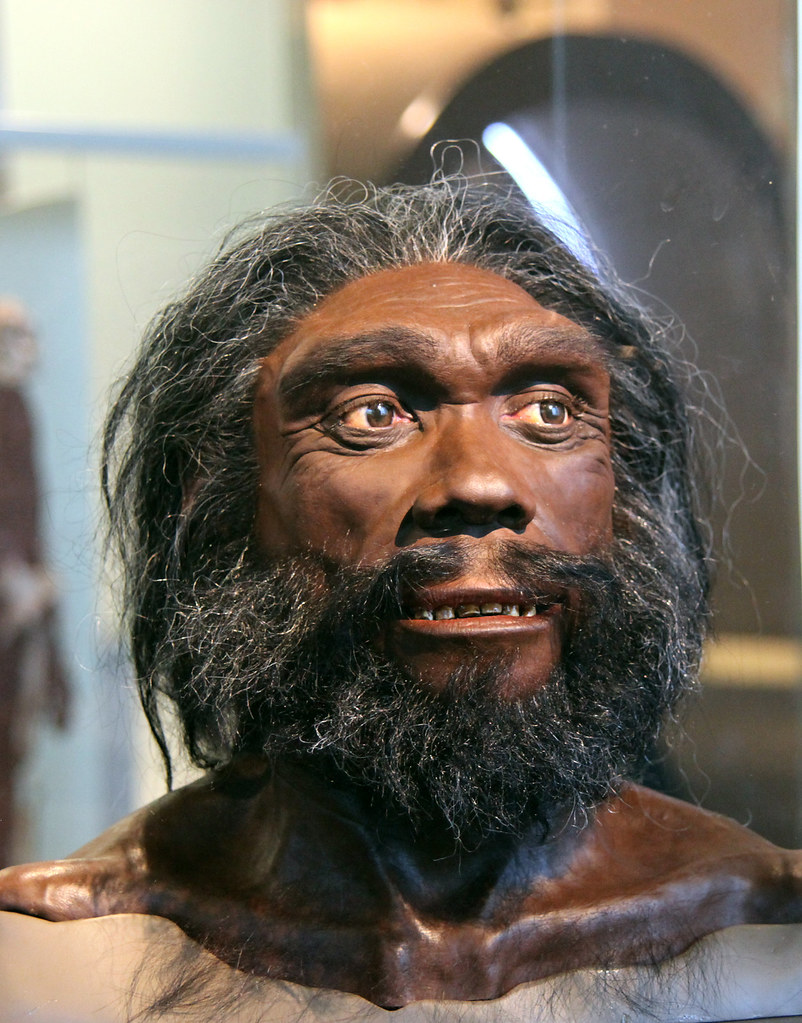
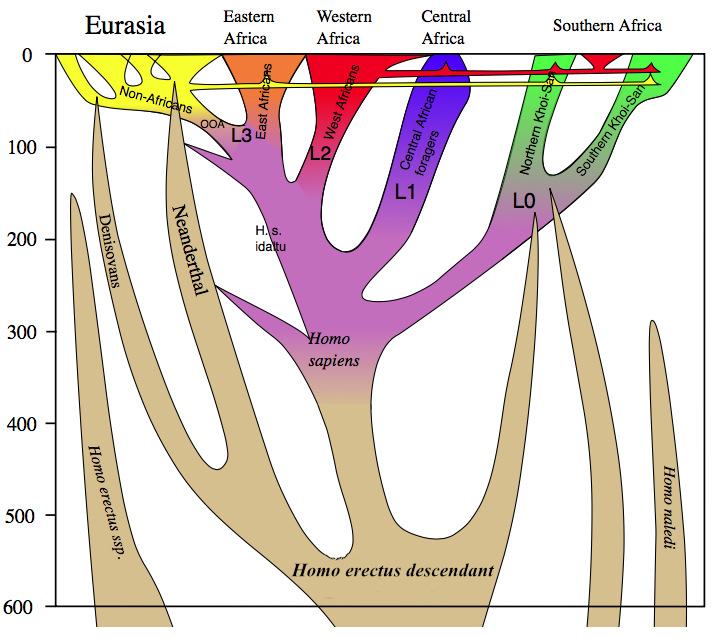
The uncertainty surrounding the story of human evolution arises from the confusing array of human fossils dating from between 1 million and 300,000 years ago. Palaeontologists call this the "muddle in the middle" (that is, the earlier and later parts of the story are better understood than this part). What experts do agree on is that, in the last 800,000 years, humans evolved along five major branches: Homo erectus, Homo heidelbergensis, Homo sapiens, Homo neanderthalensis (Neanderthals) and Homo longi (Denisovans).
Earlier origins?
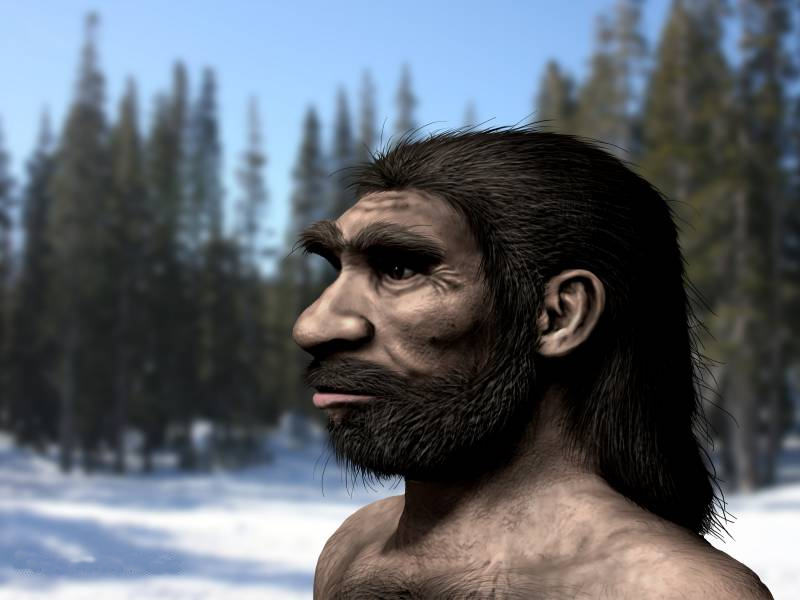
Analysis of Yunxian 2 suggests that the species of human to which it appears to belong, the Denisovans, had already split off from other humans by at least a million years ago—not, as previously thought, just 600,000 years ago. (It also reveals that the Denisovans were the most closely related extinct human species to Homo sapiens, taking over from Neanderthals as our closest relatives). If Denisovans walked the Earth a million years ago, then early versions of Neanderthal and our own species must have done so, too. So there are likely to be million-year-old fossils of early Homo sapiens somewhere on Earth—we just haven't found them yet. Or we have found them but haven’t yet recognized them as such.
The discovery also opens up the possibility that our ancestors might first have evolved not in Africa (which most scientists, up until now, believe was the case) but somewhere in Asia, the homeland of the Denisovans. In this scenario, populations later migrated into Africa where more recent versions of Homo sapiens then evolved and spread out across the world.