
EASY READ Prehistoric life

CITE
We have made every effort to follow citation style rules, but there may be some minor differences. If in doubt, please refer to the appropriate citation style manual.
EASY READ What was it like in the Cretaceous world?. (2026). In Q-files Encyclopedia, Prehistoric, EASY READ Prehistoric life. Retrieved from
https://www.q-files.com/prehistoric/easy-read-prehistoric-life/easy-read-what-was-it-like-in-the-cretaceous-world
"EASY READ What was it like in the Cretaceous world?." Prehistoric, EASY READ Prehistoric life, Q-files Encyclopedia, 12 Mar. 2026.
https://www.q-files.com/prehistoric/easy-read-prehistoric-life/easy-read-what-was-it-like-in-the-cretaceous-world.
Accessed 13 Sep. 2026.
EASY READ What was it like in the Cretaceous world? 2026. Prehistoric, EASY READ Prehistoric life. Retrieved 13 September 2026, from
https://www.q-files.com/prehistoric/easy-read-prehistoric-life/easy-read-what-was-it-like-in-the-cretaceous-world
Prehistoric, EASY READ Prehistoric life, s.v. "EASY READ What was it like in the Cretaceous world?," accessed September 13, 2026.
https://www.q-files.com/prehistoric/easy-read-prehistoric-life/easy-read-what-was-it-like-in-the-cretaceous-world


What was it like in the Cretaceous world?
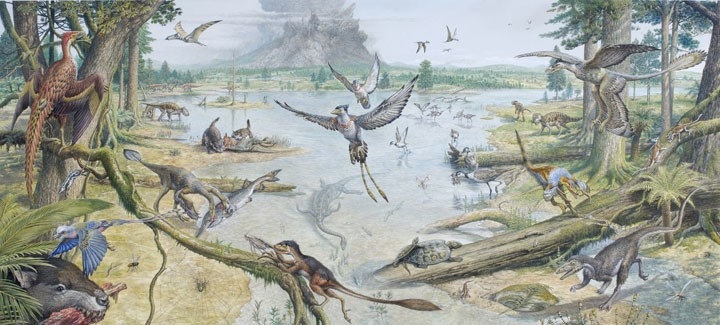
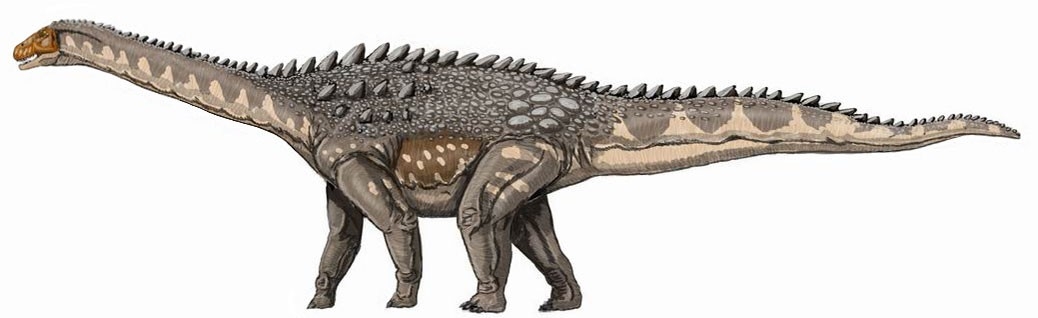
The Cretaceous Period ran from 143 to 66 million years ago. The world’s land masses divided up into lots of islands. Cut off from each other by the sea, dinosaurs in different lands began to evolve into different species. The ornithischian (“bird-hipped”) dinosaurs become much more abundant, while most of the Jurassic sauropods died out. One group of sauropods, the titanosaurs, lived on during the Cretaceous Period. They were the largest animals that ever walked the Earth.

Iguanodon
Iguanodon (Ig-WAH-noh-don) was an ornithopod, a type of ornithischian. It lived in Europe about 125 million years ago. It was not quick enough to run away from attackers. Instead, Iguanodon relied on its sharp thumb-spikes for defence. If any dinosaur dared to attack it, the Iguanodon would rear up on its back legs and jab its spike into the predator’s body.

Duck-billed dinosaurs
Hadrosaurs lived during the Cretaceous Period. Their snouts were wide and flat. They looked quite like duck’s bills, which is why they are known as duck-billed dinosaurs. They had hundreds of hard-wearing teeth in their jaws. This allowed them to chew their food. They could eat all kinds of plants, including leaves, ferns and pine needles.


Parasaurolophus
Many duck-bills had crests on top of their heads. Parasaurolophus (Pah-rah-SAW-roh-LOAF-us) had a long, backward-pointing crest. It was hollow with tubes inside. These were connected to the dinosaur's nose and throat. All this helped to make its warning calls much louder and deeper.
Armoured dinosaurs

Some plant-eating dinosaurs, called ankylosaurs, had a covering of bony plates to protect them from attack. If this were not enough to keep predators away, ankylosaurs had large balls of bone at the end of their tails. They could swing them like clubs into the bodies or heads of their attackers.
Horned dinosaurs
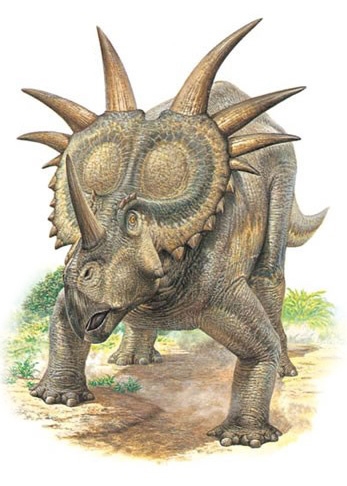
Horned dinosaurs, or ceratopsians, were mostly enormous plant-eaters. They had horns on their heads and a curved frill of bone around their necks. Triceratops (Try-SERRA-tops) was one of the largest ceratopsians. It had three horns on its head and a massive, solid neck frill. It lived in North America at the end of the Cretaceous Period. Tyrannosaurus was one of the few predators powerful enough to attack it.


Deinonychus
Deinonychus (Die-NON-ee-kus) was a small meat-eating dinosaur. It was a dromaeosaur, or raptor. It was intelligent and had sharp eyesight. Packs of Deinonychus may have hunted together to bring down prey much larger than themselves. On each of their feet they had a single, massive, curved claw. Having cornered their victim, they used the claw to pin it down while they sank their teeth into its flesh.

Tyrannosaurus rex
One of the largest flesh-eating dinosaurs, 12-metre-long Tyrannosaurus rex (Tie-RAN-oh-SAW-rus REX) had massive, powerful legs, tiny arms and teeth as sharp as steak knives. It would creep up on its prey, then charge at it, bringing it down with the huge claws on its feet. It would have probably also have fed on carrion—including kills made by other animals.


Consultant: Chris Jarvis
Ready to find out more?
Here are some pages in other parts of Q-files you might like to explore:
Cretaceous Period
Cretaceous Asia
Cretaceous Europe
Cretaceous North America
Age of Dinosaurs
Dinosaurs
Deinonychus
Euoplocephalus and the ankylosaurs
Iguanodon
Parasaurolophus
Styracosaurus
Triceratops
Tyrannosaurus rex
pics

Without in any way limiting Q-files Ltd’s exclusive rights under copyright, any use of this publication to “train” generative artificial intelligence (AI) technologies to generate text is expressly prohibited. Q-files Ltd reserves all rights to license use of this work for generative AI training and development of machine learning language models.