
EASY READ Prehistoric life

CITE
We have made every effort to follow citation style rules, but there may be some minor differences. If in doubt, please refer to the appropriate citation style manual.
EASY READ When did humans first appear?. (2026). In Q-files Encyclopedia, Prehistoric, EASY READ Prehistoric life. Retrieved from
https://www.q-files.com/prehistoric/easy-read-prehistoric-life/easy-read-when-did-humans-first-appear
"EASY READ When did humans first appear?." Prehistoric, EASY READ Prehistoric life, Q-files Encyclopedia, 12 Mar. 2026.
https://www.q-files.com/prehistoric/easy-read-prehistoric-life/easy-read-when-did-humans-first-appear.
Accessed 1 Nov. 2026.
EASY READ When did humans first appear? 2026. Prehistoric, EASY READ Prehistoric life. Retrieved 1 November 2026, from
https://www.q-files.com/prehistoric/easy-read-prehistoric-life/easy-read-when-did-humans-first-appear
Prehistoric, EASY READ Prehistoric life, s.v. "EASY READ When did humans first appear?," accessed November 1, 2026.
https://www.q-files.com/prehistoric/easy-read-prehistoric-life/easy-read-when-did-humans-first-appear


When did humans first appear?
The first human-like creatures lived in Africa, probably more than six million years ago. They were descended from prehistoric apes. Unlike apes, they learned to walked upright on two legs. Later kinds of human evolved and spread to all parts of the world. Modern humans, called Homo sapiens, evolved about 300,000 years ago.

Toolmakers
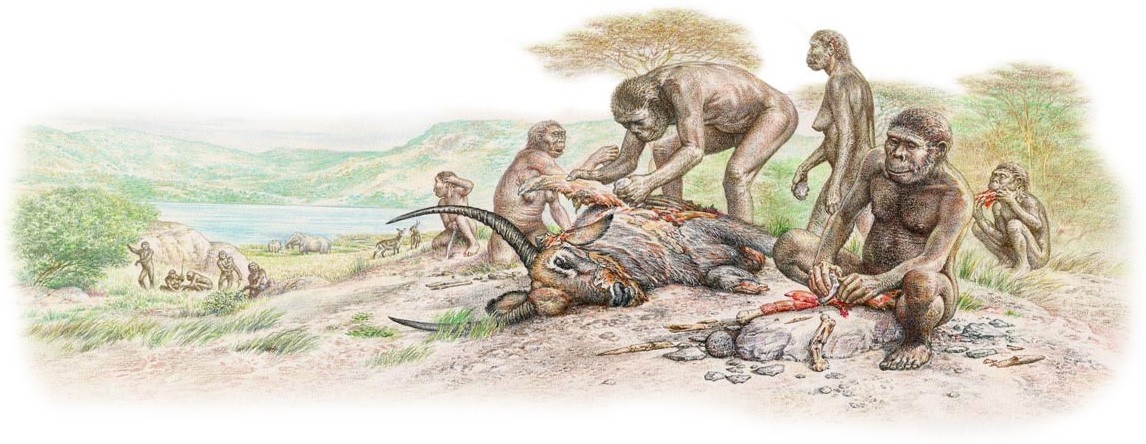
Early humans lived together in small groups. They were still ape-like in appearance. By about 2.6 million years ago, these humans had learned to make simple stone tools. They used them to kill and skin animals for food. The first tools used by humans were stone blades. They were made by striking one stone against another to make a sharp edge.

Travellers
About 2 million years ago, taller, more intelligent humans evolved. They looked a little less ape-like. They learned to hunt larger animals with better, sharper weapons. They may have been the first kinds of human to use fire to cook food. These humans, called Homo erectus, travelled out of Africa to Asia. They went around in small groups, and lived off the wild animals they hunted and the plant food they gathered.

Neanderthals
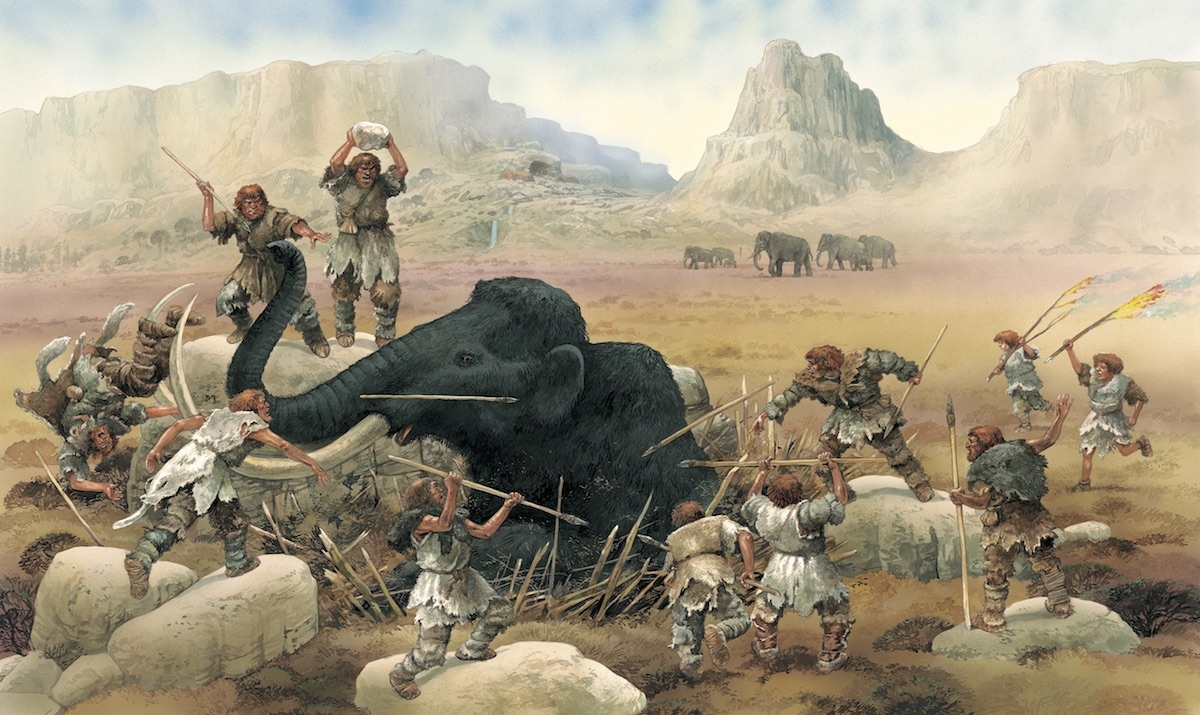
Neanderthal humans evolved about 400,000 years ago. They are named after the valley in Germany where their bones were first discovered. Short and stocky, Neanderthals had low foreheads and thick ridges above their eyes. Otherwise, they looked quite like us. Neanderthals hunted and fished, cooked their food over fires, built shelters and buried their dead. They lived in Europe until about 40,000 years ago.

Modern humans
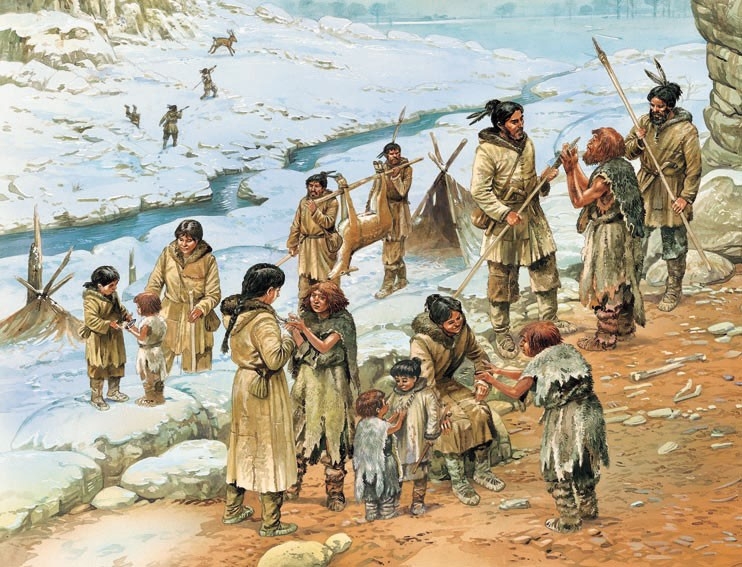
Modern humans, called Homo sapiens (which means “wise man”), evolved in Africa about 300,000 years ago. These were people who looked almost exactly like us. Over many years, modern humans spread out across the globe. They travelled to Asia, Europe, Australia and eventually reached the Americas. Homo sapiens lived in Europe at the same time as the Neanderthals for tens of thousands of years. Unlike the Neanderthals, they were able to survive into the present day.
Modern humans buried their dead, wore ornaments, used animal hides to make clothes and created cave paintings. They made much better tools than earlier humans. They hunted and fished using clever, time-saving ways.
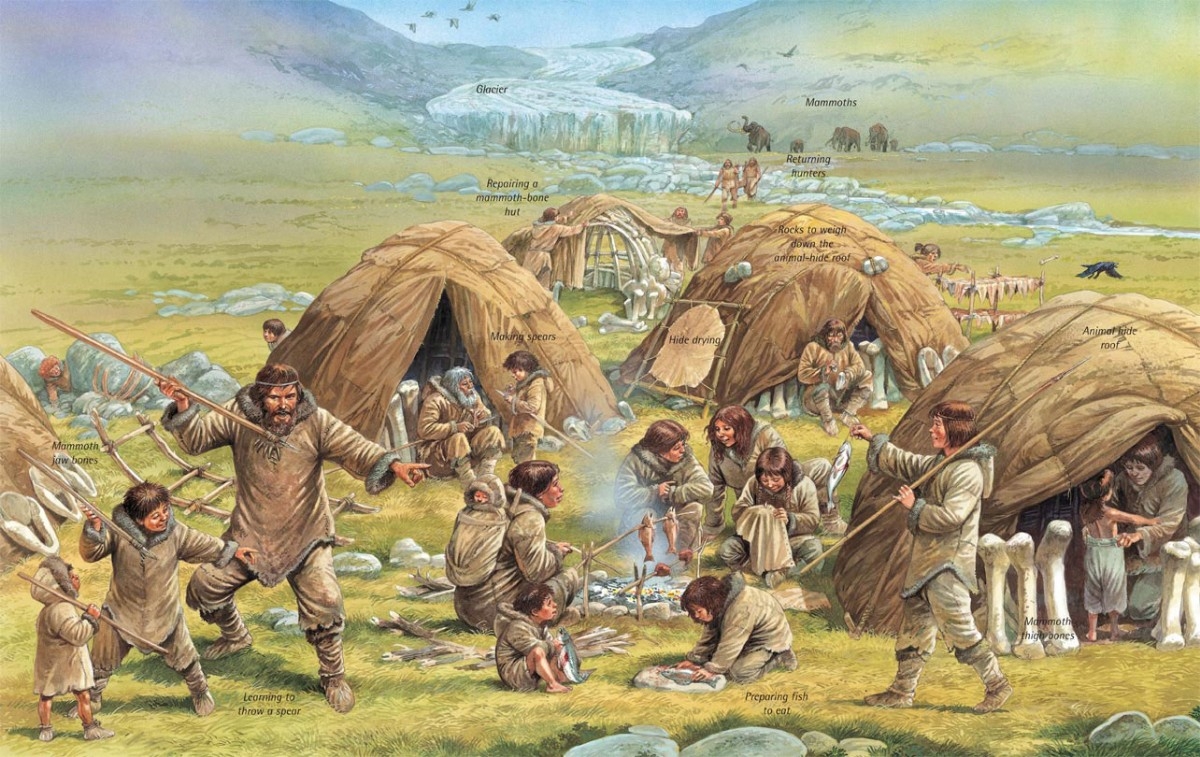
About 10,000 years ago, some people started growing plants for their food and keeping animals close by. Instead of wandering from place to place searching for food, people lived in farms and villages.
Consultant: Chris Jarvis
Ready to find out more?
Here are some pages in other parts of Q-files you might like to explore:
Story of Humans
Stone Age
Stone tools
Cave paintings
Human evolution A-Z
Stone Age A-Z
pics

Without in any way limiting Q-files Ltd’s exclusive rights under copyright, any use of this publication to “train” generative artificial intelligence (AI) technologies to generate text is expressly prohibited. Q-files Ltd reserves all rights to license use of this work for generative AI training and development of machine learning language models.