
EASY READ Prehistoric life

CITE
We have made every effort to follow citation style rules, but there may be some minor differences. If in doubt, please refer to the appropriate citation style manual.
EASY READ What was it like during the Ice Ages?. (2026). In Q-files Encyclopedia, Prehistoric, EASY READ Prehistoric life. Retrieved from
https://www.q-files.com/prehistoric/easy-read-prehistoric-life/easy-read-what-was-it-like-during-the-ice-ages
"EASY READ What was it like during the Ice Ages?." Prehistoric, EASY READ Prehistoric life, Q-files Encyclopedia, 12 Mar. 2026.
https://www.q-files.com/prehistoric/easy-read-prehistoric-life/easy-read-what-was-it-like-during-the-ice-ages.
Accessed 1 Nov. 2026.
EASY READ What was it like during the Ice Ages? 2026. Prehistoric, EASY READ Prehistoric life. Retrieved 1 November 2026, from
https://www.q-files.com/prehistoric/easy-read-prehistoric-life/easy-read-what-was-it-like-during-the-ice-ages
Prehistoric, EASY READ Prehistoric life, s.v. "EASY READ What was it like during the Ice Ages?," accessed November 1, 2026.
https://www.q-files.com/prehistoric/easy-read-prehistoric-life/easy-read-what-was-it-like-during-the-ice-ages


What was it like during the Ice Ages?
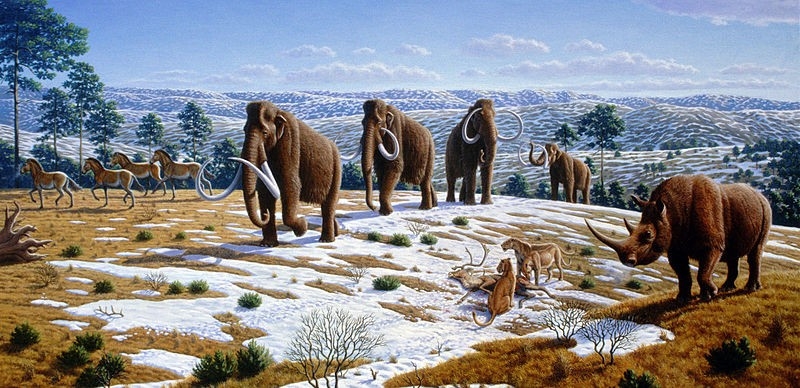
There have been several ice ages during the Earth’s long history. These are times when the climate becomes so cold that ice sheets spread out from the poles and cover huge areas of the world. The most recent ice ages began around 2.6 million years ago. They were called the Pleistocene Ice Ages. Vast, thick ice sheets covered large parts of Europe and North America for thousands of years at a time.
Glacials and interglacials
These bitterly cold times were known as glacial periods. In between, there were warmer periods called interglacials. The last glacial period ended only about 11,500 years ago. We are probably living in an interglacial today. One day, another glacial period might grip the world.
Ice Age mammals
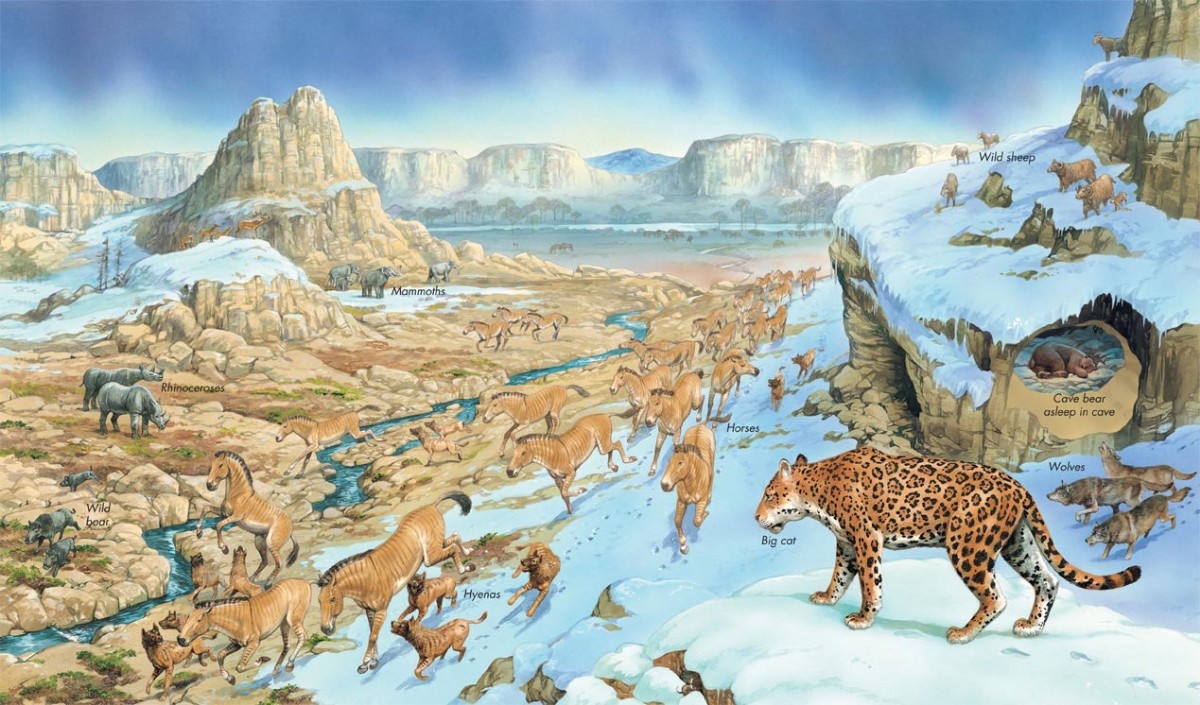
When the ice sheets spread southwards, mammoths, rhinoceroses, reindeer and bears moved to the tundra. Tundra lands were treeless areas of low grasses and frozen soils, lying just beyond the edge of the ice. To survive here, the animals grew thick fur to keep them warm. When the Ice Ages were over, the warmer weather made it hard for the animals to survive and they soon died out. Hunting by people may have helped to kill them off.
Mammoths
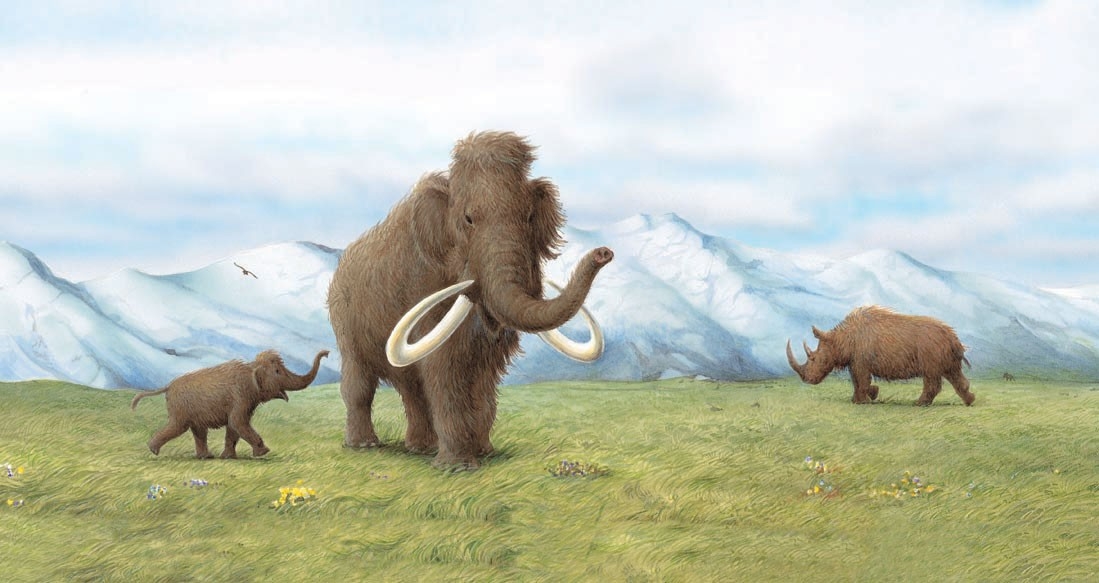
Mammoths are the best-known Ice Age mammals. The woolly mammoth had a shaggy coat and a thick layer of body fat to enable it to keep warm in the extreme cold. It may have used its long tusks to clear away the snow and get to the plants underneath. Most mammoths died out about 10,000 years ago. Complete mammoth carcasses, preserved in ice, are still found in tundra regions today.
South America
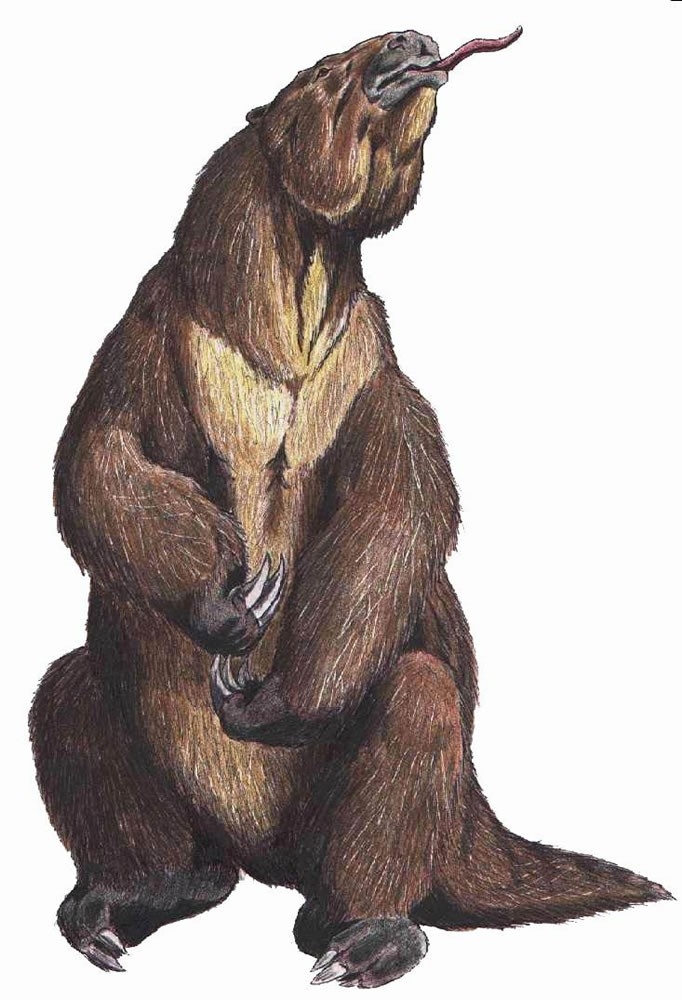
Not everywhere in the world suffered freezing climates during the Ice Ages. Megatherium, the giant ground sloth, roamed the woodlands of South America. One of the largest mammals that ever lived, Megatherium was about 7 metres (23 feet) long.
Glyptodon, an ancestor of the armadillo, was a giant plant-eater, the size of a small car. It had dome-shaped body armour.
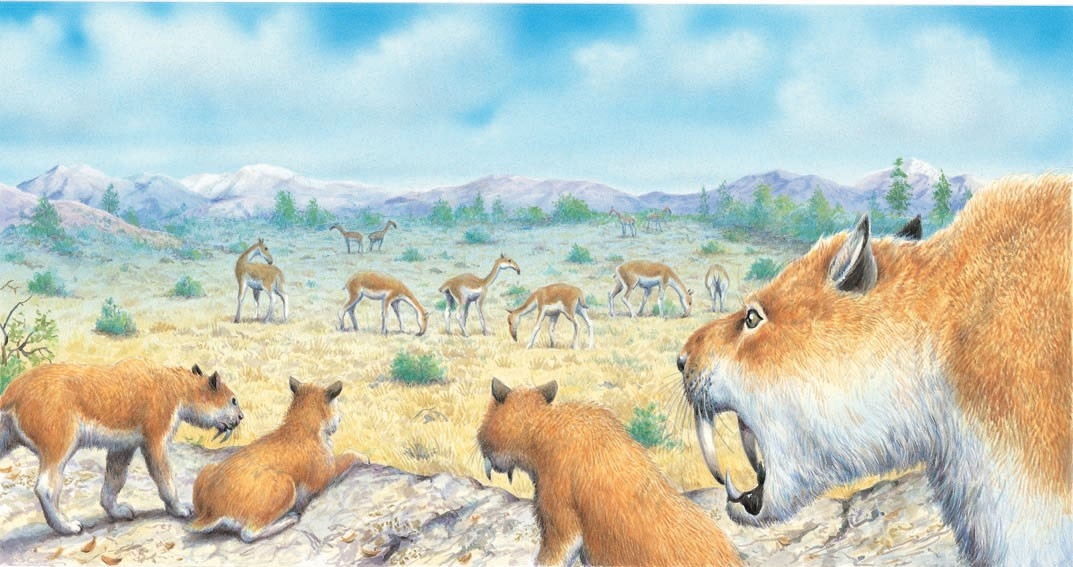
Macrauchenia, which looked like a humpless camel with a short trunk, grazed in herds on the plains. It was preyed on by Smilodon, the sabre-toothed cat. This fierce meat-eater used its massive canine teeth for stabbing the throats of its victims.
Consultant: Chris Jarvis
Ready to find out more?
Here are some pages in other parts of Q-files you might like to explore:
Ice Ages
Mammoths
Ice Age glaciation
pics

Without in any way limiting Q-files Ltd’s exclusive rights under copyright, any use of this publication to “train” generative artificial intelligence (AI) technologies to generate text is expressly prohibited. Q-files Ltd reserves all rights to license use of this work for generative AI training and development of machine learning language models.