
Story of humans
Stone tools
Stone tools made by humans or human ancestors date back more than 3 million years. Many scientists studying human origins, known as palaeoanthropologists, guess that stone tools formed only part of the early human toolkit. Materials such as wood or bamboo are rarely preserved and it is quite possible that tools made of these materials were in use even earlier. The invention of stone tools marks the beginning of the what is known as the Palaeolithic period, or old Stone Age. The period is divided into three, according to developments in tool technology. The Lower Palaeolithic (c. 3.3 million to 300,000 years ago), is the earliest period of stone tool production, from pebble tools to hand axes. The next stage, the Middle Palaeolithic (c. 300,000 to 50,000 years ago), covers the stone tools made both by the Neanderthals and the first modern humans. The Upper Palaeolithic (50,000 to 12,000 years ago) was a time when more sophisticated methods were used to create a wide range of stone tools.

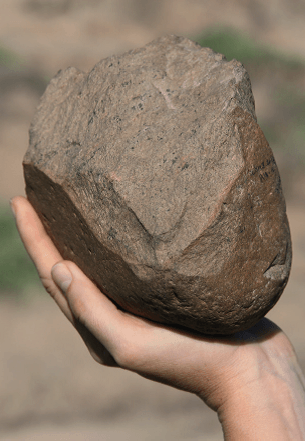
First stone tools
Stone tools found at Lomekwi, near the west bank of Lake Turkana in Kenya, between 2011 and 2014 are dated to 3.3 million years old. They are more than half a million years older than the first remains of the genus Homo. Known as “Lomekwian” tools, some scientists think they may have been made by Kenyanthropus platyops, a human ancestor that lived in the same region at the same time. The tools could also have been the work of Australopithecus afarensis, another local human-like species, of whose best known fossils are those of a find called Lucy. The stones were clearly crafted and not the result of an accidental fracture of rocks: studies show that they had been deliberately rotated as flakes were struck off to make the tool.
In 2010, researchers working at the site of Dikika in Ethiopia—near where the remains a young Australopithecus afarensis girl named “Selam” had also been discovered—reported what they believed to be cut marks on animal bones dated to 3.3 million years ago. The marks are believed to have made by tool-using human ancestors.

Pebble tools
The first known stone tools made by humans of the genus Homo date from around 2.6 million years ago. Scientists call these simple tools, which were fashioned out of volcanic rock, "pebble tools" or “Oldowan tools”, after the Olduvai Gorge in Tanzania, where they were first identified. The tools were made from large, round river pebbles. A few flakes were struck off them using other stones, producing a cutting edge. The flakes were used as simple blades. The tools have been found close by animal bones which carry cut marks, so they were probably used to butcher animal carcasses. They could also have been used to break open bones to extract the marrow inside, to dig up plant tubers, slice stems or break open nuts and seeds.
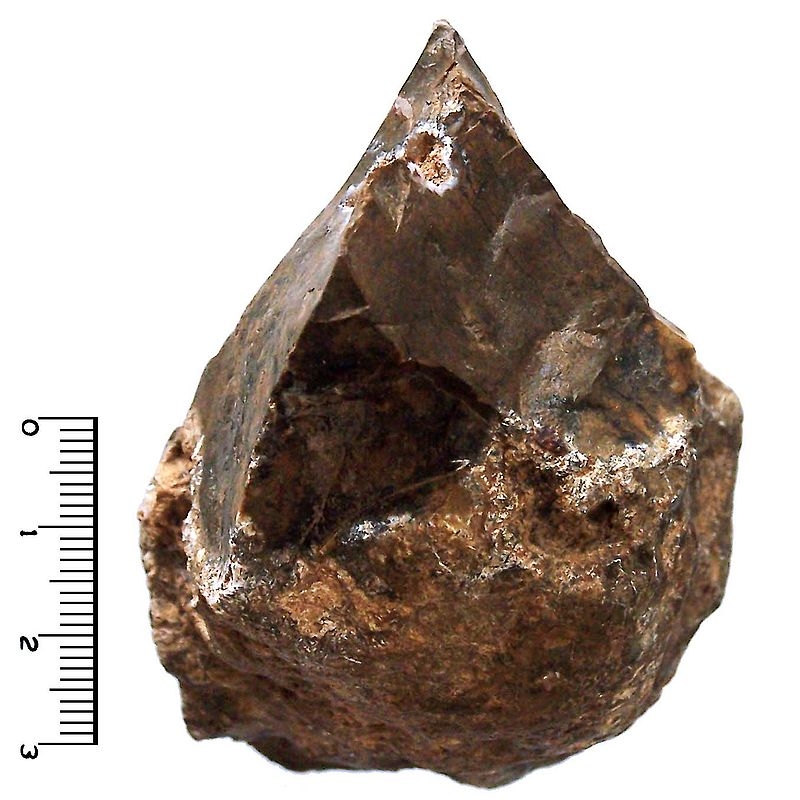
Many experts think that Homo habilis, the earliest humans, were the manufacturers of these tools, although their fossil remains have not been found close to them. It is also possible that other human-like species, such as Australopithecus garhi, could have made them. They are known to have co-existed with H. habilis at places like the Olduvai Gorge.
Oldowan tools were made in southern and eastern Africa between 2.6 and 1.7 million years ago. But this type of toolmaking also spread out of Africa and into Asia and Europe by travelling bands of Homo erectus.

Hand axes
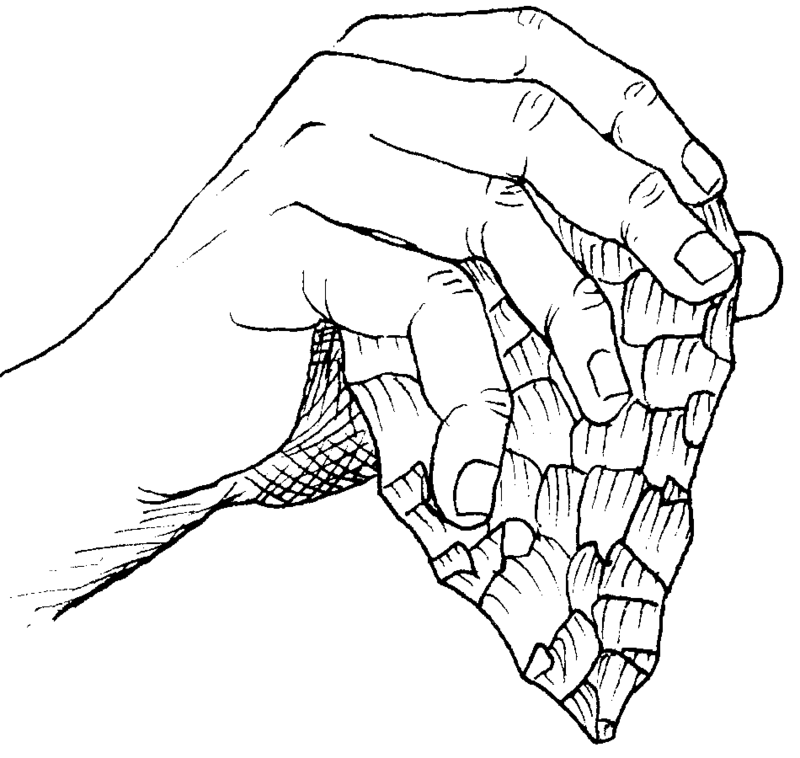
Hand axes first appeared in East Africa about 1.7 million years ago. These new-style, teardrop-shaped tools were probably first crafted by Homo ergaster or Homo erectus, and later by their descendants, Homo heidelbergensis. The use of hand axes spread to different parts of the world as humans migrated from Africa. They were made out of a variety of rock types: in Africa they were often volcanic rocks such as basalt, while in Europe they were from chert or flint. They are called “Acheulian” tools after St Acheul in France, where many examples have been found.
The sharp edge on an Oldowan tool was probably the result of trial and error, whereas an Acheulean tool was the product of a skilled technique. The maker, or "knapper", began with a larger stone, from which large flakes were knocked off. These were then used as cores. This was roughly shaped by another stone acting as a hammer. Then, using a soft hammer made of wood, bone or antler, the hand axe was finely honed all over its surface. The final tool had two convex surfaces meeting at a sharp edge. Its technical name, biface, comes from the fact it was worked on two sides.
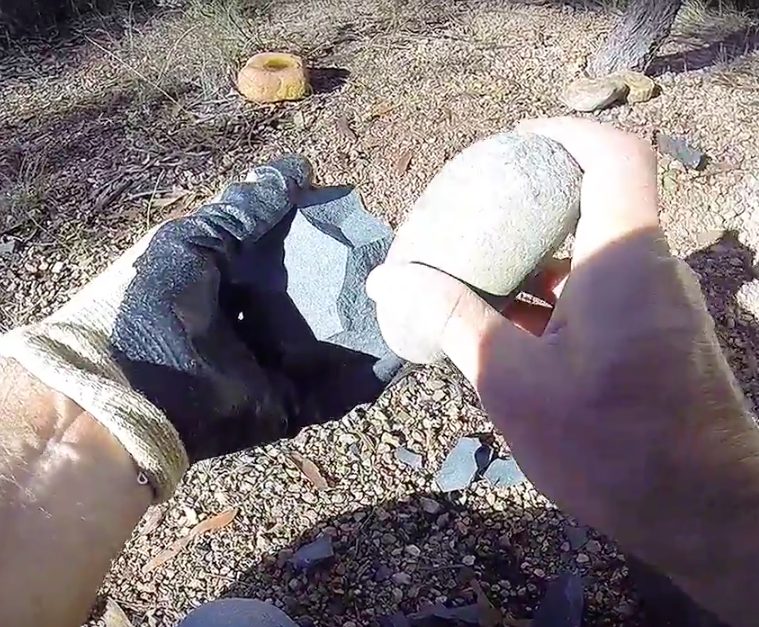
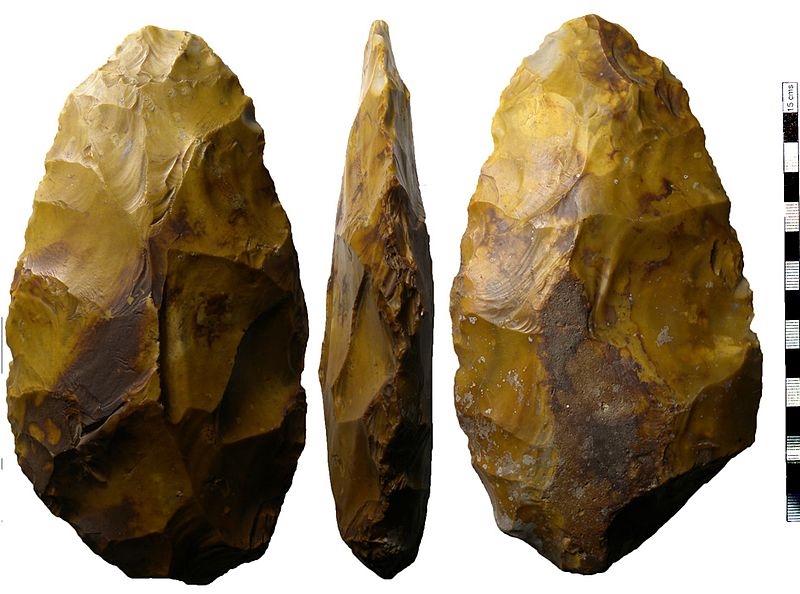
Having a point at one end, a blunt butt at the other and a cutting surface around its edges, the hand axe was clearly a multi-purpose tool: it could be used to slice carcasses, to dig for tubers, to chop wood and remove tree bark and to throw like a discus or “killer frisbee” at prey. It could also serve as a block of raw material for the production of fresh, sharp flakes when these were needed.
The hand axe was a vital tool used humans in many parts of the world. Its form changed little in more than a million years.
Levallois technique
About 300,000 years ago, at the beginning of the Middle Palaeolithic, a method called the Levallois technique was invented (named after the French site where it was first recognized). Pieces were flaked off around the edge of a flint, creating a domed shape on the top that looked like a tortoise's shell. When the flint was struck, a thin flake, with all its edges already sharpened, came away. The flake could be used as a scraper, knife or spearpoint, according to its design; the technique allowed the toolmaker to control the final shape of the flake.
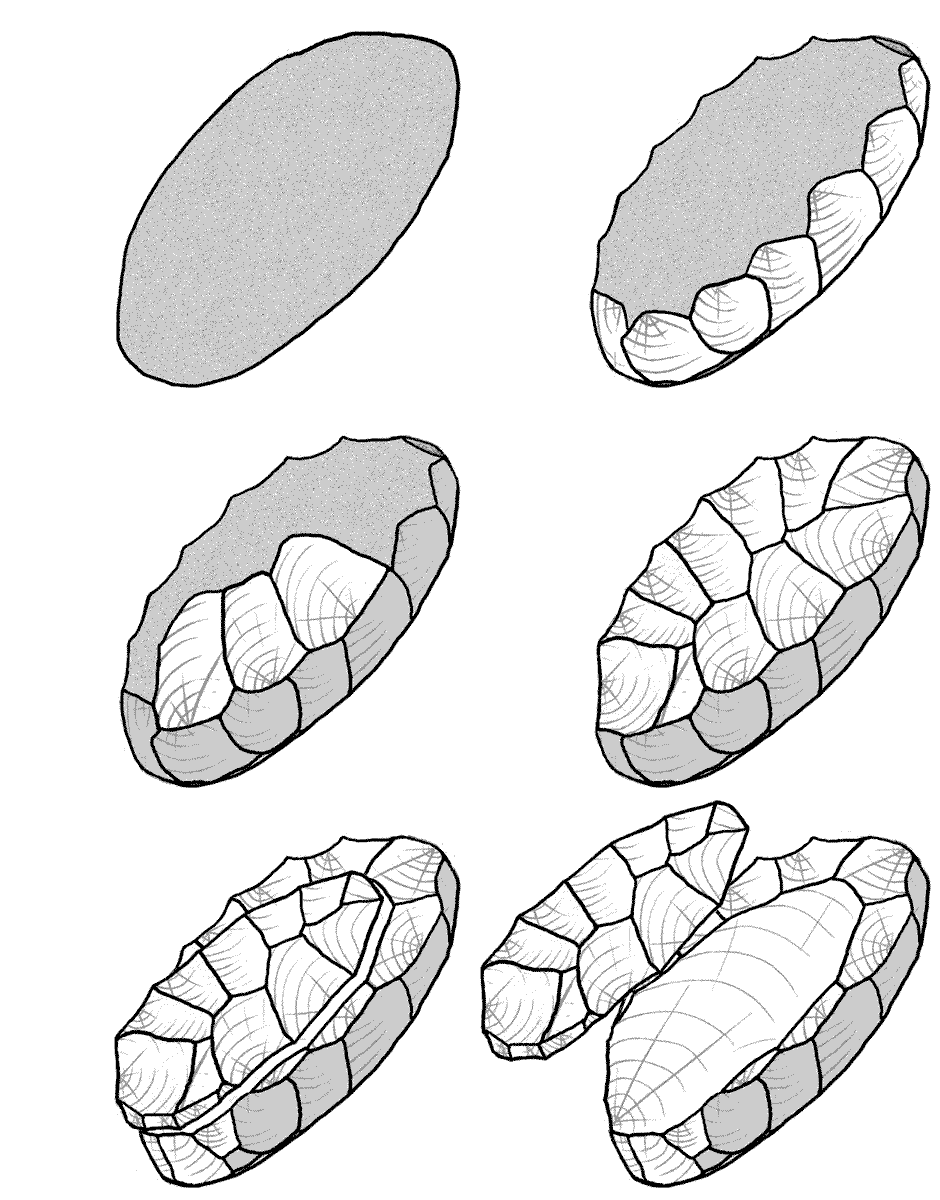

The Levallois technique was used by the Neanderthals, whose tools are also known as “Mousterian” after the French cave of Le Moustier, one of the first sites where they were found. The Neanderthals made different kinds of flake tools, which appear to be scrapers, knives and points, although it is not known exactly how they were used. Tools made using the Levallois technique have also been found alongside the earliest remains of Homo sapiens—modern humans—at Jebel Irhoud in Morocco, northwestern Africa, dating back 300,000 years ago.
Upper Palaeolithic tools

At the beginning of the Upper Palaeolithic, about 50,000 years ago, there was a change in the way tools were made in Africa and the Middle East, and this change soon spread to Europe. Whereas previously stone tools were made by reducing a piece of rock down to just a few tools, the new method allowed many long, thin flakes, or blades, to be produced from a single block of stone. The blades were produced by the use of a pointed implement made of wood, bone or antler. They were then worked into different shapes to form knives, scrapers, chisels or borers. A burin (from the French word, meaning "cold chisel”), was such a blade with a chisel-like edge. Humans used it for engraving and for carving wood or bone.

A microlith was a small stone tool around a centimetre (0.4 inch) in length, usually made of flint or chert. It was made by humans across Africa, Eurasia and Australia and used to make spearpoints and arrowheads. Often they were attached to wood, bone or resin.
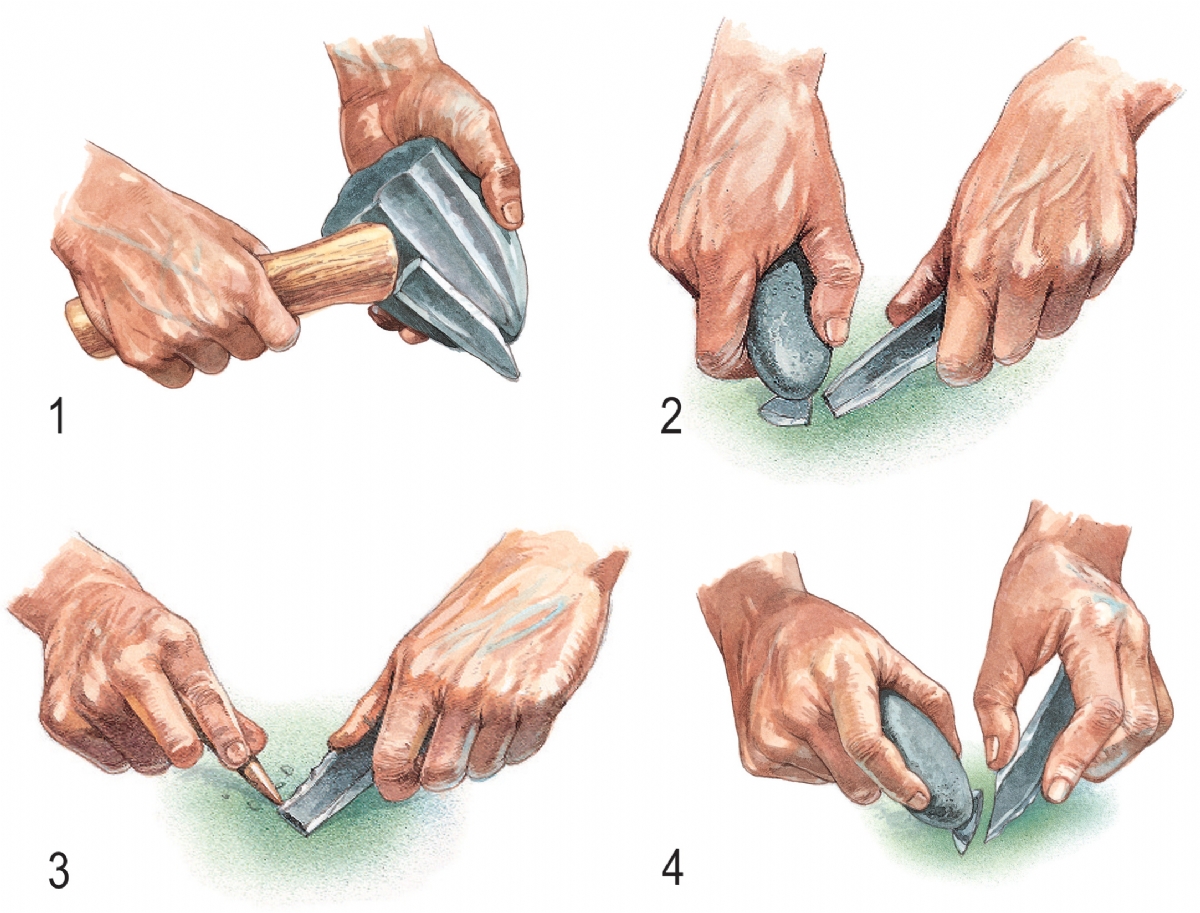
This illustration shows how tools were made in Upper Palaeolithic times: An antler hammer knocks a flack off the stone core (1). Snapping off the end of the flake using a rounded cobble gives a flat edge (2). To make a sharp blade, an antler tool is used to flake off layers along the edge (3). Striking the end of the flake at an angle to break off a triangular shard creates a sharp point (4).
Stone tool use by animals
Many monkeys and apes use tools. Chimpanzees have been observed using twigs to “fish” ants or termites out of their nests. But until recently it was not thought these animals used stones for tools. One reason is that stones are not available to species that spend much of their time in trees. However, recent observations of chimpanzees of west Africa show they use stones as tools to crack open nuts, and, as a 2004 study shows, have been doing so for at least 4300 years.
It is now known that bearded capuchin monkeys in Brazil and long-tailed macaque monkeys in Thailand also use stone tools. Capuchins use them to crack open nuts or dig up tubers, while macaques use them for cracking open shellfish. Chimps are our closest relative in the animal kingdom, but neither the capuchin nor the macaque is closely related to humans. This means that the animals must have each come up with stone tool technology independently.

Consultant: Chris Jarvis