
Canals
Aqueducts
Canals with sources of water at a higher level, such as springs, lakes or mountain streams, may carry water to a place at a lower level where it is needed. Canals built for this purpose are known as aqueducts. The smallest types, known as rills, are open channels made from stone, brick or concrete which are built to transport water for domestic use or irrigation. Some run alongside streets or through exotic gardens. The term aqueduct is also used for bridges that are constructed to carry manmade watercourses across valleys.


Ancient aqueducts
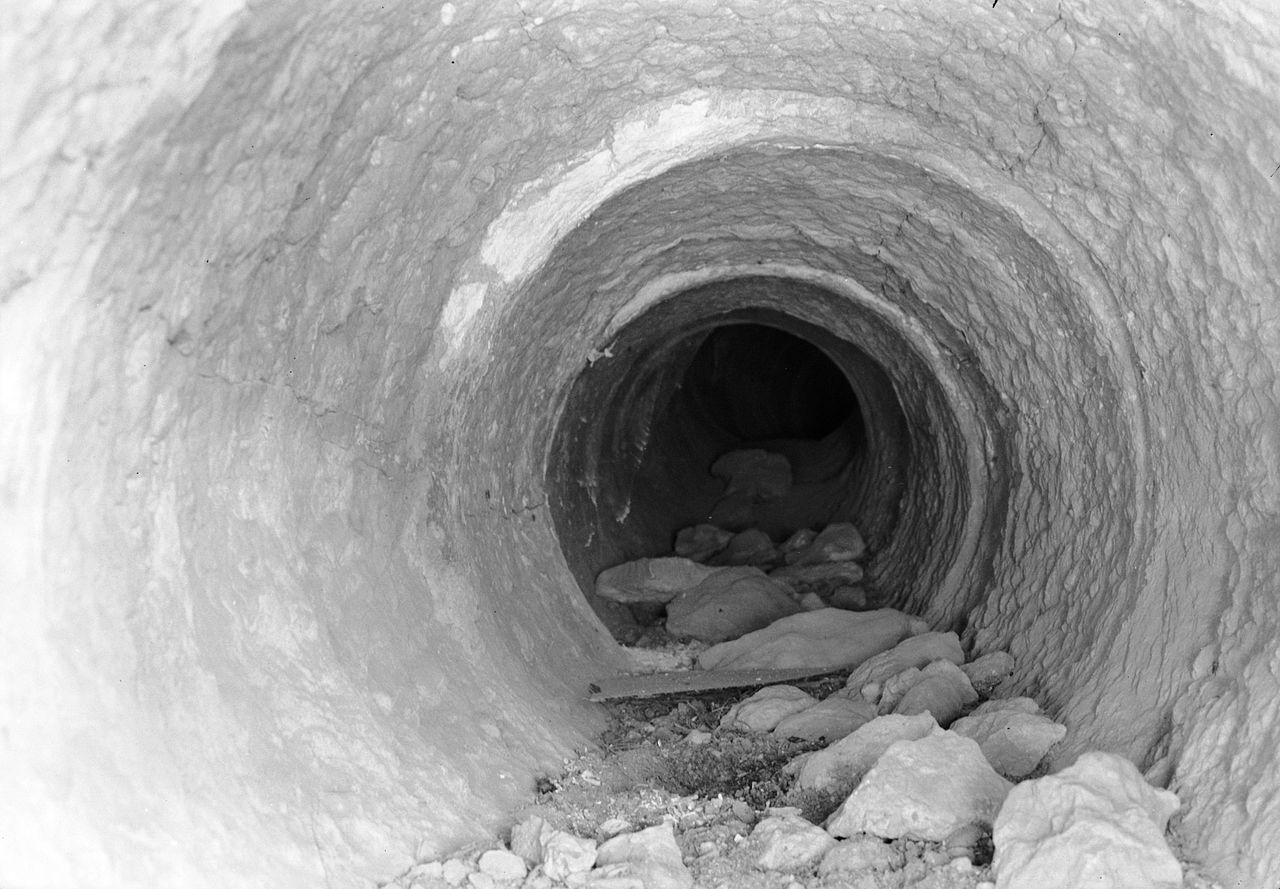
Aqueducts were built at the time of ancient civilizations and cultures all over the world, including, for example, the Indus Valley, Aztec Empire, Nazca culture of Peru, and ancient Sri Lanka. Water flowed along narrow channels built of of stone, brick or concrete with a slight downward gradient. Many aqueducts were buried beneath the ground and followed the contours of the terrain, but some were carried over bridges.

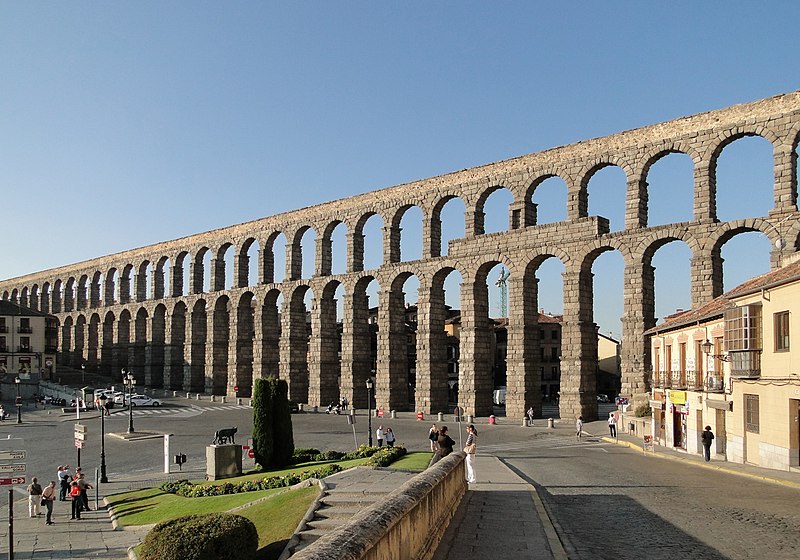
Aqueducts were built in all parts of the Roman Empire, supplying fresh water to public baths and for drinking water in the cities. To cross valleys, the water was channelled through pipes over spectacular arched bridges, many of which still stand today. The term aqueduct is often used for a bridge carrying watercourses.
Acequias
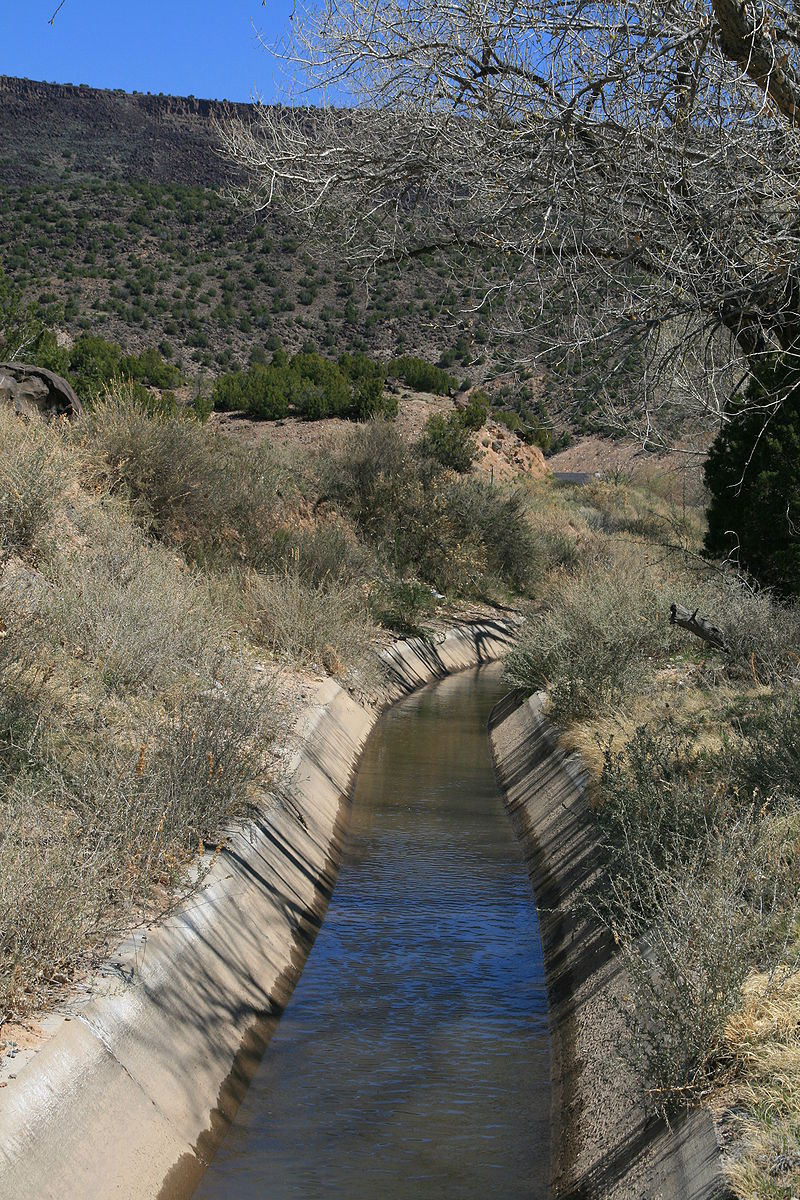
Having adopted the technology of aqueduct-building brought by the Arabs during their long rule over the Iberian peninsula (Spain and Portugal) in medieval times, the Spanish built irrigation channels, called acequias, across Spain and throughout their conquered lands in the Americas: the Andes, northern Mexico and the modern-day American Southwest.
Leats
A leat (or millstream) is an aqueduct dug into the ground. Leats were made for many purposes, including supplying water to watermills, mines, factories, cultivated fields or people's homes.
Beginning in a reservoir created behind a weir (a low dam), a leat runs along the side of a valley at a shallower slope than the main stream. At the mill, the difference in levels between the leat and the main stream is large enough to provide a swift downflow of water, called the mill race, which turns the water wheel.
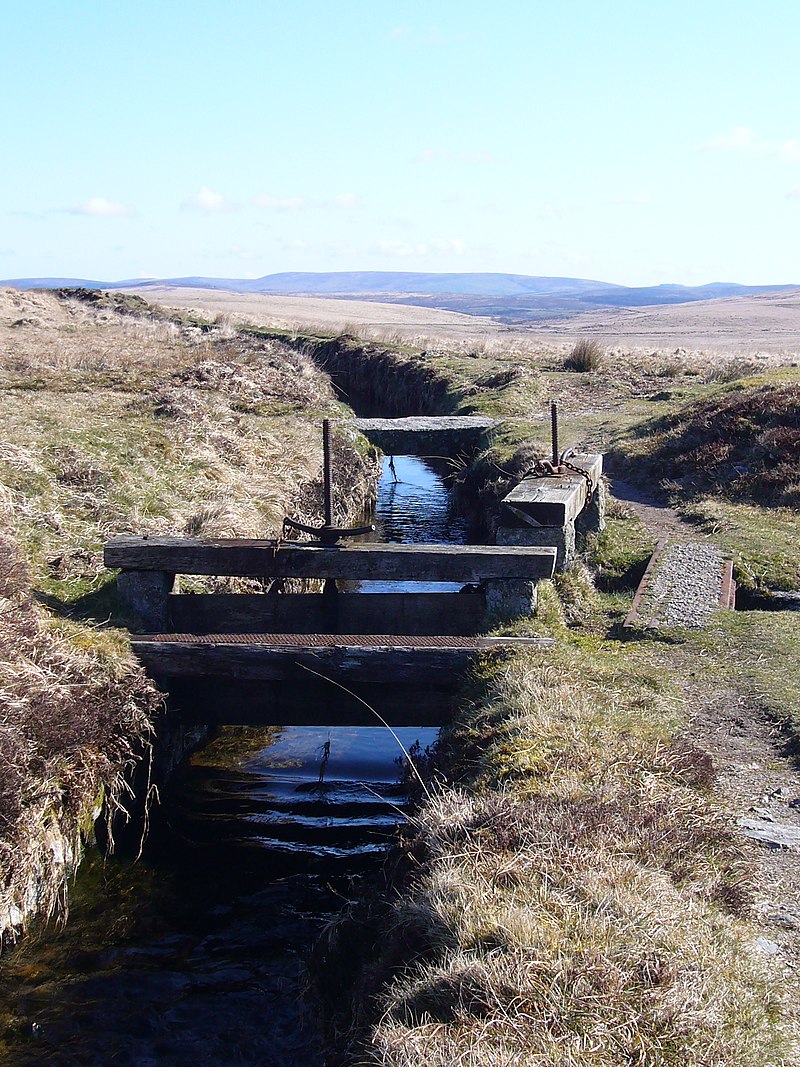
The many leats on Dartmoor, Devon, were mostly constructed to provide power for mining activities, although Drake's Leat, constructed in 1591 under the supervision of Sir Francis Drake, was intended to carry water from Dartmoor to Plymouth.

Levadas
Levadas are aqueducts found on the Portuguese island of Madeira. They were built by Portuguese settlers, starting in the 16th century, in order to bring water from the west and northwest of the island to the drier southeast, where most people lived and farmed. Many were cut into the sides of mountains or run through tunnels. Today the levadas not only still supply water to the southern parts of the island, they also provide hydro-electric power and an extensive network of walking paths.
Modern aqueducts
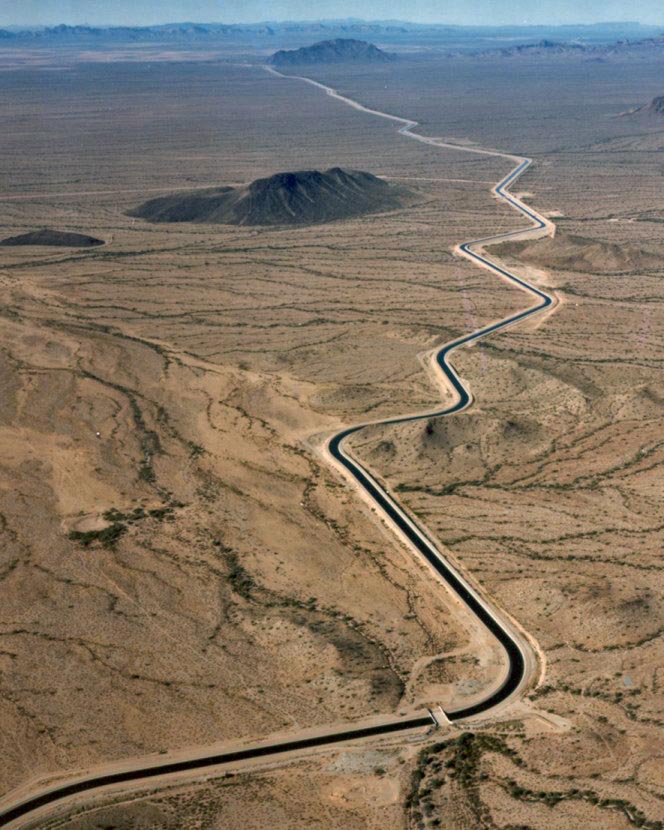
In modern times, long, wide aqueducts have been built in the United States to supply large cities, especially in the drought-stricken regions of the American Southwest. The 389-kilometre (242-mile) Colorado River Aqueduct, for example, supplies Los Angeles with water from the Colorado River, while the Central Arizona Project stretches 541 kilometres (336 miles) across Arizona to the cities of Phoenix and Tucson.

The South–North Water Transfer Project in China is an ongoing project involving a vast system of aqueducts and canals. Eventually, billions of cubic metres of fresh water will be channelled from the River Yangtze in southern China to the drier north via three waterway systems: the Eastern Route via the Grand Canal; the Central Route from the Danjiangkou Reservoir on the Han River via the Grand Aqueduct to Beijing and Tianjin; the Western Route which links tributaries of the Yangtze to Qinghai, Gansu, Shaanxi, Shanxi, Inner Mongolia and Ningxia provinces.