
Satellites

CITE
We have made every effort to follow citation style rules, but there may be some minor differences. If in doubt, please refer to the appropriate citation style manual.
Small satellites. (2026). In Q-files Encyclopedia, Technology, Satellites. Retrieved from
https://www.q-files.com/technology/satellites/small-satellites
"Small satellites." Technology, Satellites, Q-files Encyclopedia, 2 Jun. 2026.
https://www.q-files.com/technology/satellites/small-satellites.
Accessed 22 Sep. 2026.
Small satellites 2026. Technology, Satellites. Retrieved 22 September 2026, from
https://www.q-files.com/technology/satellites/small-satellites
Technology, Satellites, s.v. "Small satellites," accessed September 22, 2026.
https://www.q-files.com/technology/satellites/small-satellites


Small satellites
A small satellite, or smallsat, is an artificial satellite that weighs less than 500 kilograms (1100 lb). The number of smallsats launched has expanded rapidly in recent years, particularly since economical ways of launching them into orbit were introduced in around 2015. A total of 336 smallsats were launched in 2017—six times as many as were launched in 2012. Around 16,900 small satellites are expected to be launched between 2026 and 2035. They typically operate in Low Earth orbit (LEO), between 1100 and 1300 kilometres above the Earth’s surface. Smallsats are classified according to their weight. Those between 100 and 500 kilos are called minisatellites (minisats); 10 to 100 kilos microsatellites (microsats); 1 to 10 kilos nanosatellites (nanosats); 0.1 to 1 kilos picosatellites (picosats); less than 0.1 kilos femtosatellites (femtosats).
Updated 2nd June 2026


Advantages
Smallsats hold a number of advantages over conventional satellites, which explains their increasing popularity. They are much cheaper to manufacture. They are also cheaper to launch, because they need only small cheap launch vehicles, which can often carry many at once. Nations previously unable to afford space programmes, companies, universities and even schools are able to develop them.
By working together in large groups, known as a constellations, smallsats can cover vast areas of the Earth in order to collect data or to set up communications networks. They can also be used to test new technology for later use on larger, more expensive satellites.

Space tugs
Although smallsats can be launched as secondary payloads, riding "piggyback" alongside bigger satellites in rocket launch vehicles, some companies, such as Spaceflight Industries, have developed what are known as satellite dispensers, or "space tugs". These are spacecraft specially designed to deliver constellations of minisatellites, microsatellites or nanosatellites such as CubeSats (see below), into their required orbits.
Sherpa, for example, is a space tug developed by Andrews Space, part of Spaceflight Industries. It was first launched by a SpaceX Falcon 9 Block 5 rocket on 3rd December 2018. On reaching Low Earth orbit, Sherpa separates from the launch vehicle before releasing its cargo of smallsats. If required, an on-board propulsion system (there are three different versions, offering more power if required) has the capability of boosting the satellites into higher orbits. A total of 64 smallsats were placed in orbit on Sherpa's first flight.

CubeSats


As of June 2026, more than 3200 nanosatellites have been launched into space, most of them CubeSats. These are based on a standard cube-shaped unit measuring 10 x 10 x 10 centimetres and known as 1U. Many CubeSats are made up of several units linked together, called 2U, 3U, 6U etc.
CubeSats were invented in 1999 by Professor Bob Twiggs of Stanford University, California, as an educational tool for students. Much cheaper to build and launch than conventional satellites, there are now hundreds of CubeSats orbiting the globe, aiding research projects, many involving Earth observation. They are used, for example, to monitor deforestation, track endangered animals or to investigate forced labour camps. All parts of the globe can be imaged every 3.5 hours rather than the once-per-24 hours achieved with older satellites—a significant improvement when a quick response is needed.
CubeSats have many other applications, too. Deployed in constellations, they can be used for telecommunications (connecting areas of the world without land communication), geolocation (providing accurate monitoring of the positions of aircraft, ships, cars and other vehicles), signal monitoring (SIGINT, in the event of a disaster, providing immediate information about the severity of the event), a range of scientific applications (including space observation and interplanetary missions), and even serving as "targets" in space debris capturing tests.

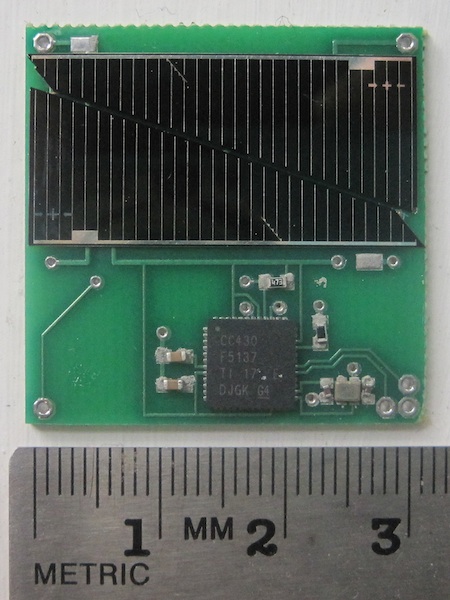
Picosats and Femtosats
These minuscule satellites—some measuring only a few centimetres across—are launched as constellations of tens or hundreds of satellites. Designed to work together, they are usually accompanied by a larger "mother" satellite to assist communication with (and tracking by) ground controllers.
In March 2019, the CubeSat KickSat-2 placed 105 femtosats, called "ChipSats", into Low Earth orbit. The satellites were tested for three days before they re-entered and burned up in Earth's atmosphere.
Starlink

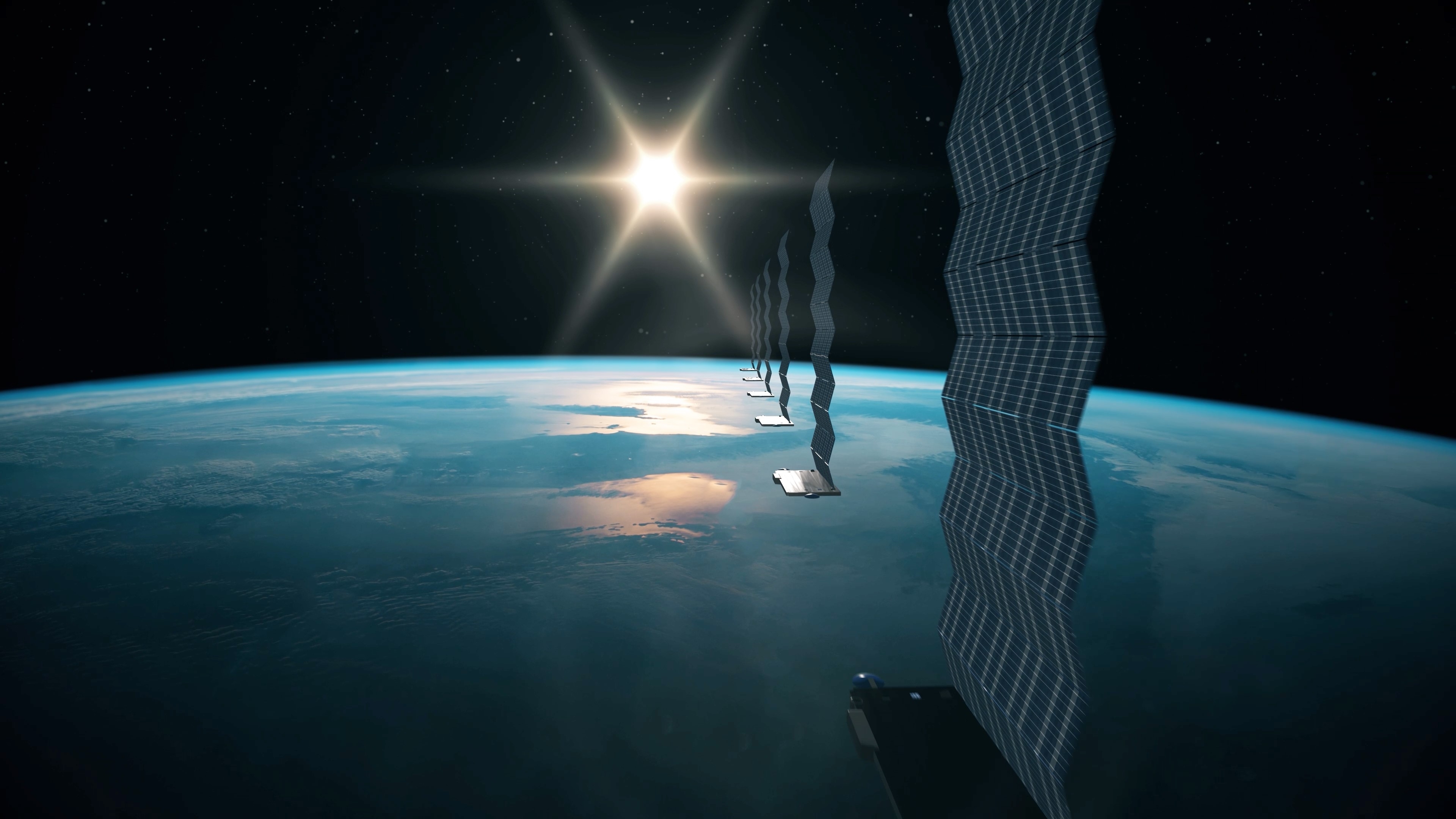
On 23rd May 2019, Elon Musk’s company SpaceX launched 60 smallsats from a single rocket. They were the first members of what is planned to be a “megaconstellation”—thousands of satellites working together to bring internet coverage to the entire planet. Known as Starlink, the megaconstellation had, by June 2026, grown to a collection of around 10,400 working satellites. Placed in Low Earth orbit, the 260-kilo (570-pound) Starlink minisats communicate with ground transceivers (devices that combine the functions of a radio transmitter and receiver).
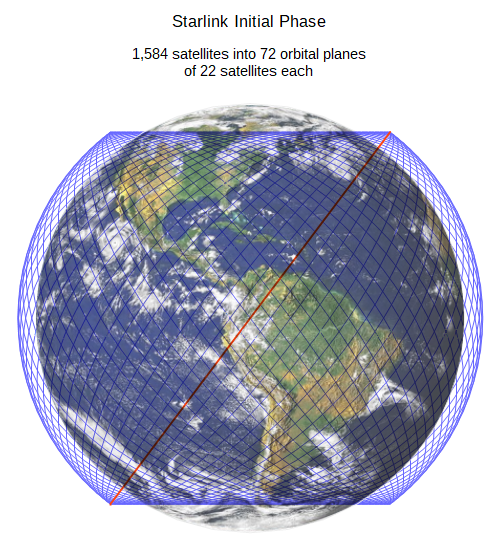

The new megaconstellation has, however, sparked major concerns. With so many satellites regularly crossing telescopes' fields of view, it is harder for astronomers to make observations of the Universe. And it is not only astronomers who have raised this objection. Because of Starlink, no one on Earth may ever again be able to experience a view of the heavens on a clear night for it will always be criss-crossed by bright, human-made objects.
In attempt to deal with this problem, SpaceX has darkened the latest batches of satellites, installing a “visor” that blocks sunlight from falling on most of the satellites' surfaces, so reducing their ability to reflect light.
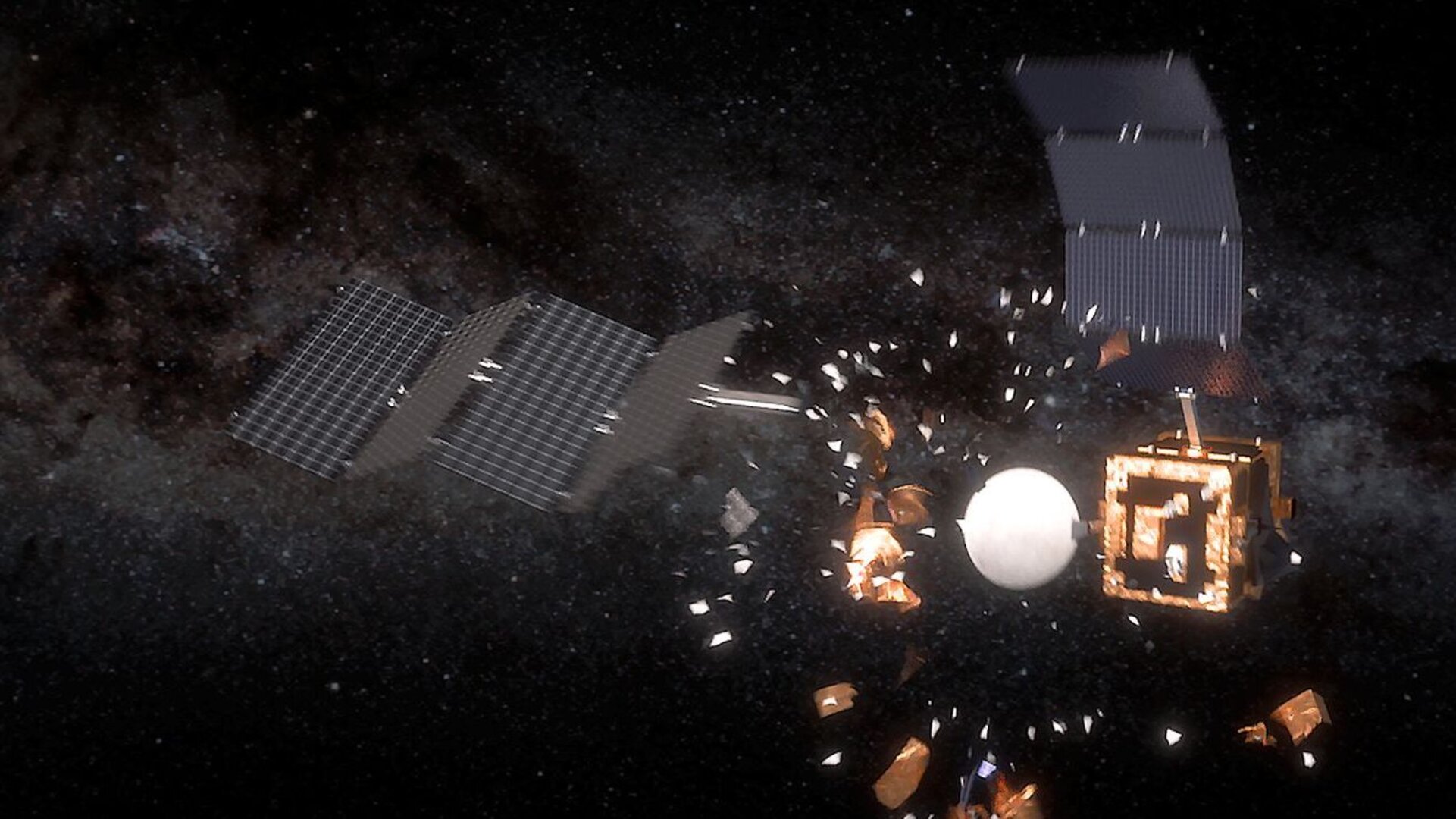
A second problem with the megaconstellation is the potential for a huge increase in space debris, produced when satellites collide with each other (or other pieces of space debris) in orbit. The danger becomes greater the more satellites there are in orbit. Again, SpaceX has attempted to reduce this risk by designing the satellites autonomously (self-steering) to avoid collisions based on tracking data. The satellites are also equipped with thrusters, enabling them to de-orbit at the end of their operational lives.
Consultant: Mike Goldsmith
pics

Without in any way limiting Q-files Ltd’s exclusive rights under copyright, any use of this publication to “train” generative artificial intelligence (AI) technologies to generate text is expressly prohibited. Q-files Ltd reserves all rights to license use of this work for generative AI training and development of machine learning language models.