
Film

CITE
We have made every effort to follow citation style rules, but there may be some minor differences. If in doubt, please refer to the appropriate citation style manual.
Walt Disney. (2026). In Q-files Encyclopedia, Culture, Film. Retrieved from
https://www.q-files.com/culture/film/walt-disney
"Walt Disney." Culture, Film, Q-files Encyclopedia, 13 May. 2026.
https://www.q-files.com/culture/film/walt-disney.
Accessed 28 Oct. 2026.
Walt Disney 2026. Culture, Film. Retrieved 28 October 2026, from
https://www.q-files.com/culture/film/walt-disney
Culture, Film, s.v. "Walt Disney," accessed October 28, 2026.
https://www.q-files.com/culture/film/walt-disney


Walt Disney
Walt Disney (1901–66) was an American film producer and businessman who founded the Walt Disney Animation Studios. One of the most famous film producers of the 20th century, he created films still well-known today such as Bambi (1942) and Cinderella (1950). Disney was also an animator and voice actor. The characters he created with fellow animator Ub Ewerks, including Mickey Mouse and Donald Duck, are known all over the world. In his lifetime, Disney saw major developments in film technology, such as sound and colour. Today, Disney Animation is one of the world’s most successful animation studios.

Early life
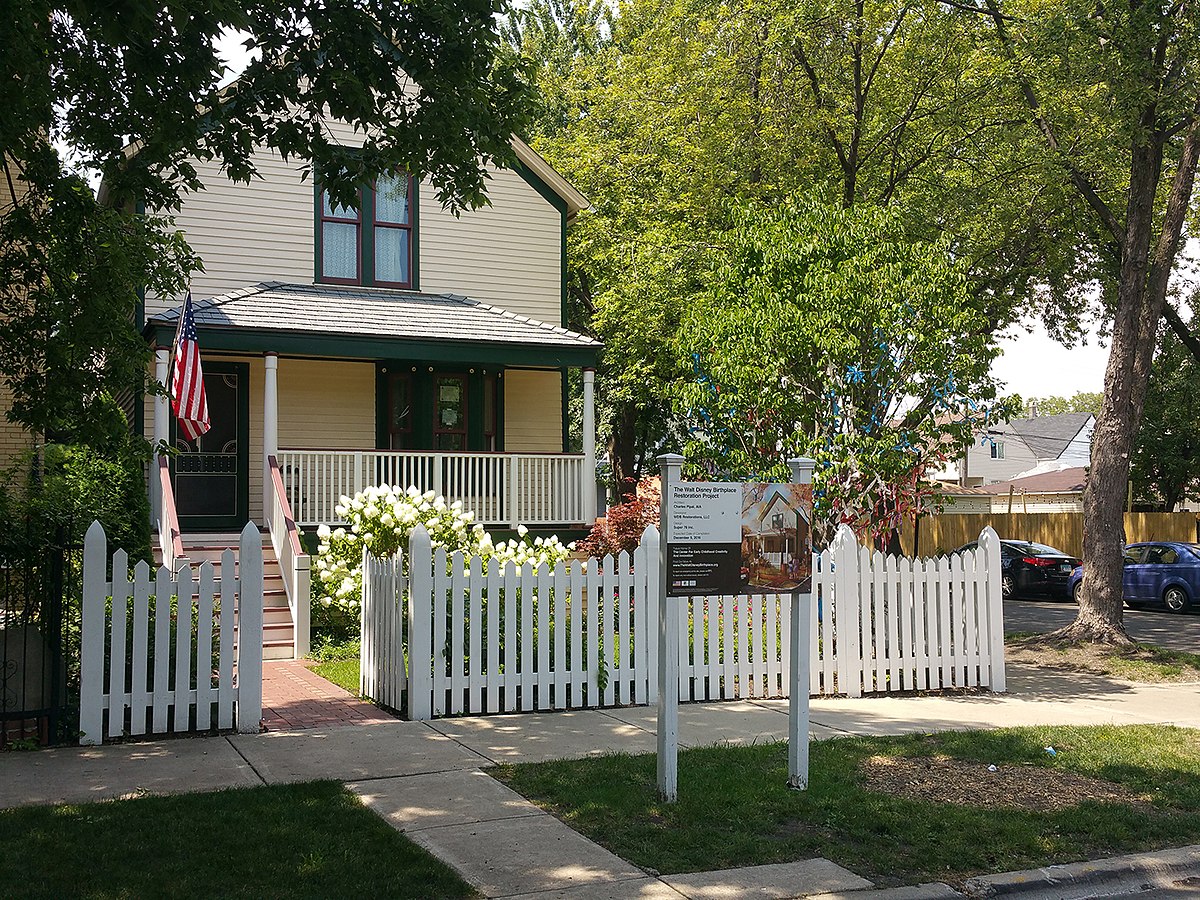
Walter Elias Disney was born in Chicago, Illinois, on 5th December 1901, the fourth of five children. His family were often short of money, moving between towns and states as his father found work. As a boy, Walt loved drawing. He took art classes alongside his schoolwork, and drew cartoons for the school newspaper. When he left school he got a job as an illustrator at an art studio, where he earned a living by drawing cartoons for advertisements and theatre posters.
Disney Brothers Studio

In 1920 Disney and another artist, Ub Ewerks, set up a small animation studio and began to make short movies for advertising companies. They also made short animated cartoons, which they called “Laugh-O-Grams”. One of these was based on Alice in Wonderland, the story by Lewis Carroll. Their company collapsed in 1923, but at the same time, their Alice film suddenly became successful, and a film producer commissioned Disney and Ewerks to make more films in the series. They began work in Hollywood, California, where Disney and his brother Roy set up a new company: the Disney Brothers Studio (later Walt Disney Studios).
Cel animation
Disney used a type of animation known as “cel animation”, which had been invented in 1915. This was a way of making a cartoon movie by breaking the action down into a series of scenes, known as frames, and hand-painting them one by one. The word “cel” is short for celluloid, the thin clear sheets of plastic that animators used to paint on.


Mickey Mouse
In 1927, just as sound was becoming possible in cinema, Disney and Iwerks created a character called Mickey Mouse. Drawn by Iwerks and voiced by Disney, Mickey first appeared in a short animated film with sound called Steamboat Willie (1928), and was an instant hit with audiences. A year later, they introduced Mickey’s friends: Minnie Mouse, Donald Duck, Pluto and Goofy, all characters that are still well-loved today.
Technicolor
In 1932 Disney was offered the chance to try out a three-strip Technicolor movie camera. It used three strips of film to record three layers of colour at the same time. When the strips were put together and played back, they made a full-colour movie. Disney used the camera to create the first ever three-colour Technicolor animation: an eight-minute film about trees dancing at the beginning of spring, called Flowers and Trees (1932). From now on, all Disney’s films were made using the three-colour (“three-strip”) process. His exclusive contract with Technicolor meant that for the next three years, no other film companies were permitted to use it.


Feature-length movies
Disney was soon working on his first feature-length movie, Snow White and the Seven Dwarfs (1937), based on the Grimms' classic fairy tale. An instant success, it made nearly $1.5 million at the box office even in the midst of the Great Depression. The film won eight Academy Awards (now Oscars). Over the next five years, Disney and his company made several more feature films, including Pinocchio (1940) and Bambi (1942), about a young fawn and his friends growing up in the woods.
In 1941 many of Disney’s top animators went to fight in World War II, and his company was put to work making training films for the US Army. The business only recovered with the post-war release of Cinderella (1950), followed by Peter Pan (1953). Disney now began to change the way he worked. He turned his attention to making children’s television programmes, including a variety show called The Mickey Mouse Club.
Disneyland

In 1952 Disney began work on a theme park near Los Angeles. Together with a team of researchers and designers he called “Imagineers”, he created a series of themed areas, or “lands”. They were linked by a central street called Main Street USA, which was based on Marceline, Missouri, the town where Disney lived as a young boy. There was even a 21-metre-high (70-foot) model of a medieval castle. The park, known as Disneyland, opened in July 1955, and drew more than 3 million visitors in its first year. Billed as “160 acres of happiness”, Disney wanted the park to be “a source of joy and inspiration to all the world”.


Disney World
In 1965 Disney produced Mary Poppins, a live-action film featuring real actors instead of cartoons. Based on P. L. Travers' story about a nanny with magical powers, it was the most successful Disney film of the 1960s, winning five Oscars. The same year, Disney made plans for a new theme park called Disney World, a bigger and better version of Disneyland, near Orlando, Florida. It included plans for a new, futuristic type of city within the park, called "Tomorrowland". But Disney died from lung cancer in December 1966, and never saw his new park completed. The project was finished by his brother Roy, who renamed it Walt Disney World.
Legacy
After his death, Disney’s company, Walt Disney Studios, carried on making films, although they concentrated on live-action films instead of animations. At the end of the 1980s Walt Disney Studios returned to animation to make films based on old stories and fairy tales, such as The Little Mermaid (1989), Aladdin (1992) and The Lion King (1994). The company also bought other film production companies such as Pixar (the makers of animations such as Toy Story). Some of the earliest Disney films remain the most popular today, alongside new computer-generated animations such as Frozen (2013).


pics

Without in any way limiting Q-files Ltd’s exclusive rights under copyright, any use of this publication to “train” generative artificial intelligence (AI) technologies to generate text is expressly prohibited. Q-files Ltd reserves all rights to license use of this work for generative AI training and development of machine learning language models.