
Music and dance
Brass instruments
A brass instrument makes its sounds when the player presses his or her lips against a cup-shaped mouthpiece and forces air through them, causing the lips to vibrate or “buzz”. The vibrations make the column of air inside the instrument (which is essentially a long tube) vibrate as well. Unlike the woodwind, brass players do not uncover sound holes to produce notes of a different pitch. Simply by varying the breath pressure and the tension of the lips (known as the embouchure), a player can produce different notes. The very simplest brass instrument, the bugle, is played in this way, although the range of notes achievable is limited. By changing the length of the tube, the brass player can produce a full range of notes. In modern versions of the horn, trumpet and and tuba, this is done by pressing valves; a slide is used for the trombone.
Horn
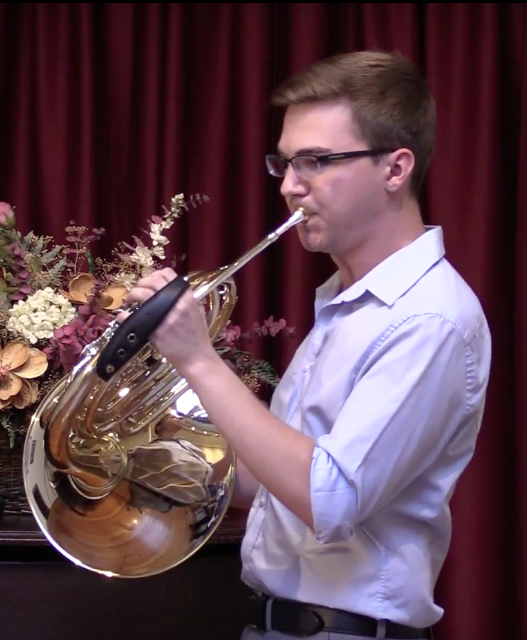
Sometimes known as the French horn, the horn was developed from a French hunting horn, the trompe de chasse, which first appeared in the late 17th century. It consisted of a thin, coiled tube with a wide bell, and it was carried on the huntsman’s shoulders. Later versions, coiled in a double hoop (the cor de chasse), were used in 18th century orchestras. However, different horns were needed for music written in different keys. Horn players found they could produce new notes by placing their clenched fists inside the instrument’s bell and bending them. This required holding the horn sideways to the body (rather than pointing the bell upwards), which is how it is played today.
The use of crooks, sections of tubing of differing lengths that could be inserted into the instrument to alter its tube length (and thus its pitch), was introduced in the mid 1700s. But changing crooks during a performance was still unsatisfactory. The invention of valves in 1818 allowed players to switch automatically from one tube length to another simply by pressing a valve. Although this made horns fully flexible, many players refused to use them at first, claiming that the valveless horn, or natural horn, was a better instrument.

A modern horn has three rotary valves, operated by a set of levers. A fourth valve, operated by the thumb, enables the player to change from the original horn keyed in F to one in B flat (giving a higher, more brilliant tone). Altogether, the instrument has a sounding length of 518 centimetres (17 feet).
Trumpet


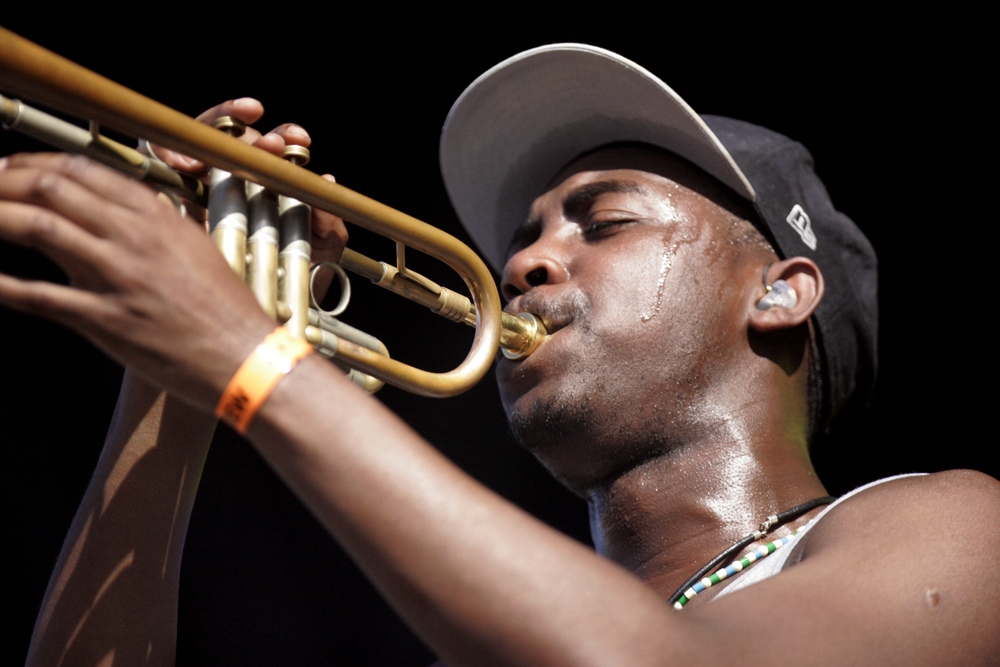
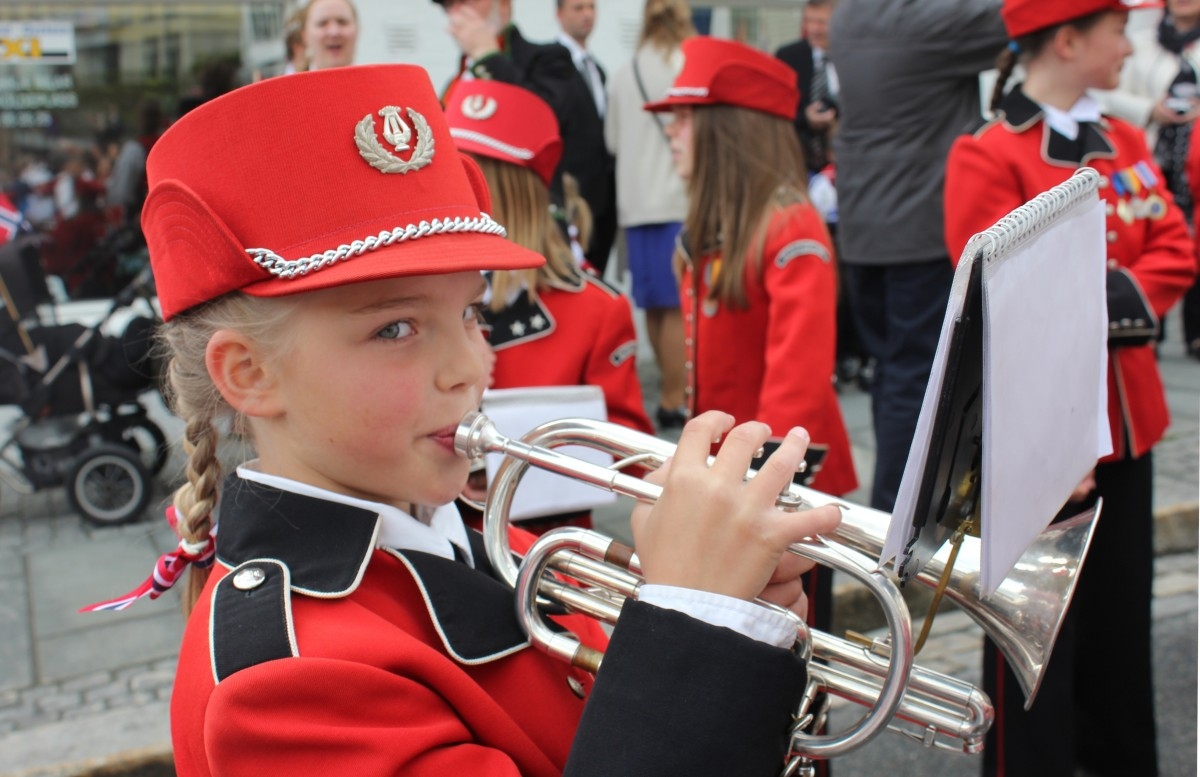
The modern trumpet was developed from military trumpets, used since Renaissance times for fanfares. The original instrument consisted simply of a long metal tube, folded over once, with a mouthpiece at one end and a flared bell at the other. The natural trumpet, as it was called, could only produce a certain range of notes, but, by using a special lip position on the mouthpiece, specialist players could sound the brilliant and powerful notes of its high clarino range.
Early in the 17th century, loops of tubing called crooks came into use. These were inserted between the mouthpiece and the rest of the trumpet, extending the tube length and so varying the instrument's pitch. But these crooks had to be changed by hand—an awkward procedure to carry out during a performance. Crooks fell out of use following the invention of valves in 1818. These valves gave the trumpeter automatic access to extra tubing simply by depressing them. Modern trumpets have three valves, either of the piston type or the rotary type. Most instruments used in jazz or brass bands are tuned in B flat, while those in orchestras are more commonly in C. The sound of the trumpet can be modified by adding various kinds of mute placed inside the bell.

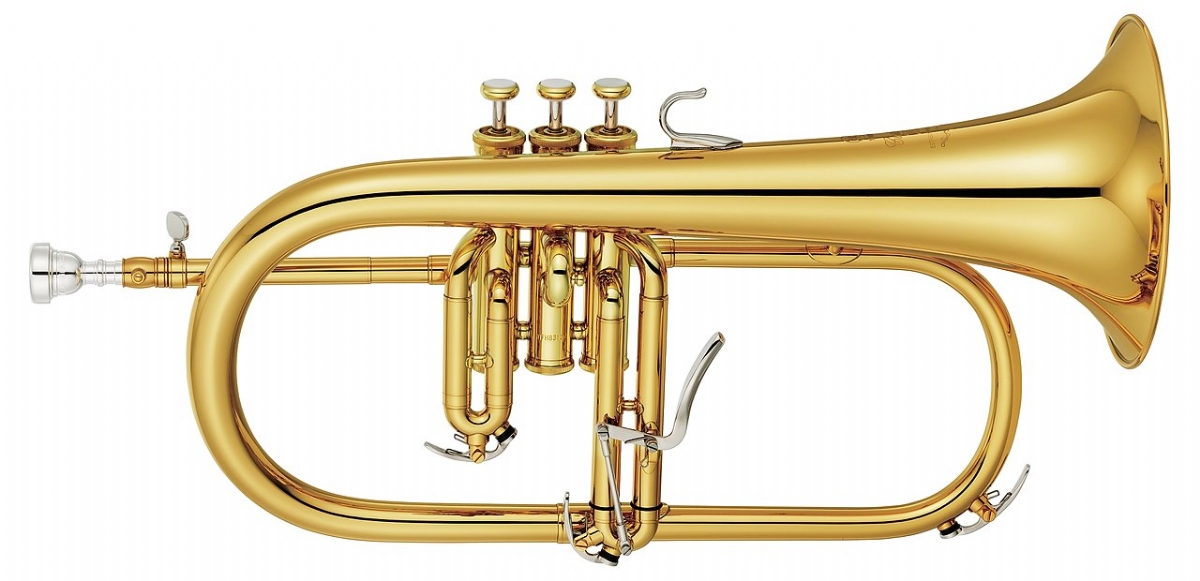
Similar to the trumpet is the flugelhorn, which has a wider conical bore and produces a sound halfway between a trumpet and a horn. Another similar instrument is the cornet, which has a bore that is partly conical and partly cylindrical and produces a sound halfway between a trumpet and a flugelhorn.
Trombone
The trombone was developed from another instrument, the sackbut, which appeared at the end of the 15th century. This had two U-shaped cylindrical tubes linked at opposite ends to make a flattened S shape. At the point where the two tubes were linked, one tube slid inside the other, so the overall length of the tube could be shortened or lengthened, producing higher or lower notes as required. At one end of the instrument was a mouthpiece, at the other a flared bell.
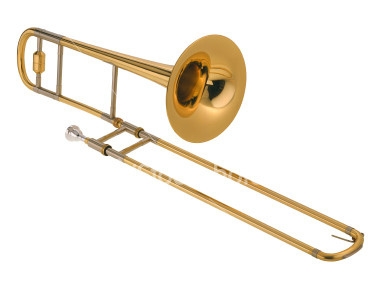
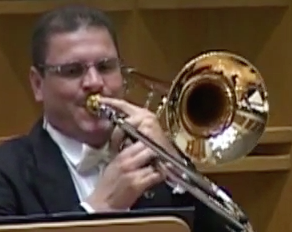
Sackbuts were used to accompany voices in church music. They dropped out of favour, but were revived in their current form (with wider bells) as trombones at the end of the 18th century. Two members of the family, the tenor and bass trombone, are used in modern orchestras, where they provide a bass to the brass section. The maximum sounding length of a tenor trombone, when the slide is fully extended, is 272 centimetres (8 feet 11 inches).
The player, called a trombonist, uses the telescopic slide to alter the length of the tube while varying the breath pressure at the mouthpiece, thereby producing notes of different pitch. There are seven playing positions of the slide, with the lowest note produced when the slide is fully extended.
Tuba
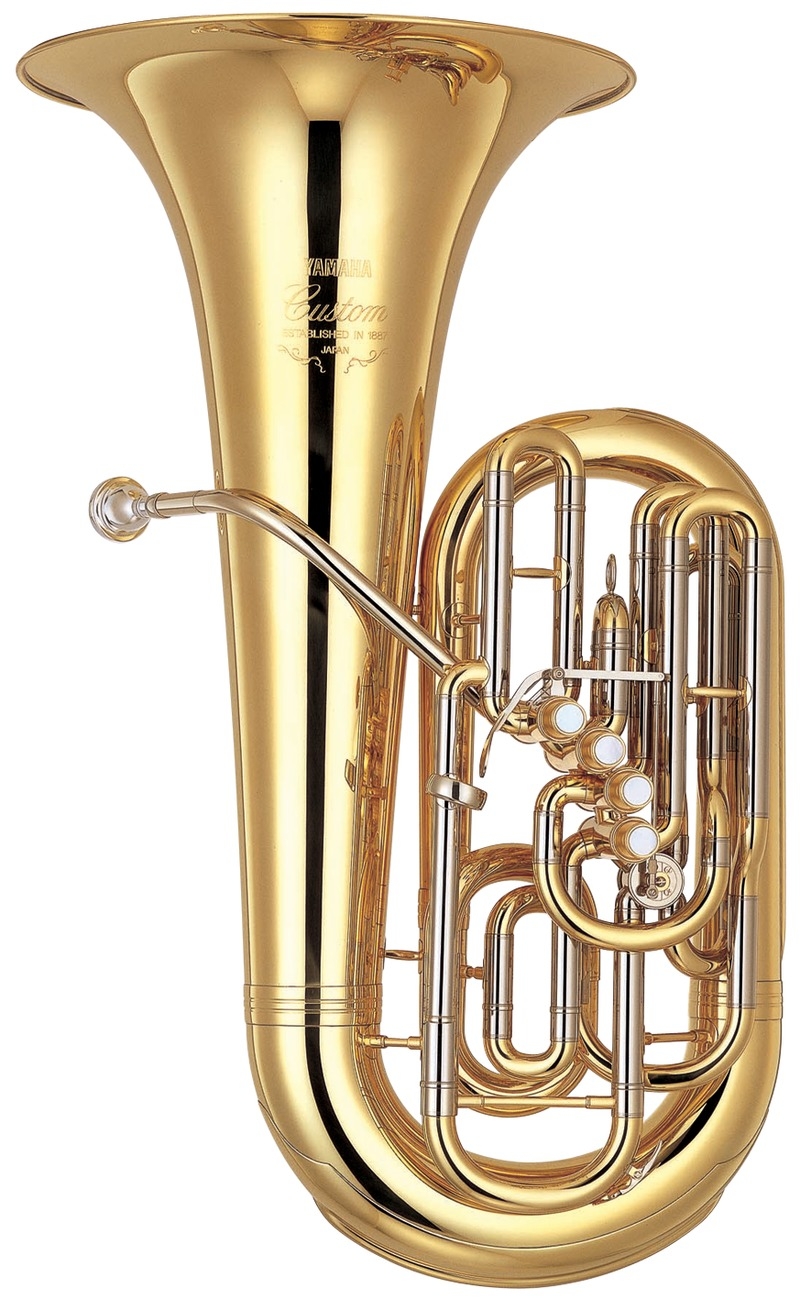
The tuba is the largest and lowest-pitched musical instrument in the brass family. It first appeared in military bands in 1835. It consists of an exceptionally long tube fitted with valves and a wide conical bore, which opens up into a large, flared bell. It is held with the bell pointing upwards.
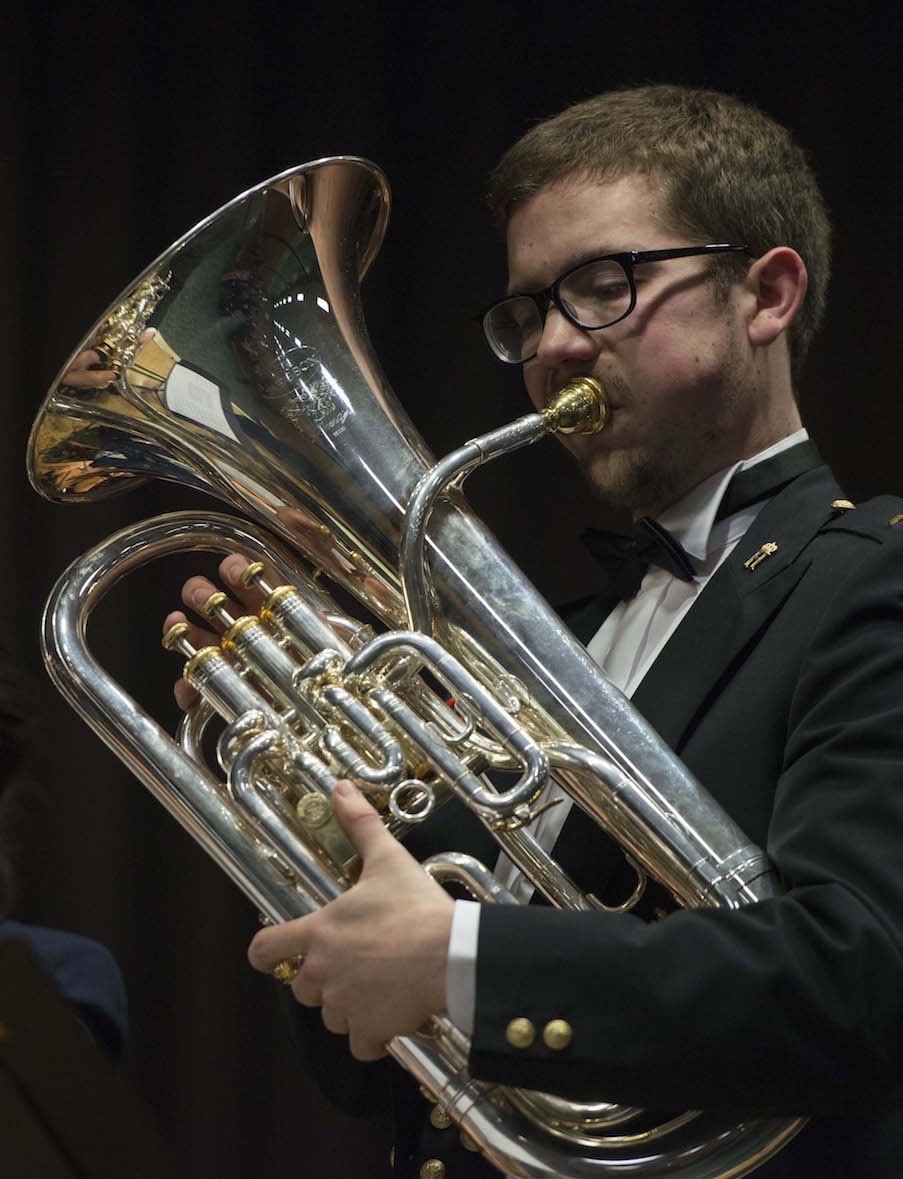
Tubas come in a number of sizes. The smallest (tube length 274 centimetres or 9 feet) is the tenor tuba, more commonly known as a euphonium. It is usually played in bands rather than orchestras. The bass tuba (366 centimetres or 12 feet) is the standard orchestral instrument, while the contrabass tuba (549 centimetres or 18 feet) is popular in military bands.

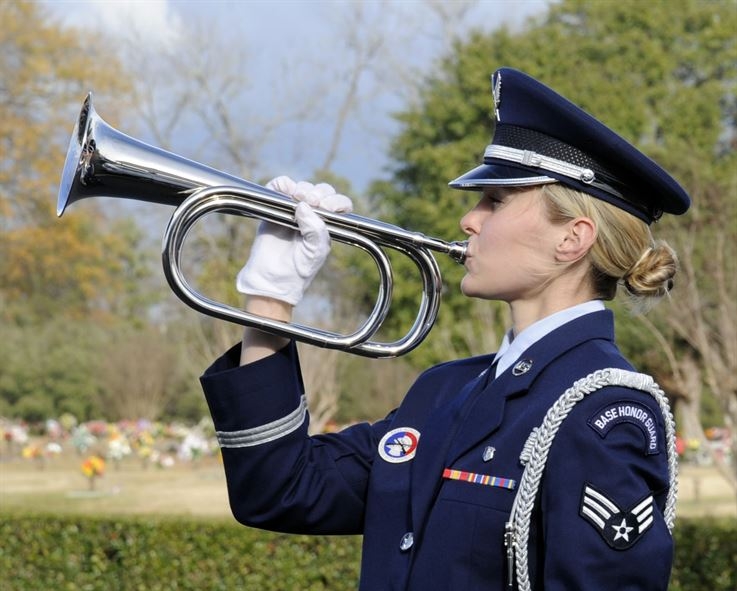
Bugle
The bugle is one of the simplest brass instruments, having no valves or any device to alter the pitch. Pitch control is instead achieved by varying the embouchure, the shaping of the lips. As a result, the bugle is limited to just five notes, making up what is called the bugle scale. Bugle calls are short tunes using just these notes. The bugle is used mainly in the military, where the bugle call is used to mark the daily routines of camp.
The bugle developed originally from curved animal horns. The earliest bugles were usually shaped in a double coil (similar to the modern horn) and were used by huntsmen to signal to one another during hunts, or to announce the arrival of a coach or post rider.