
Earthquakes

CITE
We have made every effort to follow citation style rules, but there may be some minor differences. If in doubt, please refer to the appropriate citation style manual.
Nepal 2015 earthquake. (2026). In Q-files Encyclopedia, Earth, Earthquakes. Retrieved from
https://www.q-files.com/earth/earthquakes/nepal-2015-earthquake
"Nepal 2015 earthquake." Earth, Earthquakes, Q-files Encyclopedia, 6 Mar. 2026.
https://www.q-files.com/earth/earthquakes/nepal-2015-earthquake.
Accessed 13 Sep. 2026.
Nepal 2015 earthquake 2026. Earth, Earthquakes. Retrieved 13 September 2026, from
https://www.q-files.com/earth/earthquakes/nepal-2015-earthquake
Earth, Earthquakes, s.v. "Nepal 2015 earthquake," accessed September 13, 2026.
https://www.q-files.com/earth/earthquakes/nepal-2015-earthquake


Nepal 2015 earthquake
A 7.8-magnitude earthquake struck Nepal on 25th April 2015. Its epicentre (the point on the Earth's surface directly above the focus of the quake) was around 80 kilometres (50 miles) northwest of the capital, Kathmandu. The quake brought buildings crashing down in many towns, villages and cities in the area—including Kathmandu. By mid-May, when a second quake occurred, around 9000 people were reported killed, with the more than 19,000 injured. Many tens of thousands were left homeless. On Mount Everest, the quake triggered an avalanche that killed at least 24 people and left 140 climbers temporarily stranded. They were all later evacuated safely.


Many survivors were left in desperate need of food and water. The United Nations said that more than 1.4 million people required food aid, including 750,000 who live near the quake’s epicentre. Relief teams from neighbouring China and India quickly brought aid, including medical teams, food, medicines, rescue equipment, sniffer dogs, tents, blankets and generators to the area. Many people in remote areas of Nepal, where some villages were almost totally destroyed, remained cut off days after the event, reachable only by helicopter.
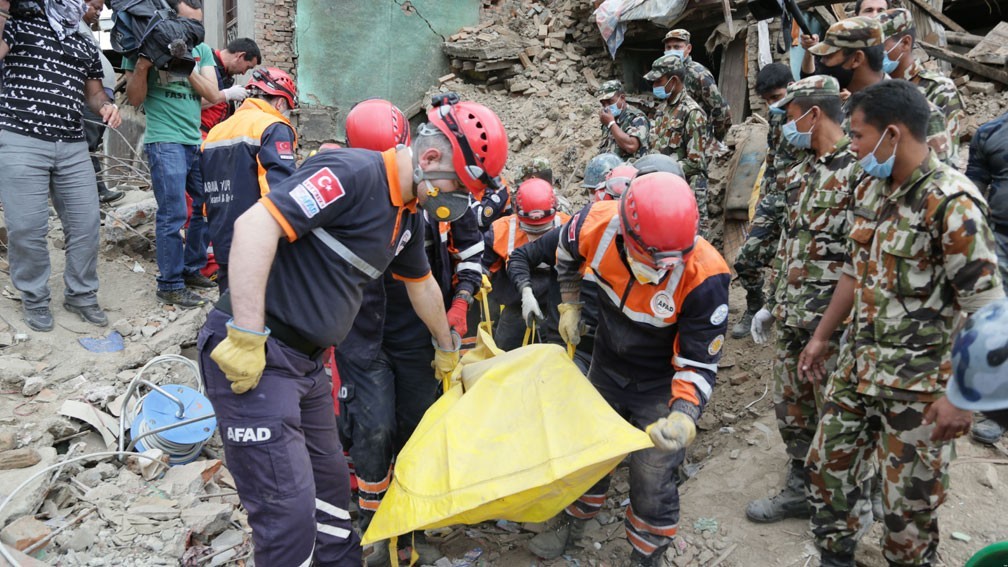
Hundreds of thousands of people were given shelter in temporary camps, but conditions were squalid, with very little food and drinking water, raising fears of serious disease breaking out. At Kathmandu's Bir hospital, every bed was filled and the road outside was being used as a makeshift emergency ward. The survivors’ despair turned to anger at the Nepalese government’s slow response and with food, water and other essentials still in short supply weeks afterwards.

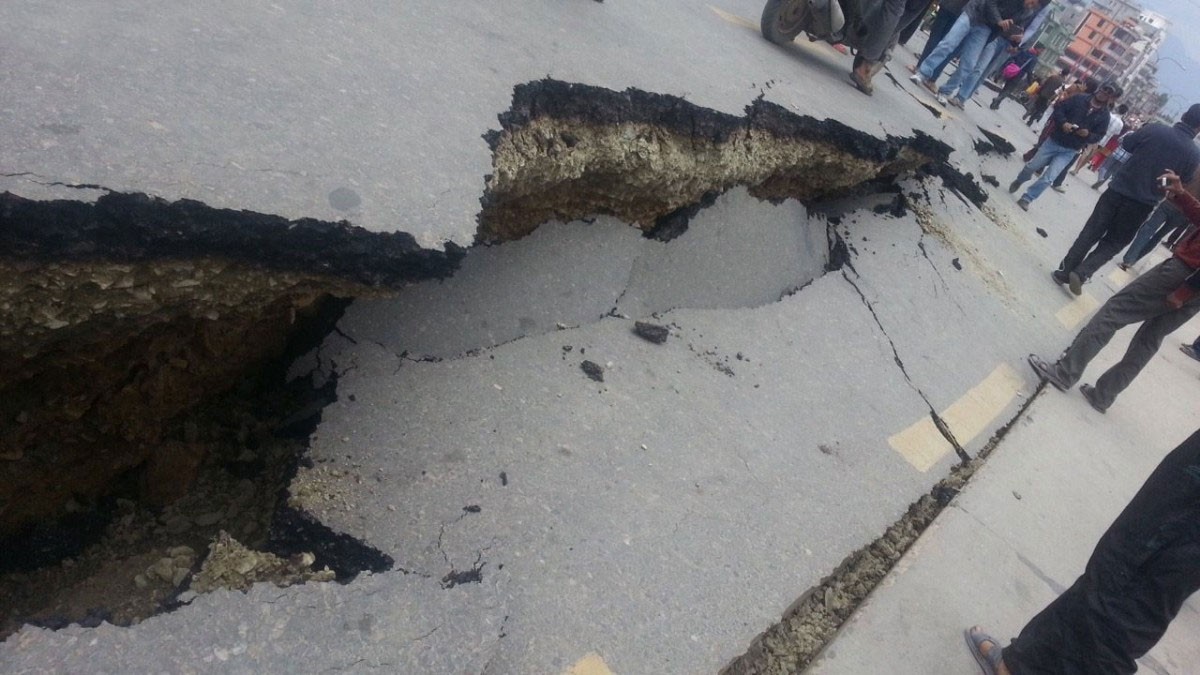
In Kathmandu, Nepal's capital, thousands of people queued for buses to take them out of the city, amid fears of further aftershocks. But the roads were choked with vehicles and relief convoys. Kathmandu airport found it hard to cope with the additional rush of people desperate for flights out, as well as the arrival of cargo aircraft bringing in relief supplies.
Nepal is no stranger to earthquakes. The Himalaya mountains, in which Nepal is situated, were formed by the Indian tectonic plate driving under the Eurasian tectonic plate. These two great slabs of the Earth's outer shell are being forced together at a rate of about 4–5 centimetres (2–3 inches) a year. The tectonic movements are constantly accompanied by tremors and quakes.

This particular quake was not only very powerful, it was shallow, too—just 10–15 kilometres (6–9 miles) below the ground. This made the shaking at the surface extremely severe. Following the main event, at least 14 aftershocks were recorded. These were particularly damaging because, although small in intensity, they were at even shallower depths (about 6 kilometres or 3.7 miles) than the main earthquakes. Much of the population in the area were living in houses highly vulnerable to shaking. In the mountainous terrain, landslides were triggered as well, sending vast masses of mud and rock tumbling down steep slopes, obliterating villages or cutting them off entirely.
Consultant:Ian Fairchild
pics
Without in any way limiting Q-files Ltd’s exclusive rights under copyright, any use of this publication to “train” generative artificial intelligence (AI) technologies to generate text is expressly prohibited. Q-files Ltd reserves all rights to license use of this work for generative AI training and development of machine learning language models.