
EASY READ The Earth

CITE
We have made every effort to follow citation style rules, but there may be some minor differences. If in doubt, please refer to the appropriate citation style manual.
EASY READ What are deserts like?. (2026). In Q-files Encyclopedia, Earth, EASY READ The Earth. Retrieved from
https://www.q-files.com/earth/easy-read-the-earth/easy-read-what-are-deserts-like
"EASY READ What are deserts like?." Earth, EASY READ The Earth, Q-files Encyclopedia, 6 Mar. 2026.
https://www.q-files.com/earth/easy-read-the-earth/easy-read-what-are-deserts-like.
Accessed 13 Sep. 2026.
EASY READ What are deserts like? 2026. Earth, EASY READ The Earth. Retrieved 13 September 2026, from
https://www.q-files.com/earth/easy-read-the-earth/easy-read-what-are-deserts-like
Earth, EASY READ The Earth, s.v. "EASY READ What are deserts like?," accessed September 13, 2026.
https://www.q-files.com/earth/easy-read-the-earth/easy-read-what-are-deserts-like


What are deserts like?
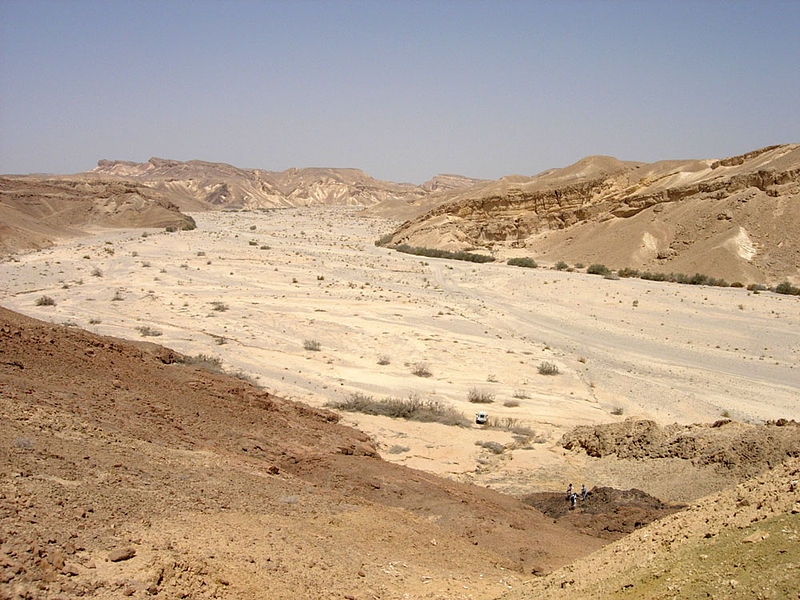
Deserts are found in areas where very little rain falls. Apart from in fertile spots called oases, there is little sign of life. Most deserts are just bare rock and gravel, although some deserts have vast areas of sand. Areas of desert are found in the west of the USA and South America, as well as in central and southwest Asia, Australia and both northern and southern Africa. Antarctica is also a desert: very little snow ever falls there.
Sandy deserts
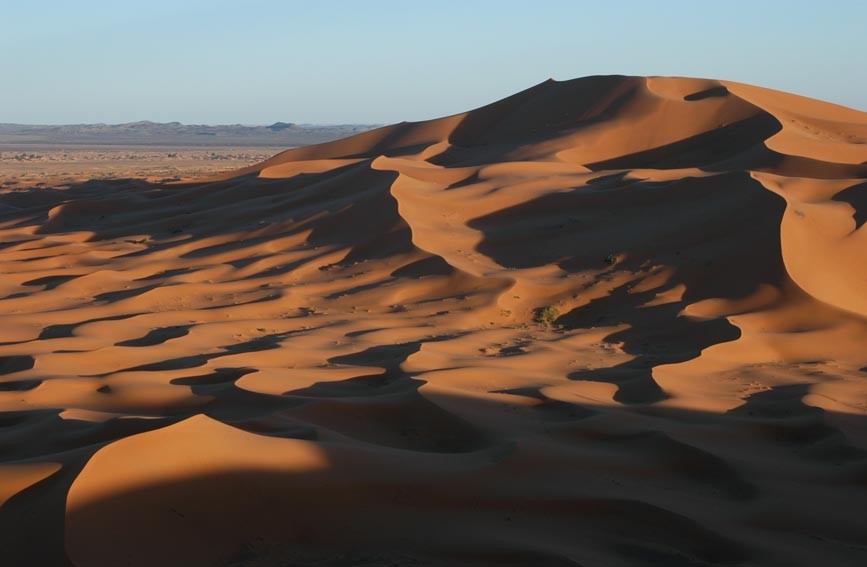
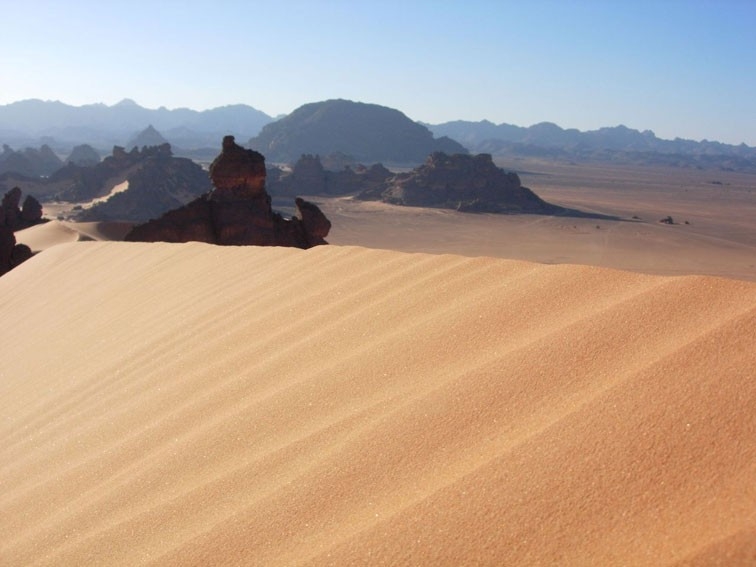
We often think of deserts as sandy regions, but only about one fifth of the world’s deserts are sandy. Most of the Sahara Desert is covered by rock or gravel. Only one tenth is sandy. Where sand occurs in a desert, the wind sometimes piles up smooth mounds called dunes. Where the wind always blows in the same direction, crescent-shaped dunes called barchans are the result. They creep slowly across the desert, blown by the wind.

Wind erosion
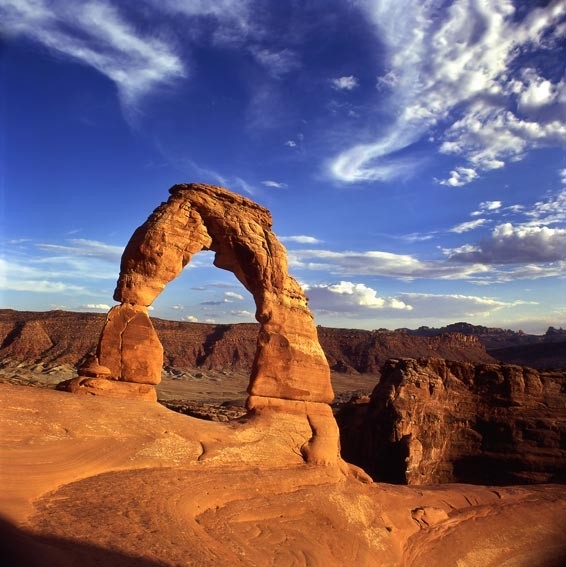
In deserts, strong winds may blast tiny sand particles at the rocks, carving out some incredible shapes. In some desert landscapes you can see rock arches. Mushroom-shaped rocks are made when wind-blown sand blasts away at the base of a boulder, leaving a narrow neck.
Wadis
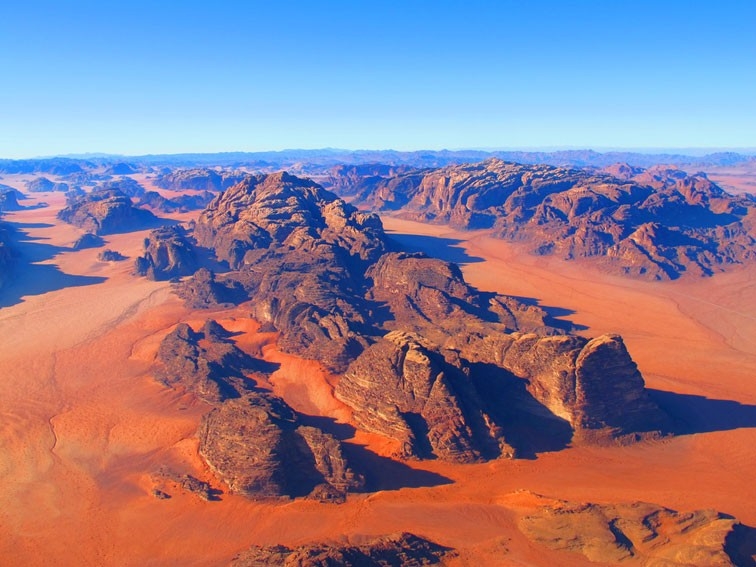
When rainstorms do occur in deserts, the fast-flowing water quickly wears away the rocks. Steep-sided gorges called wadis are the result.
Mesas and buttes
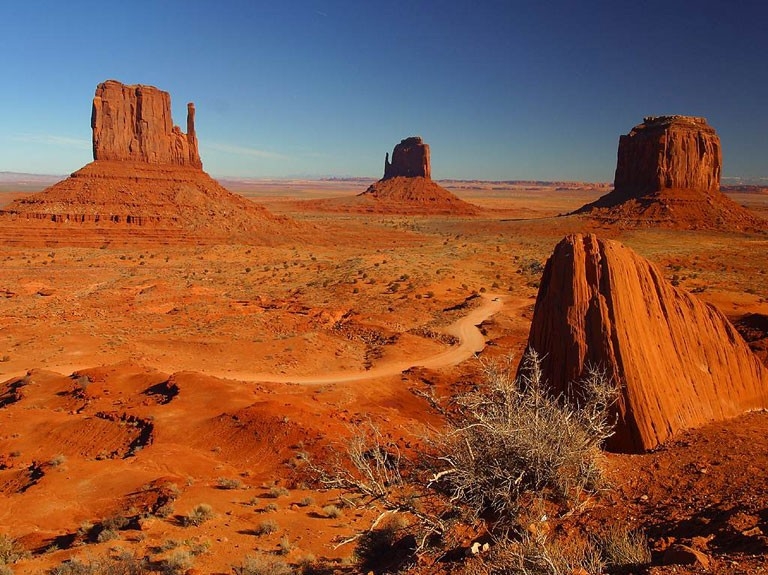
Mesas are flat-topped, steep-sided hills. The softer beds of rock have eroded away more quickly than the hard ones. This creates a “stepped” outline. As the slopes of the mesas were gradually worn away, some became isolated hills known as buttes. Good examples of mesas and buttes can be seen in the Monument Valley, Utah, USA.
Consultant: Ian Fairchild
Ready to find out more?
Here are some pages in other parts of Q-files you might like to explore:
Deserts
Deserts A-Z
pics
Without in any way limiting Q-files Ltd’s exclusive rights under copyright, any use of this publication to “train” generative artificial intelligence (AI) technologies to generate text is expressly prohibited. Q-files Ltd reserves all rights to license use of this work for generative AI training and development of machine learning language models.