
EASY READ The Earth

CITE
We have made every effort to follow citation style rules, but there may be some minor differences. If in doubt, please refer to the appropriate citation style manual.
EASY READ What causes tides and waves?. (2026). In Q-files Encyclopedia, Earth, EASY READ The Earth. Retrieved from
https://www.q-files.com/earth/easy-read-the-earth/easy-read-what-causes-tides-and-waves
"EASY READ What causes tides and waves?." Earth, EASY READ The Earth, Q-files Encyclopedia, 1 May. 2026.
https://www.q-files.com/earth/easy-read-the-earth/easy-read-what-causes-tides-and-waves.
Accessed 13 Sep. 2026.
EASY READ What causes tides and waves? 2026. Earth, EASY READ The Earth. Retrieved 13 September 2026, from
https://www.q-files.com/earth/easy-read-the-earth/easy-read-what-causes-tides-and-waves
Earth, EASY READ The Earth, s.v. "EASY READ What causes tides and waves?," accessed September 13, 2026.
https://www.q-files.com/earth/easy-read-the-earth/easy-read-what-causes-tides-and-waves


What causes tides and waves?
Sea levels rise and fall twice a day. This pattern is known as the tides. When the wind blows across the surface of the sea, it turns the water over and over in circles. These are waves. The stronger the wind and the greater the distance over which it blows, the larger the waves.

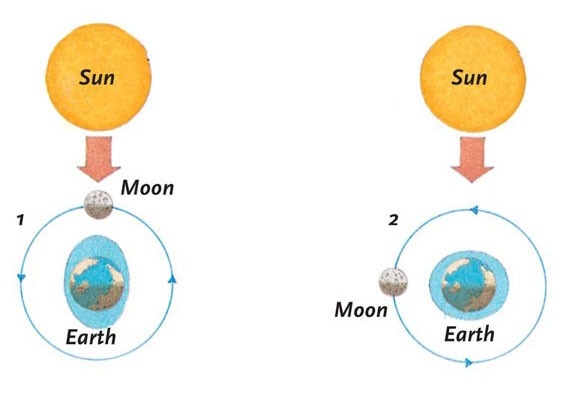
Tides
Tides are caused by gravity: the attraction that a large object (in this case, the Moon) has over another object. As the Earth spins, the ocean waters on the side of the Earth closest to the Moon bulge outwards. This results in a high tide. The rest of the Earth has a low tide.
When the Sun and Moon line up, the Sun’s gravity increases the pull. This results in very high and low tides, called spring tides. When the Sun and Moon are at right angles, the tidal range, the difference between high and low tide, is at its lowest. These are neap tides.
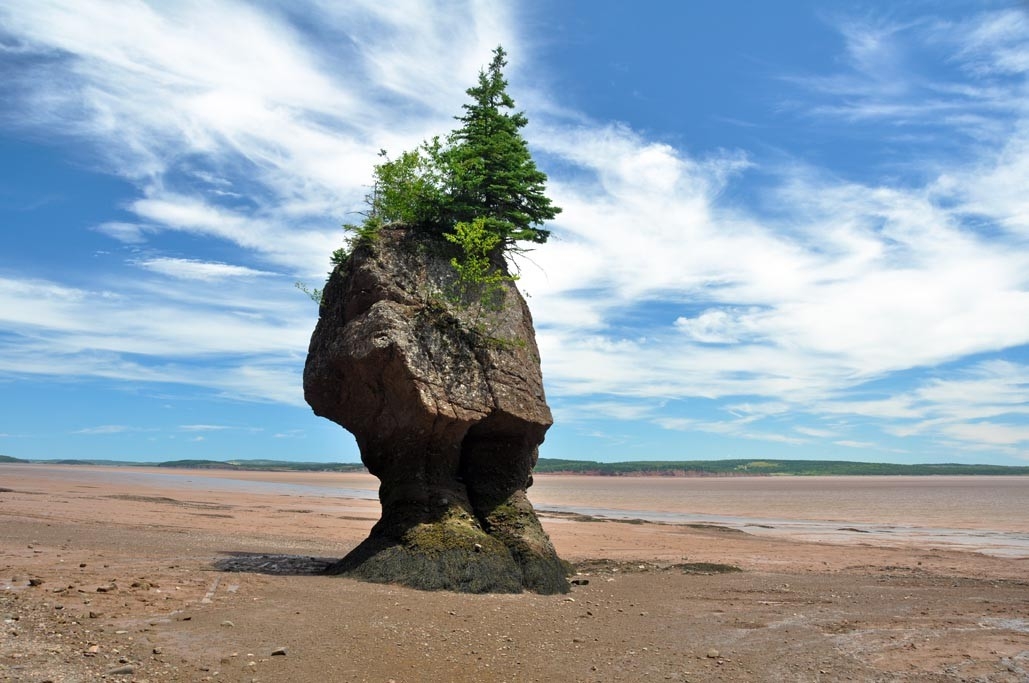


Tidal bore
In narrow estuaries, the tidal range is greater than it is in the open sea. The body of water rushing in with the tide builds into a rolling wall of water, called a tidal bore. They can reach a height of 1.5 metres (5 feet) in the Severn Estuary in England. The world's largest tidal bore is on the Qiantang River in China. It can reach up to 9 metres (30 ft) in height, and travel at up to 40 km/h (25 mph).
Waves

Waves can travel for many kilometres across the open sea before breaking on the seashore. As a wave approaches the shore, its lower part drags along the sea bed, slowing it down. The top part continues moving quickly. It eventually topples over or “breaks”.
Consultant: Ian Fairchild
Ready to find out more?
pics
Without in any way limiting Q-files Ltd’s exclusive rights under copyright, any use of this publication to “train” generative artificial intelligence (AI) technologies to generate text is expressly prohibited. Q-files Ltd reserves all rights to license use of this work for generative AI training and development of machine learning language models.