
Weather and climate
Clouds
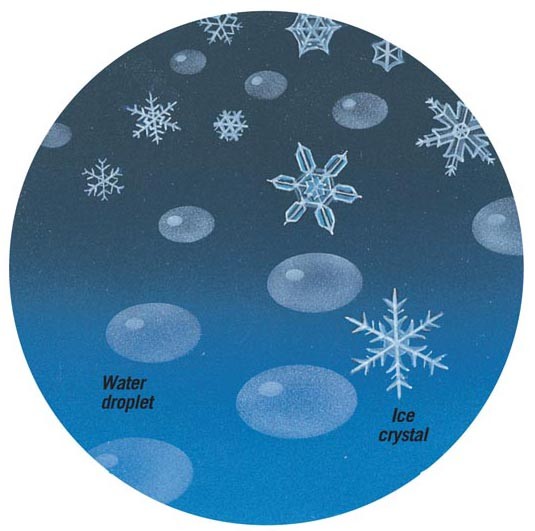
When water vapour cools, it turns back into liquid water. This is called condensation. Water droplets form around tiny particles in the air, such as sea salt and dust. Millions of these droplets gather together to form clouds. In the highest clouds, the water freezes into ice crystals. Clouds form at different heights and have different shapes. There are a variety of names to describe them.

Types of cloud
The names of clouds describe their shapes and altitudes using a combination of meanings. They are all made up of three basic shapes: cumulus (“heaped”), stratus (“layered”) and cirrus (“feathery”). High-altitude clouds have the prefix (first part of a word) cirro-, middle-altitude clouds alto- and low altitude clouds strato-.
It is possible to forecast the weather from observing the different types of clouds. Highest at 8000 metres (about 25,000 feet) and above are cirrus, made of tiny ice crystals. Thin and wispy, they signal fine, dry, settled conditions.
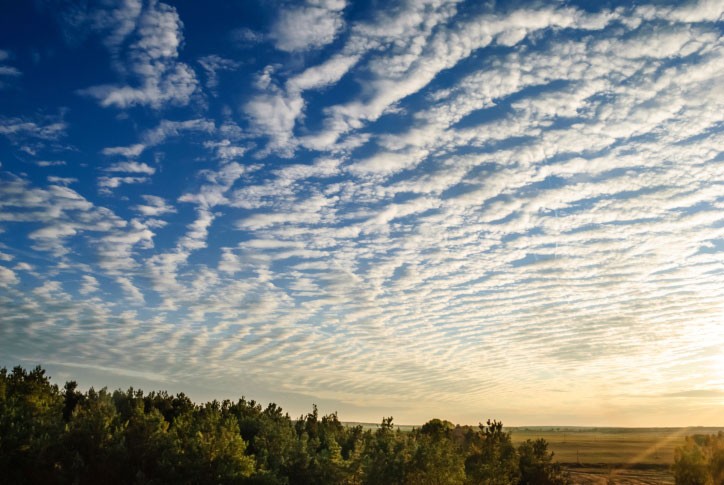
Cirrocumulus are small, regular-shaped clouds that look almost like fish scales and make a so-called “mackerel sky”.
Altostratus and altocumulus form at medium heights and often mean that rain is on the way.
Cumulus are the “cotton wool” clouds of a summer’s day.
Stratus are low clouds that cover the whole sky like a flat, pale grey sheet.
Nimbostratus clouds are even lower and usually bring heavy rain or snow.
The biggest and most impressive cloud is the cumulonimbus. It towers 5000 metres (16,000 feet) or more, with a fluffy white top and flat, grey “anvil” base. It usually brings fierce storms with thunder and lightning.
Rain and snow
A cloud is a vast gathering of billions of tiny water droplets, ice crystals or a mixture of both. They are so small and light that they float in the air. The water droplets or the ice crystals grow until they are so heavy they start to fall. Rain that falls outside of the tropics usually starts out as snow. The snow melts if the air is warmer below.

Fog and mist
Clouds form at ground level, too. We call them mist if they are thin and fog if they are thicker. It is often foggy when moist air cools at night, causing water droplets to form. Fog also forms when moist air is forced to rise over a hill.
Consultant: Ian Fairchild