
Ancient Middle East
Persian Empire
In around 1300 BC, two peoples, the Medes and the Persians settled in what is today called Iran. For centuries, the Medes were the more powerful, but eventually the Persians defeated their rivals. For more than 1000 years, the land of Persia was ruled by three mighty empires. The Achaemenid, or First Persian, Empire controlled the country from around 550 BC until 330 BC—when it was conquered by Alexander the Great. From 247 BC the Parthians rebuilt the empire until, in AD 224, the Sassanians established the Neo-Persian, or Second Persian, Empire that was to last until 651. These three empires controlled much of the rest of the Middle East during their days of supremacy.


The empire of
Cyrus the Great
The Achaemenid Empire got its name from King Achaemenes, who ruled the region of Persis in southern Persia in the early 7th century BC. Cyrus the Great (ruled 559–530 BC) expanded his empire by conquering first the neighbouring kingdoms of Media (550 BC) and Lydia (around 547 BC) and finally the Babylonian Empire in 539 BC.
A wise and compassionate ruler, Cyrus respected the customs and religions of the lands he conquered. A clay cylinder, inscribed with cuneiform script, gives details of how Cyrus went about ruling his empire. Described as "King of Babylon, King of Sumer and Akkad, King of the Four Corners of the World", Cyrus established peace and abolished forced labour in Babylon. He also allowed the Jews, who had been captured and brought to Babylon, to be allowed to return to Israel after 70 years of exile. He actively assisted them in rebuilding their temple in Jerusalem. The cylinder has been described as the world’s first declaration of human rights.
At its height, the Achaemenid Empire spanned three continents, stretching from Egypt in Africa and Macedonia in Europe across to the borders of India in Asia. It ruled more than 50 million people—around 44% of the world’s entire population at that time—the highest proportion for any empire in history.

Persepolis
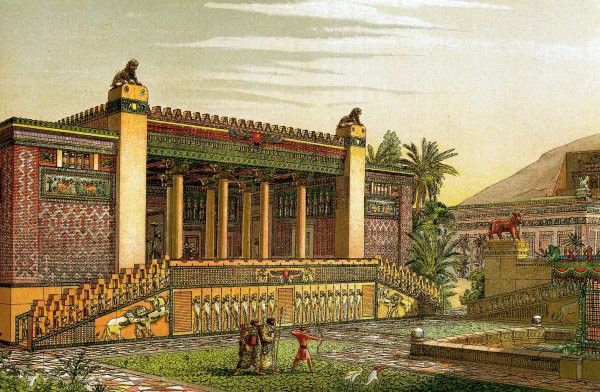
The king ruled the empire from one of four capital cities, Babylon, Ecbatana, Pasargadae and Susa. During the reign of Darius the Great (King Darius I, 522–486 BC), a new ceremonial capital was built at Persepolis, which eclipsed the old royal capital at Pasargadae. The empire was well governed, with a large civil service, a national currency and postal service, and an efficient taxation system.

Royal Road
Because of its vast size, the empire was divided into 20 satrapies (provinces), each ruled by a local satrap. Many of the satrapies were linked by a highway, called the Royal Road, built around 500 BC by Darius I. It stretched for 2700 kilometres (1700 miles) from Susa, still the administrative capital of the Persian Empire, to Sardis near the Aegean coast of what is now Turkey. It is said that a relay of mounted messengers could reach even the remotest areas of the empire within 15 days. A large, professional army of soldiers secured the empire, 10,000 of whom formed an elite unit, known as the Immortals.

Architecture, sculpture and language
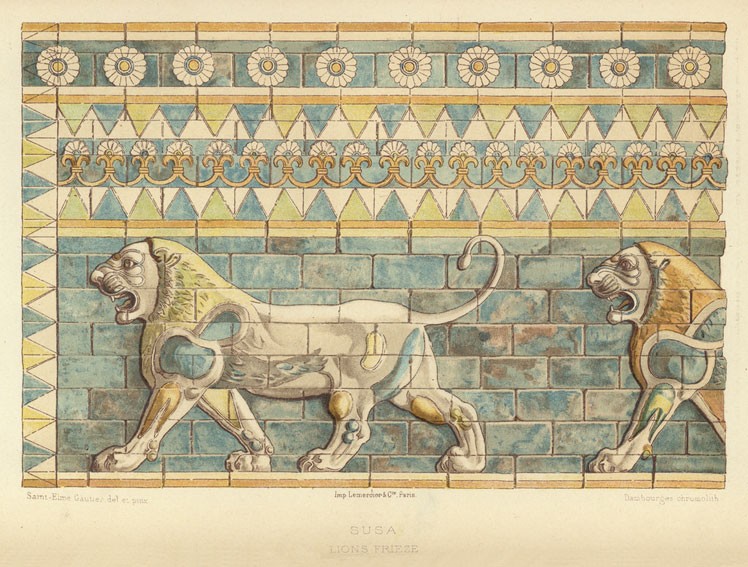
The Persians were skilled architects, building beautiful temples and public buildings in Persepolis and elsewhere. They created elaborate carvings and sculptures of their kings and leaders. At first, the Persians used Elamite as their main language, but after the conquest of Mesopotamia in 539 BC they adopted the Aramaic language. Zoroastrianism became the main religion of the empire.


The fall of the empire
Despite their military power, the Persians did not conquer everyone they attacked. In 492 BC, under the command of Darius I, and again in 480 BC under his son, Xerxes I, the Persians invaded Greece but were defeated and had to withdraw their armies. The Greeks did not forget the Persian invasion and in 334 BC the Macedonian king Alexander the Great invaded the Persian empire. He defeated Persian armies at Granicus (334 BC), Issus (333 BC) and Gaugamela (331 BC), and captured Persepolis in 330, thus bringing the Achaemenid Empire to an end. For almost the next century, Persia was now ruled by Alexander and his Greek successors, the Seleucids.

The Parthian Empire
The founder of the Parthian Empire was Arsaces I, who ruled from about 250 to roughly 211 BC. Arsaces led the Parni tribe to conquer the satrapy of Parthia in the north of Persia from the Seleucids in 247 BC. He then went on to seize Media in the northwest of Persia and Mesopotamia to the west to create a new empire. At its height, the Parthian Empire stretched from central Turkey and the Caspian Sea southeast to the Persian Gulf and across Persia itself. The empire was located on the main Silk Road trade route between the Roman Empire and China and thus became a rich centre of trade.

The powerful Parthians
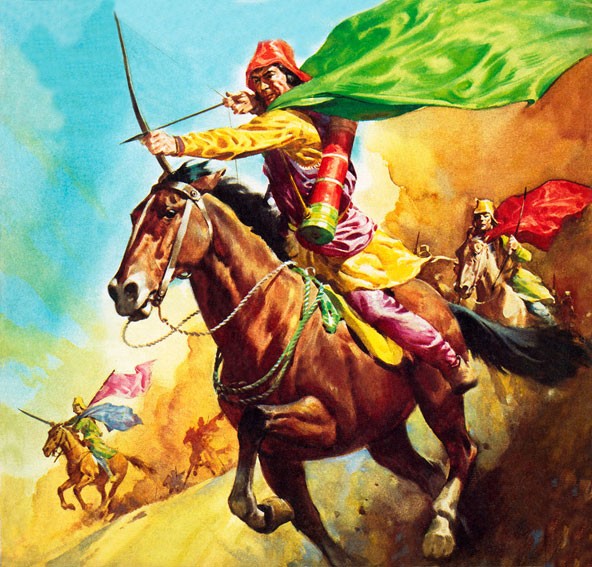
The Parthians adopted the art, architecture, and religious beliefs of their Achaemenid and Greek predecessors. Parthian rulers ran their empire from the capital at Ctesiphon on the River Tigris and appointed satraps to run the outlying regions. Their main enemies were the Seleucids to the west and the Scythians to the east. But as the empire expanded westward, it came into conflict with both Armenia and the Roman Republic. In 53 BC the Parthians defeated the Romans at Carrhae and by 39 BC had captured the whole of what is now Lebanon from the Romans. However they soon lost their gains, and fought several more wars with the Romans over the next 200 years.
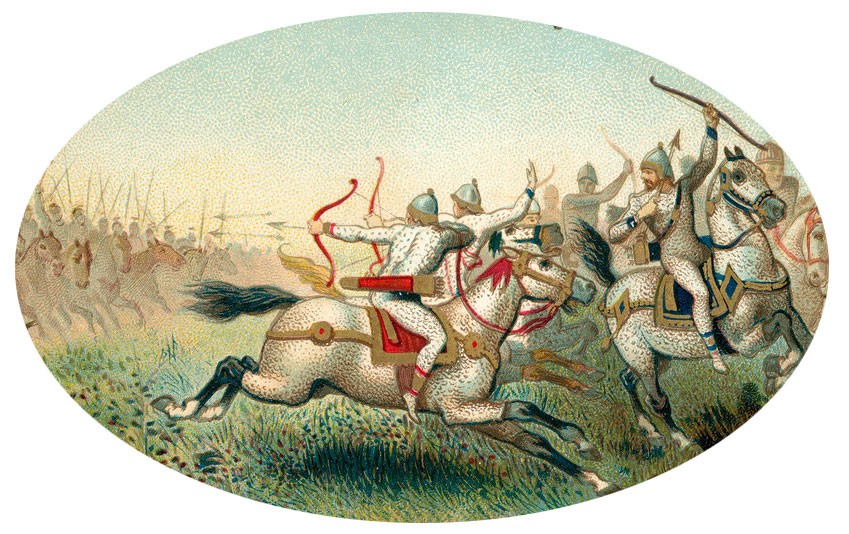
The strength of the Parthian Empire was reduced both by its constant wars with Rome and frequent civil wars between the various contenders to the throne. In AD 224, Ardashir I, ruler of the city of Estakhr in southern Persia rose in revolt and killed the last Parthian ruler, Artabanus IV, establishing a new Sassanian (Sassanid) Empire.

The Sassanian Empire
The new Sassanian Empire was as powerful as its Achaemenid predecessor, At its height, it stretched from Egypt and Turkey east to Afghanistan and the borders of India and south across the Persian Gulf to Yemen. A powerful army kept control, while a navy kept the Persian Gulf free of pirates.

Throughout its existence, the Sassanian Empire was in constant conflict with its neighbours, fighting the Romans, Byzantines, Arabs, Huns, Khazars and other Turkic nomads. Numerous fortifications were built to protect its borders. The Sassanians did, however, remain on good terms with the Chinese, exchanging ambassadors and working together to protect the prosperous trade routes along the Silk Road.
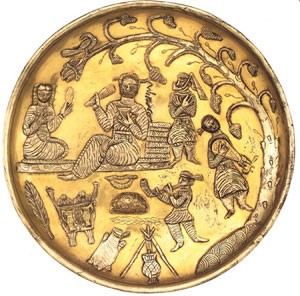
The Sassanian kings ruled their empire from Ctesiphon and took the title Shahanshah, or Kings of Kings. A powerful civil service administered the country. The Sassanians were great builders, and developed industry, trade and agriculture. Harbours were constructed in the Persian Gulf to speed up trade with India. The Sassanians encouraged philosophy and learning and promoted the arts.

The fall of the Sassanians
In 613 the Sassanian army defeated the forces of the Byzantine Empire at Antioch. They went on to capture Jerusalem in 614 and the whole of Egypt by 621. The Byzantines fought back, winning a series of victories up 628. The Sassanian king Khosrau II was overthrown and killed by son Kavadh, who in turn died the next year. Chaos and civil war then broke out in the empire, which was in no state to repel the invading Arab armies bringing Islam into the country after 632. After a great victory against the Sassanians at Nehavend in 641, the Arabs overwhelmed the empire by 651, and Persia came to be ruled by the Umayyad dynasty, which was founded in Damascus in 661.

Consultant: Philip Parker