
EASY READ World history

CITE
We have made every effort to follow citation style rules, but there may be some minor differences. If in doubt, please refer to the appropriate citation style manual.
EASY READ When was the Golden Age of Piracy?. (2025). In Q-files Encyclopedia, History, EASY READ World history. Retrieved from
https://www.q-files.com/history/easy-read-world-history/easy-read-when-was-the-golden-age-of-piracy
"EASY READ When was the Golden Age of Piracy?." History, EASY READ World history, Q-files Encyclopedia, 5 Dec. 2025.
https://www.q-files.com/history/easy-read-world-history/easy-read-when-was-the-golden-age-of-piracy.
Accessed 1 Nov. 2026.
EASY READ When was the Golden Age of Piracy? 2025. History, EASY READ World history. Retrieved 1 November 2026, from
https://www.q-files.com/history/easy-read-world-history/easy-read-when-was-the-golden-age-of-piracy
History, EASY READ World history, s.v. "EASY READ When was the Golden Age of Piracy?," accessed November 1, 2026.
https://www.q-files.com/history/easy-read-world-history/easy-read-when-was-the-golden-age-of-piracy


When was the Golden Age of Piracy?
Pirates are people who steal from ships. During the "Golden Age of Piracy", which lasted from the the 1680s to the 1720s, many pirates sailed across the seas in stolen ships. They attacked other ships, seized their cargo and killed their crews. The Spanish Main (the southern Caribbean Sea) was a popular hunting ground for pirates. From the Caribbean coast of South America, Spanish galleons transported gold, jewellery and coins (“pieces of eight”) back from the Americas to Spain. The treasure ships were a tempting target for pirates.


Pirates
Pirates were murderous outlaws who attacked ships for their own gain. Many pirates had once been ordinary sailors who became pirates to escape the brutal treatment they received on merchant ships or warships. They found that they could make much more money as pirates—but it was still a tough life.
Privateers and buccaneers
After Christopher Columbus landed in the Americas in 1492, Spain claimed much of Central and South America as its own. The Spanish began to ship vast amounts of silver and other treasures they found in the Americas back to Spain. Enemies of Spain, including Britain, France and the Netherlands, hired men to steal Spain’s treasure. These men were called privateers. In the mid-17th century they were helped by local raiders, called buccaneers, who lived on the islands of Tortuga, Hispaniola and Jamaica in the Caribbean. Many became pirates. Some sailed as far as the Indian Ocean in search of treasure ships to plunder.

In around 1713, a war which involved Spain, France, Britain and the Netherlands ended. These countries no longer needed to hire sailors to man their warships. So they became pirates instead. For a few years, pirates terrorized the seas. They even had their own pirate republic: New Providence in the Bahamas.
Spanish galleons
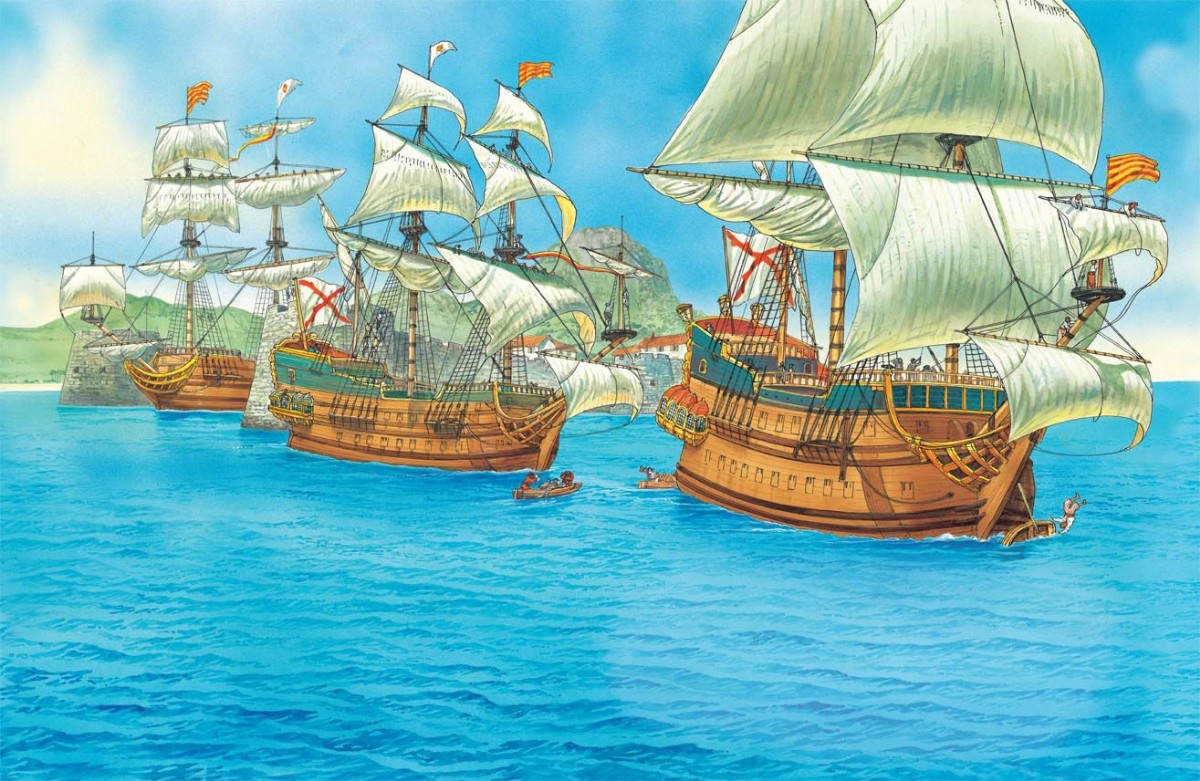
From about 1600, all treasure from the Americas—including gold bars, silver ingots and coins—was transported in large warships called galleons: the Spanish treasure fleet. Galleons were slow to steer. Pirate ships were much faster and could easily overtake them. But aboard the galleons were soldiers and guns: up to 30 cannon on either side of the ship.
Attack
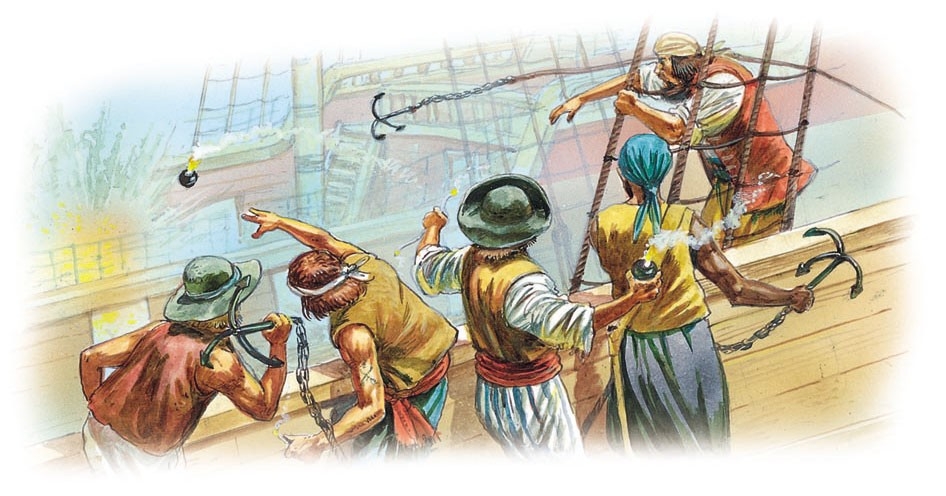
Pirate ships would often take a galleon by surprise. They swapped a friendly flag for the Jolly Roger just moments before their attack. Their ship would draw alongside the galleon, using grappling irons to pull the ships together. The pirates then leapt aboard, brandishing cutlasses (razor-sharp, curved-edge swords), pistols, axes and daggers.
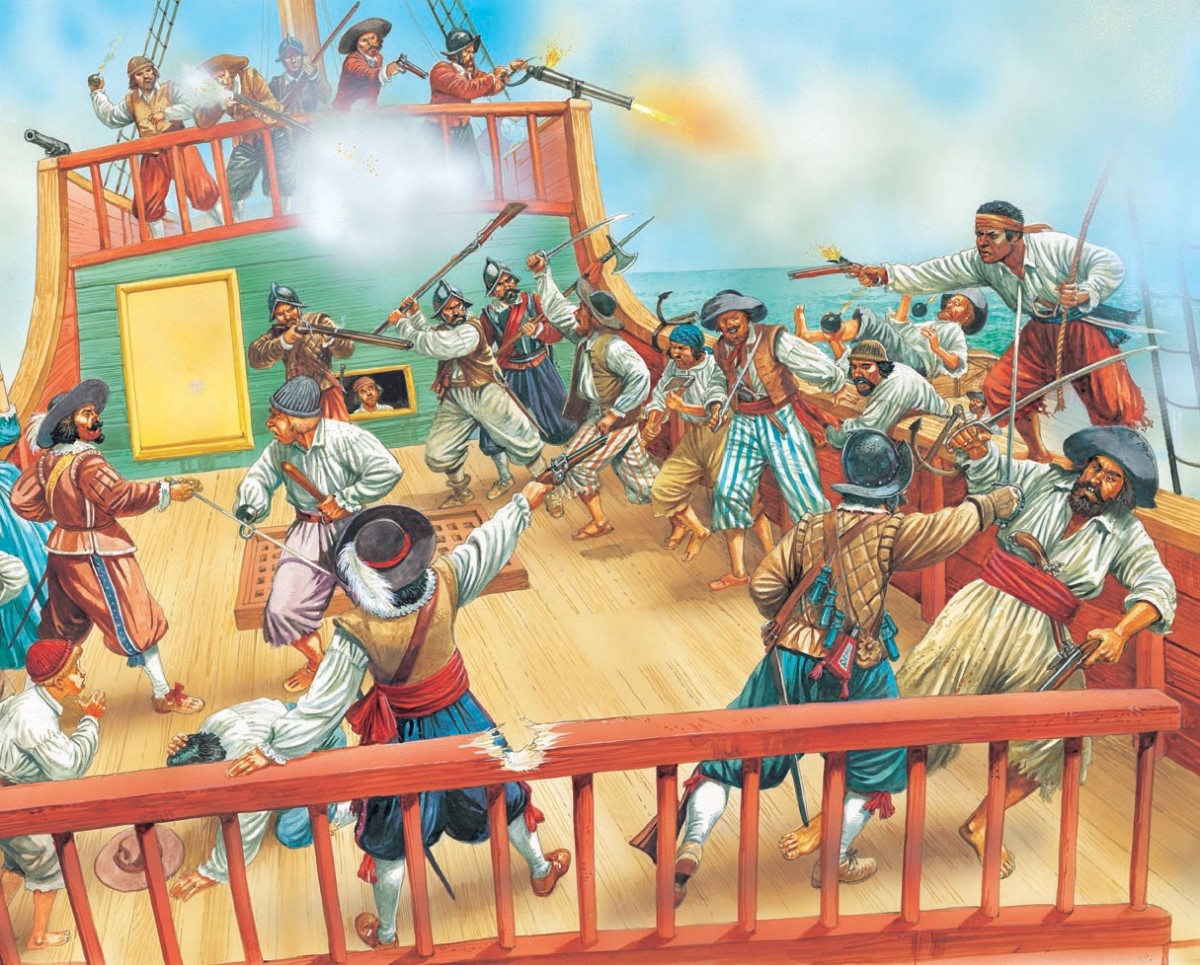
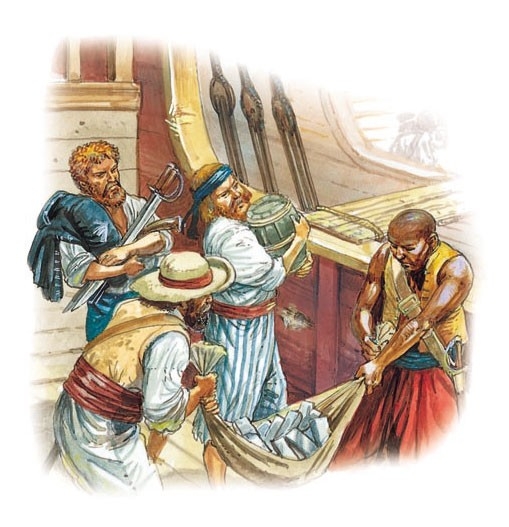
With his crew outnumbered by the pirate crew, the galleon's captain often surrendered his ship without a shot being fired. The pirates would then make off with their plunder: arms, supplies and treasure.
Ready to find out more?
Here are some pages in other parts of Q-files you might like to explore:
Pirates and galleons
History of piracy
Spanish treasure fleet
Golden Age of Piracy
William Kidd
Inside a pirate ship
Life aboard a pirate ship
Pirate weapons
How pirates attacked
How to defend a pirate attack
Pirates and galleons A-Z
Consultant: Philip Parker
pics

Without in any way limiting Q-files Ltd’s exclusive rights under copyright, any use of this publication to “train” generative artificial intelligence (AI) technologies to generate text is expressly prohibited. Q-files Ltd reserves all rights to license use of this work for generative AI training and development of machine learning language models.