
Famous leaders

CITE
We have made every effort to follow citation style rules, but there may be some minor differences. If in doubt, please refer to the appropriate citation style manual.
Abraham Lincoln. (2023). In Q-files Encyclopedia, History, Famous leaders. Retrieved from
https://www.q-files.com/history/famous-leaders/abraham-lincoln
"Abraham Lincoln." History, Famous leaders, Q-files Encyclopedia, 30 Aug. 2023.
https://www.q-files.com/history/famous-leaders/abraham-lincoln.
Accessed 6 Aug. 2026.
Abraham Lincoln 2023. History, Famous leaders. Retrieved 6 August 2026, from
https://www.q-files.com/history/famous-leaders/abraham-lincoln
History, Famous leaders, s.v. "Abraham Lincoln," accessed August 6, 2026.
https://www.q-files.com/history/famous-leaders/abraham-lincoln


Abraham Lincoln
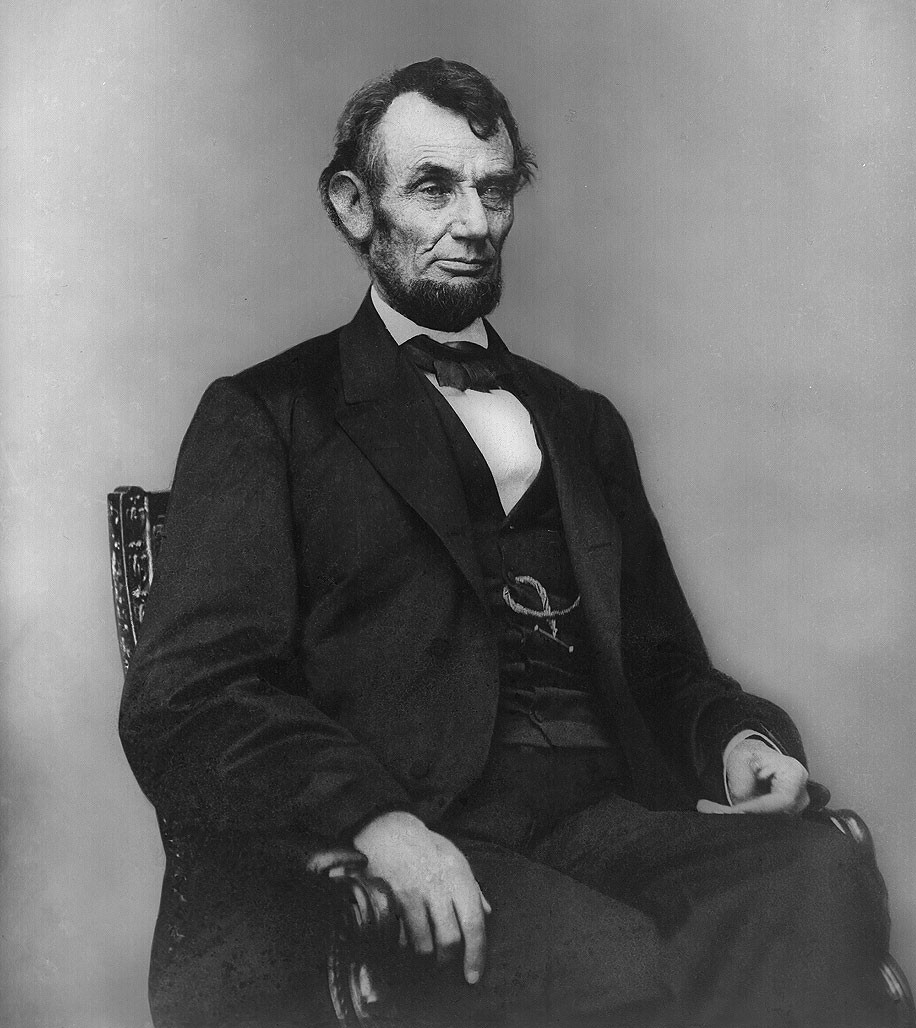
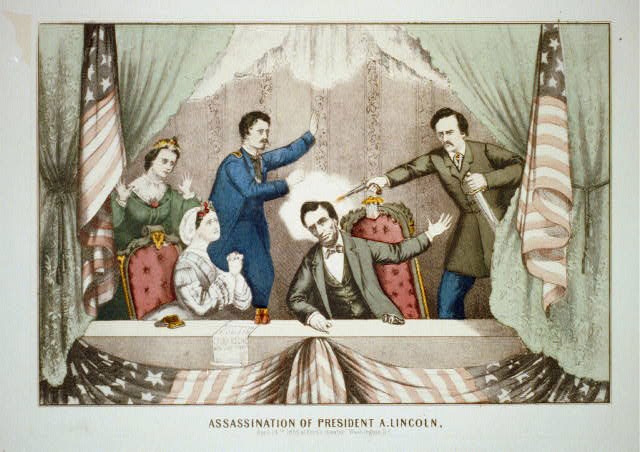
Abraham Lincoln (1809–1865) was the 16th president of the United States (1861–1865), and one of the country’s greatest leaders. He is celebrated for his tolerance and moderation, and for guiding the country through one of the most difficult periods in its history. He became president at a time of crisis in the USA, as civil war threatened to split the North and South. Lincoln led the federal armies to victory to preserve the Union, and abolished slavery in the USA. In 1865, he was shot by John Wilkes Booth while attending a performance at Ford's Theatre in Washington, D.C. He was the first US president to be assassinated.
Early life
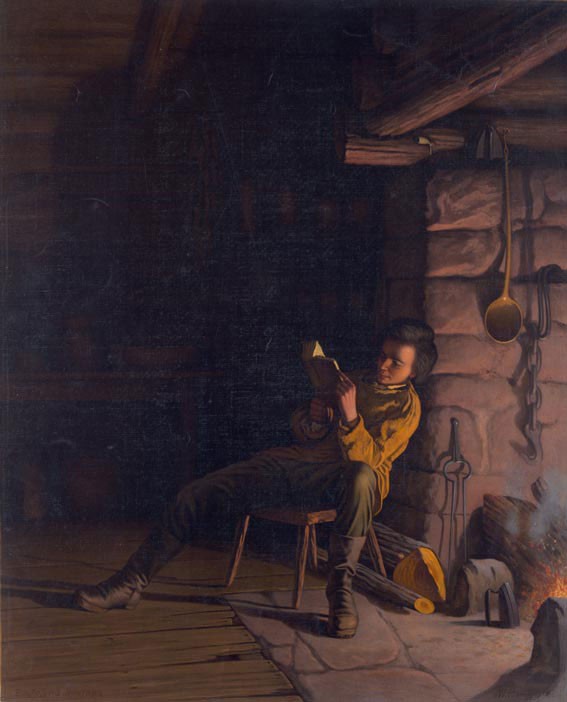
Abraham Lincoln was born in a tiny log cabin near Hodgenville, Kentucky, on 12th February 1809. His father Thomas was a pioneer and farmer. His mother Nancy died when he was nine years old, and his father remarried a widow called Sarah Bush Johnston. Abraham became very close to his stepmother, who encouraged him to read and to learn. He later called her his "angel mother".
Lincoln was largely self-taught. He attended school now and then, most often in the winter when there was less farmwork to be done. But whatever he was doing, he always had a book tucked in his pocket. He became interested in the law and often walked miles to the nearest courtrooms to listen to cases. In 1831, Lincoln witnessed a slave auction for the first time, on a working trip to New Orleans as a flatboatman.


New Salem
In 1831 Lincoln left his family to settle in New Salem, a small village on the Sangamon River in Illinois. There he ran a small general store, and in 1832 enlisted as a volunteer to fight in a brief conflict against the Black Hawk Native Americans. He did not see any action but the experience taught him much about the hardships of a soldier’s life. Around the same time, Lincoln started his political career with a campaign to be elected to the Illinois General Assembly. He was unsuccessful at first, but two years later, in 1834, he was elected. He taught himself law from borrowed books and in 1836 he passed the necessary examinations to practise law.
Marriage
Lincoln moved to Springfield, Illinois, which offered more opportunities than New Salem. He soon had a reputation as an able and very successful lawyer. He also met Mary Todd, a well-educated and high-spirited young woman who came from a wealthy and well-connected family from Lexington, Kentucky. Despite the disapproval of her family, the two were married in 1842. The couple went on to have four sons. Three of the boys died young; only the eldest, Robert, lived to adulthood. These deaths had a profound effect on both parents.


Kansas-Nebraska Act
Lincoln was elected to Congress in 1846, where he served one two-year term. Afterward, he returned to practising law in Springfield. It was the issue of slavery that brought Lincoln back into politics, in 1854. That year, Lincoln’s political rival, the Democrat senator Stephen A. Douglas, introduced a bill that allowed settlers in the new territories of Kansas and Nebraska to decide for themselves whether to allow slavery (the Kansas-Nebraska Act). This Act potentially extended the reach of slavery.
Lincoln was determined to stop the spread of slavery. He joined the Republican Party, which was newly formed to fight the slavery issue. Lincoln became the leading Republican in Illinois, and in 1858 started a campaign to become the state’s representative in the US Senate. He was opposed by Douglas, and the two men engaged in a famous series of public debates on the question of slavery. It was, however, Douglas who emerged victorious at the end of the campaign.
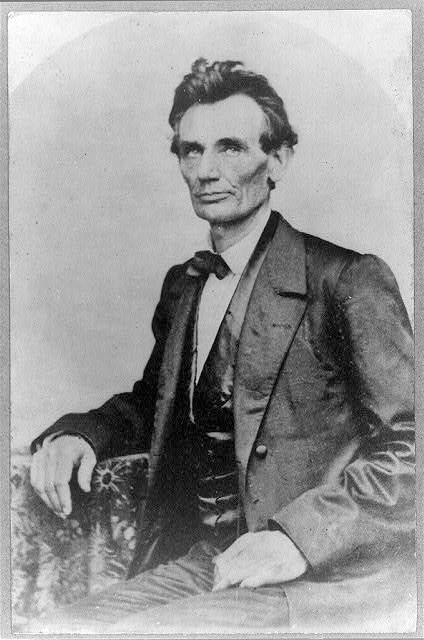
The debates had, however, spread Lincoln's fame across the country. He decided to stand as president in the next elections. In November 1860, Lincoln was elected the first Republican president of the USA.
Secession

Lincoln did not get any votes from the Deep South, and his views on slavery caused alarm in the Southern slave states. South Carolina was the first state to secede (withdraw) from the Union. Six more states (Florida, Mississippi, Alabama, Georgia, Louisiana and Texas) followed even before Lincoln took office, combining to form the Confederate States of America (the Confederacy).
Lincoln was determined to preserve the Union, even at the risk of war. Only a few weeks after he took office, the first shots were fired when Confederate forces attacked US troops at Fort Sumter in Charleston, South Carolina, in April 1861. This event marks the beginning of the American Civil War.
Civil War
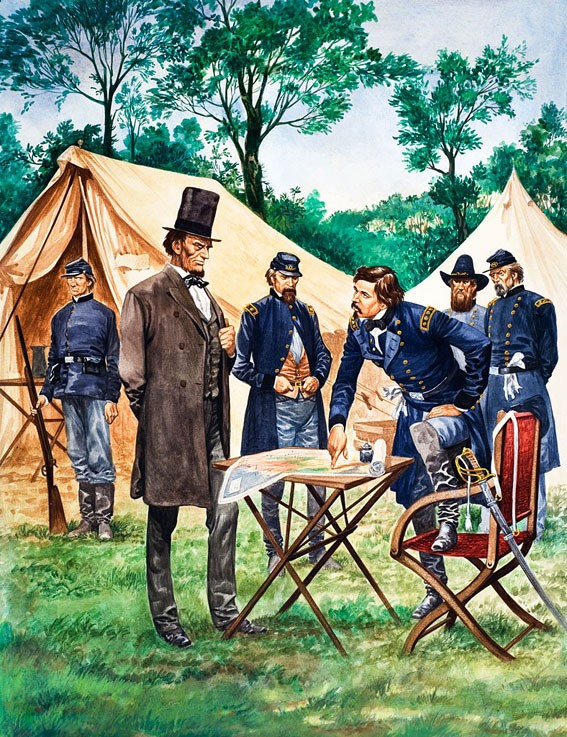
Lincoln called on all states to send troops to "preserve the Union", effectively forcing all the states to decide which side to take. Four more states (Arkansas, North Carolina, Tennessee and Virginia) joined the Confederacy. Lincoln quickly took control, taking on the role of commander-in-chief and giving himself widespread wartime powers. He imposed a blockade on Southern ports, and appointed several generals to lead the US army. However, it was not until he promoted Ulysses S. Grant in 1864, that he found a general who could match his own skill in tactics and organization.

Lincoln’s primary aim in the Civil War was to bring the Confederate states back into the Union. But on 1st January 1863 he issued his Emancipation Proclamation, which freed all slaves in areas still under Confederate control. The proclamation meant that the war was also now a struggle to end slavery. He later succeeded in making a Thirteenth Amendment to the US Constitution. This amendment abolished slavery throughout the United States. It meant that slaves freed by the Emancipation Proclamation during the war could not be re-enslaved after the end of the war.
Gettysburg Address
In July 1863, Union forces fought their first battle on northern soil at Gettysburg, Pennsylvania. The battle is often described as a turning-point in the war, when Union forces began to get the
upper hand.
In November of that year, Lincoln gave a short speech at the dedication of the Soldiers’ National Cemetery at Gettysburg. The speech lasted only around three minutes, but it is now considered to be one of the greatest in US history. Lincoln spoke of "a new birth of freedom" in the nation, and ended with the words: "… government of the people, by the people, for the people, shall not perish from the earth."


Re-election and death
Lincoln stood for president and was re-elected for a second term in 1864. At his second inaugural address in 1865 he extended the hand of friendship to the Southern states, looking forward to welcoming them back into the Union: "With malice toward none, with charity for all… let us strive on to finish the work we are in; to bind up the nation's wounds…". The end of the war came in April 1865. A few days later, Lincoln was shot while attending a performance at Ford’s Theatre in Washington, D.C. He died the following morning, 15th April 1865. His assassin was John Wilkes Booth, a Confederate and a supporter of slavery.
Consultant: Philip Parker
pics

Without in any way limiting Q-files Ltd’s exclusive rights under copyright, any use of this publication to “train” generative artificial intelligence (AI) technologies to generate text is expressly prohibited. Q-files Ltd reserves all rights to license use of this work for generative AI training and development of machine learning language models.