
Jewish history
Sephardi and Ashkenazi Jews
By the end of the Middle Ages, the Jews of Europe formed two major groups: the Sephardim (from the Medieval Hebrew name for Spain, Sepharad), or "Hispanics”, who lived in Spain and Portugal, and the Ashkenazim (from the Hebrew name for Germany, Ashkenaz), or "Germanics”, who had settled in western Germany and northeastern France. The two groups had separate identities and customs, which they took with them in their exile from their adopted homelands: the Sephardi Jews to North Africa, Anatolia (modern Turkey), Levant and southern Europe; the Ashkenazi Jews to Poland-Lithuania (then a large part of eastern Europe), and later from there to western Europe and the United States.
Sephardi diaspora
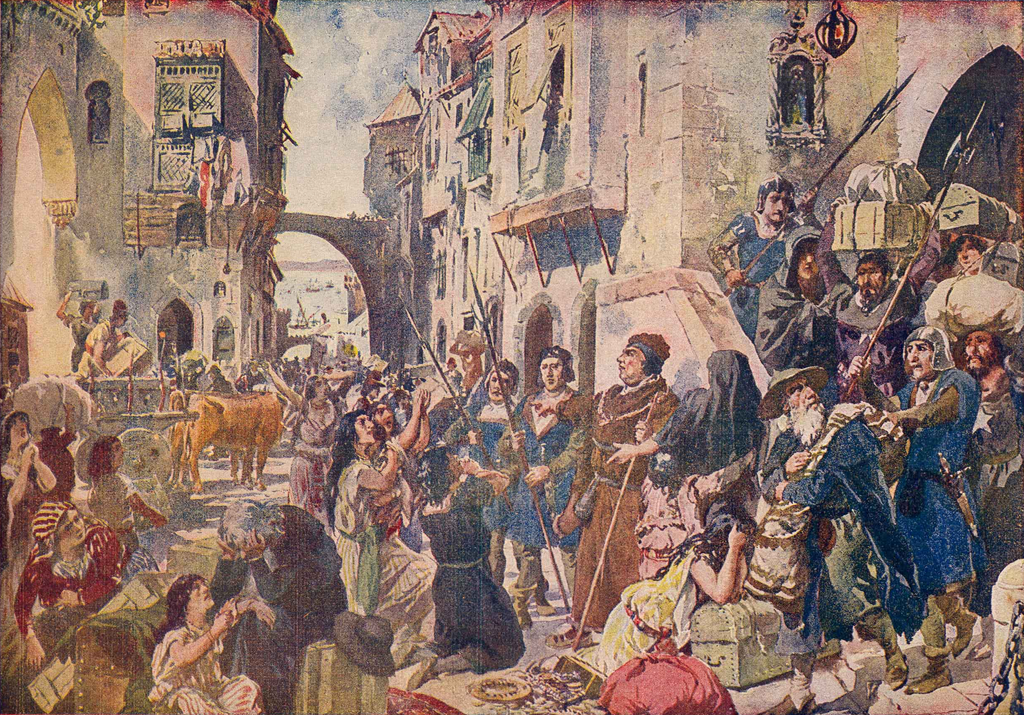
In the late Middle Ages, Spain was the last Christian country where Jews survived in large numbers. But even here, they experienced persecution. In 1391, Christian Spain ordered the majority of Spain's 300,000 Jews to convert to Christianity. They became known as conversos.
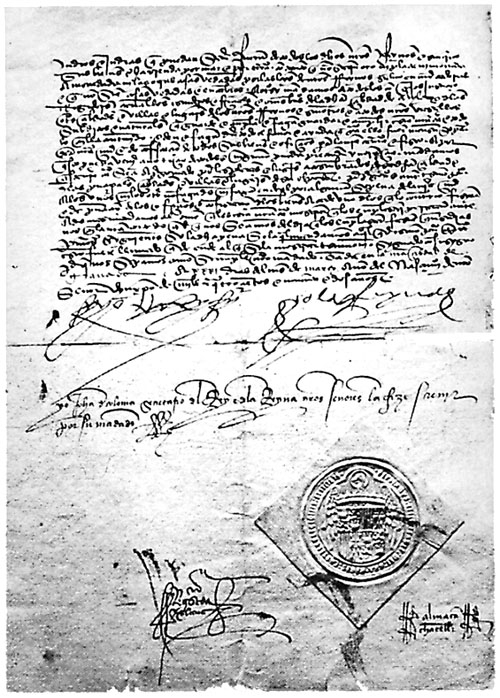
Following the conquest of the Muslim Kingdom of Granada in 1492, the Christian monarchs issued the Alhambra Decree whereby Spain's remaining 100,000 Jews were forced to choose between conversion and exile. As a result, an estimated 50,000 to 70,000 Jews left Spain. Those conversos who secretly practised Judaism were subjected to 40 years of repression by the Spanish Inquisition. The expelled Spanish Jews, the Sephardim, fled mainly to Portugal (where they were forcibly converted to Christianity or expelled in 1496–97), the Ottoman Empire, North Africa and the Kingdom of Naples. This was known as the Sephardi diaspora. A small number of Sephardi Jews also settled in Holland and England.


Ottoman Empire
The Ottoman Empire was a safe haven for Jews fleeing persecution. The Sephardim from Spain were welcomed after 1492 for their medical and technical knowledge and their commercial expertise. Salonica (today, the Greek city of Thessaloniki) became a mainly Jewish town and a major port founded on Jewish enterprise. When Egypt and the Levant came under Ottoman rule, these regions also attracted Jewish immigrants.
Ashkenazi diaspora
From the 14th to 18th centuries, the Kingdom of Poland in alliance with the Grand Duchy of Lithuania covered a vast area of central and eastern Europe, extending from the Baltic Sea nearly as far as the Black Sea. Poland had the largest Jewish population in Europe at this time, most of whom arrived there from Germany in 13th century. They brought with them their own language, Yiddish, developed from German and fused with words from Hebrew and Aramaic. Known as the Ashkenazim, Polish Jews enjoyed tolerance, prosperity and freedom for nearly 400 years.
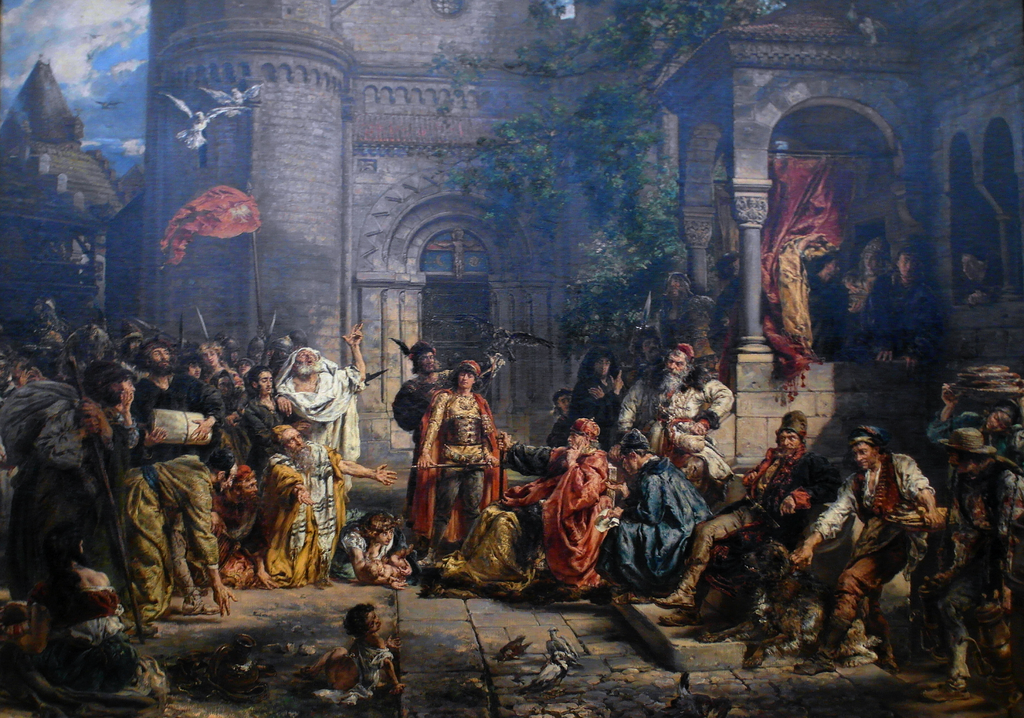

The Golden Age of Polish jewry came to an abrupt end during the Cossack rebellion of 1648. The aim of its leader, Bogdan Chmielnicki, was to wipe out Judaism in the Ukraine. Polish and Lithuanian Jews were slaughtered in their hundreds of thousands during the Chmielnicki Uprising. Driven by these and other persecutions, many Jews started to move back to western Europe in what became known as the Ashkenazi diaspora. They travelled to Germany, England (especially London) and Holland (especially Amsterdam). The courts of late 17th century Germany—then a land made up of hundreds of independent states—offered employment to financiers and dealers in jewellery. These few “court Jews” became wealthy and powerful. Most Ashkenazi Jews, however, were small traders or semi-skilled workers.
Pale of Settlement
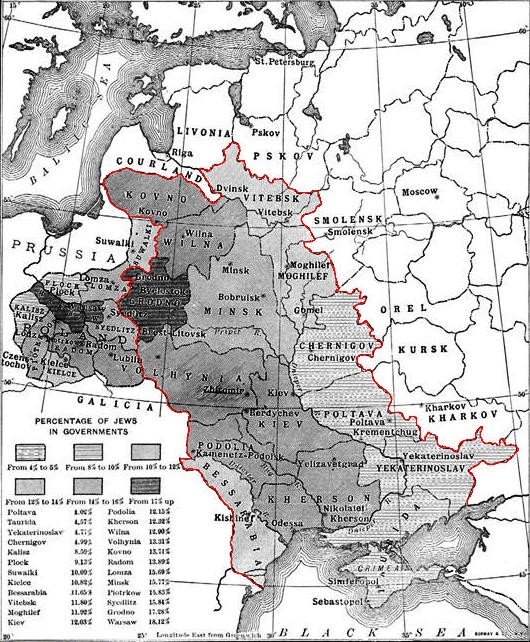
Following the partition of Poland in the late 18th century, the Jewish population was split between the Russian Empire, Austro-Hungary and Prussia. In Russia, Jews were restricted to the western part of the country, called the Pale of Settlement, an area created by Catherine the Great in 1791. Most Jews were excluded from living in a number of cities within the Pale as well. The majority of Russia's Jews lived in extremely poor conditions. But at its height (around 1910), the Pale, including the new Polish and Lithuanian territories, had a Jewish population of over 5 million, representing 40% of the world Jewish population at the time.

Jewish movements
Poland and Central Europe saw the creation of an important new Jewish movement: Hasidism. Begun by Rabbi Israel Baal Shem Tov (1700–60), it was about making holiness in everyday life both understandable and enjoyable. Hasidism became popular amongst ordinary Jews, but it also led to divisions within Judaism, with many in the religious establishment strongly opposed to it.
In the 19th century another new movement began in Germany. Reform Judaism held that Jewish law and ritual should move with the times, and not be fixed in the past. It introduced many changes to worship and customs and rapidly became influential.
Emancipation and antisemitism
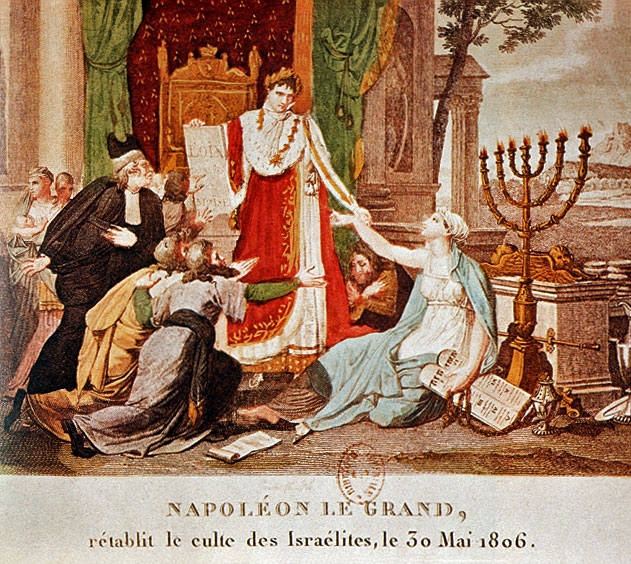
Until the 18th century, many Jews in Europe were segregated (kept apart from) non-Jews. They were made to live in separate parts of towns and cities, known as ghettos. Though persecution still existed, emancipation (freedom from restrictions) started to spread across the continent. In the early 19th century, Napoleon invited Jews to seek refuge in the parts of his empire that offered equality under Napoleonic Law. By 1871, every European country except Russia had emancipated its Jews.
Despite the increasing integration of the Jews with the rest of society, a new form of antisemitism (anti-Jewish feeling) emerged, based on race rather than the religious hatred of the Middle Ages. It held that Jews were a separate race from the people of western Europe. New political parties in France, Germany and Austria-Hungary campaigned against the emancipation of the Jews.

Great Migration
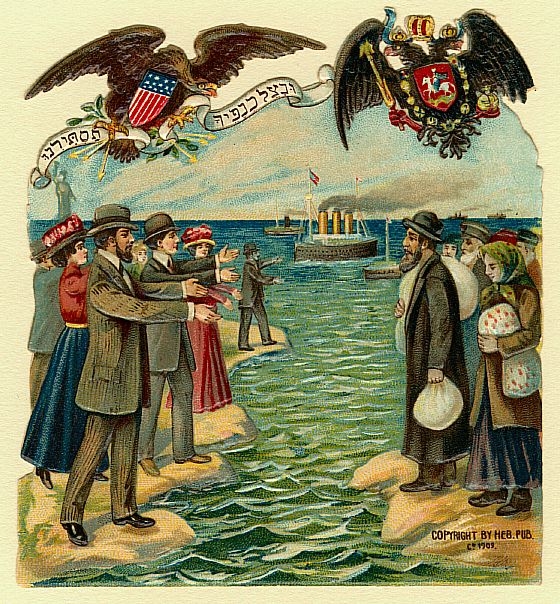
Following the assassination of the Russian Tsar Alexander II in 1881—falsely blamed on the Jews by the Russian government—pogroms (anti-Jewish violence) swept through the country, causing hundreds of deaths. These pogroms, together with the rapid growth in the Jewish population and hardship, led to more than 2 million Jews leaving Russia and Eastern Europe between 1881 and 1917. Many migrated to the United States, which promised opportunities for a better life. With a Jewish population of about 1.2 million by 1910, New York, the traditional point of entry, became the world’s largest “Jewish city” by far.
Hundreds of thousands of Jews also emigrated to Canada, Britain, Palestine (then part of the Ottoman Empire), South Africa and Argentina. Millions, however, remained living in Russia and Eastern Europe, where the Jewish population continued to increase. Following the Russian Revolution in 1917, the Pale of Settlement was abolished. A portion of it, together with its Jewish population, became part of Poland.


Zionism
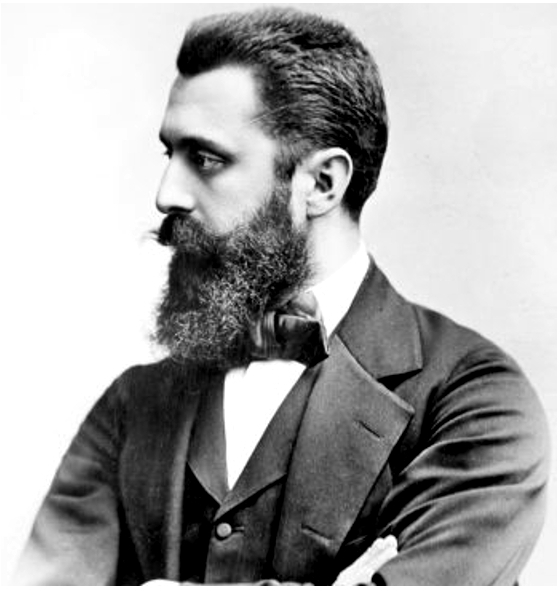
In response to widespread antisemitism, many Jews started to believe that they would be safe only in their own nation: the Land of Israel, or Palestine. Then part of the Ottoman Empire, the region was home to a small Jewish community, mostly living in Galilee and Jerusalem, but the Palestinian Arab population formed a large majority. Zionism, the movement that supported the re-establishment of a Jewish homeland in Palestine, began in the 1880s. It was boosted when the Hungarian writer Theodor Herzl (1860–1904) formed the Zionist Organization in 1897.
Consultant: Philip Parker