
EASY READ The animal kingdom

CITE
We have made every effort to follow citation style rules, but there may be some minor differences. If in doubt, please refer to the appropriate citation style manual.
EASY READ Why is the platypus so unusual?. (2026). In Q-files Encyclopedia, Life, EASY READ The animal kingdom. Retrieved from
https://www.q-files.com/life/easy-read-the-animal-kingdom/easy-read-why-is-the-platypus-so-unusual
"EASY READ Why is the platypus so unusual?." Life, EASY READ The animal kingdom, Q-files Encyclopedia, 23 Mar. 2026.
https://www.q-files.com/life/easy-read-the-animal-kingdom/easy-read-why-is-the-platypus-so-unusual.
Accessed 13 Sep. 2026.
EASY READ Why is the platypus so unusual? 2026. Life, EASY READ The animal kingdom. Retrieved 13 September 2026, from
https://www.q-files.com/life/easy-read-the-animal-kingdom/easy-read-why-is-the-platypus-so-unusual
Life, EASY READ The animal kingdom, s.v. "EASY READ Why is the platypus so unusual?," accessed September 13, 2026.
https://www.q-files.com/life/easy-read-the-animal-kingdom/easy-read-why-is-the-platypus-so-unusual


Why is the platypus so unusual?
The platypus belongs to a small group of mammals known as monotremes. They are the only mammals that lay eggs instead of giving birth to live young, as marsupials and placentals (all other mammals) do. There are only five kinds of monotremes: four species of echidna and the platypus. They live only in Australia and New Guinea.
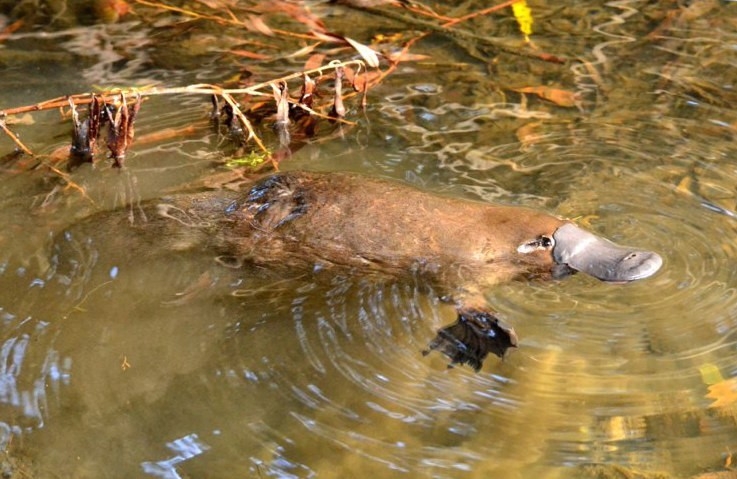


Platypus
The platypus is a river-dwelling mammal from eastern Australia and Tasmania. It has a rubbery, duck-like bill, webbed feet and a wide, flat tail. It feeds on the worms, shrimps, insect larvae and crayfish it finds on the riverbed. The platypus lays soft-shelled eggs. The young hatch out after just a few days. They are suckled (fed on milk) by their mother until they have learned to feed for themselves.
Echidna
The echidna, or spiny anteater, lives only in Australia and New Guinea. It has a long thin snout and claws for digging up ants, termites and worms, on which it feeds. Its body is covered in sharp spines. Unlike all other mammals except the platypus, the echidna lays soft-shelled eggs. The female tucks her single egg into a pouch on her front. After it hatches, the baby, called a puggle, stays in her pouch. It licks milk that seeps from patches on her fur.

Ready to find out more?
Here is a page in another part of Q-files you might like to explore:
Platypus and echidna
pics

Without in any way limiting Q-files Ltd’s exclusive rights under copyright, any use of this publication to “train” generative artificial intelligence (AI) technologies to generate text is expressly prohibited. Q-files Ltd reserves all rights to license use of this work for generative AI training and development of machine learning language models.