
EASY READ The animal kingdom

CITE
We have made every effort to follow citation style rules, but there may be some minor differences. If in doubt, please refer to the appropriate citation style manual.
EASY READ A to Z of carnivorous mammals. (2026). In Q-files Encyclopedia, Life, EASY READ The animal kingdom. Retrieved from
https://www.q-files.com/life/easy-read-the-animal-kingdom/easy-read-a-to-z-of-carnivorous-mammals
"EASY READ A to Z of carnivorous mammals." Life, EASY READ The animal kingdom, Q-files Encyclopedia, 30 Jun. 2026.
https://www.q-files.com/life/easy-read-the-animal-kingdom/easy-read-a-to-z-of-carnivorous-mammals.
Accessed 13 Sep. 2026.
EASY READ A to Z of carnivorous mammals 2026. Life, EASY READ The animal kingdom. Retrieved 13 September 2026, from
https://www.q-files.com/life/easy-read-the-animal-kingdom/easy-read-a-to-z-of-carnivorous-mammals
Life, EASY READ The animal kingdom, s.v. "EASY READ A to Z of carnivorous mammals," accessed September 13, 2026.
https://www.q-files.com/life/easy-read-the-animal-kingdom/easy-read-a-to-z-of-carnivorous-mammals


A to Z of carnivorous mammals
The carnivores include a number of mammal families: cats, dogs, bears, civets, hyenas, weasels, raccoons and mongooses. Some marine mammals, including seals, sea lions and the walrus, are carnivores, too. Most are meat-eaters, but some feed on insects and fruit, and a few eat only plants. Many carnivores seek out and kill other animals for food. Known as predators, they must use stealth, speed and strength to overcome their prey. Some carnivores are scavengers: they feed on kills made by others.


Badgers
Badgers are members of the weasel family. They have stocky bodies and strong paws for burrowing. They are nocturnal. Most badgers feed on earthworms, slugs and insects, but some badgers will also kill and eat birds and small mammals. The honey badger, or ratel, breaks open beehives to reach the honey inside.
Bears
Bears are large, heavily built animals. Most live on their own in forests. Smaller kinds are good climbers. Bears generally eat a wide range of foods including fish, small mammals, insects, plants and fruit. They sniff out their food using their excellent sense of smell. There are eight kinds of bear: brown (or grizzly) bear, American black bear, Asian black bear, polar bear, sun bear, sloth bear, spectacled bear and the giant panda. Most kinds seldom attack people and usually avoid us.

Cats


The cat family is divided into the big cats or panthers (lion, tiger, jaguar, cheetah and the leopards) and the small cats (cougar, lynxes, serval, caracal, bobcat, ocelot, fishing cat and wildcats). All cats are expert hunters. Lions live in groups called prides, but most cats usually live and hunt on their own.
Small cats are found in remote forests or mountains. Some have spotted coats that help them to blend into the background.
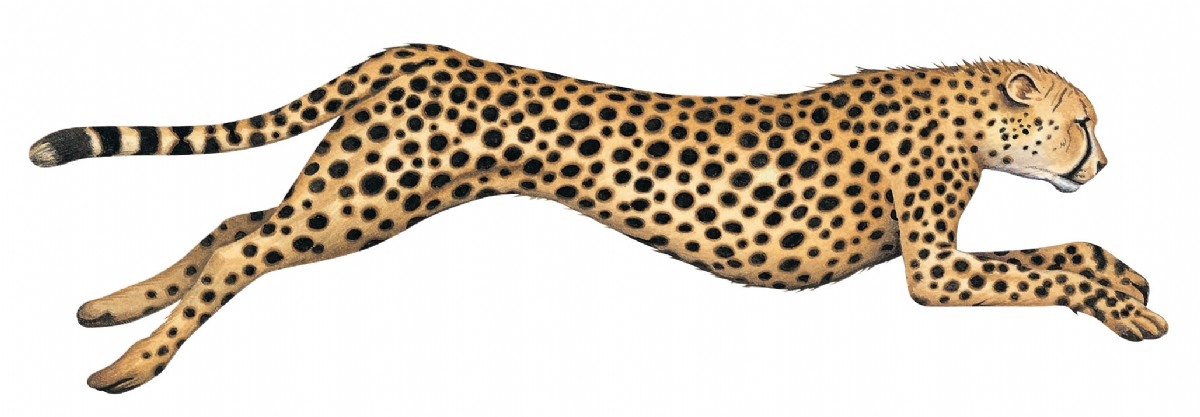
Cheetah
A powerful hunter from the dry grasslands of Africa, the cheetah is the fastest animal on land. This big cat can run faster than 100 km/h (60 mph) A cheetah may stalk its prey—say, a young zebra or wildebeest—for up to several hours. When it is only 30 metres (100 ft) away, the cheetah suddenly bursts into the attack. After a short chase, lasting no longer than 20 seconds, the cheetah brings its quarry down. It kills it with a bite to the throat.
Civets
Civets, genets, linsangs and the binturong are all members of the civet family. Nocturnal, solitary animals, they look like long-nosed cats. All civets have excellent hearing and vision. They feed on a variety of foods, including small animals, carrion, insects, eggs and plants. They give off foul smells to ward off attackers.


Dogs
Wolves, foxes, coyotes, jackals, African wild dogs, dingos and raccoon dogs are all members of the dog family. They are hunters or scavengers with powerful jaws. Their strong legs carry them great distances in the search for food. They grab small prey in their jaws or pounce on them with their front feet. Dogs feed on almost anything they can find, including fish, fruit and even insects, as well as other animals, dead or alive. Most kinds live together in family groups. Some form large packs. They work together to hunt large prey. They chase them until the prey is exhausted.
Foxes
Foxes are members of the dog family. They have pointed muzzles, bushy tails and sharp hearing. The family includes the fennec and kit foxes, which live in deserts, the Arctic fox, which lives in polar lands, and the red fox, which is widespread across the Northern Hemisphere and Australia.


Foxes usually live in small family groups. Many hunt small mammals such as rodents, but they will eat most foods, including fruit, worms and insects as well. Many red foxes now live in cities and towns, where they scavenge on our waste food.
Giant panda

The giant panda is a large black and white bear from the mountain forests of central China. A solitary animal, it spends most of its days feeding on bamboo shoots. The giant panda is now very rare. As people have taken over more of the bamboo forest for farmland, it has lost more and more of its natural home. It is slow to breed and, when it does have young, only one cub normally survives.
Grizzly bear
The grizzly bear is a type of brown bear from North America. It gets its name from its grizzled (grey-tipped) fur. It is a powerful carnivore, but eats plants as well as meat. Grizzlies are skilled at fishing. Groups of them wait in the shallows of a river for salmon to swim upstream, leaping out of the water as they go. The bears catch their prey with either their teeth or their claws.


Hyenas
Hyenas live in family groups on the dry grasslands of Africa and Asia. They hunt or scavenge together, usually at night. Some kinds can kill large prey, such as wildebeest, after chasing them for long distances. A hyena’s strong jaws and large teeth can crush bones, horns and hooves. They often drive away other scavengers from their kills.
Jaguar

The jaguar is a big cat from the Americas. It prowls through the rainforest, preying on tapirs, monkeys and even caimans. Lying in wait, it ambushes its victim at close quarters. It then drags the carcass to a hidden-away place to eat it.
Leopards
Leopards are big cats from Africa and parts of Asia. Most leopards have cream and gold fur with black markings. Their colouring allows them to blend into the surrounding forest. Leopards are solitary hunters. They seize most of their victims, such as antelopes, after creeping up on them. They often drag their kill up a tree, to keep it safe from hyenas. Some leopards have very dark fur. These are known as black panthers.


Lion
The lion is a big cat. It lives in Africa and a small part of India. Unlike other big cats, lions live together in groups called prides. These consists of females, called lionesses, their young and a small number of adult males. Male lions have shaggy manes. Their job is to defend the pride from other males.
Groups of lionesses hunt together, preying mostly on large herbivores such as zebra and antelopes. Lions also scavenge other predators' kills.

Meerkats
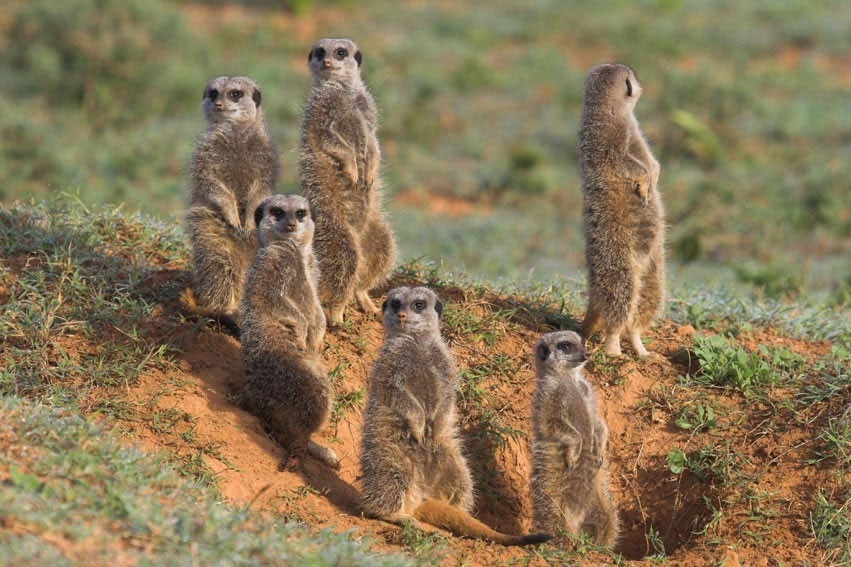
Meerkats are members of the mongoose family. They live in groups, called mobs, of around 30 animals. Each meerkat take turns to act as a lookout. It stands up on its hindlegs watching for danger. If it spots a predator, it gives a loud alarm bark to warn the rest of the mob.

Mongooses
The mongoose family are small carnivores from Asia, Africa and southern Europe. They are mainly solitary animals, but some kinds live and hunt in packs. Mongooses have long claws for digging. They feed mostly on insects, worms, lizards, snakes, birds, eggs and rodents. They use their strong sense of smell to find their prey or carcasses to scavenge.
Otters

Otters are fish-eating mammals. They are members of the weasel family. Most kinds of otter live near rivers or ponds, while the sea otter lives in the coastal waters of the Pacific Ocean. The otter has a long body, webbed paws and a thick, flattened tail. It moves quickly through the water by bending its body and tail up and down. It feeds on other water creatures, including fish, shellfish, amphibians, birds and small mammals.
Polar bear
The polar bear has a thick, white, waterproof coat. Underneath its skin there is a thick layer of blubber. Its claws and hairs on the soles of its feet give it a grip on the ice. It is also an expert swimmer. The polar bear lives in the Arctic. It spends most of its time alone on floating ice hunting for seals. It sniffs out holes in the ice where seals come up for air. As soon as a seal appears, the bear grabs it. When the sea ice melts in the summer, polar bears swim to land. Here, they cannot hunt seals, so they eat whatever food they can scavenge.


Raccoons
Raccoons, coatis and kinkajous are members of the raccoon family. They are quite small animals with long tails. Good climbers, some feed and nest in trees. The kinkajou has a long, prehensile tail. It uses it as a "fifth limb" for grasping on to branches. Most members of the raccoon family live alone and are nocturnal. Coatis, however, live in groups and feed during the day. Raccoons and coatis have a varied diet, including rodents, insects, eggs, fruits and nuts. Many raccoons live in cities, where they scavenge from rubbish bins at night.
Skunks
Skunks have a thick black-and-white coat, bushy tail and long claws. When threatened by a predator, the skunk will turn its back on its attacker and spray foul-smelling liquid in its face. The skunk's bold markings warn predators of this spray, so most decide not to attack it. Skunks eat most things, both plants and small animals. They use their claws to dig up insects or worms. Their thick fur protects them from the stings of honeybees. In cities, skunks may raid rubbish bins.

Tiger

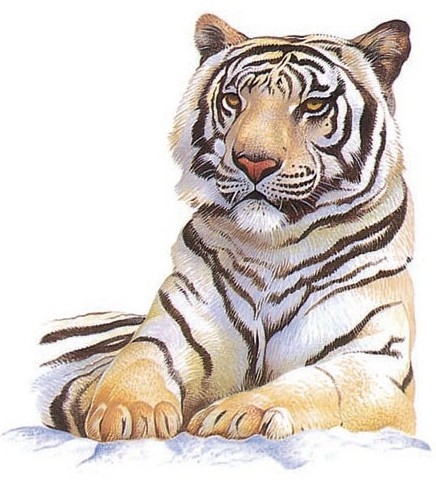
The tiger is the largest member of the cat family. It lives in Asia, in forests, grasslands or swamps. It has a huge body and powerful jaws with long, sharp teeth. It has excellent sight and hearing. The dark stripes on its coat help it to blend into its surroundings. Camouflaged in tall grass, the tiger can get close to its prey and catch it by surprise. It usually hunts alone. Each tiger has its own territory. Its prey includes deer, water buffalo, tapir, wild pigs and other mammals.
Weasels


The weasel family includes weasels, stoats, minks, ferrets, polecats, martens, otters, badgers, the sable, and the wolverine. These animals have long bodies, short legs and often long tails. Most feed on smaller mammals, especially rodents. Some will also eat worms, fruit, fish, frogs, birds and insects. Many members of the weasel family spray a foul-smelling liquid, called musk. They do this both to mark their territories and to defend themselves against predators.
Wolf
Wolves are large, wild dogs. They have sharp hearing and a strong sense of smell. They have powerful jaws and will eat anything they can find. But their main food is other animals, including deer and moose. They hunt them in packs. Up to 20 or more wolves work together to bring down much larger prey, such as moose, often after a long chase. The wolves howl to keep in touch with each other. All domestic dogs are descended from wolves.

Consultant:Chris Jarvis
Ready to find out more?
pics
Without in any way limiting Q-files Ltd’s exclusive rights under copyright, any use of this publication to “train” generative artificial intelligence (AI) technologies to generate text is expressly prohibited. Q-files Ltd reserves all rights to license use of this work for generative AI training and development of machine learning language models.