
EASY READ The animal kingdom

CITE
We have made every effort to follow citation style rules, but there may be some minor differences. If in doubt, please refer to the appropriate citation style manual.
EASY READ A to Z of bird families. (2026). In Q-files Encyclopedia, Life, EASY READ The animal kingdom. Retrieved from
https://www.q-files.com/life/easy-read-the-animal-kingdom/easy-read-a-to-z-of-bird-families
"EASY READ A to Z of bird families." Life, EASY READ The animal kingdom, Q-files Encyclopedia, 23 Mar. 2026.
https://www.q-files.com/life/easy-read-the-animal-kingdom/easy-read-a-to-z-of-bird-families.
Accessed 13 Sep. 2026.
EASY READ A to Z of bird families 2026. Life, EASY READ The animal kingdom. Retrieved 13 September 2026, from
https://www.q-files.com/life/easy-read-the-animal-kingdom/easy-read-a-to-z-of-bird-families
Life, EASY READ The animal kingdom, s.v. "EASY READ A to Z of bird families," accessed September 13, 2026.
https://www.q-files.com/life/easy-read-the-animal-kingdom/easy-read-a-to-z-of-bird-families


A to Z of bird families
Albatrosses
The albatrosses are a family of large sea birds with hooked beaks. The wandering albatross has the largest wingspan of any living bird. Its long, narrow wings are perfect for gliding and soaring in the winds that blow over the Southern Ocean. The wandering albatross spends its days gliding across the sea, scooping up fish and squid from the water.


Bee-eaters
The bee-eaters are a family of birds related to kingfishers. They have colourful plumage, downwards-curving beaks and long tail feathers. They feed on bees, wasps and other flying insects, which they catch with their beaks in mid-air. Bee-eaters nest together in large colonies. They make their burrows by tunnelling into soft river banks.
Birds of prey
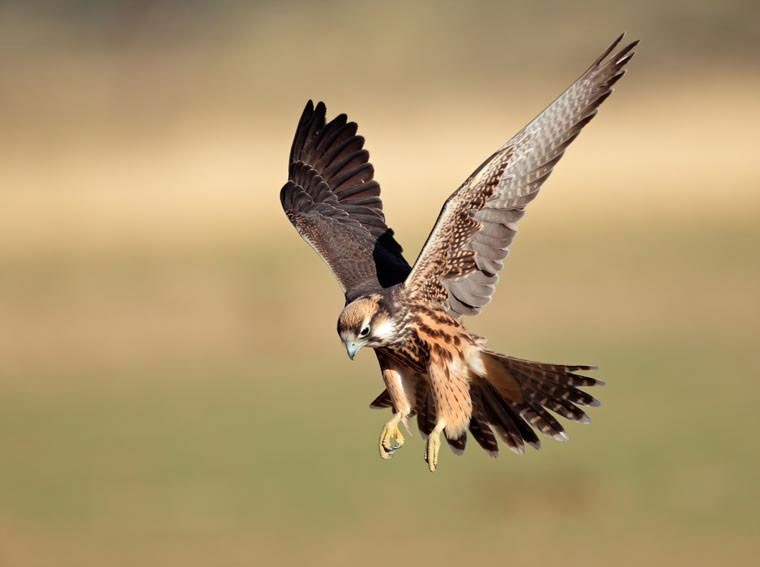
Eagles, falcons, kites, buzzards, harriers, hawks, vultures and the osprey are all birds of prey. They are sometimes called raptors. Birds of prey have excellent long-distance vision. They have hooked beaks for tearing flesh and strong talons (clawed feet) for gripping prey. They swoop down through the air to pluck their victims from the land or the water’s surface. Most birds of prey also eat carrion (animals already dead).


Bustards
Bustards are ground-nesting birds. They live on the plains of Africa, Europe and Asia. They have large bodies and long legs. They feed mostly on leaves, seeds and insects. They are the world's heaviest birds that can fly. They rarely take to the air, however.
Cuckoos
The cuckoo family also includes turacos and roadrunners. Cuckoos are medium-sized birds with long tails. They are mostly solitary.
The common cuckoo lays its eggs in the nests of other kinds of bird. While the mother is away, the female cuckoo pushes one egg out of her nest and quickly lays one of her own in its place. She then flies off. The host cannot tell apart the cuckoo's egg from one of her own. The cuckoo's egg soon hatches and the chick kicks the other unhatched eggs out of the nest. It now gets all the food the adult host brings for itself.


Ducks, geese and swans
Ducks, geese and swans are all water birds. They swim along the water’s surface using their webbed feet as paddles. They feed on water plants, fish, insects and worms. They use their wide, flat beaks to dredge muddy riverbeds for river creatures, and to pull up waterweeds. They may nest on beds of reeds, on land, or even in holes in trees.

Flightless birds
Some birds cannot fly, but run instead. They do have wings, but they are useless for flight. These birds are called ratites. Ostriches from Africa, emus and cassowaries from Australia and rheas from South America are all ratites. They eat plants, fruits, seeds and insects. All use their excellent eyesight to spot predators. Their long, strong legs carry them quickly away from danger.


Ostriches roam the dry grasslands of Africa in small groups. Ostriches are the fastest creatures on two legs. They can run at up to 65 km/h (40 mph)—as fast as a racehorse. Powerful legs, knees and two-toed feet give them their speed. Ostriches lay the biggest eggs of all birds. Each weighs about the same as 40 hen’s eggs.
The kiwi is a flightless bird from New Zealand with shaggy plumage. It measures up to 45 centimetres (18 inches) tall. It uses its long, thin bill to find and grab small insects and worms. Females lay a single, large, white egg. The male kiwi keeps it warm inside a burrow for up to three months.


Game birds
Chickens, turkeys, pheasants, guineafowl, peafowl, grouse, quail and partridges are all game birds. They have short wings and cannot fly far. They are strong runners, however. They feed on seeds, fruits and invertebrates. Many kinds of game birds are bred or hunted by humans for food. Male game birds often have colourful plumage. To court females, they strut, puff up, fan out their feathers and make loud calls.
Grebes and divers
Grebes and divers (loons) are duck-like diving birds. Using their feet as paddles, they dive below the water's surface to hunt for food. Before they mate, grebes take part in courtship "dances". They appear to trot across the water side by side, with their wings held back and their necks curved upwards.


Hoatzin
The hoatzin, from South American rainforests, makes its nest on branches overhanging rivers. If the chicks are threatened by predators, they drop into the water below and swim away. They climb back to the nest using the claws at the tips of their wings. The claws are lost when the young birds reach adulthood and learn to fly.
Honeyguide
The honeyguide, from Africa, deliberately leads humans to bees' nests. After the humans have harvested the honey from the nest, the bird then feasts on the grubs and beeswax left behind. The birds will make a call to alert human hunters if they have found a bees’ nest. Both the Yao people of Mozambique and the Hadza of Tanzania use the honeyguide to find honey.


Hornbills
Hornbills are a group of large birds. They are related to the kingfishers and bee-eaters. They are so-called because of the horny growth on their huge beaks. Hornbills mostly eat fruit but will also take any prey they can find—even snakes and scorpions.
Hummingbirds
The smallest bird is the hummingbird. The tiniest kind is no bigger than a bee. Hummingbirds can beat their wings very quickly—as fast as 100 beats per second. This allows them to hover over flowers and collect nectar from them. They can also fly sideways or even backwards. Their wings beat so quickly they make a humming sound.


Kingfishers
Kingfishers have dagger-like bills. Most kinds have brightly coloured plumage. Some prey on fish, which they catch by swooping down from a perch near a river. Others hunt small animals in deserts and woodlands. The laughing kookaburra, from Australia, eats lizards, snakes, frogs, other small birds, mice and insects. It catches them by swooping down on them from a branch at high speed.

Nightjars
Nightjars are nocturnal birds. The prey on moths and other flying insects in the late evening. They fly silently, performing rapid twists and turns in mid-air, grabbing their prey in their short bills. During the day, they lie still on the ground. Nightjars are the only birds known to hibernate through the winter.


Owls
Owls are a family of hunting birds with flat faces and forward-facing eyes. Most birds find a safe place to spend the night. But this is the time an owl goes hunting for its prey—small mammals, insects and worms, fish, frogs and other birds. Using its superb eyesight and hearing, it swoops down on its victim, seizing it in its sharp talons (claws). Its soft wing feathers allow it to fly in almost complete silence. Owls swallow their prey whole. They cough up the fur, feathers, teeth and bone, which they cannot digest, in a small, neat balls called owl pellets.

Parrots
Parrots are brightly coloured, tropical birds. They have short, strong, curved beaks. The parrot family includes macaws, lories, lorikeets, parakeets, cockatoos and budgerigars. Parrots feed on fruits, nuts and seeds. They pick them up with their toes and crack them open in their beaks. Parrots also use their beaks to help them clamber among twigs and branches in the trees. Along with members of the crow family, parrots are the most intelligent of birds. They are often able to imitate human voices.

Penguins

Penguins are flightless birds from the southern hemisphere. (There are no penguins in the Arctic.) There are 17 kinds of penguin. Some live on the icy coastlines of Antarctica and nearby islands. Others live farther north: the Galapagos penguin lives close to the equator.

Penguins are clumsy on land. They either waddle or "toboggan" on their bellies over the ice. But they are graceful and fast in the water. Their flipper-like wings pull them through the water as they hunt for fish and squid.
Penguins breed on land, where they form large nesting colonies called rookeries. To keep warm in icy waters, penguins have several layers of dense feathers. They also have a thick layer of fat under their skins.
Perching birds
The perching birds are the largest family of birds. They range in size from the tiny wren to the raven. They all live on land, rather than wetlands or the sea. They all have four toes: three point forwards and one backwards. This enables them to perch on twigs with ease. Most feed on seeds, insects or worms, but some eat fruit or nectar.
Most perching birds build nests in trees or hedges, to keep their young safe from predators. The young are born naked, blind and helpless. They must be kept warm and fed by their parents until they are ready to fly.


Most perching birds are songbirds. Many birds make short, simple calls, but songbirds can produce patterns of notes. Males sing to warn off intruders—and to attract females.
Many of the birds we see (and hear) in towns or the countryside are kinds of songbird. Finches, treecreepers, shrikes, crows, birds of paradise, larks, flycatchers, robins, tits, warblers, wrens, starlings, thrushes, blackbirds, sparrows and wagtails are all songbirds.
Pigeons
Pigeons are a family of round-bodied birds. They have short necks and legs. There are more than 300 kinds in the family found all over the world. Some are known as doves. Most pigeons feed on seeds and fruits, but a few prey on insects, worms, snails and even small reptiles. Pigeons are among the fastest flyers. Racing pigeons are experts at finding their way “home” over long distances.


Sea birds
About 300 kinds of birds live on or near the ocean. They include: penguins, skuas, gulls, terns, auks, skimmers, albatrosses, petrels, shearwaters, fulmars, frigatebirds, gannets, boobies, puffins, cormorants, shags, tropicbirds and pelicans. Most sea birds have waterproof feathers. Many gather in large colonies on islands or cliffs to breed.
Sea birds feed on fish and other marine life. Some kinds, such as gannets and boobies, dive into the water to catch their food. Others, such as skimmers and most pelicans, scoop up prey from the water's surface. Some sea birds, such as penguins, can chase their prey by swimming through the water.

Shorebirds
Most shorebirds (also called waders), live in wetlands, mudflats or on coasts. Jacanas, sandpipers, snipes, avocets, stilts, plovers, oystercatchers and woodcocks are all shorebirds. They have long legs for wading in shallow water. Their bills are shaped to poke about in mud, sand or soil for small invertebrates to eat.


Swifts
Swifts are the fastest birds of all. Streamlined in shape, they swoop through the air catching insects in their gaping beaks. Some types of swift can fly at speeds of more than 110 km/h (70 mph). Swifts spend most of their time in the air; they have tiny legs and never settle on the ground. They can even sleep while they are on the wing.
Toucans
Toucans live in the tropical rainforests of Central and South America. They have very large, brightly coloured beaks. They use them to grasp fruit. They can also poke their beak inside nests or holes in trees to grab bird hatchlings, insects or lizards. Their strong legs help them to climb about the branches. Toucans' beaks are too light to use as hammers, so they nest in tree holes already punched out by woodpeckers.


Wading birds
Storks, herons, ibises, egrets, bitterns, cranes, flamingos and spoonbills are all kinds of wading bird. These birds all have long legs and long bills. They stand very still in shallow water waiting to snap up passing fish and other river creatures. Some large storks also eat carrion, the meat of dead animals.
Rails, crakes, coots and moorhens also live near ponds, rivers or marshlands, especially where there is dense vegetation cover.

Woodpeckers
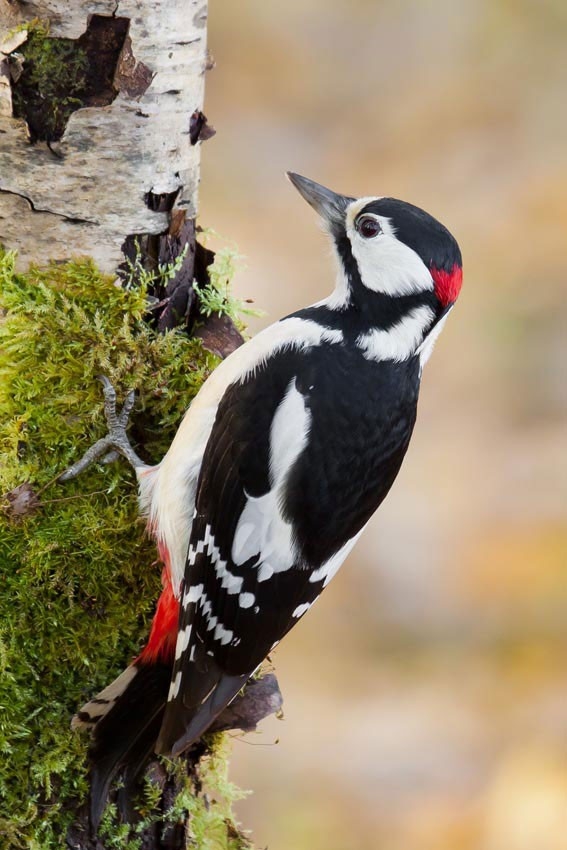
Woodpeckers, sapsuckers and others make up a family of more than 200 kinds. Jacamars, puffbirds, barbets, toucans and honeyguides are all relatives. Woodpeckers can cling on on to tree trunks. They have a good grip because two of their toes point forwards and two backwards. They hammer into the bark to punch holes in it. They then pick out insects, grubs and spiders from behind the bark with their long tongues. Sapsuckers drill holes in the bark to get to the sap.
Consultant: Chris Jarvis
Ready to find out more?
Here are some pages in other parts of Q-files you might like to explore:
Adélie penguin
Albatrosses
Bustards
Cuckoos
Ducks, geese and swans
Eagles
Emperor penguin
Game birds
Grebes and divers
Hummingbirds and swifts
King penguin
Kingfishers
Nightjars
Ostriches and other ratites
Owls
Parrots
Perching birds
Pigeons
Shorebirds
Wading birds
Woodpeckers and toucans
Bird families A-Z
pics
Without in any way limiting Q-files Ltd’s exclusive rights under copyright, any use of this publication to “train” generative artificial intelligence (AI) technologies to generate text is expressly prohibited. Q-files Ltd reserves all rights to license use of this work for generative AI training and development of machine learning language models.