
Birds

CITE
We have made every effort to follow citation style rules, but there may be some minor differences. If in doubt, please refer to the appropriate citation style manual.
Adélie penguin. (2026). In Q-files Encyclopedia, Life, Birds. Retrieved from
https://www.q-files.com/life/birds/adelie-penguin
"Adélie penguin." Life, Birds, Q-files Encyclopedia, 23 Mar. 2026.
https://www.q-files.com/life/birds/adelie-penguin.
Accessed 6 Aug. 2026.
Adélie penguin 2026. Life, Birds. Retrieved 6 August 2026, from
https://www.q-files.com/life/birds/adelie-penguin
Life, Birds, s.v. "Adélie penguin," accessed August 6, 2026.
https://www.q-files.com/life/birds/adelie-penguin


Adélie penguin
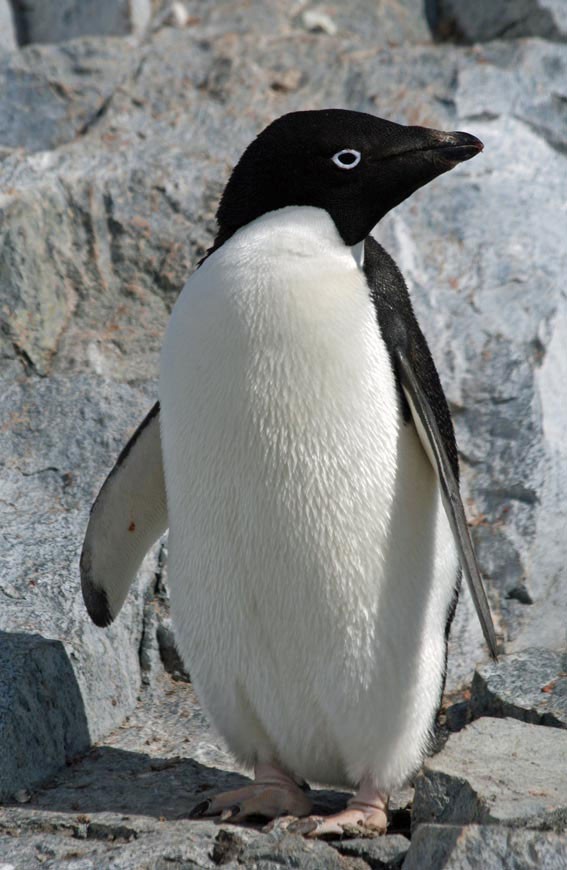
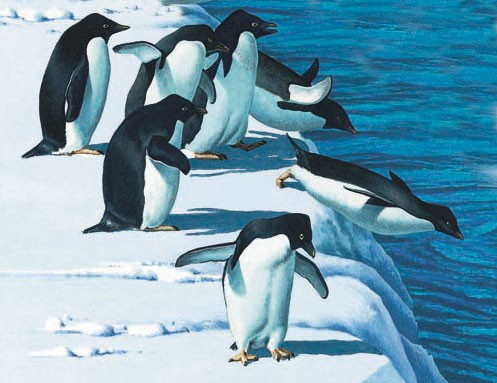
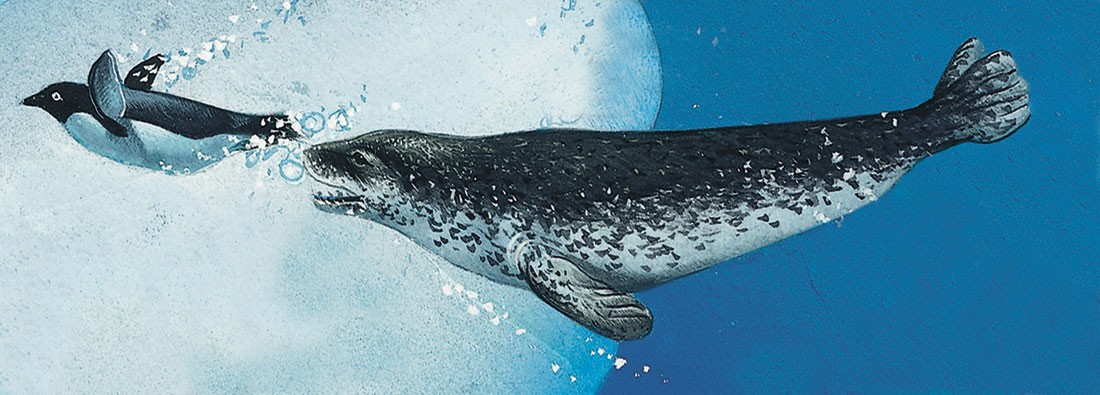
The Adélie penguin is the commonest Antarctic penguin. It is medium-sized with a distinctive white ring around each eye. Every spring, Adélie penguins undertake a long migration to their rookeries (breeding grounds). Here they raise their young over the Antarctic summer, while food is most plentiful. Like all penguins, the Adélies are fast and graceful swimmers, but they are vulnerable to marine predators, such as the leopard seal. Adélie penguins are so fearful of leopard seals that they hesitate at the water’s edge, none daring to be the first to take the plunge. The seals lurk in waters near the penguins’ fishing grounds and mostly catch their prey by stealth. But in open water, a lucky penguin may be able to outswim the predator.
Breeding
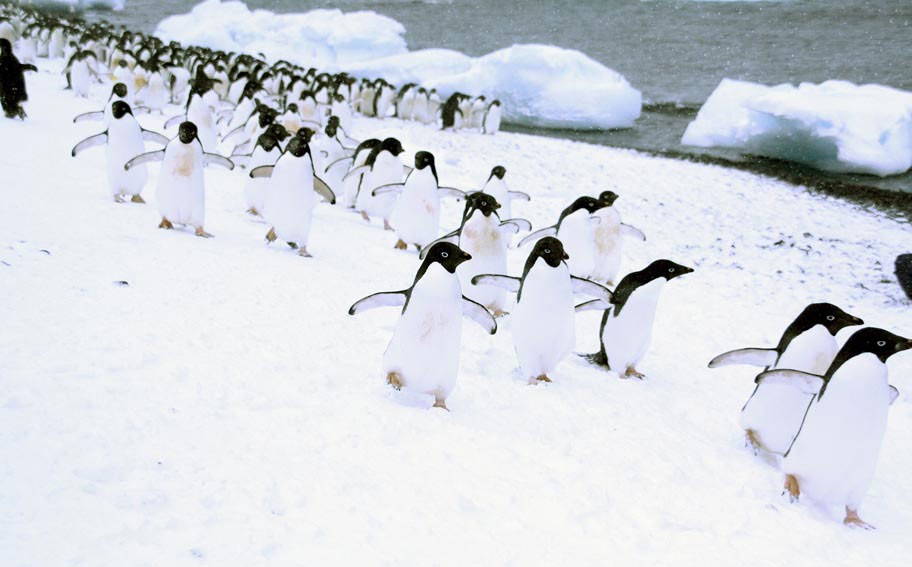
Each spring, thousands of Adélie penguins set out across the Antarctic ice for their rookeries, a journey of up to 50 kilometres (30 miles) inland. They must race against time to raise their young before returning to the sea in autumn. Progress is slow: an Adélie penguin’s stride is short—just 10 centimetres (4 inches) long. But when the ice is smooth, the penguins slide along more quickly on their bellies. The penguins take nearly a week to complete their journey.
Rookeries
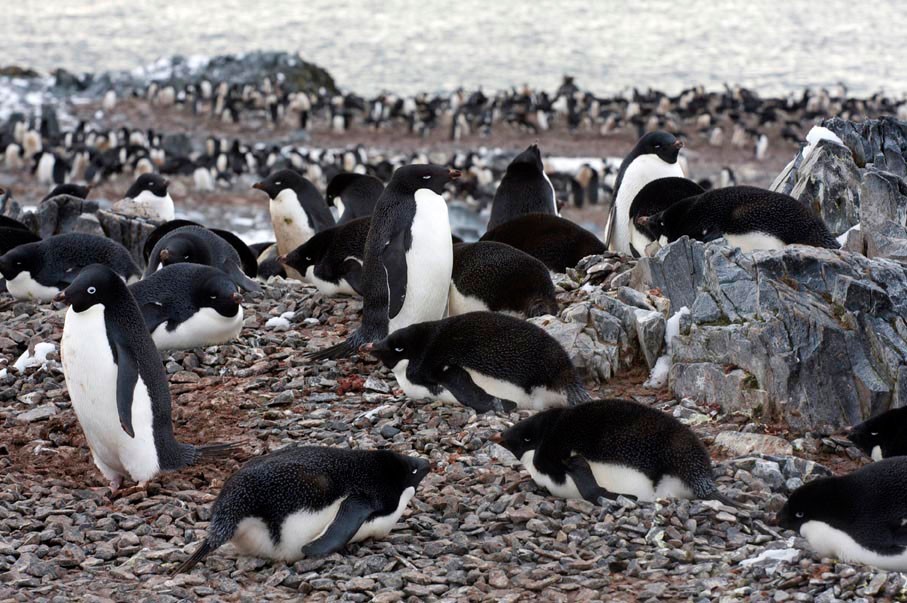
By November, Adélie penguins have reached their rookeries, ice-free areas on land where they can find stones with which to build their nests. Rookeries may consist of half a million birds. Large crowds make it easier to find a mate and provide some safety in numbers from great skuas and petrels. Males arrive first, and set about building a nest by piling up pebbles. A good nest will help to attract a mate.
Raising young
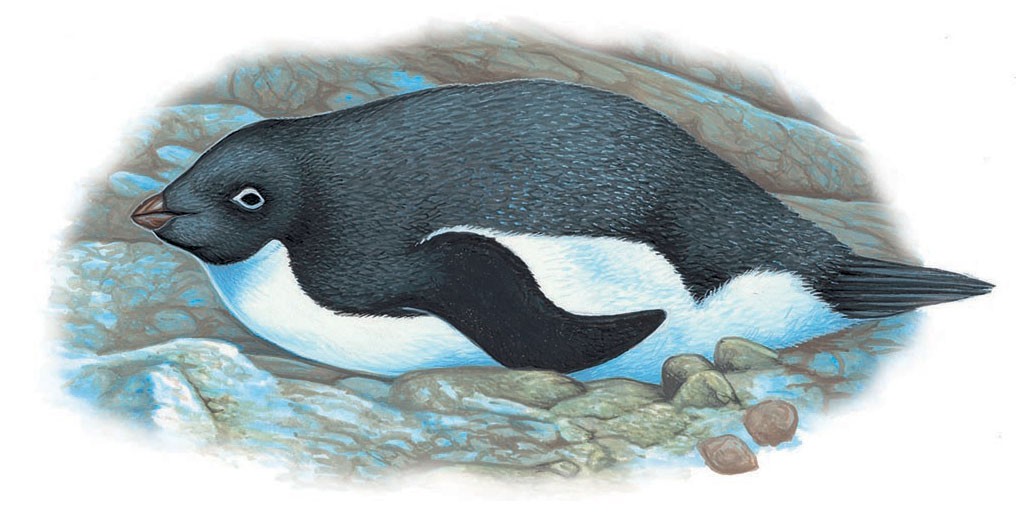
Once the females arrive, the penguins couple and the female lays one or two eggs. Parents take turns to incubate the eggs while their partner feeds. After 35 days, the eggs hatch. Three or four weeks later, the chicks are big enough to be left in a “crèche” with other chicks while their parents find food for them.
Consultant: Chris Jarvis
pics
Without in any way limiting Q-files Ltd’s exclusive rights under copyright, any use of this publication to “train” generative artificial intelligence (AI) technologies to generate text is expressly prohibited. Q-files Ltd reserves all rights to license use of this work for generative AI training and development of machine learning language models.