
Birds

CITE
We have made every effort to follow citation style rules, but there may be some minor differences. If in doubt, please refer to the appropriate citation style manual.
Pigeons. (2026). In Q-files Encyclopedia, Life, Birds. Retrieved from
https://www.q-files.com/life/birds/pigeons
"Pigeons." Life, Birds, Q-files Encyclopedia, 23 Mar. 2026.
https://www.q-files.com/life/birds/pigeons.
Accessed 30 Oct. 2026.
Pigeons 2026. Life, Birds. Retrieved 30 October 2026, from
https://www.q-files.com/life/birds/pigeons
Life, Birds, s.v. "Pigeons," accessed October 30, 2026.
https://www.q-files.com/life/birds/pigeons


Pigeons
Pigeons are a family of round-bodied birds with short necks and legs. Some species are known as doves. There are more than 300 species in the family (scientific name Columbidae), found all over the world. Most kinds feed on seeds and fruits, but a few prey on insects, worms, snails and even small reptiles. Unlike most birds, pigeons can produce milk for their young, which they do from a gland in their necks. Pigeons are among the fastest flyers. Their powerful wings can keep them airborne for long periods. Racing pigeons, domestic descendants of rock doves, are experts at finding their way “home” over long distances.

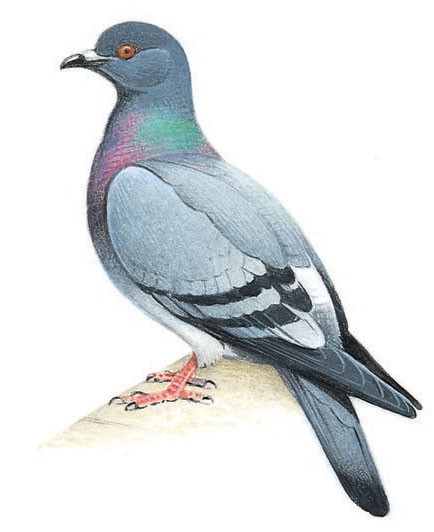
Urban pigeons
The feral pigeon, a familiar resident of many major towns and cities, is descended from escaped domestic pigeons. These in turn evolved from the wild rock dove, which already had a large range across Europe, Asia and Africa. Now it is found in urban areas in every continent. Naturally adapted to living on cliffs and mountains, feral pigeons roost on rooftops and ledges of buildings. They have adapted their diet to include scraps and pieces of bread thrown to them by people.

Dodo
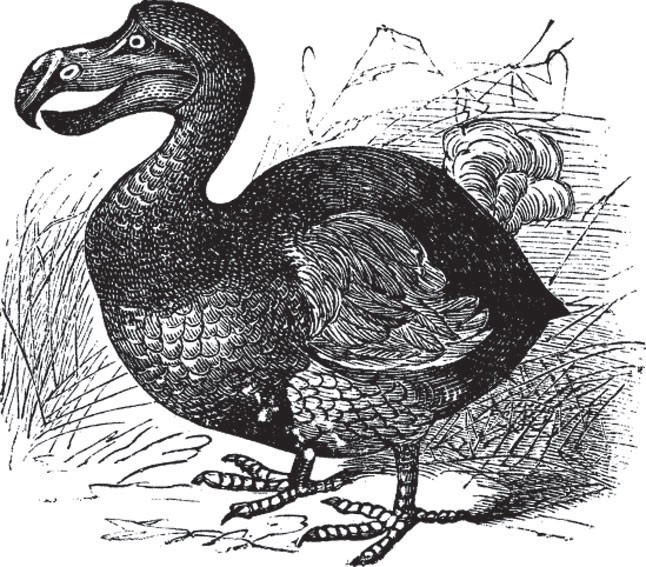
The dodo was a flightless species of pigeon that lived on the island of Mauritius in the Indian Ocean. About one metre (3 feet 4 inches) tall, it had greyish-brown plumage, a tuft of curly tail feathers, a colourful beak, thick yellow legs and black claws. With the absence of predators on its island home, it gradually lost the ability to fly. It ate fruits, nuts and seeds, swallowing pebbles, called gizzard stones, to help with digestion.
The first Europeans to discover the dodo were Dutch sailors in 1598. From then on, it was hunted by settlers and preyed on by their animals and rodent pests. With their forest habitat destroyed and their food taken by other animals, all dodos were wiped out in 60 or 70 years.

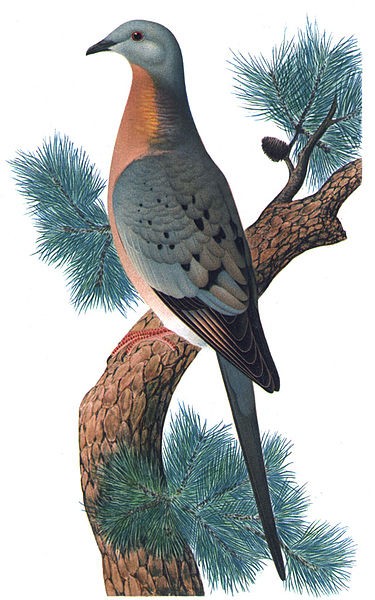
Passenger pigeon
The passenger pigeon of North America went extinct in modern times, despite its great abundance during the 19th century. Flocks consisting of billions of birds were said to darken the sky, and took several hours to pass. The decline of the passenger pigeon was rapid; the last individual died in 1914. It was hugely overhunted, being caught for food by settlers lacking an alternative source of food. Its woodland habitat was also devastated as forests were cut down when Europeans settled the continent's interior.
Consultant: Chris Jarvis
pics


Without in any way limiting Q-files Ltd’s exclusive rights under copyright, any use of this publication to “train” generative artificial intelligence (AI) technologies to generate text is expressly prohibited. Q-files Ltd reserves all rights to license use of this work for generative AI training and development of machine learning language models.