
Q-news

CITE
We have made every effort to follow citation style rules, but there may be some minor differences. If in doubt, please refer to the appropriate citation style manual.
Conditions deteriorate as 25,000 Sudanese refugees cross into Chad in a week. (2026). In Q-files Encyclopedia, , Q-news. Retrieved from
https://www.q-files.com/news/conditions-deteriorate-as-25000-sudanese-refugees-cross-into-chad-in-a-week
"Conditions deteriorate as 25,000 Sudanese refugees cross into Chad in a week." , Q-news, Q-files Encyclopedia, 6 Feb. 2026.
https://www.q-files.com/news/conditions-deteriorate-as-25000-sudanese-refugees-cross-into-chad-in-a-week.
Accessed 13 Sep. 2026.
Conditions deteriorate as 25,000 Sudanese refugees cross into Chad in a week 2026. , Q-news. Retrieved 13 September 2026, from
https://www.q-files.com/news/conditions-deteriorate-as-25000-sudanese-refugees-cross-into-chad-in-a-week
, Q-news, s.v. "Conditions deteriorate as 25,000 Sudanese refugees cross into Chad in a week," accessed September 13, 2026.
https://www.q-files.com/news/conditions-deteriorate-as-25000-sudanese-refugees-cross-into-chad-in-a-week


Conditions deteriorate as 25,000 Sudanese refugees cross into Chad in a week
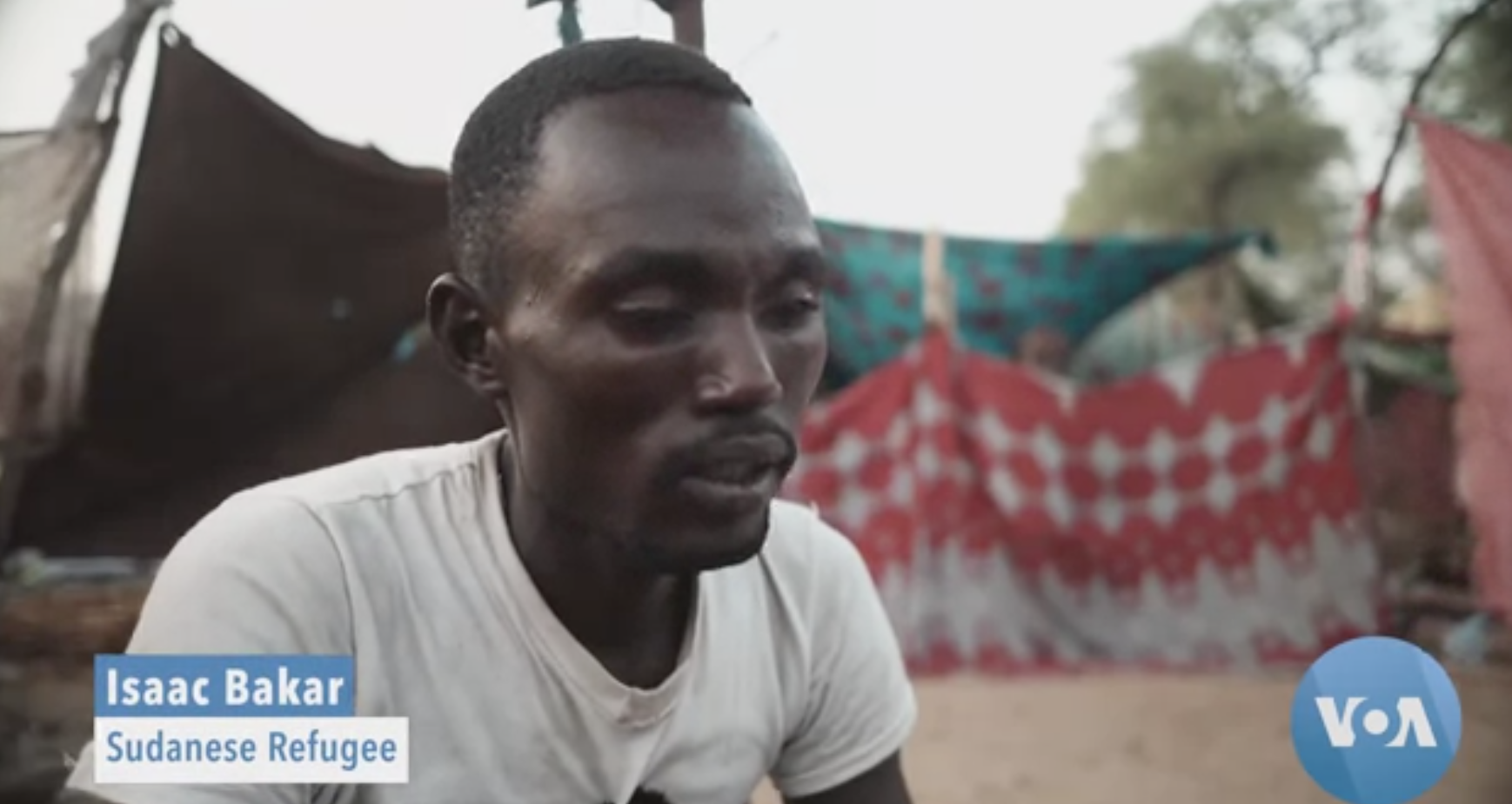
Aid agencies have warned of deteriorating conditions in overcrowded and underfunded refugee camps in Chad. Intensifying violence of the Sudanese civil war and a severe hunger crisis have driven 25,000 refugees—the vast majority of them women and children—across the border from Sudan to Chad at the beginning of October. Numbers have sharply risen compared to earlier this year. Chad, one of the world’s poorest countries, already hosts nearly 800,000 Sudanese refugees, the highest number in Africa. Conditions are particularly difficult at the Farchana camp. The new arrivals join Sudanese people who have lived in the camp since the genocide in Darfur in 2003–05.
22nd October 2024


Civil war
Fighting broke out in Khartoum, Sudan’s capital, on 15th April 2023 as a power struggle between the Sudanese army (SAF) under the country’s ruler, Abdel Fattah al-Burhan and the Rapid Support Forces (RSF) led by his former deputy Mohamed Hamdan Dagalo (known as Hemedti), erupted into violence. Once known as the Janjaweed, the RSF, members of whom are Sudanese Arabs, is notorious for its brutal suppression of black African rebels in Darfur since 2003.
Since the start of the war, both the SAF and the RSF have been accused of war crimes. These include deliberately targeting civilians, launching airstrikes at hospitals and blocking humanitarian aid. The UN has accused both armies of using “starvation tactics” against the civilian population.
In the early months of the war, the RSF captured Khartoum, along with most of Darfur. It has subjected El Fasher, the only major population centre in Darfur outside its control, to a months-long siege. Civilians remain trapped there with no food. Hospitals are rapidly becoming overwhelmed.

The SAF, meanwhile controls most of the north and the east of Sudan, including the key Red Sea port of Port Sudan. In recent weeks, the SAF has made gains in Bahri (North Khartoum) and Omdurman. It is now set to retake the capital, as well as other cities in central Sudan.
Humanitarian crisis
Between 10 and 11 million people have been forced to flee the fighting by moving to other parts of Sudan. Another 2 million people have sought refuge across the country’s borders. Most have gone to Chad and South Sudan, both of which are struggling to meet basic needs. Of those who fled abroad, more than 160,000 are Masalit, a black African ethnic group from western Darfur, who have fled to Chad to escape attacks by the RSF.
As fighting intensified around El Fasher in September, the number of refugees arriving in neighbouring Chad has soared to around 25,000 people a week.

The destruction of health care systems across Sudan resulting from the war has led to multiple outbreaks of diseases including cholera, malaria, dengue fever, measles and rubella. Around 3.4 million children under the age of five are highly vulnerable to infection.
pics
Without in any way limiting Q-files Ltd’s exclusive rights under copyright, any use of this publication to “train” generative artificial intelligence (AI) technologies to generate text is expressly prohibited. Q-files Ltd reserves all rights to license use of this work for generative AI training and development of machine learning language models.