
Q-news

CITE
We have made every effort to follow citation style rules, but there may be some minor differences. If in doubt, please refer to the appropriate citation style manual.
Eruption of Vesuvius killed people of Pompeii in 15 minutes, study finds. (2022). In Q-files Encyclopedia, , Q-news. Retrieved from
https://www.q-files.com/news/eruption-of-vesuvius-killed-people-of-pompeii-in-15-minutes-study-finds
"Eruption of Vesuvius killed people of Pompeii in 15 minutes, study finds." , Q-news, Q-files Encyclopedia, 10 Feb. 2022.
https://www.q-files.com/news/eruption-of-vesuvius-killed-people-of-pompeii-in-15-minutes-study-finds.
Accessed 13 Sep. 2026.
Eruption of Vesuvius killed people of Pompeii in 15 minutes, study finds 2022. , Q-news. Retrieved 13 September 2026, from
https://www.q-files.com/news/eruption-of-vesuvius-killed-people-of-pompeii-in-15-minutes-study-finds
, Q-news, s.v. "Eruption of Vesuvius killed people of Pompeii in 15 minutes, study finds," accessed September 13, 2026.
https://www.q-files.com/news/eruption-of-vesuvius-killed-people-of-pompeii-in-15-minutes-study-finds


Eruption of Vesuvius killed people of Pompeii in 15 minutes, study finds
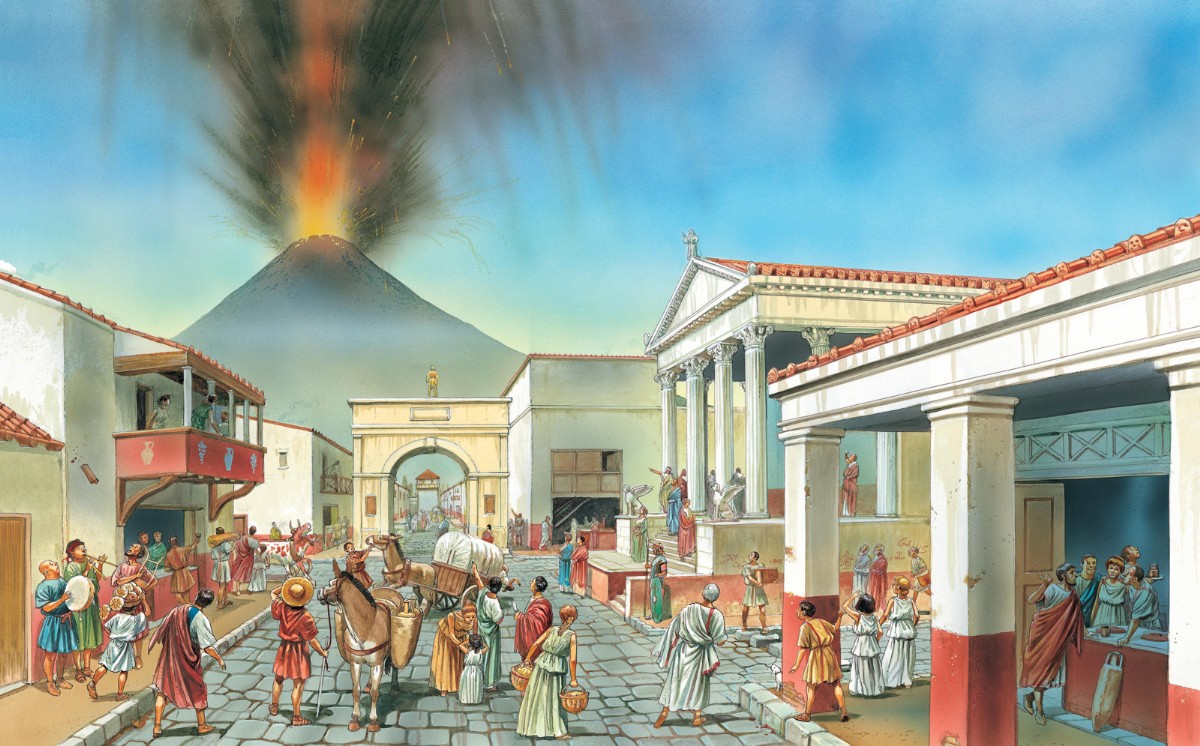
The ancient city of Pompeii was devastated in AD 79 when the volcano Mount Vesuvius erupted, killing an estimated 2000 people in the city, as well as overwhelming the nearby town of Herculaneum. It is one of the most famous and deadly natural disasters in history. But the people who perished at Pompeii were not caught trying to escape rivers of lava, or even obliterated by a fast-moving avalanche of hot rubble, ash and gases. A new study suggests they died from asphyxiation (suffocation through lack of oxygen) from the giant cloud of scorching ash and gas ejected by the erupting volcano. They did so in little over 15 minutes.

Pyroclastic flow
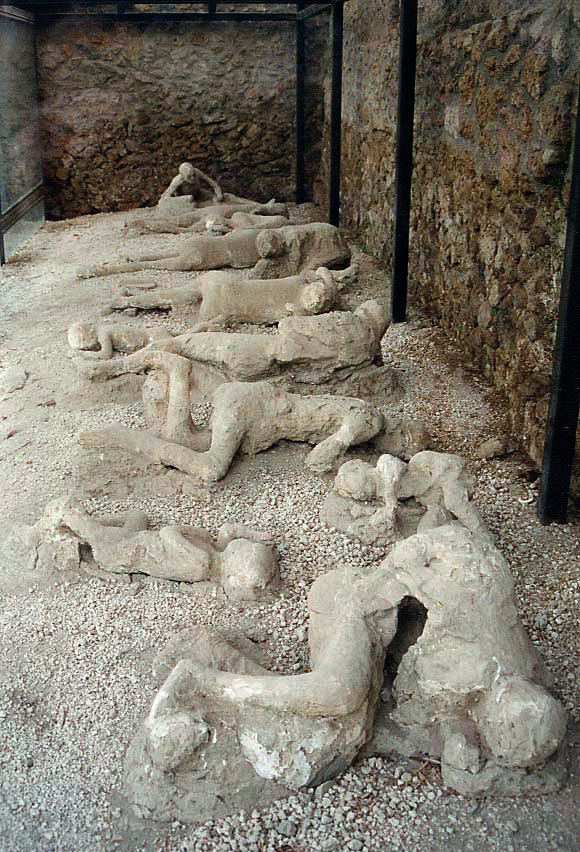
The erupting volcano later unleashed an avalanche of hot ash, rock and poisonous gases, known as a pyroclastic flow, that surged down the side of the volcano at speeds of hundreds of kilometres per hour. It happened when the lava, ash, and gases blasted skywards from the volcano fell back to the ground. The avalanche buried everything lying in its path in up to 10 metres (30 feet) of ash and debris. It quickly covered over the bodies of those who had already perished, preserving their postures at the exact time of their death—plaster cast models of which which we can see today. The city remained hidden for nearly 1700 years until Pompeii was rediscovered in the 18th century.

Lethal cloud
The researchers (from the University of Bari, in collaboration with the National Institute of Geophysics and Volcanology, or INGV, in Rome and the British Geological Survey in Edinburgh) found that the cloud, which had a temperature of over 100°C (212°F), probably engulfed the city for around 17 minutes, long enough for it to wipe out the inhabitants, minutes before the avalanche of volcanic debris arrived to bury them.
The lethal cloud had “a temperature of over 100 degrees and was composed of CO2, chlorides, particles of incandescent ash and volcanic glass”, said Roberto Isaia, senior researcher of the INGV. Pompeii's remaining inhabitants—most had already fled—had no escape from the cloud. A few dozen died from the shower of pumice and volcanic rock known as lapilli that rained down on Pompeii after the eruption. Others may have been trampled in the frenzied panic that followed. But most of those who died suffocated in their homes and beds, or in the streets and squares of the city.


The inhabitants of Herculaneum, a town situated at the foot of the volcano, did not stand a chance. The temperature and strength of the cloud was such that survival was impossible. But, according to the researchers, many residents of Pompeii, lying 10 kilometres (6 miles) away, could have survived if the cloud from the erupting volcano had lasted just a few minutes less.

Evidence
Previous studies have suggested that the people of Pompeii were killed by the extreme heat—temperatures reaching 300°C (570°F)—in a fraction of a second. The new study points out that fragments of clothing survived, indicating that temperatures, while still burning hot, were lower than once thought. According to the researchers, humans can survive pure hot air at 200–250°C (392–482°F) for up to 5 minutes or so, but if hot fine ash is inhaled, that time is drastically reduced. With the cloud enveloping Pompeii for 17 minutes, this was long enough to make breathing in the hot ash swept up in the swirling currents of gas lethal.
pics
Without in any way limiting Q-files Ltd’s exclusive rights under copyright, any use of this publication to “train” generative artificial intelligence (AI) technologies to generate text is expressly prohibited. Q-files Ltd reserves all rights to license use of this work for generative AI training and development of machine learning language models.