
Q-news
Marsupials once thought extinct found living in remote forests of New Guinea
Two marsupials, previously thought to be extinct for 6000 years, have been discovered living in West Papua, a remote northwestern region of the island of New Guinea. The animals are rare examples of what scientists call “Lazarus taxa”: species known only from fossilized remains but are later found to be living, often in remote habitats. They are named after the story from the New Testament of the Bible, in which Jesus raises Lazarus from the dead. Already, there are concerns for both species' survival, due to the threat to their forest habitat from logging, road construction and farming.
10th March 2026
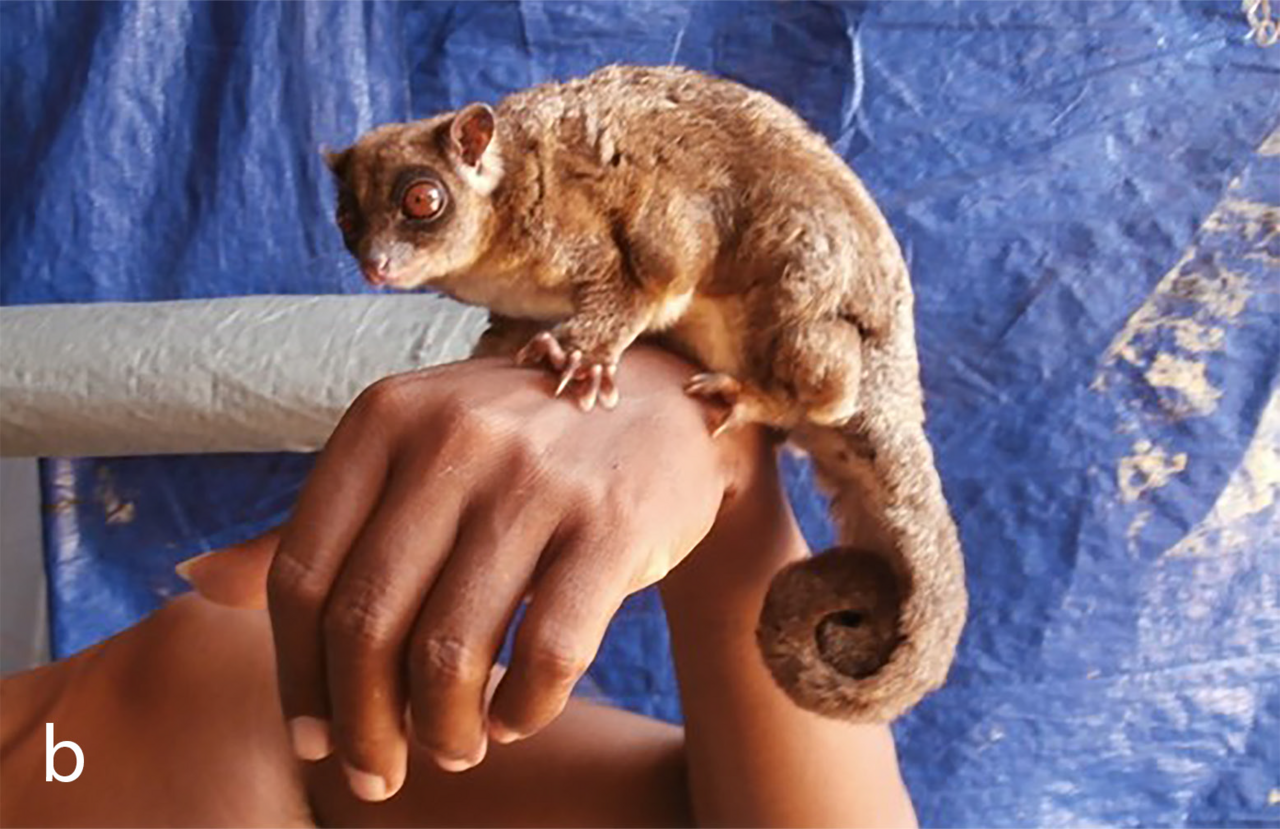
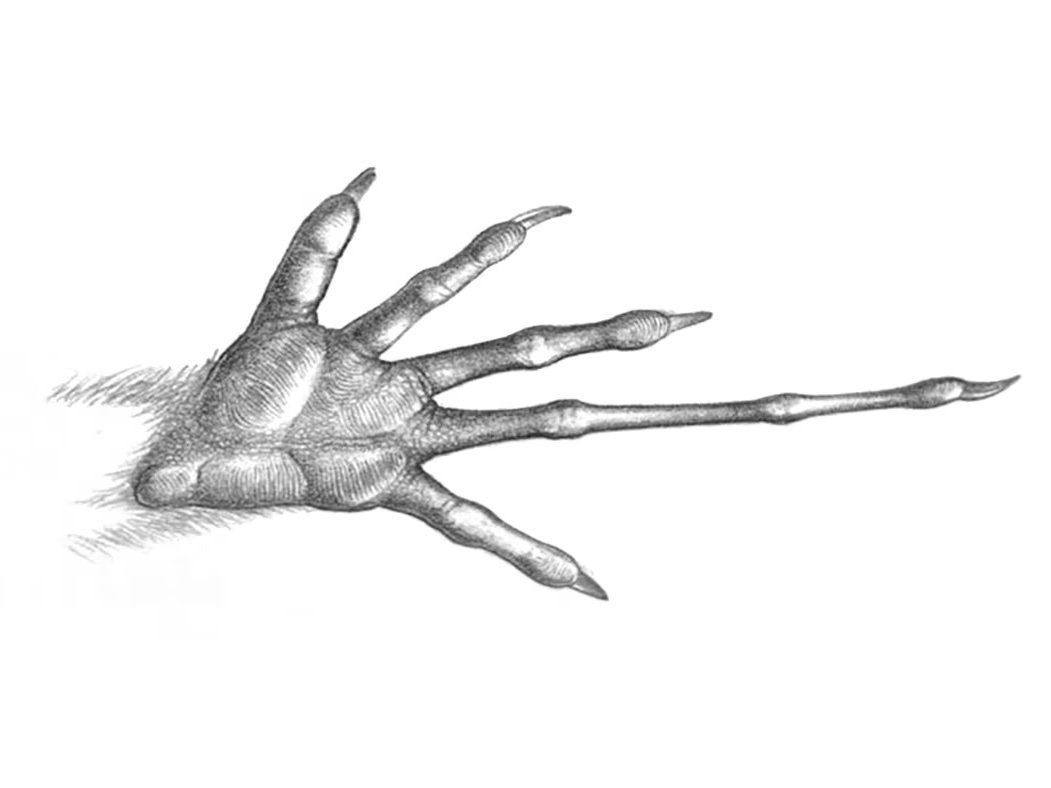

One of the species is the pygmy long-fingered possum (Dactylonax kambuayai). It is only about 17.6 centimetres (7 inches) long, not including its tail of about the same length. Bold black and white stripes run down its body, but its most distinctive feature is its greatly elongated fourth finger—twice as long as its other fingers. The possum uses it to extract and feed on wood-boring insect larvae. Before the recent discovery, it was last known to have lived in West Papua until 6000 years ago.
The other new species is a ring-tailed glider (Tous ayamaruensis), known in one West Papua language as "Tous wan". It is closely related to the Australian greater glider, but it has no fur on its ears and its long, tapering tail is prehensile, used for gripping branches when climbing trees or gliding from one to another. On each side of its body is a membrane stretching between the elbow and the ankle, giving it the ability to glide. A nocturnal animal, it feeds on leaves and tree sap. Like its relative, it nests in tree hollows.

Both species live in lowland mountain forests on the sparsely inhabited Bird’s Head Peninsula, also known as the Vogelkop, in the West Papua province of northwestern New Guinea, the part of the island that belongs to Indonesia. Their existence was revealed by comparing photographs taken by local and visiting researchers, then matching them with fossil fragments and, in the case of the long-fingered possum, a museum specimen that was found in the 1990s, but mis-identified at the time.


Fossil records indicate that both species lived in eastern Australia about 300,000 years ago, before apparently vanishing. The discoveries are evidence that the Bird’s Head Peninsula, along with the rest of New Guinea, was once a part of the Australian continent, before sea levels rose after the Ice Ages, separating the island from Australia.