
Q-news

CITE
We have made every effort to follow citation style rules, but there may be some minor differences. If in doubt, please refer to the appropriate citation style manual.
Parker Solar Probe makes closest ever approach to the Sun by a human-made object. (2026). In Q-files Encyclopedia, , Q-news. Retrieved from
https://www.q-files.com/news/parker-solar-probe-makes-closest-ever-approach-to-the-sun-by-a-human-made-object
"Parker Solar Probe makes closest ever approach to the Sun by a human-made object." , Q-news, Q-files Encyclopedia, 23 Apr. 2026.
https://www.q-files.com/news/parker-solar-probe-makes-closest-ever-approach-to-the-sun-by-a-human-made-object.
Accessed 13 Sep. 2026.
Parker Solar Probe makes closest ever approach to the Sun by a human-made object 2026. , Q-news. Retrieved 13 September 2026, from
https://www.q-files.com/news/parker-solar-probe-makes-closest-ever-approach-to-the-sun-by-a-human-made-object
, Q-news, s.v. "Parker Solar Probe makes closest ever approach to the Sun by a human-made object," accessed September 13, 2026.
https://www.q-files.com/news/parker-solar-probe-makes-closest-ever-approach-to-the-sun-by-a-human-made-object


Parker Solar Probe makes closest ever approach to the Sun by a human-made object
On 24th December 2024, NASA's Parker Solar Probe will fly approximately 6.1 million kilometres (3.8 million miles from the surface of the Sun, thus making the closest solar approach by any human-made object in history. It is travelling about 690,000 kilometres per hour (430,000 mph), which is the fastest any human-made object has travelled (fast enough to fly from New York to Tokyo in just over a minute). The probe was designed to study the corona, the hot outer layer of the Sun's atmosphere which extends out from the Sun's surface (the photosphere) millions of kilometres into space. It has been circling the Sun, getting ever closer with each orbit, since its launch on 12th August 2018.
29th December 2024
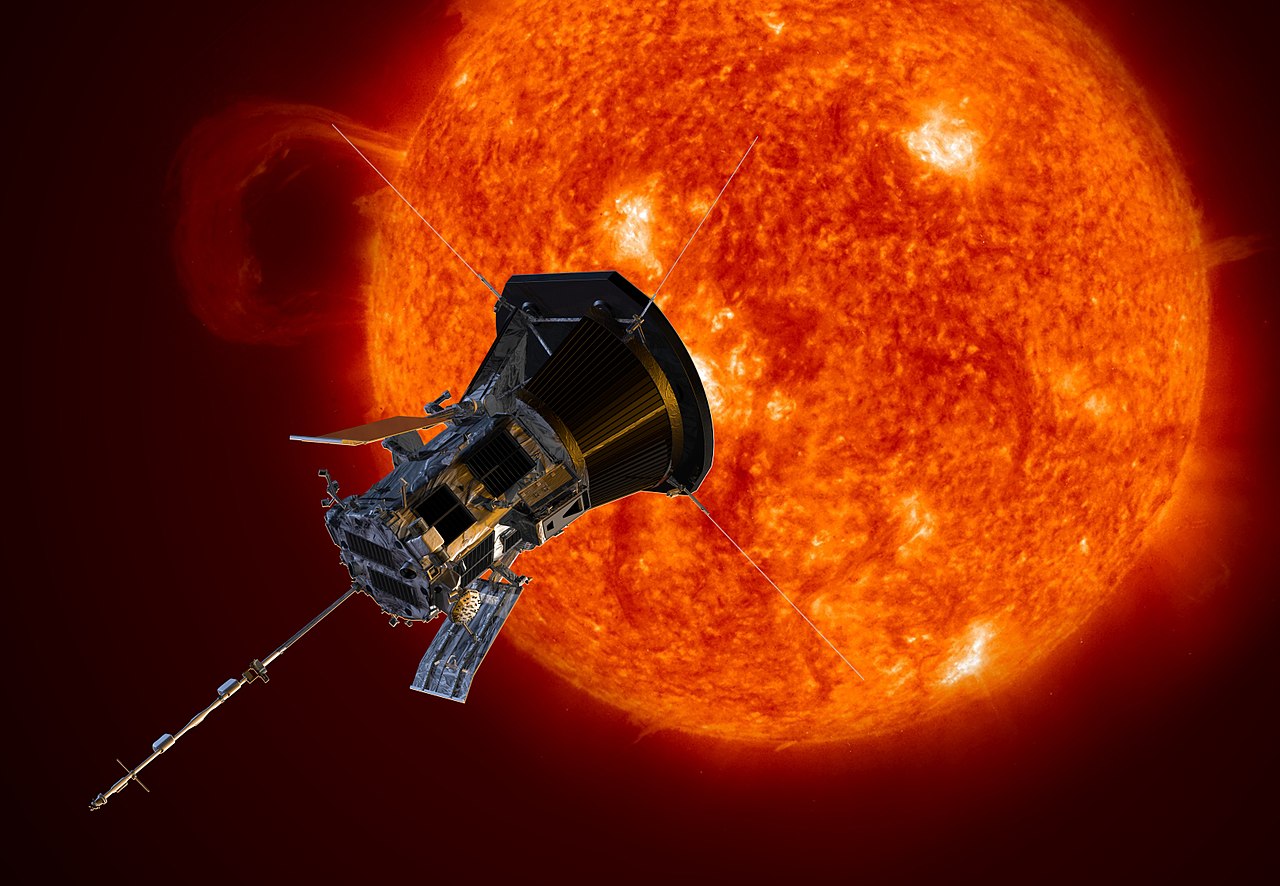

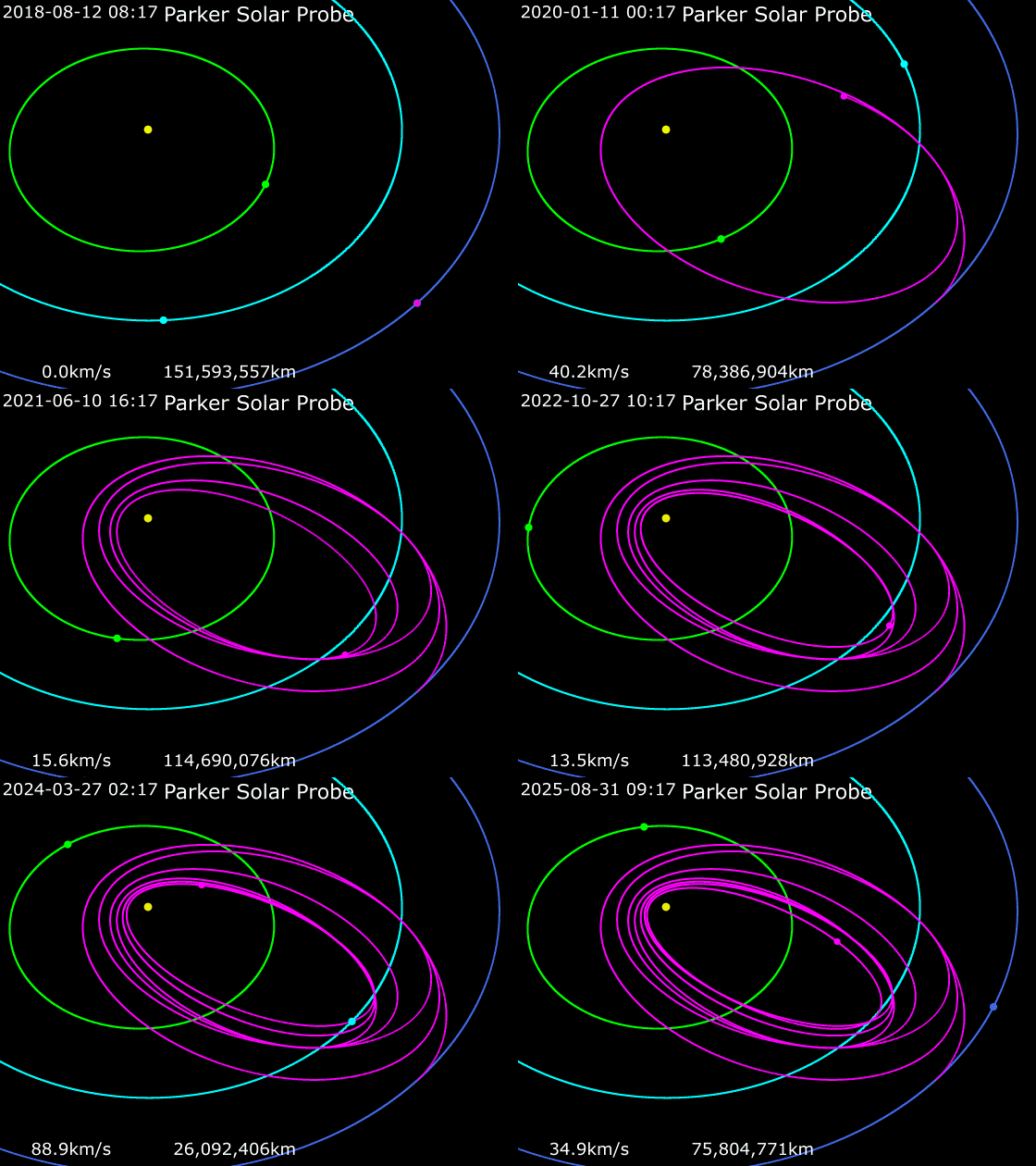
Over its seven-year mission, the probe will have made 24 orbits around the Sun. As it flies by Venus, it uses the planet's gravity to slow itself down, enabling it to enter into an orbit closer to the Sun than the previous one. On an orbit made in April 2021, it became the first spacecraft to fly through the corona, an event astronomers described as "touching the Sun". In November 2024, the probe carried out its seventh and final flyby of Venus. It will make its last orbit of the Sun late in 2025 before it runs out of fuel and is incinerated by the Sun's heat.
The purpose of the Parker Solar Probe's mission is to collect data from inside the corona. This is where the solar wind, a stream of charged particles, is released into space. This occurs because gases in the corona are so hot that some of the ions and electrons of which they are composed have too much energy to be held in, even by the Sun’s strong gravitational field.
It is hoped the data gathered by the probe will help astronomers answer a number of questions, such as why the corona is so much hotter than the photosphere, and why the solar wind accelerates away from the Sun to reach supersonic speeds. Understanding more about the solar wind can help astronomers predict "space weather". Such weather, including unpredictable bursts of energy, affects satellites by interfering with their onboard electronics or even causing them to stop working.

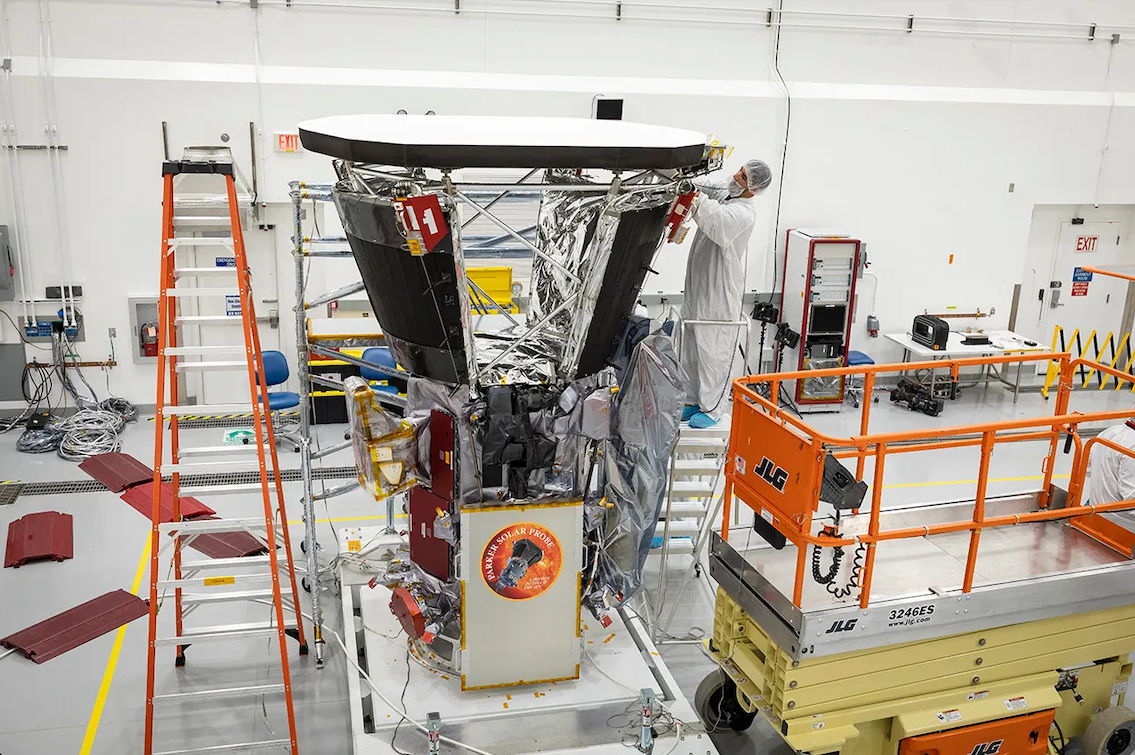
The probe's heat shield has been designed to withstand temperatures of about 1377°C (2500°F), keeping the scientific instruments sheltering behind it at 29°C (85 F). Mounted on the Sun-facing side of the spacecraft, the hexagonal shield is 2.3 metres (7 ft 7 inches) in diameter and 11.4 centimetres (4.5 inches) thick. It is made of two panels of reinforced carbon-composite material sandwiching a carbon foam core.
The mission is named after the American physicist Dr Eugene N. Parker, who pioneered our modern understanding of the Sun. In the mid-1950s, he developed a mathematical theory that predicted the solar wind. In 2018, Parker became the first person to witness the launch of a spacecraft bearing his name. He died in March, 2022, at the age of 94.
pics
Without in any way limiting Q-files Ltd’s exclusive rights under copyright, any use of this publication to “train” generative artificial intelligence (AI) technologies to generate text is expressly prohibited. Q-files Ltd reserves all rights to license use of this work for generative AI training and development of machine learning language models.