
Age of Dinosaurs
Cretaceous Asia
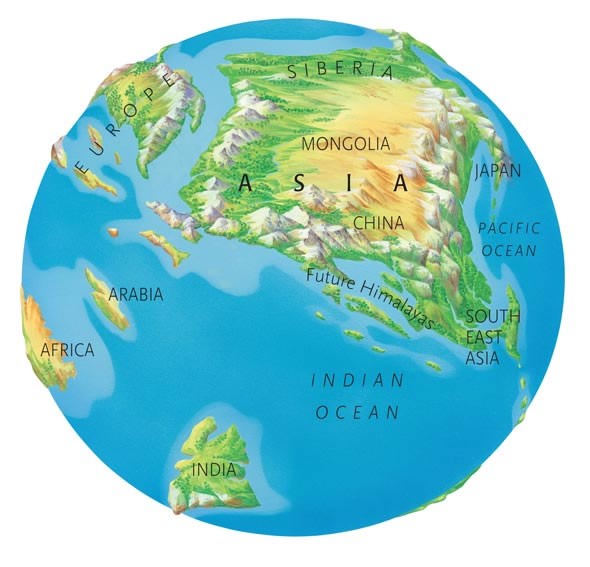
Across the world during the Cretaceous Period, there was only about half as much dry land as there is today. The oceans covered a much greater part of the Earth’s surface than they do now. Most of the land that existed formed part of largest continent, Asia. South Asia, where the massive Himalayas mountain range now rises between the Indian subcontinent and Tibet, was a chain of islands and lagoons in Cretaceous times. India was still far away from the rest of Asia. A wealth of dinosaur fossils from Cretaceous Asia, including those of a number of feathered species, have been found in Mongolia and China.
Life on the dry plains
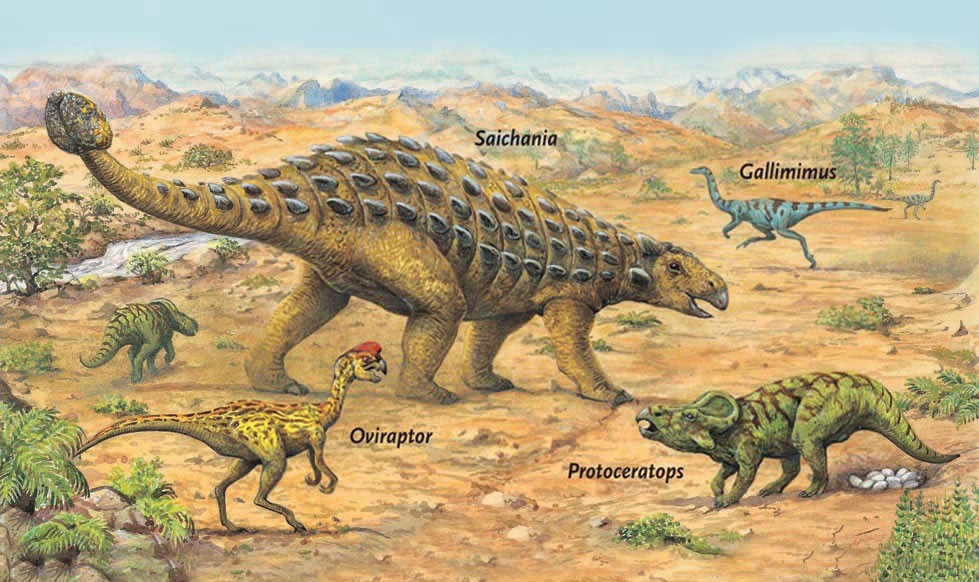
Today, most of Mongolia is dry, cold and windy. About 70 million years ago it was just as dry, but rather warmer. Bushes and shrubs grew in the sandy soil of the Gobi Desert, interspersed with lush areas of forest. The tank-like ankylosaur, Saichania, 6 metres (20 feet) long, munched low plants. Protected by spikes and bony studs, it stood ready to hammer any predator that came too near with its club-ended tail.
The fastest runner of the time was Gallimimus. It was very similar in size and shape to the ostrich of today, except that it had a long and bony tail. Recent studies show that even had a coat of feathers. "This ostrich dinosaur" pecked for roots, seeds, insects, worms and lizards with its toothless beak. Although a relative Gallimimus, Deinocheirus was much larger than slower. Also an omnivore, it used its giant arms with long clawed fingers to forage for plants and fish in nearby swamps.
Battle to the death
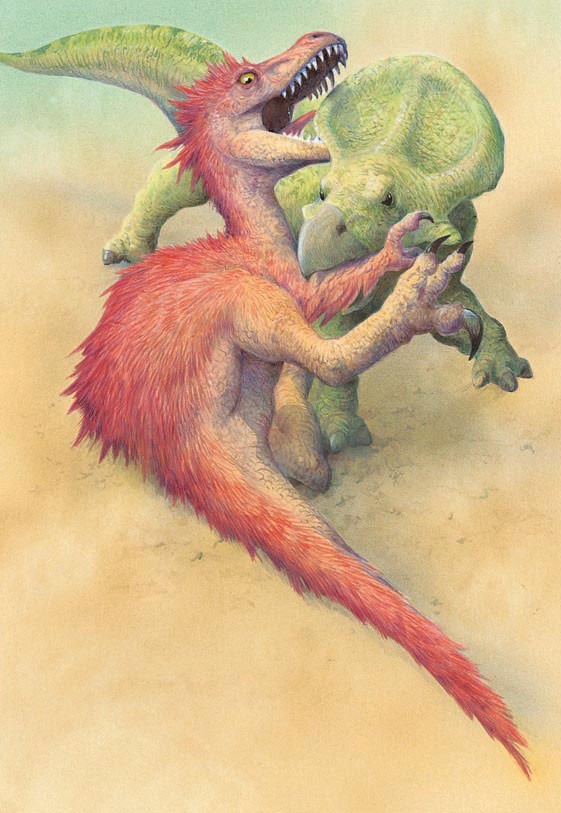
One amazing fossil find shows how two dinosaurs battled to the death about 80 million years ago in the sands of East Asia. Protoceratops was a pig-sized cousin of Triceratops. It was attacked by the fierce hunter, Velociraptor. Protoceratops bit Velociraptor's arm with its powerful beak, Velociraptor slashed at Protoceratops's throat with one of its toe-claws—and both died as a sandstorm suddenly whipped up around them.
Feathered dinosaurs
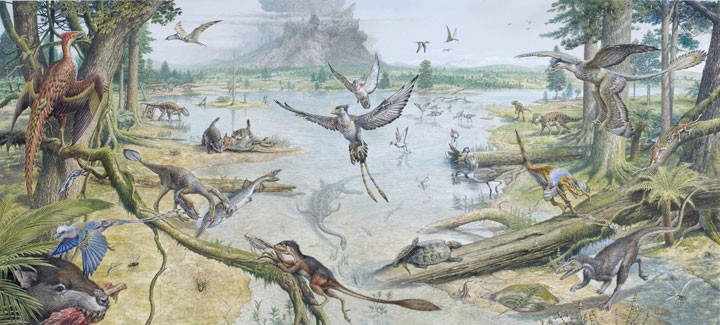
From the mid-1990s onwards, many well-preserved fossils of feathered dinosaurs have been discovered in Liaoning province, China. Volcanic eruptions about 124 million years ago, during the Early Cretaceous, smothered the area in ash, which preserved the living organisms in fine detail. The feather coats of various theropod dinosaurs, including Velociraptor, Shuvuuia, Microraptor, Sinosauropteryx, Sinornithosaurus and Caudipteryx, are beautifully preserved.
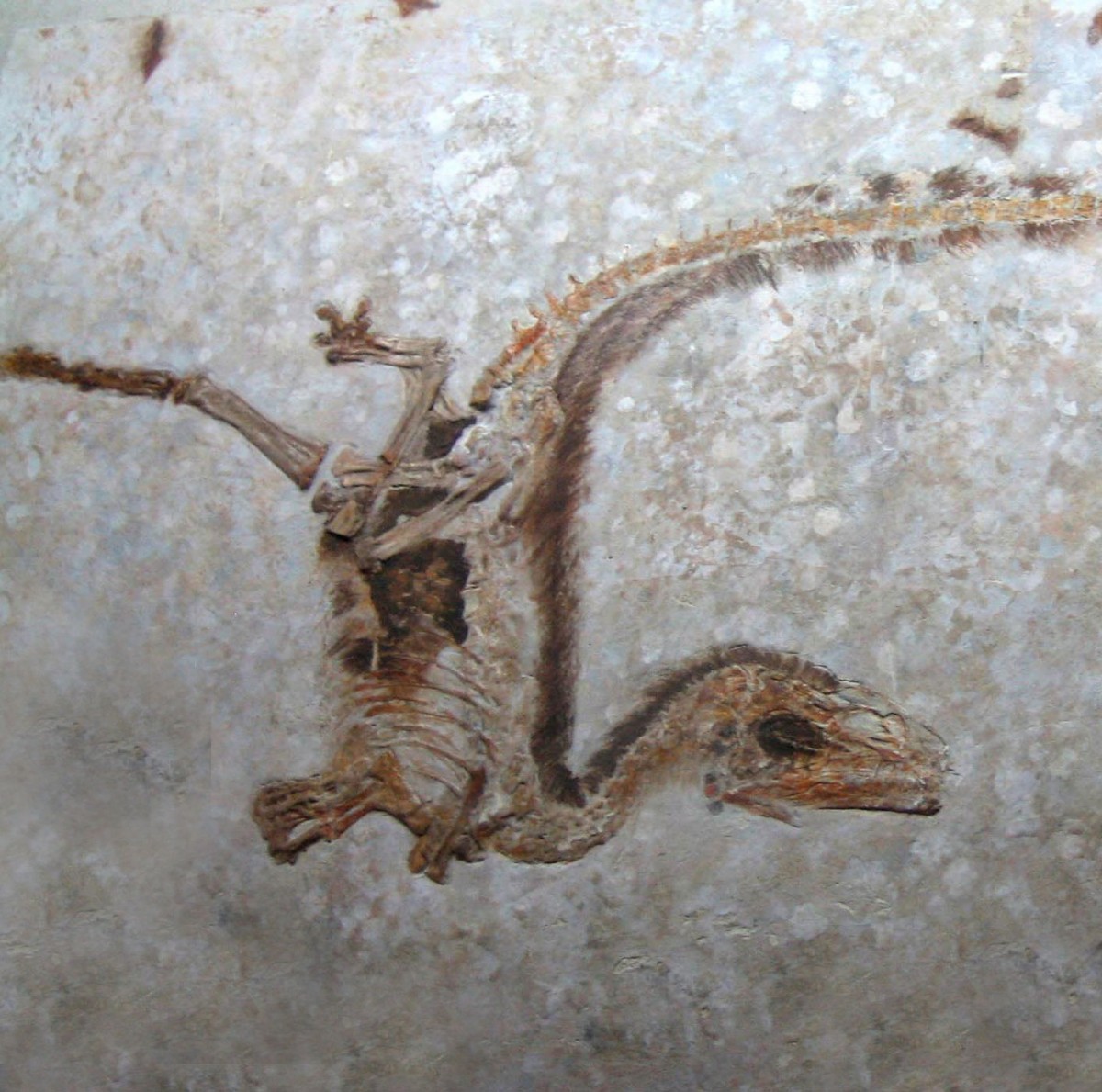
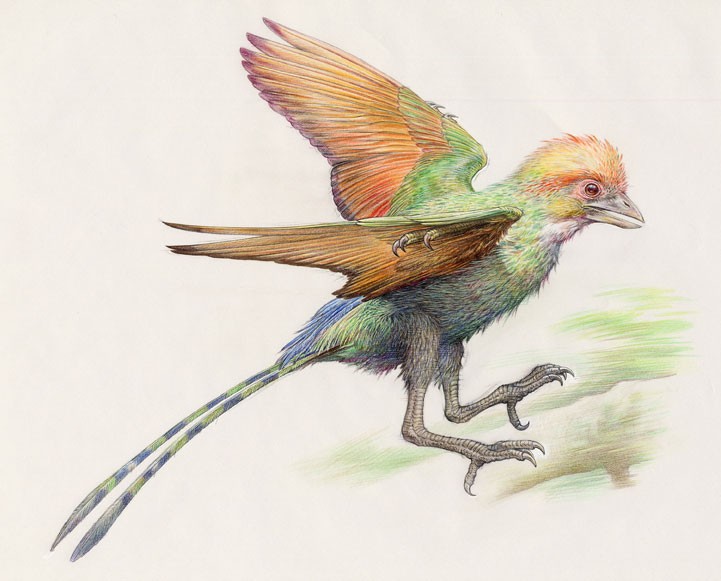
The feathered arms of some of these bird-like dinosaurs were too small to be any use as wings (although scientists think the tiniest and lightest of them could have used their wings at least when gliding down from the trees). The feathers originally evolved perhaps simply to keep them warm—strong evidence that these species, like all birds today, were warm-blooded. Their feather coats might also have been brightly coloured, suggesting they were used by males in courtship displays to females, like peacocks and other birds do today.
Consultant: Chris Jarvis