
EASY READ Prehistoric life

CITE
We have made every effort to follow citation style rules, but there may be some minor differences. If in doubt, please refer to the appropriate citation style manual.
EASY READ When did pterosaurs rule the skies?. (2026). In Q-files Encyclopedia, Prehistoric, EASY READ Prehistoric life. Retrieved from
https://www.q-files.com/prehistoric/easy-read-prehistoric-life/easy-read-when-did-pterosaurs-rule-the-skies
"EASY READ When did pterosaurs rule the skies?." Prehistoric, EASY READ Prehistoric life, Q-files Encyclopedia, 12 Mar. 2026.
https://www.q-files.com/prehistoric/easy-read-prehistoric-life/easy-read-when-did-pterosaurs-rule-the-skies.
Accessed 13 Sep. 2026.
EASY READ When did pterosaurs rule the skies? 2026. Prehistoric, EASY READ Prehistoric life. Retrieved 13 September 2026, from
https://www.q-files.com/prehistoric/easy-read-prehistoric-life/easy-read-when-did-pterosaurs-rule-the-skies
Prehistoric, EASY READ Prehistoric life, s.v. "EASY READ When did pterosaurs rule the skies?," accessed September 13, 2026.
https://www.q-files.com/prehistoric/easy-read-prehistoric-life/easy-read-when-did-pterosaurs-rule-the-skies


When did pterosaurs rule the skies?
Pterosaurs were flying reptiles. They first took to the air in the Triassic Period and dominated the skies for the whole of the Age of Dinosaurs. Pterosaurs had wings made of flaps of skin that stretched between their extremely long fourth fingers to their feet or tails. Many pterosaurs had toothed beaks which they used for seizing fish. There were two main types: the long-tailed rhamphorhynchs and the short-tailed pterodactyls.
Rhamphorhynchus

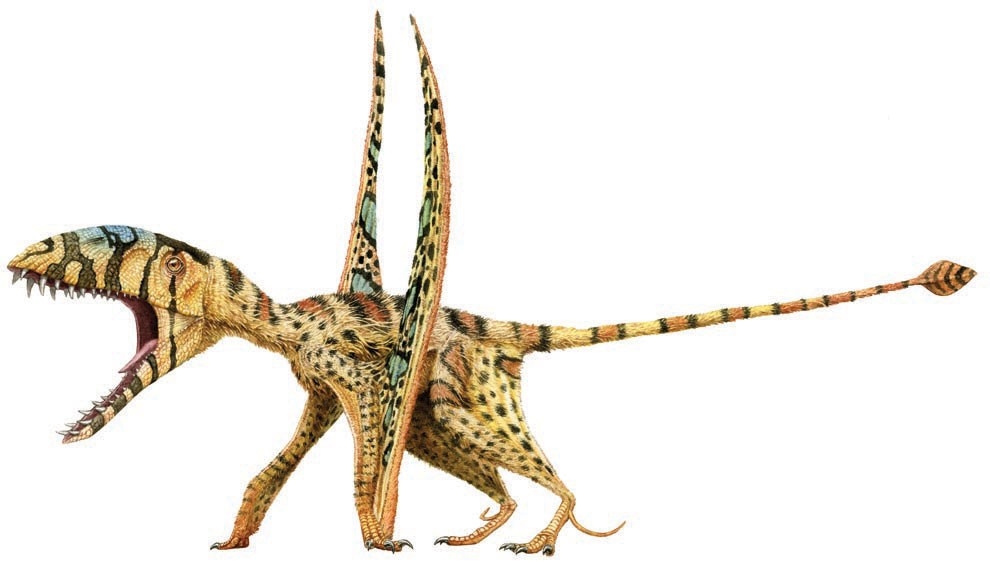
Rhamphorhynchus (pronounced RAM-foh-RIN-kuss) lived in the Late Jurassic Period. It had a small, furry body with a short neck and tiny legs. Its long, stiffened tail had a diamond-shaped piece on the end. Its long jaws were filled with sharp, forward-pointing teeth. When on land, it spent its time perched on cliffs or branches. It used its claws to climb up and hang on.
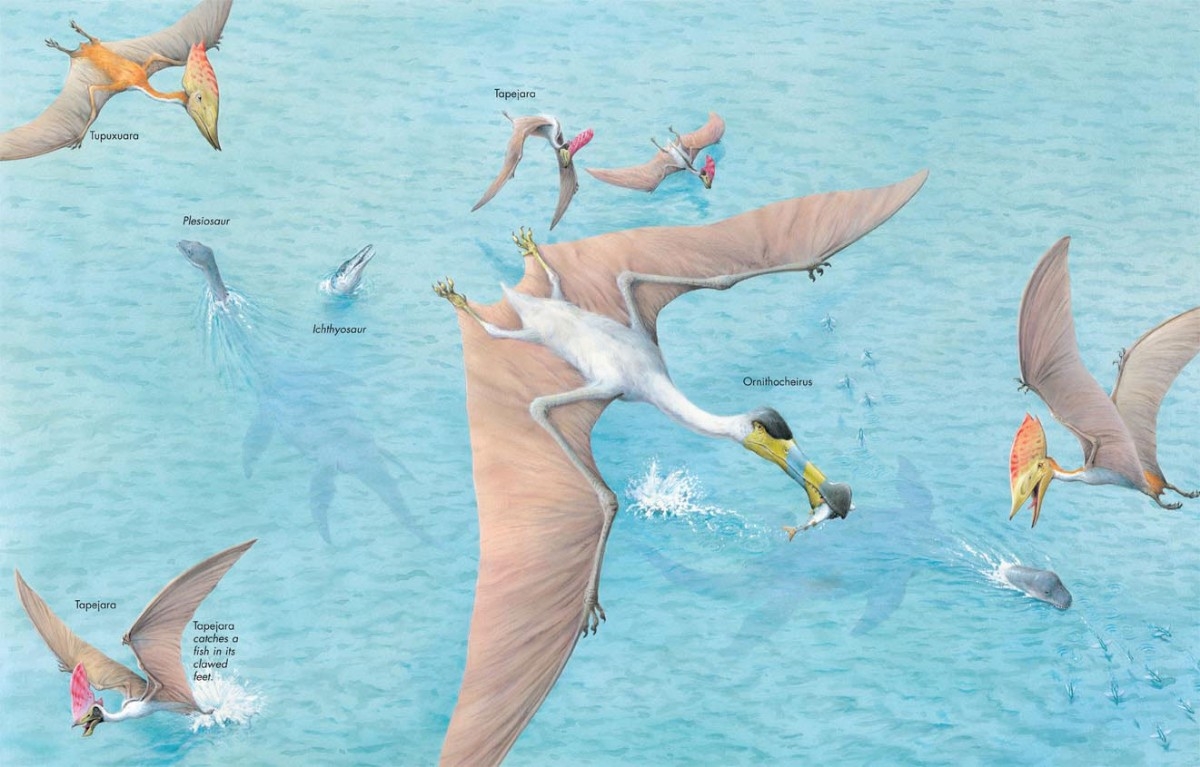
Rhamphorhynchus's huge eyes enabled it to spot prey from high up. It then flew low, dragging its beak in the water. Its teeth snapped shut like a cage once it had grabbed a fish.

Pteranodon

Pteranodon (Tair-ANN-oh-don) was a large pterosaur from the pterodactyl group. Its name means “wings and no teeth”. It lived during the Late Cretaceous Period. It had a furry body with very short tail. Its wings were enormous: some types had a wingspan of nine metres (30 feet). On top of Pteranodon’s long skull was a large, backward-pointing crest. Its long, curved, toothless bill had a throat pouch underneath.

Pteranodon’s long wings allowed it to glide on air currents above the oceans for hours on end. Having spotted a fish in the waters below, Pteranodon swooped down, scooped it up in its long, narrow jaws, then stored it in its throat pouch—just like a modern pelican.
Quetzalcoatlus
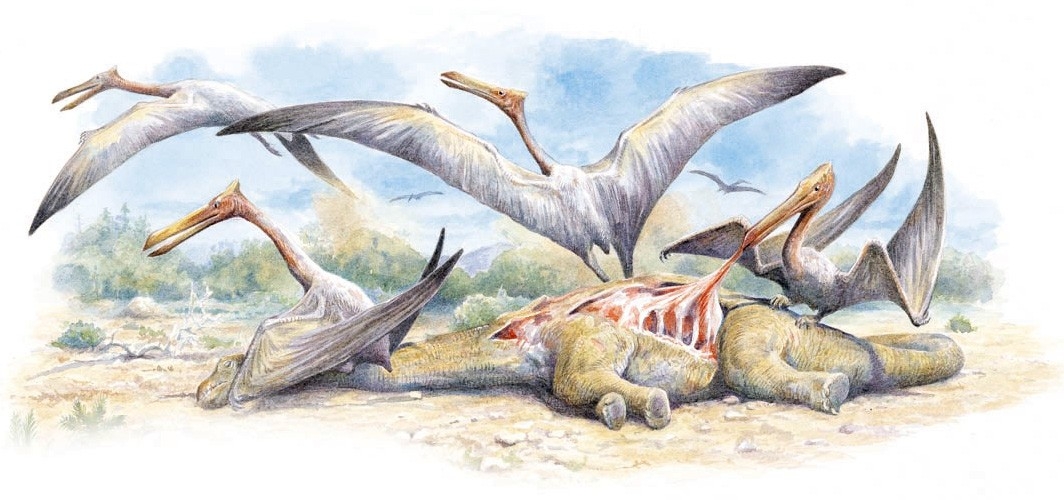
Quetzalcoatlus (KETT-zahl-koh-AT-lus) was a pterosaur from the pterodactyl group. It lived at the very end of the Age of Dinosaurs. Quetzalcoatlus had a long neck, large eyes, a long, pointed beak and toothless, slender jaws. Its head was topped by a short, bony crest. Its body was covered in a furry, fuzzy coat of short feathers.
Quetzalcoatlus was one of the largest animals ever to fly. Its wingspan measured up to 12 metres (39 feet). When standing upright, it was about the height of a modern giraffe.

Consultant: Chris Jarvis
Ready to find out more?
Here are some pages in other parts of Q-files you might like to explore:
Pterosaurs
Rhamphorhynchus
Pteranodon
Quetzalcoatlus and the pterodactyls
Pterosaurs A-Z
pics

Without in any way limiting Q-files Ltd’s exclusive rights under copyright, any use of this publication to “train” generative artificial intelligence (AI) technologies to generate text is expressly prohibited. Q-files Ltd reserves all rights to license use of this work for generative AI training and development of machine learning language models.